
Last updated October 9, 2026
Free on-site gate assessment - hinges, posts, and your LiftMaster or Nice gate operator checked before anything is quoted
The assessment is free and the quote is the invoice.
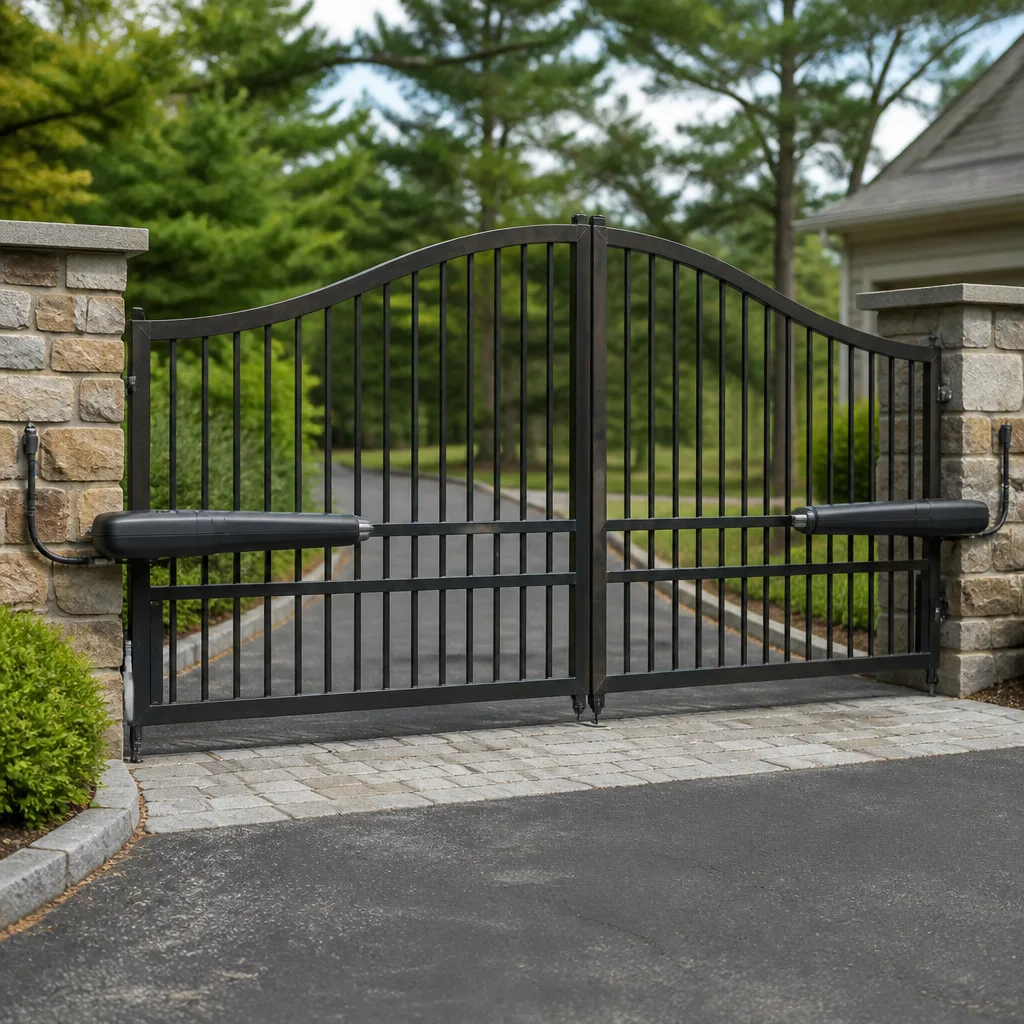
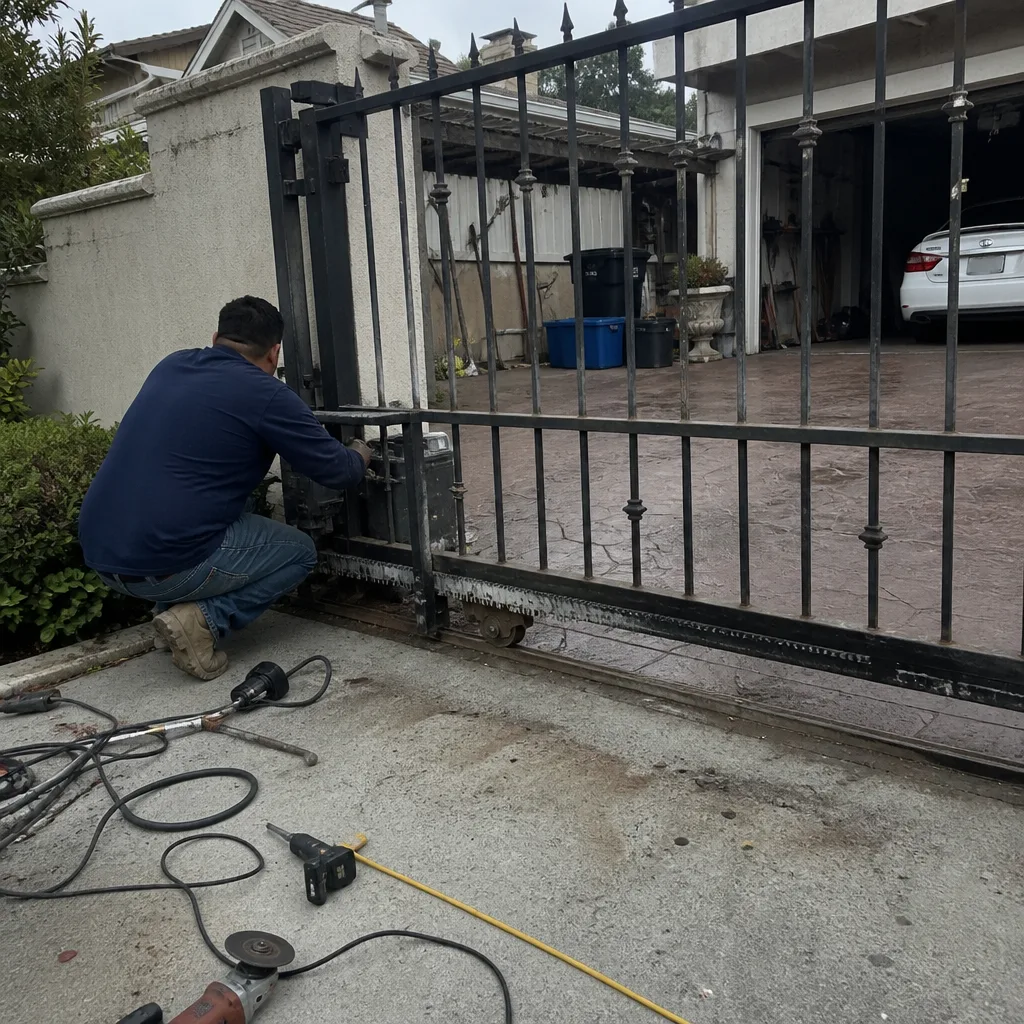 Before
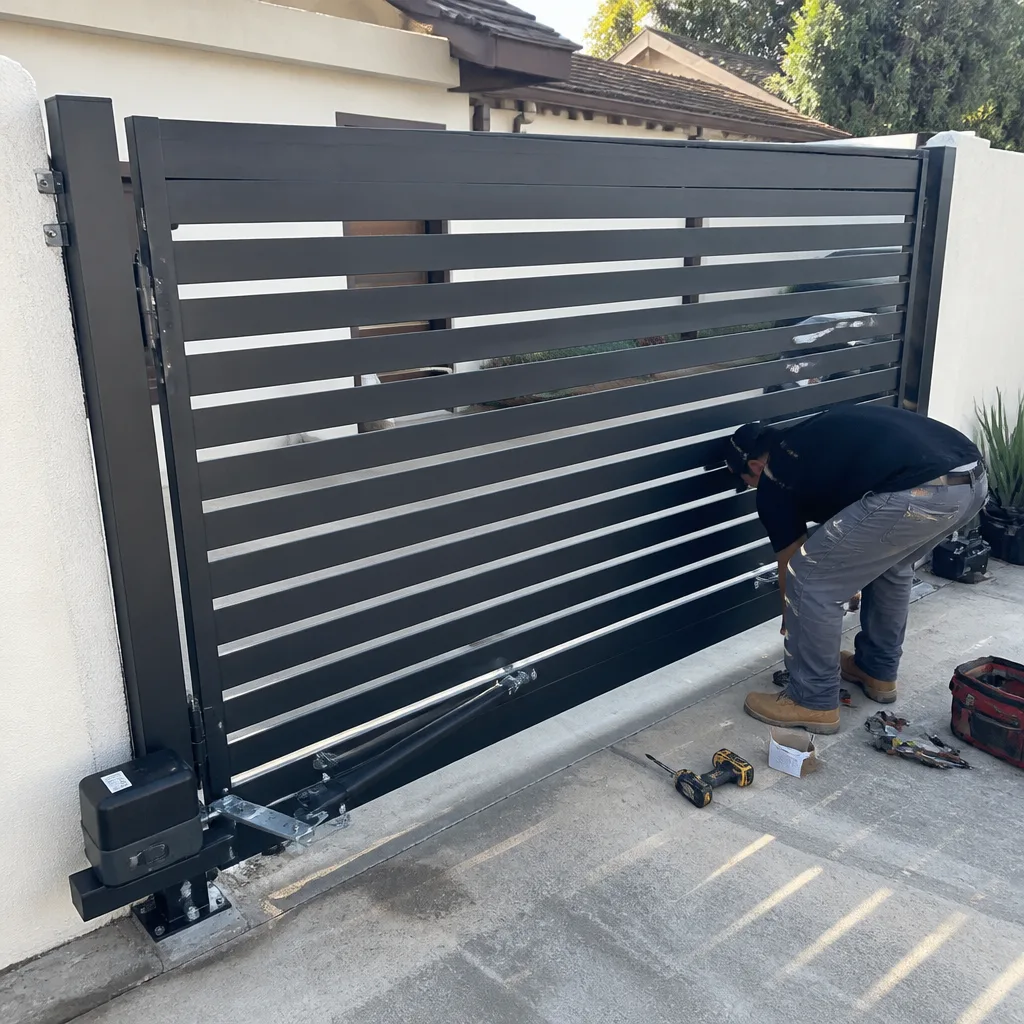 After
After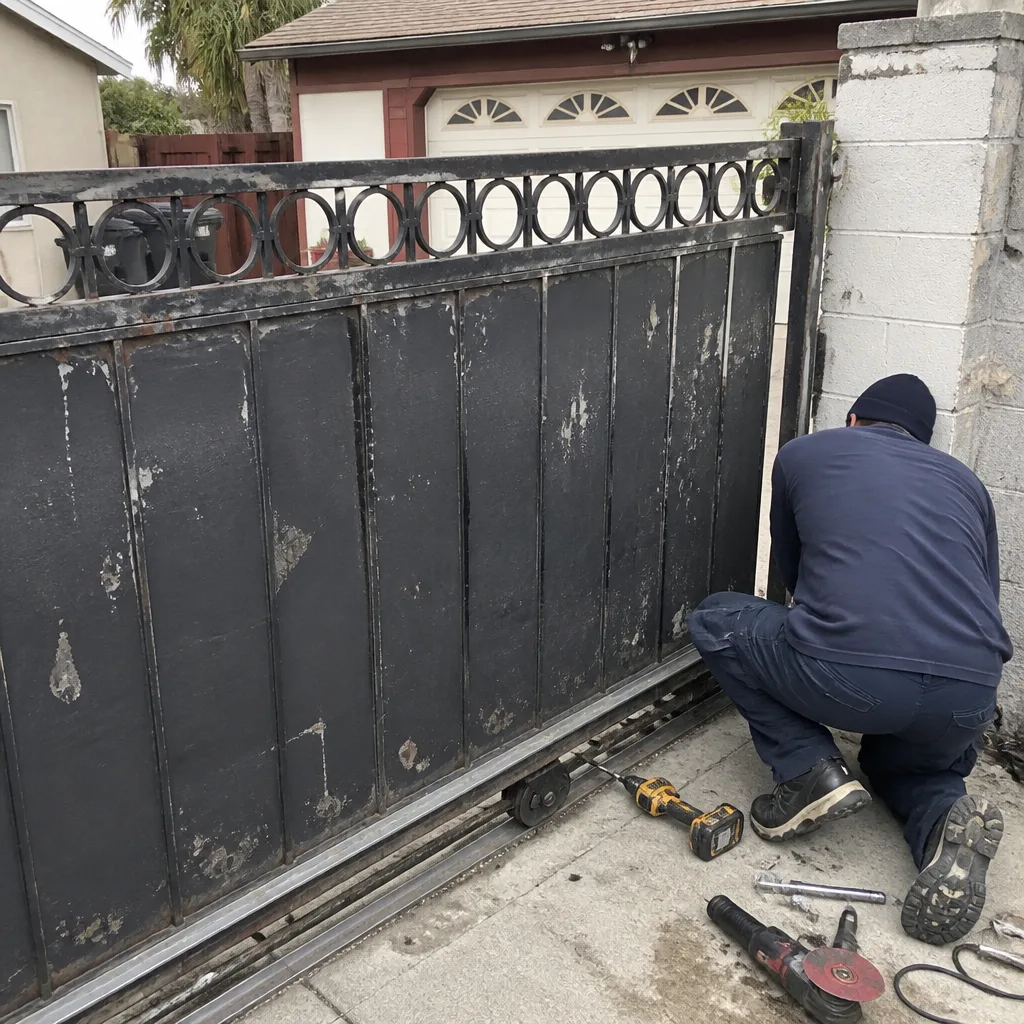 Before
 After
After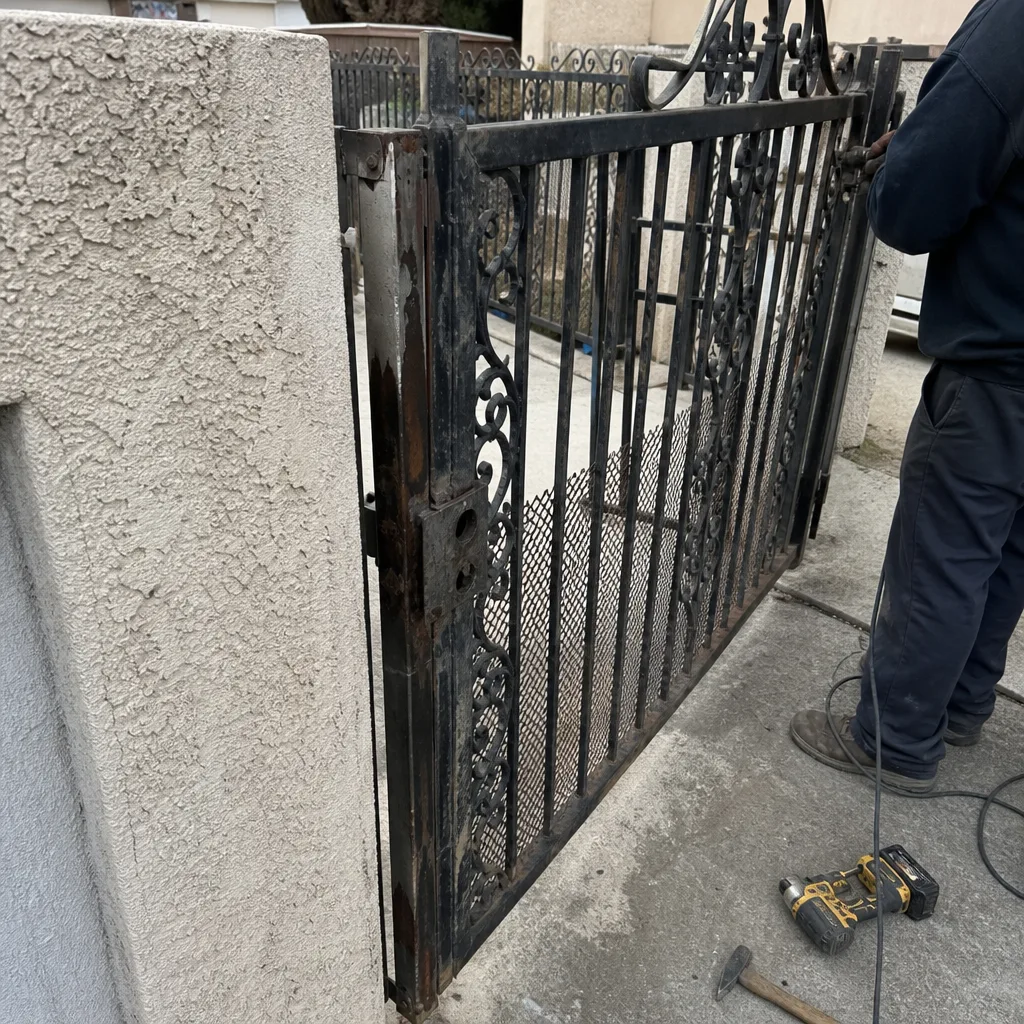 Before
 After
AfterGate Repair Warning Signs: A Los Angeles Homeowner’s Reference Guide
A gate that takes four seconds longer to open than it did last month is not “a little slow.” It is a gate operator drawing excess current to overcome a mechanical problem, and it will fail completely, usually at 7 a.m. with your car inside. Los Angeles homeowners treat their gates as background equipment until the morning they won’t budge. This guide teaches you to read the signals your gate has been sending for weeks, so you can schedule gate repair on your terms instead of making an emergency call on the gate’s terms.
Quick Answer
Gate failure in Los Angeles almost never happens without warning. The most common early signs are a change in opening or closing speed, new grinding or clicking sounds from the motor, a gate that reverses mid-cycle for no reason, or visible sagging at the hinge side. If you catch these signals early, most repairs cost between $180 and $450 and take under two hours. If you ignore them, the same problem becomes a $900 to $2,400 motor replacement or a gate off its track blocking your driveway.
Table of Contents
- The Sounds Your Gate Makes and What Each One Means
- How to Time Your Gate’s Cycle and Use Deviation as a Diagnostic Tool
- Visual Warning Signs Only Visible From Angles You Never Look From
- Why a Gate That Reverses Unexpectedly Is a Safety Sensor Problem
- Three Signs That Tell You Whether You Have Weeks or Days Before Failure
- Los Angeles-Specific Gate Failure Patterns We See Every Year
- Common Mistakes to Avoid
- When to Call a Professional
- Frequently Asked Questions
The Sounds Your Gate Makes and What Each One Means
Your gate talks to you every time it opens and closes. Most Los Angeles homeowners hear these sounds daily but never register them as information. Here is what each sound typically indicates, based on what we see across the city, from Brentwood to Eagle Rock.
Grinding or gravel-crunching sound: This is almost always gear wear inside the gate operator, the box that slides or swings your gate automatically. The gears inside an operator like a LiftMaster or FAAC unit are made to strip gradually rather than snap suddenly. When you hear grinding, the gear teeth are already worn down and the motor is working harder to compensate. In our experience, this gives you roughly two to four weeks before the operator stops moving the gate entirely.
Rapid clicking when the gate reaches the open or closed position: That click is the limit switch, the component that tells the motor where to stop. When it clicks repeatedly, the switch is failing to register the gate’s position. The motor keeps trying to finish a cycle it thinks is incomplete. This is a relatively inexpensive fix if caught early, often under $200. Left alone, the motor burns out from overwork.
Humming without movement: A motor that hums but does not move the gate points to a failing capacitor, the component that provides the initial jolt of power to start the motor. On Mighty Mule and Ghost Controls openers, capacitor failure is common after five to seven years of daily use. The hum is the motor trying to start and failing. This is a days-to-weeks situation, not a weeks-to-months one.
Intermittent beeping from the control board: Beeping is a fault code. Different brands use different beep patterns, and a technician who services Elite or BFT equipment reads those patterns the way a mechanic reads a check-engine light. A single beep every few seconds usually means an obstructed sensor. A pattern of three quick beeps often indicates a battery backup issue. The beeping is not the problem itself. It is the control board telling you what the problem is, and ignoring it means the underlying fault becomes more expensive to fix.
How to Time Your Gate’s Cycle and Use Deviation as a Diagnostic Tool
You do not need any equipment to gather useful diagnostic data about your gate. You need a phone timer and two weeks of attention. Here is the method we recommend to Los Angeles homeowners who call us and want to know whether their gate is actually slowing down or whether they are imagining it.
- Time your gate’s full open cycle today. Stand at the driveway with your phone timer. Start the timer the moment the gate begins moving and stop it when the gate is fully open. Write down the number. Do the same for the close cycle.
- Repeat the timing three times over the next two weeks, at the same time of day. Gates move slightly slower in cold weather and slightly faster in warm weather due to metal expansion and lubricant viscosity. Timing at the same hour controls for temperature variables. Los Angeles mornings in January and August are different enough to skew a one-off reading.
- Compare the numbers. A healthy gate holds a consistent cycle time, usually within half a second of its baseline. A deviation of two or more seconds in either direction is meaningful. Slower movement means the motor is working against increasing mechanical resistance, often from worn rollers, a sagging gate leaf, or a failing capacitor. Faster movement is rarer but can indicate a spring or counterbalance issue where the gate’s weight is no longer being controlled properly.
- Listen while you time. The sound profile of the open cycle and the close cycle should be roughly identical. A close cycle that sounds labored compared to the open cycle tells you the problem is load-related, not motor-related, because the motor is doing the same amount of work in both directions. That distinction saves diagnostic time and therefore saves you money.
This timing method catches problems before they show up as sounds. A roller that is beginning to seize adds a second to the cycle time long before it starts squeaking. By the time you hear it, the repair is more involved.
Visual Warning Signs Only Visible From Angles You Never Look From
Most Los Angeles homeowners look at their gate from the driveway side, from about chest height, while walking to the car. That angle hides the most useful diagnostic information. Here are the visual checks that reveal early failure, and where to stand to see them.
The hinge side, viewed from the property line. Walk to the fence line and look at the gate from the edge, not the front. A gate that is beginning to sag will show a wider gap at the top of the hinge side than at the bottom. This is visible as a slight trapezoid shape to the space between gate and post. The gate leaf itself weighs 300 to 600 pounds on a typical Los Angeles driveway gate. The hinges carry that entire load. When the top hinge begins to pull away from the post, the gate sags, the latch side drags on the ground, and the motor strains against a load it was never sized for.
The bottom rail, viewed while lying at ground level or squatting. Get low and look along the bottom edge of the gate. You are looking for scrape marks on the gate itself, grooves worn into the concrete or asphalt where the gate travels, and rust blooming along the bottom rail. In coastal Los Angeles neighborhoods like Playa del Rey and San Pedro, salt air accelerates rust on the bottom rail specifically, because that is where moisture collects. A rusted-through bottom rail compromises the gate’s structural integrity, and the gate can fold or buckle under its own weight.
The wheels or rollers, viewed from the side while the gate is mid-cycle. Watch the gate move from the side, at wheel height. A healthy wheel rolls smoothly along its track. A failing wheel wobbles, skips, or slides instead of rolling. On cantilever gates, which are common on wider Los Angeles driveways, two of the four rollers carry the load at any given moment. When one roller seizes, the gate’s weight shifts to the remaining three, and the truck that carries the gate begins to wear unevenly. A seized roller is a $90 part and a 45-minute repair. A worn truck assembly is a $500 to $900 job that requires lifting the gate off its track.
Why a Gate That Reverses Unexpectedly Is a Safety Sensor Problem
A gate that reverses mid-cycle without anything visible in its path is sending you a specific message: the safety sensor system is detecting something that is not there, or has lost communication with the control board, and is defaulting to the safe behavior of reversing. This is the gate protecting you from itself. It is also the most commonly dismissed warning sign in Los Angeles, because the gate “works fine” and “only does it sometimes.”
Gate operators in California are required to have a reversing mechanism that stops and reverses the gate when an obstruction is detected. On a LiftMaster or FAAC unit, this usually takes the form of an infrared photo eye mounted near the ground on each side of the gate opening, plus a clutch or current-sensing mechanism in the motor that detects resistance. When the photo eyes get dirty, misaligned by a bump from a car or a gardener’s wheelbarrow, or degraded by direct sun exposure, they send an obstruction signal to the board even when the path is clear. The gate reverses because the board believes something is in the way.
The liability dimension matters here, and Los Angeles homeowners should understand it plainly: if a gate that has been reversing intermittently eventually fails to reverse when a child, a pet, or a delivery person is in the gate’s path, the property owner bears responsibility. California premises liability law holds property owners accountable for injuries caused by known hazards on their property. A gate that reverses for no reason is a documented, observable hazard. The homeowner who ignores it has created a known safety problem on their property. This is not a theoretical concern. Gates weigh hundreds of pounds and a closing gate striking a person produces serious injuries. If your gate reverses without cause, the safety system is compromised, and the responsible action is to have it diagnosed. Do not attempt to adjust or bypass safety sensors yourself. This work involves electrical components and a gate that can move unexpectedly. A trained technician should handle it.
Three Signs That Tell You Whether You Have Weeks or Days Before Failure
When a Los Angeles homeowner calls us and describes a gate problem, the first thing we try to determine is the timeline. Some failures give you a month of runway. Others give you one more cycle. Here are the three warning signs that separate the two, based on what we have seen at Warden Gate Repair home callouts across Los Angeles for more than 15 years.
Sign one, weeks of runway: a changed sound with no change in cycle time. If your gate sounds different but still opens and closes in roughly the same time it always has, you have caught a mechanical issue early. The motor is compensating, the problem is real, but the failure is not imminent. Schedule a repair on your timeline, and the fix is usually a part replacement, not a motor replacement.
Sign two, days of runway: the gate stops mid-cycle and then completes after a pause, or requires a second button press. This is the control board or the capacitor struggling. The gate still finishes its job, but it is telling you the starting power or the position logic is failing. In our experience, this is a three-to-seven-day window at most. After that, the gate stops completing cycles entirely, and you are now dealing with a gate stuck open or closed, not a gate that is struggling.
Sign three, hours of runway: the gate reverses immediately on startup, or refuses to move while the motor hums continuously. When a gate reverses instantly every time you try to open it, or hums without moving, the system is past warning and into failure. Do not keep pressing the button. Each press adds heat load to the motor and increases the odds that the repair goes from a $200 component swap to a $1,200 operator replacement. This is the moment to stop operating the gate and make the call.
Los Angeles-Specific Gate Failure Patterns We See Every Year
Gate failure is not distributed evenly across the calendar or the map. Los Angeles has specific climate and usage patterns that produce predictable failure modes, and knowing them helps you interpret what your gate is telling you.
Santa Ana wind season, September through November: The dry, gusty winds push dust and fine debris into gate tracks, photo eye housings, and control board enclosures. The photo eyes get coated with a fine layer of grit that triggers the reversing behavior described above. The tracks get choked with dust that the wheels grind into paste. We see a sharp increase in electric gate repair in Los Angeles calls every October, and most of them are dust-related sensor and track issues that a homeowner can prevent with a monthly wipe-down of the photo eye lenses.
Coastal corrosion, Santa Monica to San Pedro: Salt air is relentless on gate hardware. The motors in a beach-adjacent home fail two to three years earlier than the same motor in Silver Lake, because the salt corrodes the internal wiring connections and the circuit board contacts. If you live within a mile of the ocean, expect your gate operator to have a shorter service life, and treat any rust on the gate frame as an early warning, not a cosmetic issue.
Summer heat stress on motors in the San Fernando Valley: A gate operator in Woodland Hills or Northridge sits in direct sun on a metal post for six months of the year. Internal temperatures in the motor housing regularly exceed 140 degrees. Heat degrades capacitors and solder joints on control boards. A Valley homeowner whose gate fails in August is usually looking at a heat-related capacitor or board failure, and a gate motor repair in Los Angeles that is straightforward to diagnose but should be done by someone who knows the brand’s fault codes rather than guessing.
Cold-morning sluggishness in canyon neighborhoods: Laurel Canyon, Beachwood Canyon, and the hills above Studio City get cold enough in winter that gate lubricant thickens and metal contracts. A gate that is sluggish on cold mornings but fine by noon is telling you the lubricant in the track wheels and hinges is old and needs replacement. Most Los Angeles gates are lubricated when installed and then never again. A gate should be lubricated annually, and the dozens of microclimates across the city mean the service interval shifts by neighborhood.
Common Mistakes to Avoid
- Pressing the button repeatedly when the gate struggles. Every press sends another surge of current through a motor that is already straining. The repeated surge is what turns a repairable capacitor into a destroyed motor winding. If the gate does not move on the second press, stop pressing.
- Lubricating the gate with WD-40. WD-40 is a water displacer, not a lubricant. It strips the existing grease from the rollers and hinges and leaves them dry. Use the silicone or lithium grease specified for your gate’s components, or ask a gate repair tech in Los Angeles what the right product is for your specific gate.
- Ignoring the reversing gate “because it still works.” A gate that reverses for no reason is a safety system malfunction, and in California that is a liability you carry as the property owner. The fact that it still opens and closes does not make it safe.
- Power-washing the gate operator or the photo eyes. Water forced into the motor housing or the sensor enclosures causes electrical shorts and board damage. If you wash your gate, cover the operator and the sensors first.
- Waiting for the gate to fail completely before calling. Every Los Angeles homeowner who calls us for an emergency gate failure had weeks of warning signs before the gate stopped. The emergency call costs more because the same problem had time to damage additional components. The early call fixes the underlying problem for the minimum repair cost.
- Assuming a slow gate is just old. “Old” is not a failure mode. A gate that is slow is slow for a reason, and the reason is mechanical resistance somewhere in the system. Old gates that are properly maintained open at the same speed they always did.
- Searching online for a fix and then applying it without understanding your gate’s brand. A LiftMaster actuator works differently from a FAAC actuator. A Mighty Mule control board uses different fault codes than an Elite board. The wrong part or the wrong adjustment makes the problem worse and voids your repair options.
When to Call a Professional
Call a professional when the gate hums without moving, when it reverses every cycle, when the sag is visible at the hinge, or when the cycle time has changed by two or more seconds from your baseline. These are the moments when continued use damages the motor and turns a component repair into a system replacement. If you are unsure whether your gate’s behavior is a warning sign or just normal operation, the call is still worth making. Gate motors, springs, and safety sensors involve electricity and hundreds of pounds of moving metal. The work is for a trained technician, not a weekend project. Warden Gate Repair offers free estimates in Los Angeles, call (828) 426-7081.
Frequently Asked Questions
Gate repair in Los Angeles typically costs between $180 and $450 for common issues like limit switch replacement, photo eye realignment, capacitor swaps, and roller replacement. Motor or control board replacement runs $900 to $2,400 depending on the brand and model. At Warden Gate Repair, the written price is given before any work starts, every time, so there is a specific number on the page before you are asked to approve the repair. Call (828) 426-7081 for an exact quote, estimates are free.
Yes. Warden Gate Repair runs emergency dispatch in Los Angeles for gates that are stuck closed, stuck open, or creating a safety hazard. We answer calls with a live person 24/7, not a voicemail, and every technician arrives with a photo ID badge and is sent to you by name and photo before arrival. Call (828) 426-7081 and tell us what the gate is doing now, and we will give you a straight answer about how soon we can be there.
We are factory-trained across nine major gate and opener brands: LiftMaster, FAAC, BFT, Linear, Viking, Ghost Controls, DoorKing, Elite, and Mighty Mule. If your gate motor was installed in Los Angeles in the last 20 years, it is almost certainly one of these. The right parts and the right service knowledge arrive together, which is why our warranty is a full year on every repair, not 30 or 90 days.
Yes. A gate that reverses without cause is a safety system malfunction, and California premises liability makes you responsible for injuries on your property caused by known hazards. Delivery drivers, landscapers, mail carriers, and neighbors all pass through gate openings. A reversing gate that eventually fails to reverse is a serious injury waiting for a person who happens to be in the wrong place. This is a repair, not a quirk.
Time your gate’s open and close cycle. If both directions are slower than baseline, the problem is usually in the motor or the control board, because the motor drives both directions. If one direction is slower or sounds labored, the issue is usually mechanical, a sagging gate or a failing roller, because resistance differs by direction. This is the same diagnostic test we run when we arrive, and it narrows the problem before we open a single panel.
Yes. It is called the Threshold Standard. Every technician is background-checked, identity-verified, photo-badged, and sent to you by name and photo before arrival, then shows the photo ID badge at the door. Every repair comes with a written price before work starts, no surprise line items at the end, and the 365-Day Done Right Promise: if the repair is not right, we return and make it right at no charge. No exceptions.
The Bottom Line
Your gate tells you it is failing long before it stops. The sounds it makes, the time it takes to open, the way it hangs on its hinges, and the way it behaves near invisible obstructions are all data. Los Angeles homeowners who read that data save money, avoid the 7 a.m. stuck-gate emergency, and carry less liability on their property. Learn the baseline. Track the changes. Call when the pattern breaks. A warden is trusted to watch over a place and keep it secure. That is the whole idea behind a gate, and the whole idea behind how we work.
Written by Cole Rafferty, Owner at Warden Gate Repair, serving Los Angeles since 2008.