
Last updated October 9, 2026
Free on-site gate assessment - hinges, posts, and your LiftMaster or Nice gate operator checked before anything is quoted
The assessment is free and the quote is the invoice.

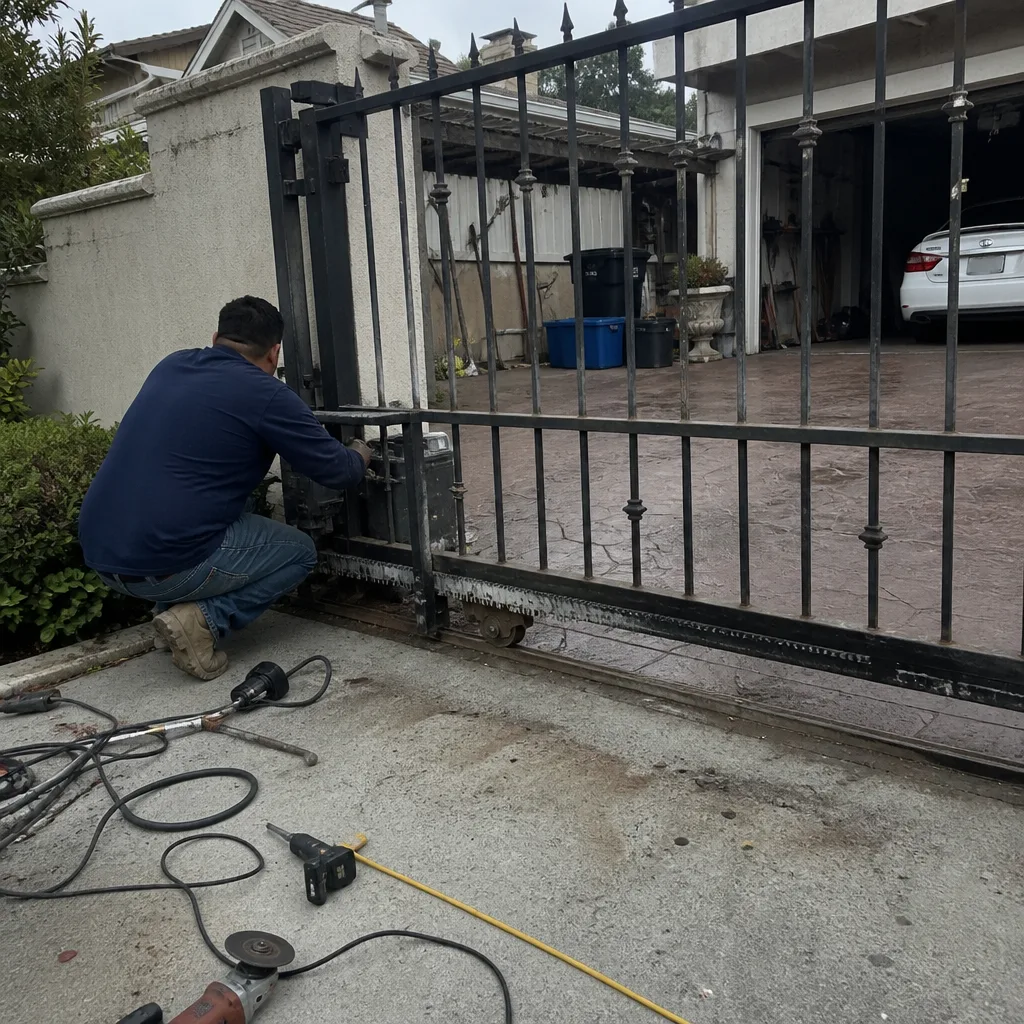 Before
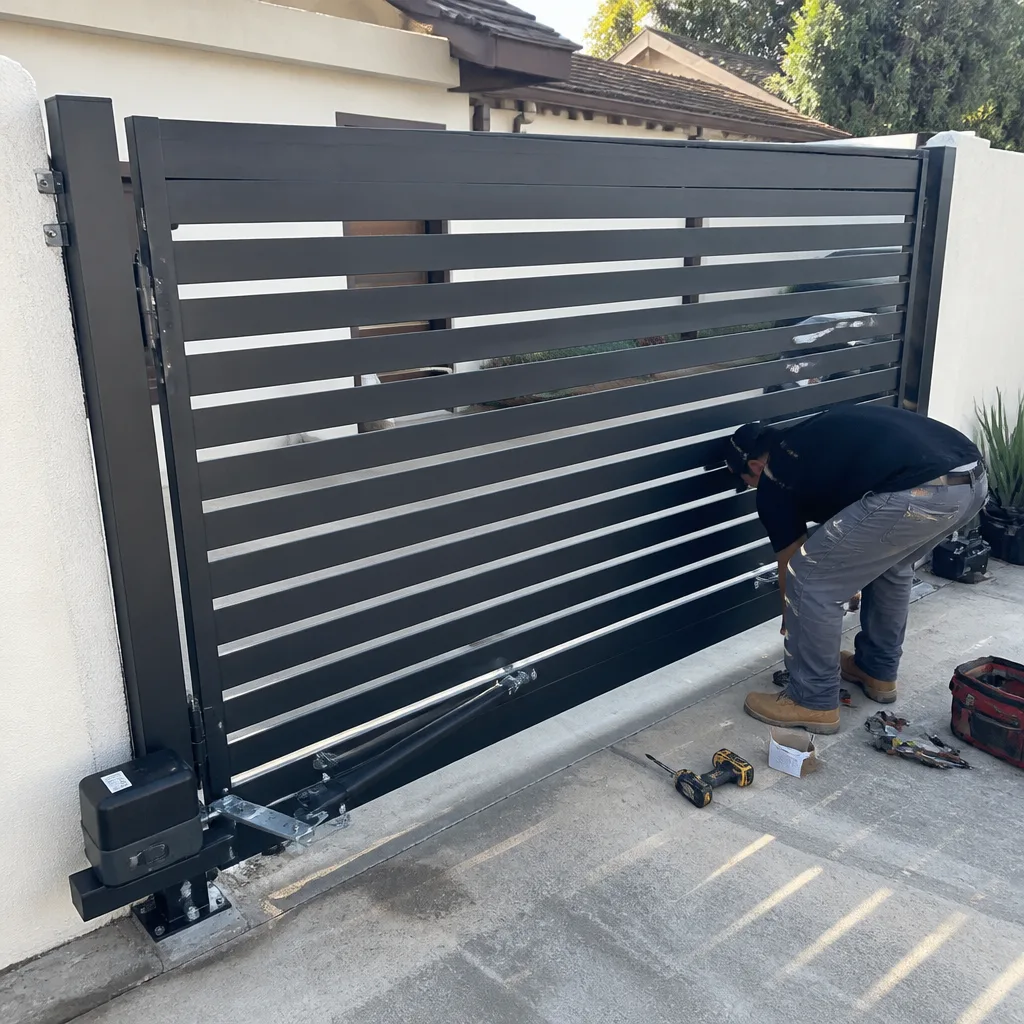 After
After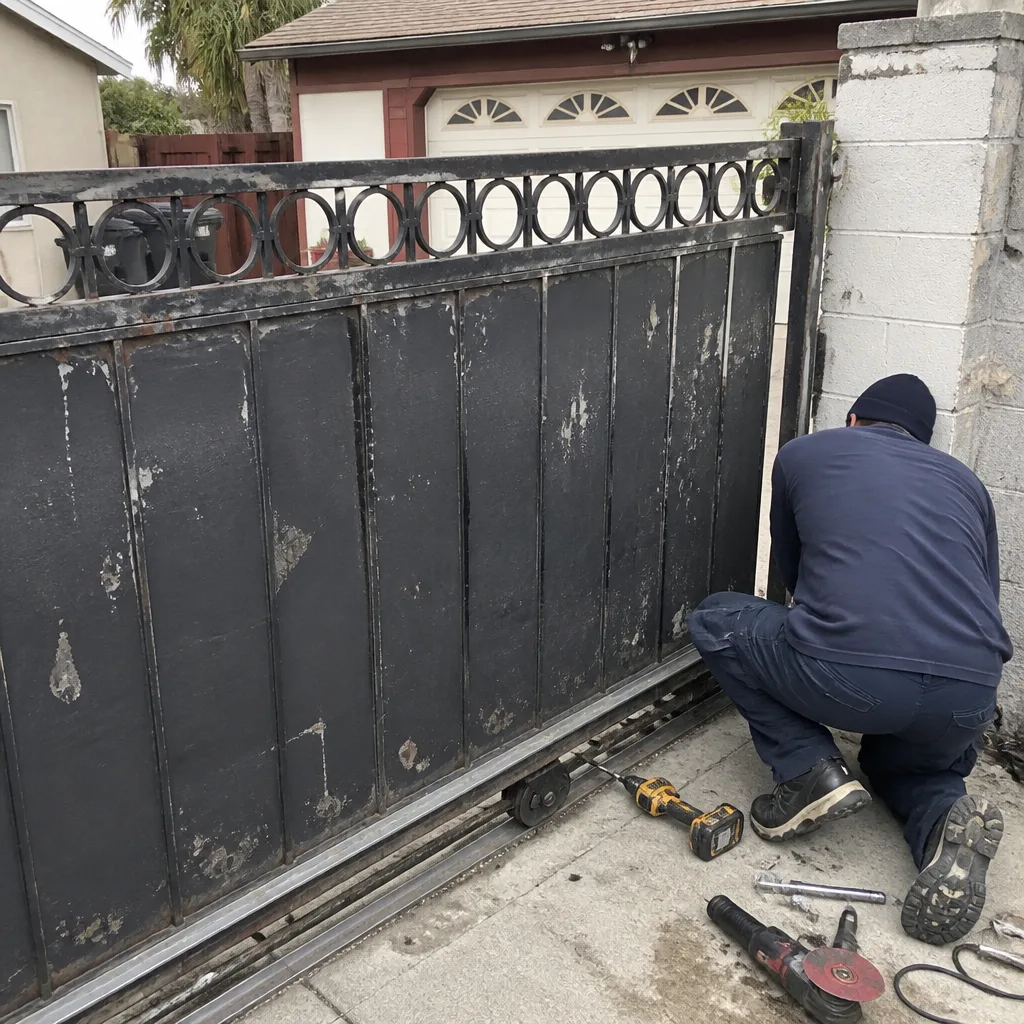 Before
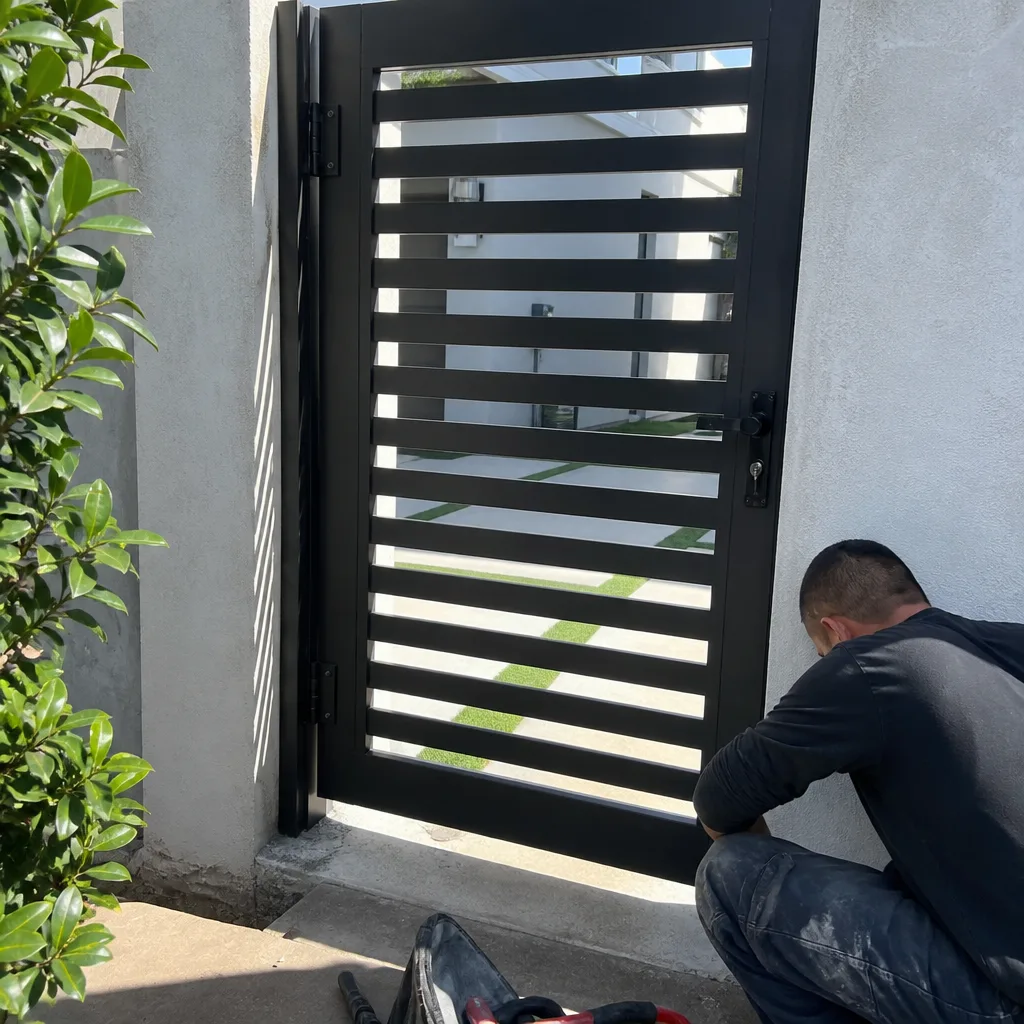 After
After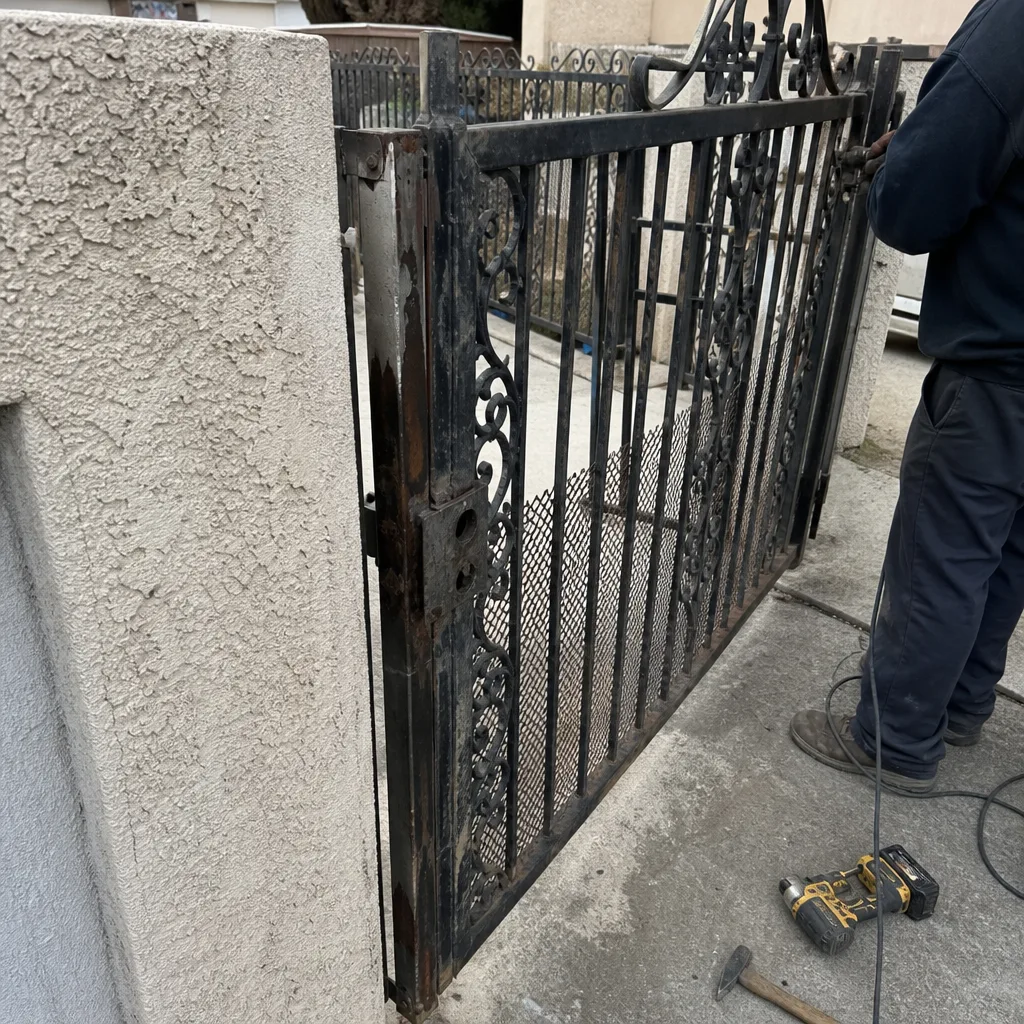 Before
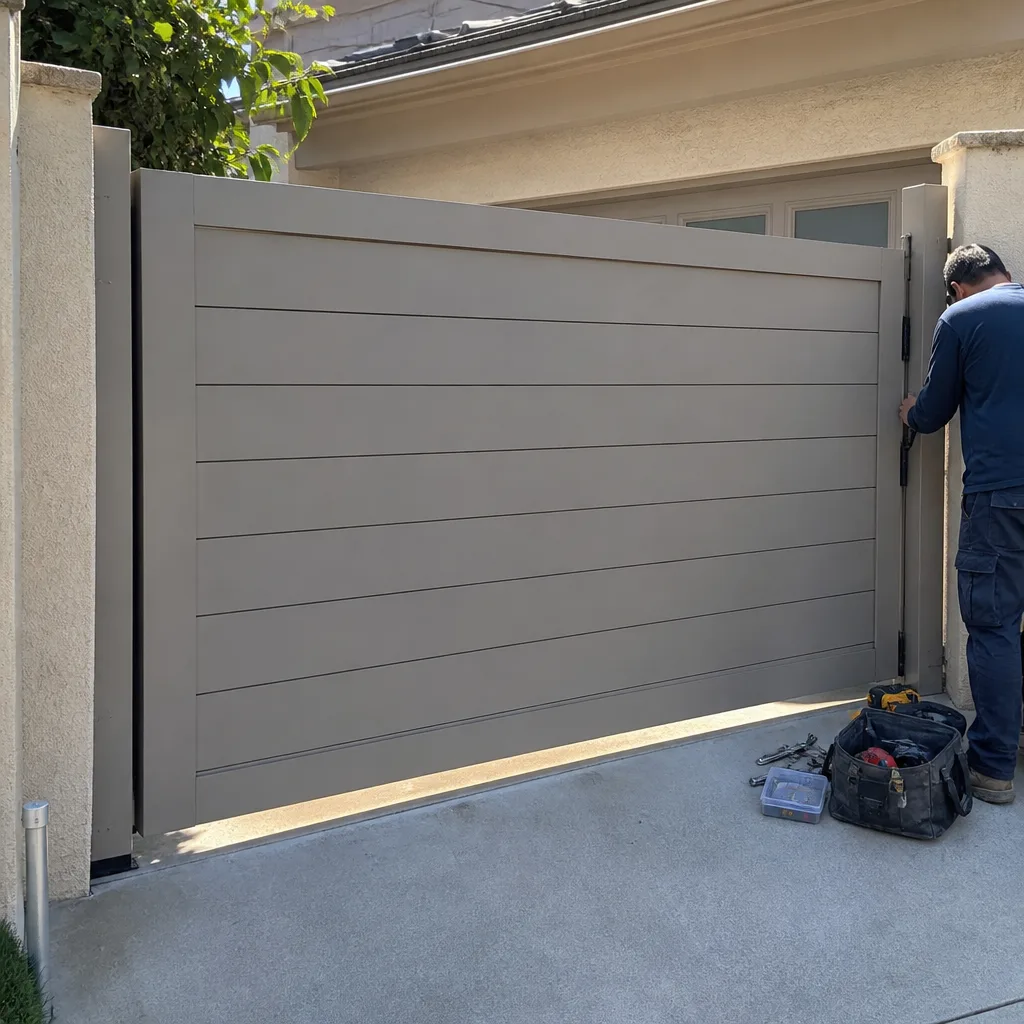 After
AfterDIY vs Professional Gate Repair: The Los Angeles Homeowner’s Decision Guide
Replacing a gate hinge yourself is legal, straightforward, and can save you $200. Replacing the circuit board on the same gate involves low-voltage wiring work that, if done incorrectly, affects how the gate behaves when a child or pet is in its path. The gate looks the same from the street. The stakes are completely different. Los Angeles has a specific legal and practical line between what a homeowner can safely do and what belongs in the hands of a licensed professional, and most of the advice online blurs that line badly. This guide draws that line clearly, task by task, with real Los Angeles pricing, the California licensing rules that matter, and the one monthly test every automatic gate owner should be doing. For professional help, see our Gate Repair services.
Quick Answer
Most mechanical tasks on a gate – lubricating hinges, tightening bolts, cleaning the track, and even replacing a hinge or wheel – are safe, legal, and smart DIY projects for a Los Angeles homeowner. Anything involving the gate motor, circuit board, safety sensors, or electrical wiring should go to a licensed professional, not because the work is impossibly hard, but because California law and your homeowner’s insurance policy both draw a hard line at unlicensed electrical work. The practical rule we give homeowners: if the repair is mechanical and you can see how the part fits together, it’s yours to attempt. Check our Electric Gate Repair Troubleshooting: Common Problems and How to Fix Them for electrical issues. If electricity enters the picture, call a professional.
Table of Contents
- The Legal Line: What California Law Says About Gate Repair
- DIY-Safe Tasks: What You Can Legally and Safely Fix Yourself
- Professional-Only Tasks: Where the Line Gets Bright
- The Real Cost Comparison: DIY vs Professional Pricing in Los Angeles
- What Happens When a DIY Attempt Goes Wrong
- The One Monthly Test That Protects Your Gate
- Why an Unlicensed Handyman Is the Riskiest Option in Los Angeles
- Common Mistakes to Avoid
- When to Call a Professional
- Frequently Asked Questions
- The Bottom Line
The Legal Line: What California Law Says About Gate Repair
California draws a clear line between mechanical work and electrical work, and that line matters more than most Los Angeles homeowners realize. The state requires a C-10 electrical contractor’s license for anyone performing electrical work for compensation that involves connecting to a building’s electrical system. Gate motors, circuit boards, safety sensor wiring, and intercom wiring all fall under this umbrella when the work is done for pay. A C-61/D-28 (doors, gates, and activating devices) license covers gate-specific work, but when electrical components are involved, the contractor must also hold or work under a C-10 electrical license.
Here’s what this means in plain terms:
- You, as a homeowner, may perform electrical work on your own property without a license under California law, provided the work is done correctly and to code.
- Any person you pay to do that electrical work must be properly licensed. Paying an unlicensed handyman to replace a gate motor is illegal in Los Angeles, even if the handyman has done similar work for years.
- If the gate is part of a permitted installation – meaning it was added with a building permit by a previous owner – unlicensed modifications can void your homeowner’s insurance coverage for any incident involving that gate.
We’ve walked Los Angeles homeowners through this conversation many times: the hinge you replace yourself does not affect your insurance. The circuit board an unlicensed handyman replaces absolutely can. The gate looks identical from the sidewalk. The liability is not.
DIY-Safe Tasks: What You Can Legally and Safely Fix Yourself
Most wear-and-tear problems on a gate are mechanical, and mechanical work is where a careful Los Angeles homeowner can save real money. These are the tasks we tell people to try themselves, with the understanding that you’re working with heavy metal, moving parts, and pinch points – so gloves and patience are non-negotiable.
Lubrication and Routine Cleaning
Squealing, grinding, or a gate that moves slower than it used to is often just friction. Spray white lithium grease on hinge pins, wheel bearings, and the chain or belt drive. Wipe down the track with a rag and mild degreaser. This takes 20 minutes and costs under $15. In our experience across Los Angeles, maybe one in four service calls for a noisy gate is solved by lubrication alone. The coastal salt air from places like Playa del Rey and the dry dust from the Valley both accelerate wear, so a quarterly lubrication schedule is realistic maintenance here. See our Electric Gate Repair Maintenance Schedule: What to Do and When for full timing.
Tightening Hardware
Gates are heavy, moved constantly, and vibrated by motors and traffic. Bolts loosen. Walk the whole structure with a socket set every few months and tighten everything: hinge bolts, wheel brackets, motor mounts, and track anchors. A gate that rattles or shifts when you push it is almost always loose hardware, and the fix is free. In neighborhoods like Sherman Oaks and Studio City, where a gate may sit on a slight grade, gravity works on loose bolts faster than on flat lots.
Replacing Mechanical Parts: Hinges, Wheels, Rollers
If you can see the part and understand how it attaches, you can replace it. Hinges, wheels, and rollers are sold at most Los Angeles hardware stores and online. A replacement hinge costs $25 to $60, and the swap takes an hour with basic tools. The one caution: a gate must be properly supported before you remove a hinge or wheel. Use a jack stand or blocks under the gate leaf, never your body, and never a car jack alone. A sliding gate that falls off its track weighs hundreds of pounds.
Cleaning and Adjusting Photo-Eye Sensors
If your gate reverses or refuses to close and you see a small sensor on each side of the opening, start with the simplest fix: wipe the lenses with a dry cloth and make sure they’re still pointed at each other. Dust, sprinkler spray, and garden debris knock them out of alignment constantly in Los Angeles. This is a two-minute fix that requires zero tools and no electrical knowledge.
Reprogramming Existing Remotes
If your remote stopped working after a power outage or a battery change, you may be able to re-sync it using the learn button on the motor. Check your owner’s manual for the specific sequence. This is low-risk DIY work. If a new remote needs to be added and the motor is a LiftMaster or Linear, the process is usually button-based and simple. If it’s a FAAC or BFT board requiring DIP switch configuration, that crosses into territory where a wrong setting can disable the whole system – and we’d suggest calling a professional for that.
Professional-Only Tasks: Where the Line Gets Bright
Everything below involves electricity, safety systems, or heavy structural failure. These are not tasks where you save money by trying. These are tasks where a mistake costs more than the original repair and potentially puts people in danger.
Gate Motor Replacement
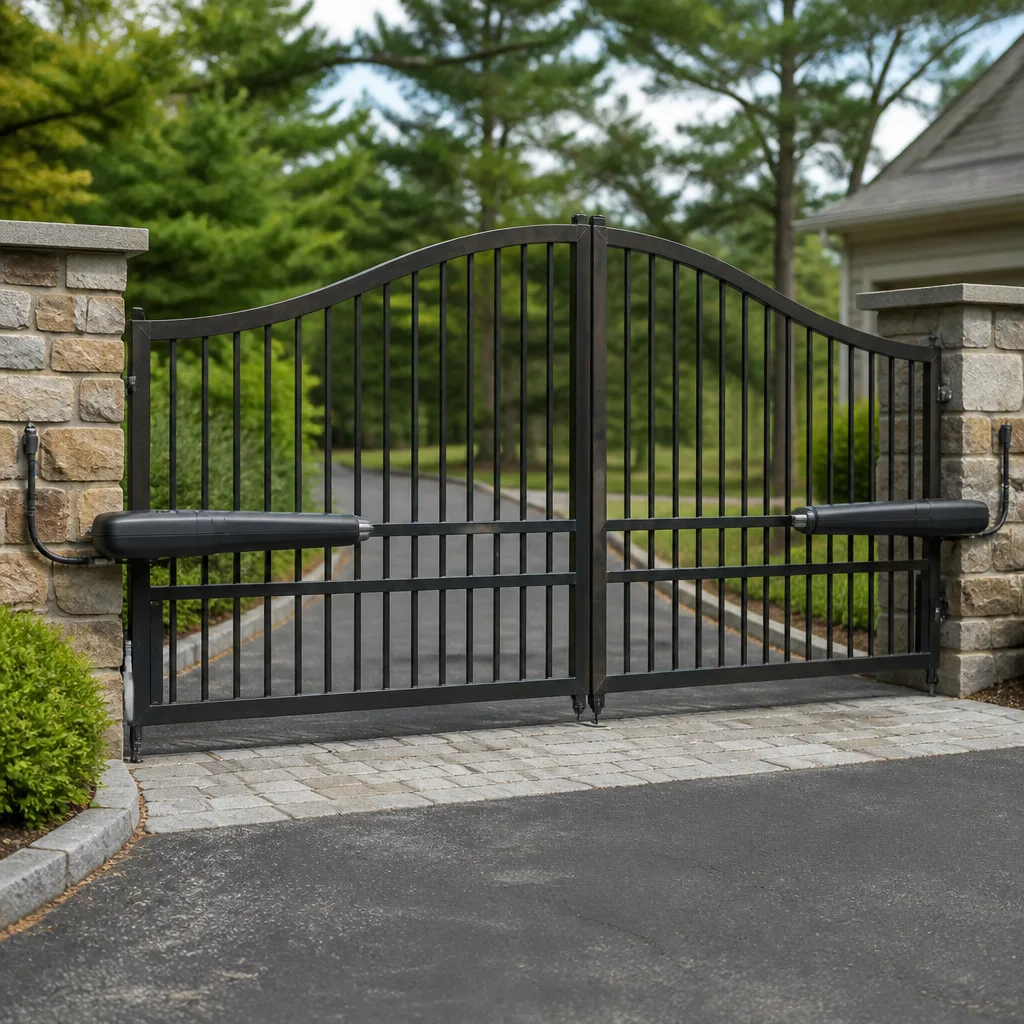
The gate motor – the box that slides or swings your gate automatically – contains capacitors that hold a charge even when the unit is unplugged, a gearbox under spring tension, and wiring that must be connected correctly or the motor runs backward, burns out, or damages the control board. A replacement motor in Los Angeles typically runs $600 to $1,400 installed, depending on whether it’s a slide or swing gate and what brand you have. Doing it yourself means buying the right motor ($350 to $800), possibly modifying the mounting plate, wiring the limit switches, and recalibrating the force settings. Get any of that wrong and the gate can crush whatever is in its path.
Circuit Board Replacement
This is the repair that sells the DIY myth hardest because the board looks like a plug-in component: unclip the old one, clip in the new one. What YouTube does not show is that the replacement board must be matched to the motor model and revision, the limit switches and safety inputs must be wired to the correct terminals, and a miswired board can send the gate slamming in the wrong direction on its first power-up. We’ve corrected boards where a homeowner transposed two wires and burned out a $700 motor in the process. Board replacement from a professional in Los Angeles runs $350 to $750, and that includes the testing and calibration afterward.
Safety Sensor and Safety Edge Work
Modern automatic gates in Los Angeles are required by code to have an inherent entrapment protection system – which means the motor itself detects obstruction – and a secondary external entrapment protection device, usually a photo-eye sensor or a safety edge. These devices exist to stop the gate before it injures a person. Modifying, bypassing, or incorrectly wiring them is not just dangerous; it’s a code violation that sits squarely on the homeowner’s liability. This is the absolute last place to save money.
Any Electrical Wiring Run
Running new wiring from your house panel to a gate motor, adding an intercom, installing a keypad, or adding a battery backup involves direct electrical connection. Los Angeles requires permits and inspection for new circuit runs, and the work must meet California Electrical Code. An unpermitted electrical addition to a gate installation adds a disclosed defect if you ever sell the house and can void insurance coverage if the wiring causes a fire or injury.
Structural Post or Track Repair
If a gate post is leaning, a concrete track is cracked and shifting, or a weld has snapped on a steel gate, you’re looking at structural work that affects the gate’s balance and safety. A leaning post on a heavy gate is a collapse waiting to happen. Welding, concrete setting, and post reinforcement require tools and experience most homeowners do not have, and the stakes are high: a falling gate injures or kills. Call a professional. No one in Los Angeles charges enough for this work that it’s worth the risk of doing it yourself.
The Real Cost Comparison: DIY vs Professional Pricing in Los Angeles
The honest math on DIY gate repair includes three numbers most people skip: the cost of the part, the cost of your time, and the cost of being wrong. A hinge you replace yourself saves the $85 to $150 a professional would charge for labor, and if you do it right, you win. A motor you replace yourself and wire incorrectly costs the motor, the board, and the professional’s time to undo the damage – plus the days your gate did not close while you figured it out. Here is the real comparison for five common repairs in Los Angeles:
| Repair | DIY Cost (Parts + Time) | Professional Cost (Installed) | Realistic Outcome |
|---|---|---|---|
| Hinge replacement (single swing gate) | $30-$60, 1 hour | $150-$250 | DIY wins if you have basic tools |
| Wheel/roller replacement (slide gate) | $40-$100, 1-2 hours | $200-$350 | DIY wins with proper support under gate |
| Remote programming (existing remote) | $0, 15 minutes | $85-$125 service call | DIY wins, follow manual exactly |
| Photo-eye realignment | $0, 10 minutes | $85-$125 service call | DIY wins, then call if problem persists |
| Gate motor replacement | $350-$800 parts, 4-6 hours, high risk | $600-$1,400 | Professional wins on total cost after one mistake |
| Circuit board replacement | $150-$300 parts, 1-2 hours, high risk | $350-$750 | Professional wins, DIY risk is motor damage |
The pattern holds across brands: a BFT board replacement looks simple and costs $200 as a part, but if you install it wrong, you may burn out the $400 transformer. A LiftMaster motor swap looks like four bolts and three wires, but the limit switch calibration decides whether the gate stops at the right point or overdrives the rack and tears it off. The professional’s price includes the knowledge of what not to connect, and that knowledge is the most expensive part.
What Happens When a DIY Attempt Goes Wrong
Every gate professional in Los Angeles has a version of this story: a homeowner calls in a rush because the gate has been stuck open for two days and the HOA is calling. The homeowner starts the sentence with, “Well, I tried to save a little money by…” and ends by handing over a plastic bag of parts. Here’s what we actually find in those situations, and what you should know if you’re about to make the call:
- Disclose everything upfront. Tell the tech exactly what you did, which parts you replaced, and where you bought them. This shortens the diagnostic time and protects you from getting charged for exploring damage you could have described over the phone.
- Expect to pay for diagnosis first. A miswired board requires tracing every connection before anything can be tested. That diagnostic time is billable, usually $85 to $125 in Los Angeles, and it applies whether the fix takes ten minutes or two hours after.
- Your negotiating position is weaker, not stronger. The professional is not bidding on a clean repair; they’re quoting to undo work they did not perform, then doing the original job correctly. You’re paying for their certainty about what is wrong, and that certainty costs more when someone else has been inside the cabinet.
- Let the professional correct it completely. Do not ask them to “just get it running” and leave the safety sensor disconnected until next month. In Los Angeles, a gate without functioning obstruction detection is a code violation and a serious safety hazard. Do it right once.
The good news: if you can clearly describe what you did, most of the damage is recoverable. We’ve rescued plenty of near-misses where a homeowner got the motor running but reversed, or the board powered but the gate didn’t stop at the limits. The repair usually ends up costing more than the original professional quote would have, but less than a full new installation.
The One Monthly Test That Protects Your Gate
There is one task most Los Angeles homeowners with automatic gates have never performed, and it’s the single most effective piece of DIY maintenance in existence. It takes 60 seconds and costs nothing.
The manual-release test. Every automatic gate has a release mechanism – usually a keyed handle, a pull chain, or a red knob on the motor – that disconnects the gate from the drive system so you can open and close it by hand. In a power outage, a fire, or a stuck motor, this release is your only way to get a vehicle in or out. If you have never tested it, you do not know whether it works. Here is the process every Los Angeles gate owner should follow monthly:
- Locate the manual release on your gate motor. Most have a small keyhole or pull handle; look for the red knob or handle on the motor housing.
- With the gate in the closed position, operate the release according to your manual. The gate should move freely by hand.
- Push the gate fully open by hand and then fully closed. It should move smoothly, without binding or jerking.
- Re-engage the release so the motor reconnects. Operate the gate with the remote to confirm everything is back to normal.
- Lock the release handle if it has one. An unlocked manual release is how gates get forced open by intruders in Los Angeles.
If the gate does not move freely by hand, or the release is jammed or rusted, that is a mechanical problem you can often solve yourself with lubrication and cleaning. If the release mechanism itself is damaged or seized, it’s a professional repair. But the monthly test itself is yours, and it’s the best insurance you have against a gate that traps you in your own driveway during a Santa Ana wind event when the power goes down.
Why an Unlicensed Handyman Is the Riskiest Option in Los Angeles
Hiring an unlicensed handyman is a larger liability than doing the work yourself, and it’s worth saying plainly because Los Angeles is full of them. They advertise on Nextdoor, they leave flyers on gates, and they charge less than licensed professionals. Here is what you’re actually getting:
- No contractor’s bond. If the handyman damages your property or does work that fails, you have no bond to claim against. You can sue in small claims court, but collecting from an unlicensed individual is frequently impossible in practice.
- No workers’ compensation coverage. If the handyman gets injured working on your property – and heavy gates, electricity, and concrete all create injury risk – you may be personally liable for their medical costs. Your homeowner’s insurance may deny the claim because you knowingly hired an unlicensed person for work that required a license.
- No license means no legal right to collect payment. Under California law, an unlicensed contractor cannot legally enforce a contract. That cuts both ways; it also means an unlicensed person who walks away with your deposit has no professional obligation to return.
- No recourse for substandard electrical work. If a handyman rewires your gate motor and your house loses power, the repair cost from a licensed electrician is yours to bear. The handyman is not responsible, not insured, and likely not reachable.
Every professional at Warden Gate Repair arrives with the full Threshold Standard: a background check, identity verification, and a photo-badged visit with the technician’s name and photo sent before arrival. That standard exists because the person you invite to work on your gate is standing at your property line, often out of sight of the street, for up to several hours. There is no circumstance under which saving $100 is worth the exposure of an unlicensed, uninsured, unverifiable stranger working on the machine that protects your home.
Common Mistakes to Avoid
- Spraying WD-40 on the chain or belt. WD-40 is a solvent, not a lubricant; it breaks down grease and leaves the chain drier than before. Use white lithium grease on chains and a dry silicone spray on tracks and rollers.
- Forcing a stuck gate with the motor engaged. If the gate won’t move under power, running the motor against the resistance burns out gears and boards. Disengage the motor first, move the gate by hand to find the obstruction, and fix the mechanical problem before re-engaging.
- Adjusting the force setting to “fix” a binding gate. The force setting exists to be increased when the gate meets resistance. Crank it up to push through a sagging gate and you have created a gate that can crush a child or pet without stopping. Fix the mechanical resistance instead.
- Testing the gate’s safety reversal with a person. Never stand in the gate’s path to test whether it stops. Use an object like a trash can or a piece of lumber. If the gate does not stop for the object, it will not stop for a person.
- Ignoring a gate that reverses on its own. A gate that reverses mid-cycle is usually the safety sensor detecting something – or failing. It will not fix itself; it will strand your car on one side of the driveway at the worst possible moment. Diagnose it this week.
- Buying knockoff replacement parts online. A generic circuit board for a FAAC or BFT motor listed for $40 less than the genuine part is usually a cheap clone with incorrect logic chips. The professional repair cost after a clone board fails often exceeds the savings several times over.
- Skipping the manual-release test because the gate “works fine right now.” The release fails silently. The first time you need it will be during an emergency, and a rusted release mechanism does not care that it used to work.
When to Call a Professional
If any of these apply, stop troubleshooting and make the call: the gate motor hums but the gate does not move; you smell burning plastic near the motor; the gate reverses mid-cycle and the sensors are clean and aligned; the manual release is seized; a weld has snapped; a post is leaning; or you’ve already tried a repair and the gate is behaving worse than before. These are not failures of effort. They’re signals that the problem is in the electrical or structural layer, where experience and proper licensing matter. Gate Repair in Los Angeles starts with a written price before any work begins, so you’ll know the cost of the fix before you commit to it. Call (828) 426-7081 for a free estimate.
Frequently Asked Questions
Yes, California law permits a homeowner to perform repairs, including electrical work, on their own property without a contractor’s license. The work must still meet code, and if the gate is part of a permitted installation, the modification must not violate the permit conditions. The person you hire to do the same work for pay must be properly licensed.
Most professional gate repairs in Los Angeles fall between $150 and $750, with simple mechanical fixes like a hinge or wheel replacement at the low end and circuit board replacements at the high end. A full motor replacement runs $600 to $1,400 installed. The written price is agreed before any work starts, so there are no surprises on the final invoice.
Only if the handyman holds a proper contractor’s license with the appropriate classification. In practice, most handymen advertising gate repair on Nextdoor or Craigslist in Los Angeles do not hold a C-10 electrical or C-61/D-28 gate license. Paying an unlicensed person to do electrical work on your gate is illegal and voids the insurance protection you’d otherwise have.
Lubricating hinges and tracks, tightening hardware, replacing hinges, wheels, and rollers, cleaning photo-eye sensor lenses, and reprogramming an existing remote are all safe, legal DIY tasks. Browse more guides & resources for deeper help. All of these are mechanical or low-risk programming work that does not involve wiring, safety system modification, or structural repair.
Call a licensed gate professional and disclose exactly what you did before they arrive. Describe which parts you replaced, where you bought them, and what the gate does now. This shortens the diagnostic time and helps the tech zero in on the damage quickly. Expect to pay for diagnosis and planning around $85 to $125 in Los Angeles, then the actual repair cost on top of that.
Monthly. The manual release is the only way to open the gate by hand in a power outage or motor failure, and it fails silently when left untested. A 60-second test once a month confirms that the release operates, the gate moves freely by hand, and the mechanism re-engages correctly. For more on maintaining the motor itself, see our guide on Gate Motor Repair in Los Angeles and call (828) 426-7081 with any questions.
The Bottom Line
The DIY-vs-professional decision on a Los Angeles gate is decided by a simple line: mechanical work is yours, electrical work is theirs. Lubricate, tighten, replace hinges and wheels, and test the manual release every month. Leave motors, boards, sensors, and structural repair to a licensed professional. The cost difference is not about labor; it’s about liability, insurance, and the safety of the people and pets who walk through that gate every day. Electric Gate Repair in Los Angeles done correctly is not something to gamble on. If you’re ever unsure which side of the line a repair falls on, call (828) 426-7081 and ask. We’ll tell you straight, with a written price before anything begins, and the 365-Day Done Right Promise behind every job: if the repair isn’t right, we make it right, with the return visit free.
Written by Cole Rafferty, Owner at Warden Gate Repair, serving Los Angeles since 2008.