
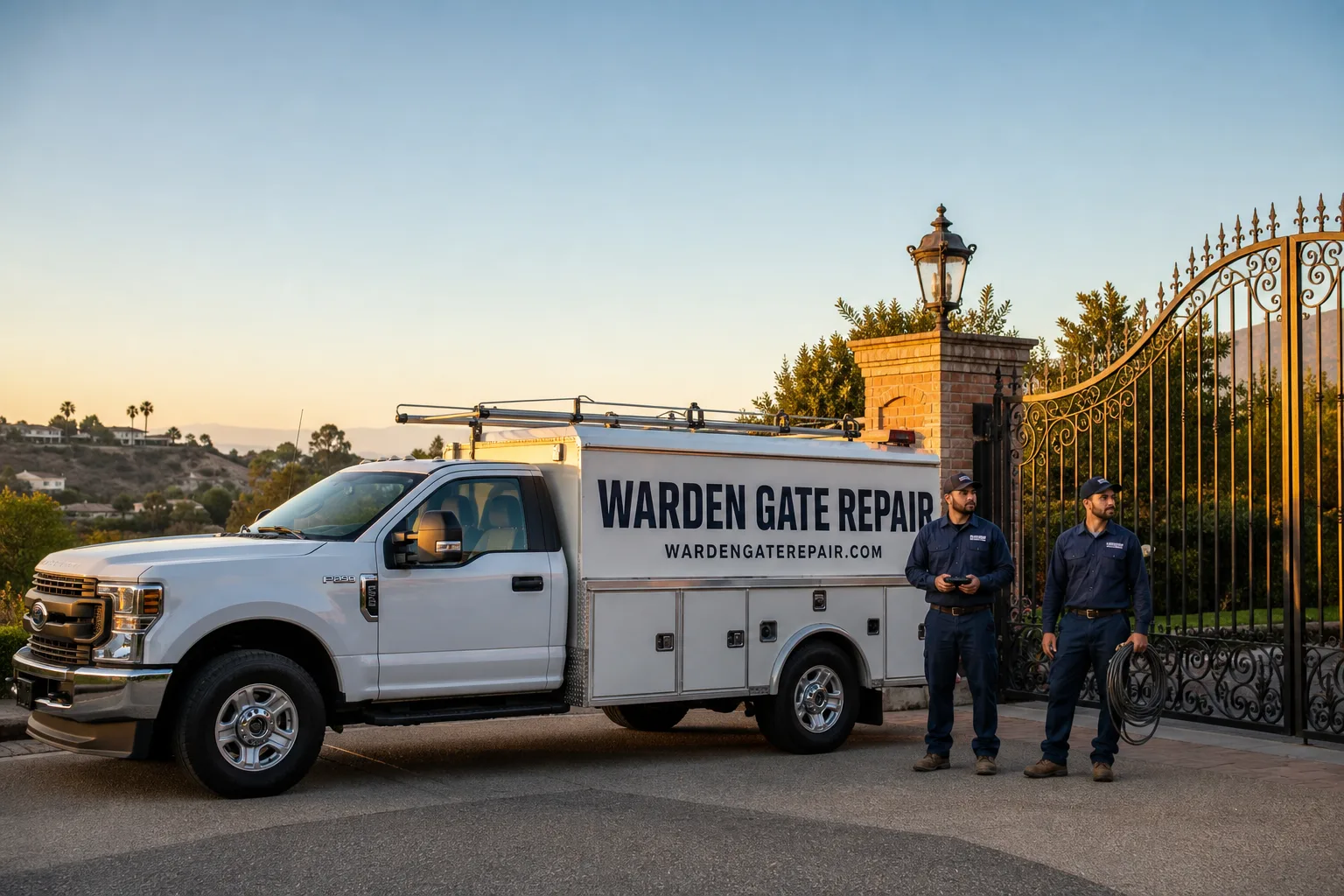
Free on-site gate assessment - hinges, posts, and your LiftMaster or Nice gate operator checked before anything is quoted
The assessment is free and the quote is the invoice.

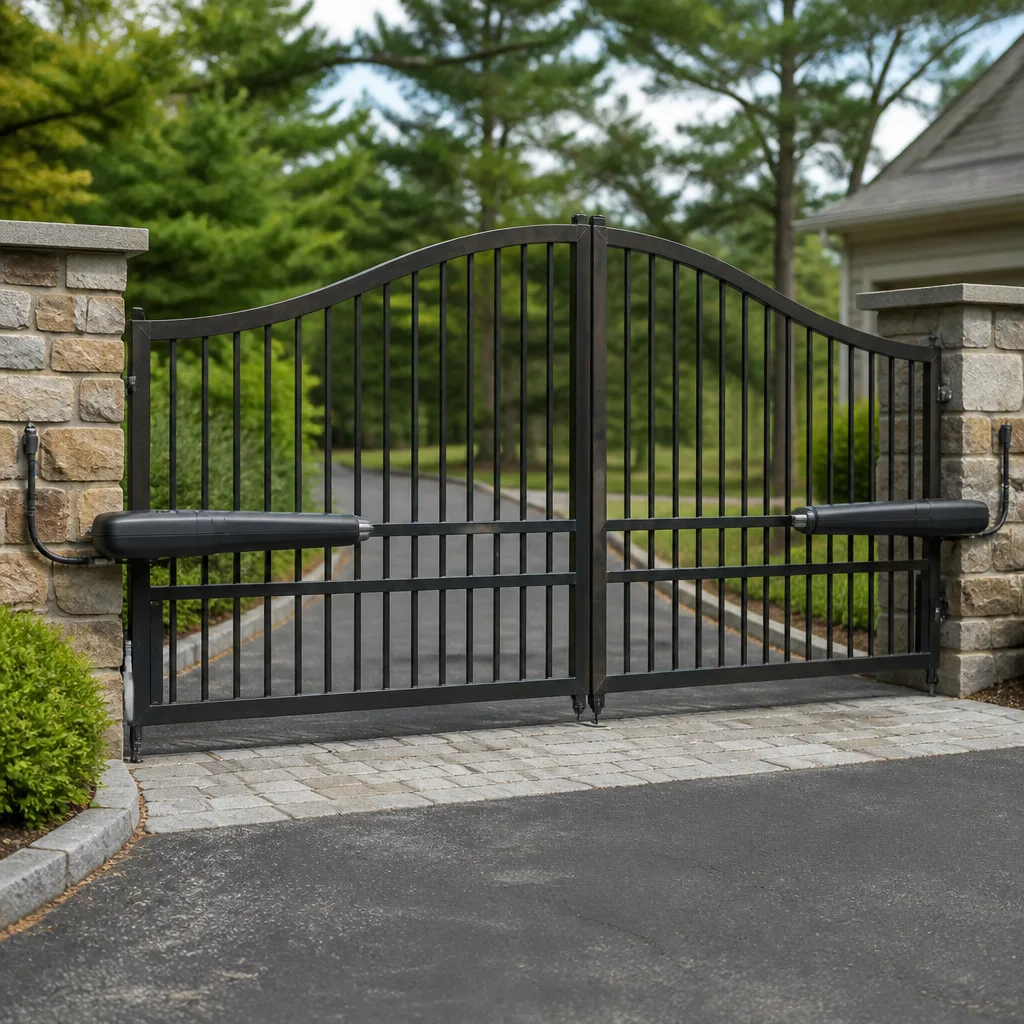
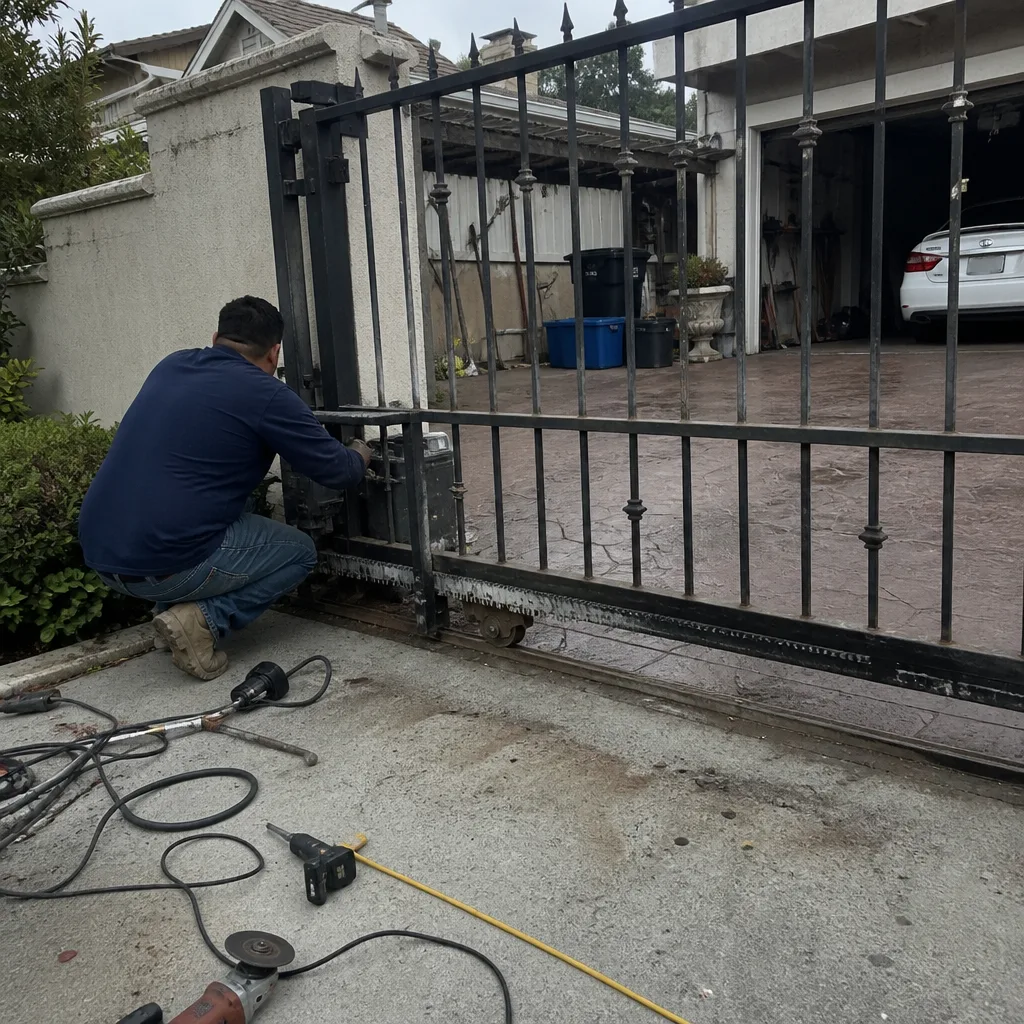 Before
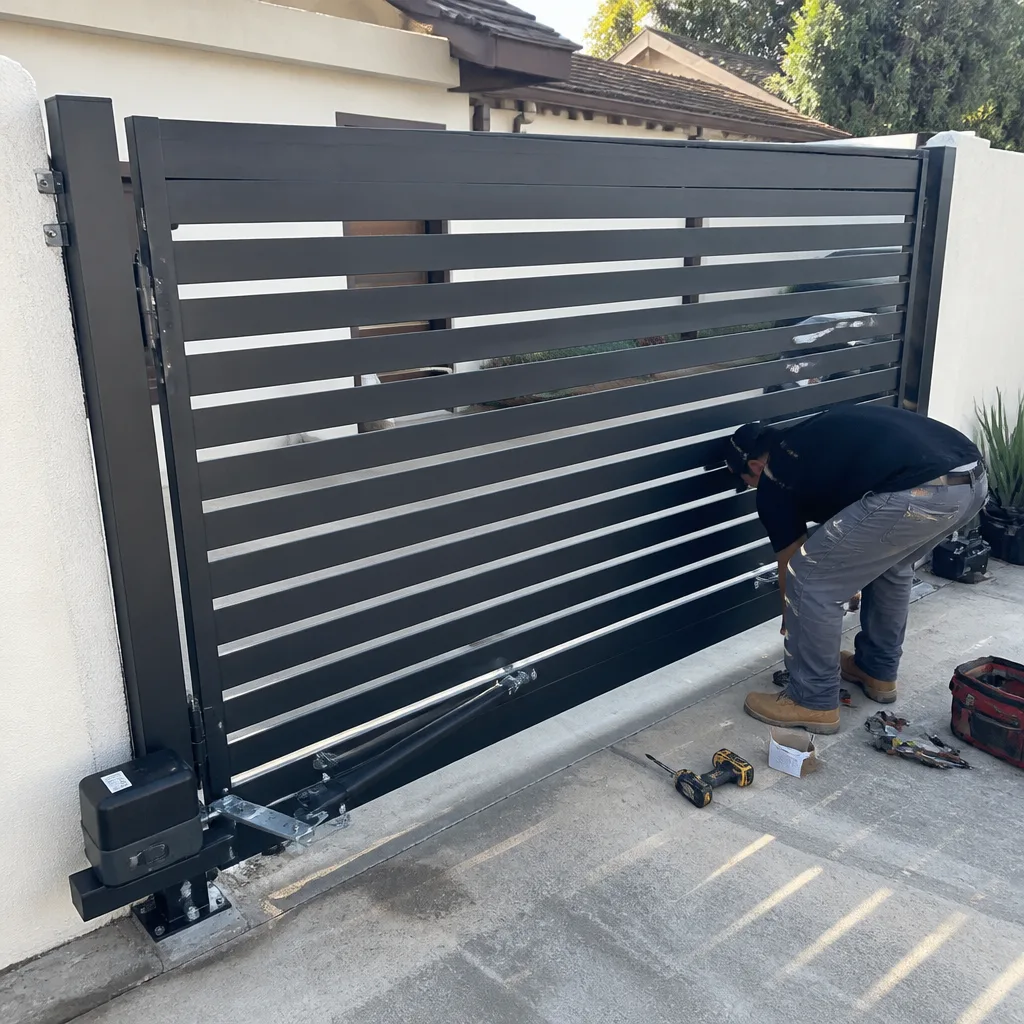 After
After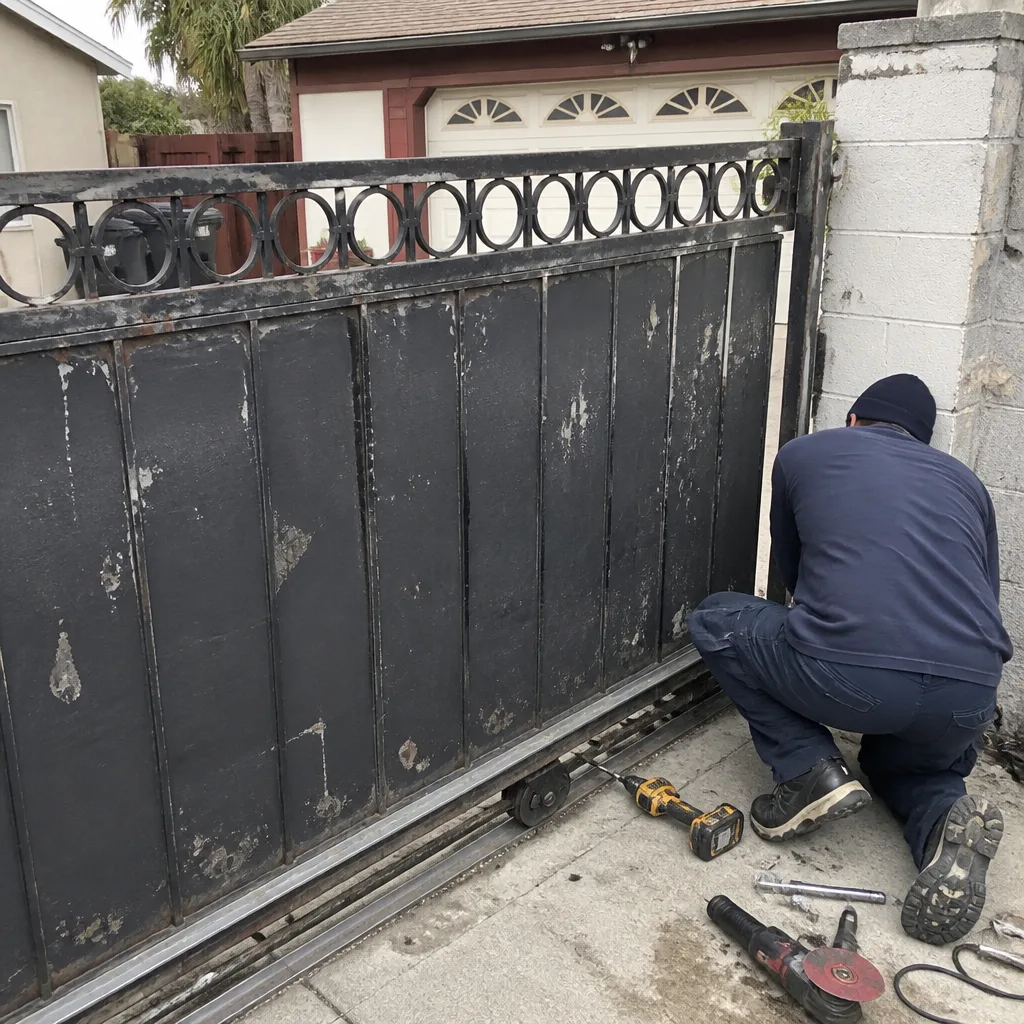 Before
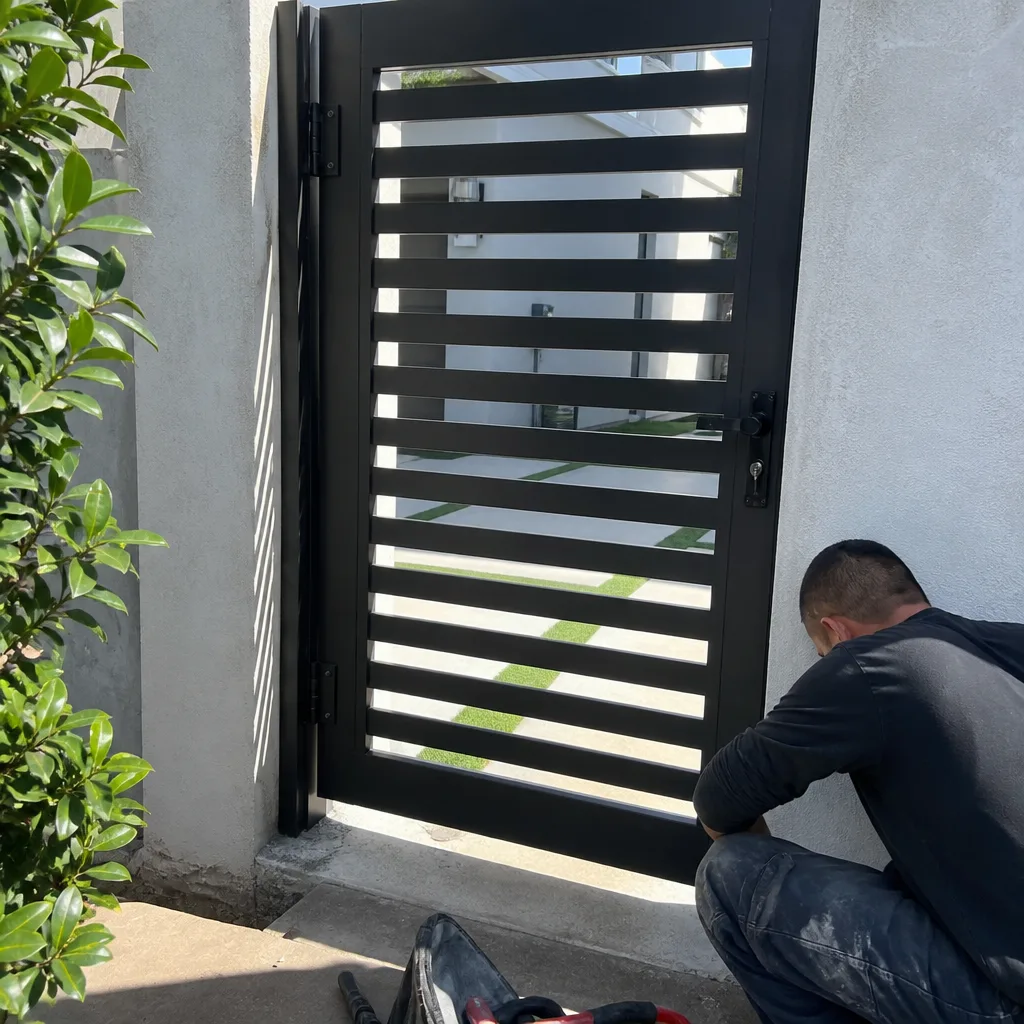 After
After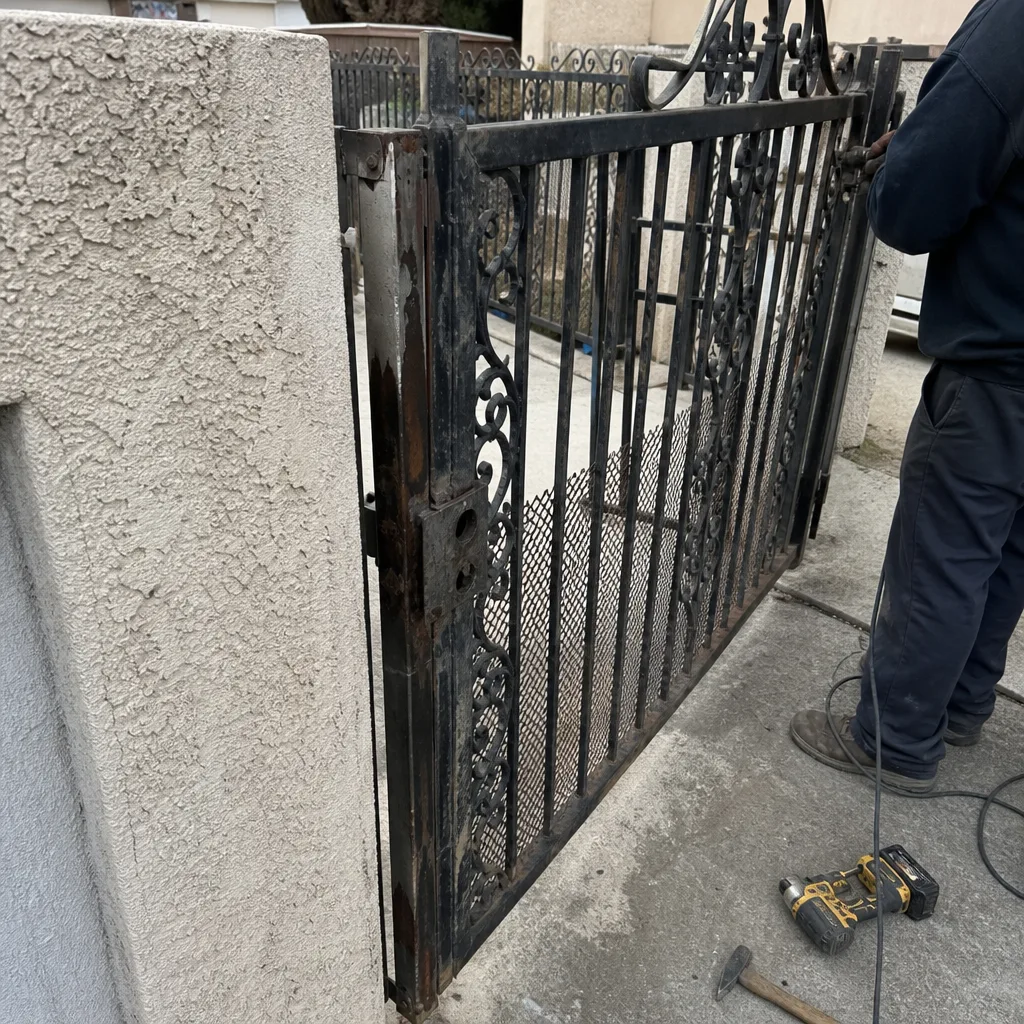 Before
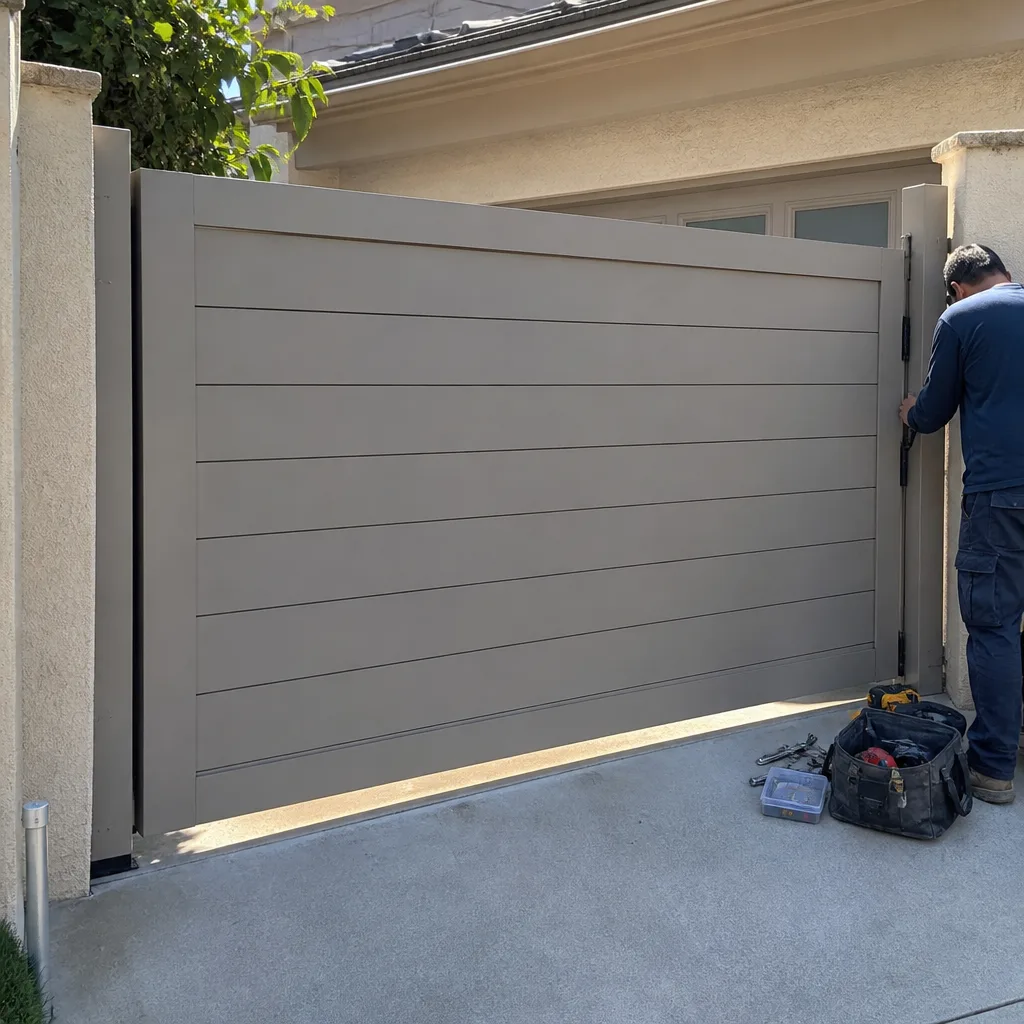 After
AfterBuzzing but not moving: what’s actually happening
When your gate buzzes but won’t move, the motor is almost certainly receiving power and trying to run – but something mechanical or electrical is stopping it from turning the gate. In most cases the culprit is one of four things: a failed gate motor, a stripped or seized drive component, a locked or physically obstructed gate, or a capacitor that has died inside the control box. This is a job for a technician, not a workaround.
The buzz itself is your first useful clue. It tells you the opener is getting power and the solenoid or motor windings are energizing – they’re just not winning against whatever resistance is in the way. That resistance might be mechanical (something blocking or binding the gate) or it might be internal (a capacitor that can’t give the motor its starting surge, or a motor winding that’s partially seized). Left alone, a motor straining against resistance will burn itself out, turning a cheaper fix into a much more expensive one. The sooner the gate stops being forced, the better.
Why it happens
Dead or failing capacitor
The capacitor is a small cylindrical component inside the motor housing that delivers the initial burst of current needed to get the motor spinning. When it fails – and they do fail, especially after hot summers or cold winters put thermal stress on the casing – the motor hums and strains but can’t generate enough torque to start rotating. You’ll often hear a louder-than-normal hum that lasts a second or two before the unit gives up. If the gate worked fine yesterday and nothing visibly changed overnight, a bad capacitor is frequently the answer.
Seized or burnt-out gate motor
Gate motors that have been running against an obstruction, or that have simply reached the end of their service life, can seize internally. The windings energize, the buzz happens, and nothing turns. If you smell something faintly like burning plastic near the motor housing, or if the motor housing feels unusually hot to the touch, stop using the gate immediately and call your local Warden Gate Repair team. Continuing to apply power to a seized motor shortens the list of salvageable parts quickly.
Mechanical obstruction or binding hardware
Sometimes the gate itself is the problem, not the motor. A hinge that has shifted, a wheel that has jumped its track, a bolt that fell into the path of the gate, or a section of the gate that has sagged and is now dragging on the ground can all create enough resistance to stall the motor while the motor hums along trying its best. Walk the full path the gate travels and look for anything touching the ground, the frame, or the post. If you see obvious physical contact, don’t keep triggering the opener – let the motor rest and call for a technician.
Stripped drive gear or disengaged clutch
The drive gear – the nylon or metal gear that transfers rotation from the motor to the chain, rack, or arm – can strip its teeth over time, especially on gates that have been forced manually while the motor was engaged. When the gear is stripped, the motor spins freely inside and you hear a buzz or a whir with zero movement at the gate. A disengaged clutch on certain LiftMaster and FAAC models produces a nearly identical symptom. Either way, the motor sounds like it’s running but the mechanical connection to the gate is broken.
What to do right now
- Stop triggering the opener. Every buzz-and-fail cycle puts more thermal stress on the motor windings and the capacitor. If the motor is already struggling, repeated attempts accelerate the damage. Let the unit sit idle until a technician arrives.
- Check for an obvious physical obstruction. Walk along the full travel path of the gate and look for debris, a shifted wheel, a dragging edge, or anything wedged against the gate or the track. If you find something you can safely remove by hand – a branch, a stone – remove it. If the obstruction is part of the gate structure itself, leave it alone and note what you see.
- Do not attempt to manually disengage the motor if the gate is on a slope. A heavy swing or slide gate on a grade can move fast and without warning once the motor’s brake is released. This is not a step to take without understanding the specific release mechanism on your unit.
- Photograph the motor housing, the control board, and the gate’s contact points (hinges, track, ground clearance). A few photos taken now help the technician arrive with the right parts rather than needing a second trip.
- Lock the gate manually if your property’s security requires it. If the gate is stuck partially open, padlock it until the repair is done. An inoperable electric gate is a security gap – that’s the whole reason gates exist.
How we fix it
When your local Warden Gate Repair technician arrives, the first thing that happens is a complete diagnostic. The tech runs through the motor, the capacitor, the drive train, the control board, and the gate’s mechanical path – in that order – to find the actual root cause rather than guessing at a part swap.
Once the diagnosis is clear, you get a written price before any work starts. No surprises at the end, no add-ons discovered “once we were in there.” If the capacitor is the issue, it’s typically replaced on the spot. If the motor itself has failed, the tech carries common replacement motors for LiftMaster, FAAC, BFT, Linear, Viking, Ghost Controls, DoorKing, Elite, and Mighty Mule units and can often complete the gate motor repair the same visit. A drive gear replacement is similarly handled on-site in most cases.
Most buzzing-but-not-moving repairs are complete within one to two hours. Every repair is covered by the 365-Day Done Right Promise: if the fix doesn’t hold, the return visit is free. That promise is in writing before we leave.
Frequently Asked Questions
Yes, in two ways. First, every time you trigger the opener while it’s stalled, you risk burning out the motor – which turns a capacitor swap into a full motor replacement. Second, a gate that won’t open or close properly is a security and access problem. If the gate is stuck open, your property is exposed; if it’s stuck closed, emergency access becomes a real issue. Call (828) 426-7081 and get a technician out before the situation gets worse.
It shouldn’t wait if you can avoid it. A motor straining against resistance is actively wearing itself out. What might be a capacitor repair today can become a full motor replacement by the weekend if you keep triggering the unit. There’s also the plain fact that an inoperable gate isn’t doing the one job a gate is supposed to do. Call (828) 426-7081 – our team answers live, 24 hours a day, every day of the year.
Your local Warden Gate Repair team handles gate repair and electric gate repair calls and will work to get a technician to you as quickly as scheduling allows. Call (828) 426-7081 – a live person picks up, checks local availability, and gives you a real answer on timing. No voicemail, no callback queue.
You’ll have a written price in hand before any work begins – that’s how every Warden job works, without exception. The technician diagnoses the problem, tells you exactly what needs to be done, and puts the price in writing. You approve it or you don’t, and there’s no charge for the estimate itself. Nothing starts until you’ve said yes to a number you’ve seen on paper.
Get it fixed
A buzzing gate won’t get better on its own, and every failed start puts more wear on the motor. Call (828) 426-7081 right now – a live person answers around the clock – or book online. Your local Warden Gate Repair team arrives background-checked, photo-badged, and ready to fix it with a written price before anything starts.
Written by Cole Rafferty, Owner at Warden Gate Repair, part of the Threshold Group family since 2008.
What Our Customers Say
"Fair price and no pushing a whole new gate when all I needed was a new motor capacitor."
- Shirley A."The vetted tech thing was important since our gate protects the whole property. Careful, polite, and walked me through every safety sensor."
- Russell W."Swing gate wouldn't latch after the hinge sagged. He re-hung it, adjusted the hinge pins, and fixed the latch. Quoted before starting."
- Annette R.