
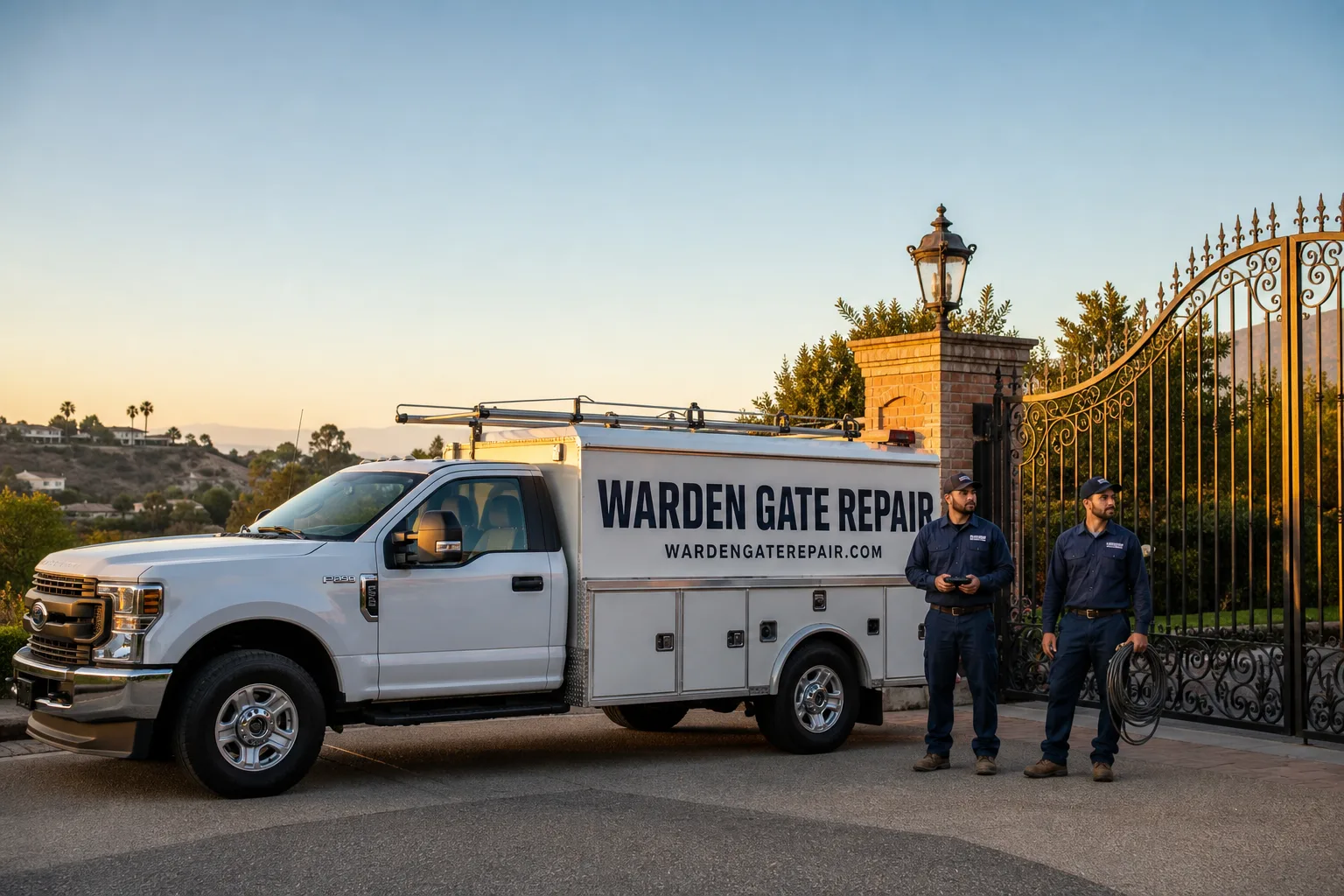
Free on-site gate assessment - hinges, posts, and your LiftMaster or Nice gate operator checked before anything is quoted
The assessment is free and the quote is the invoice.

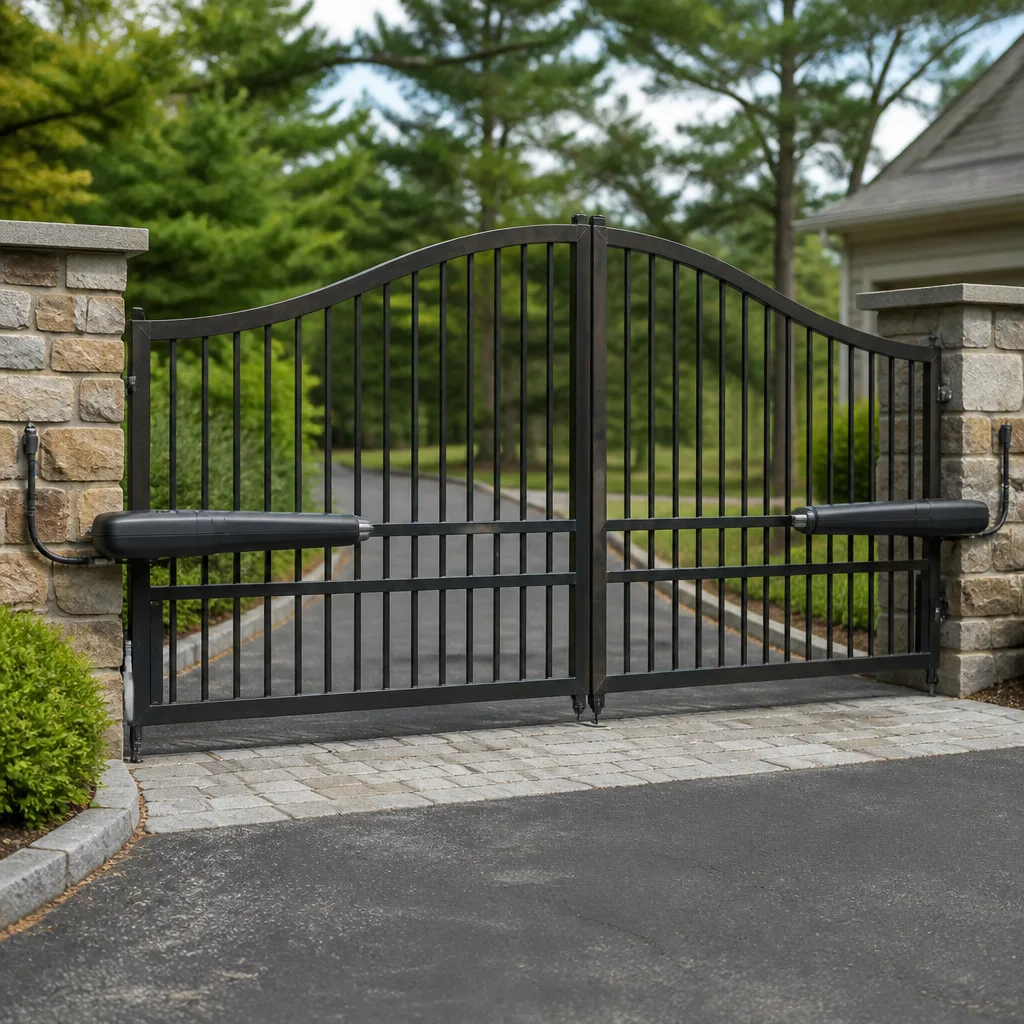
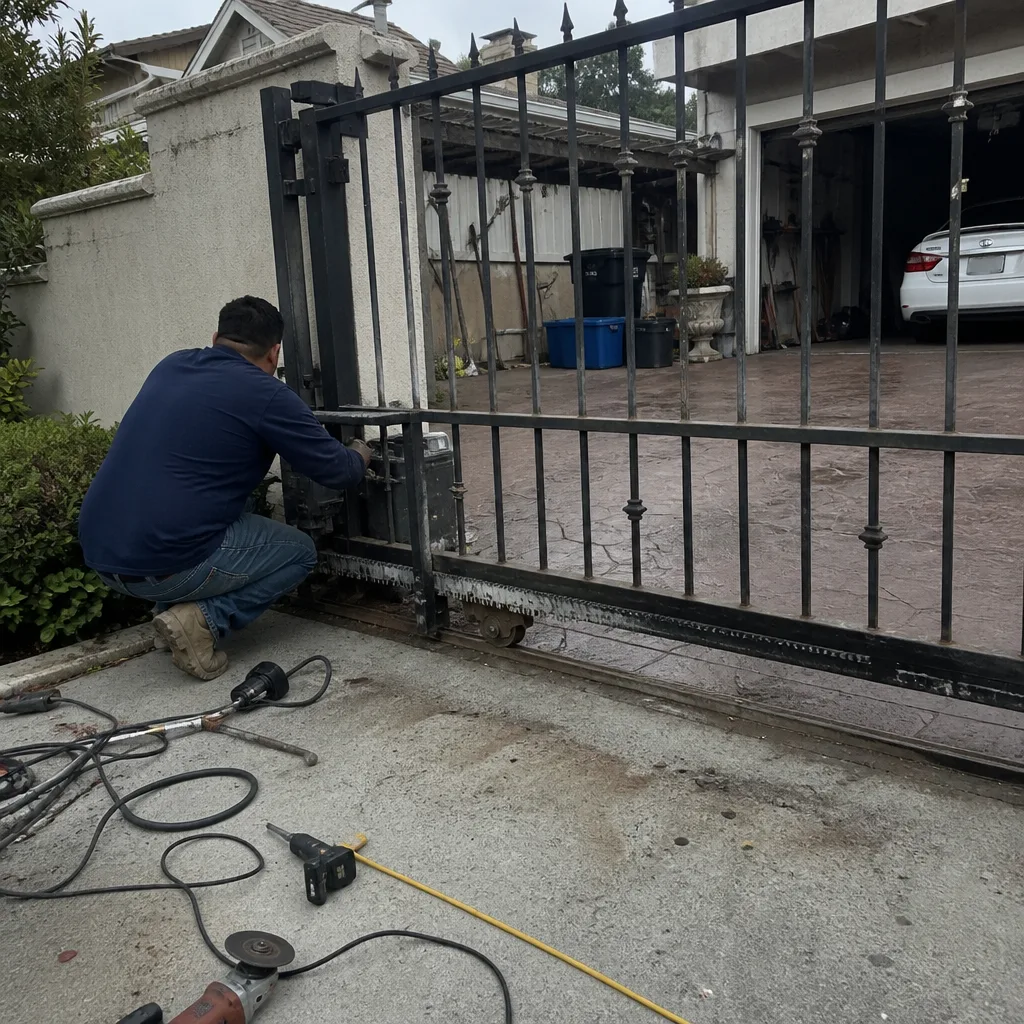 Before
 After
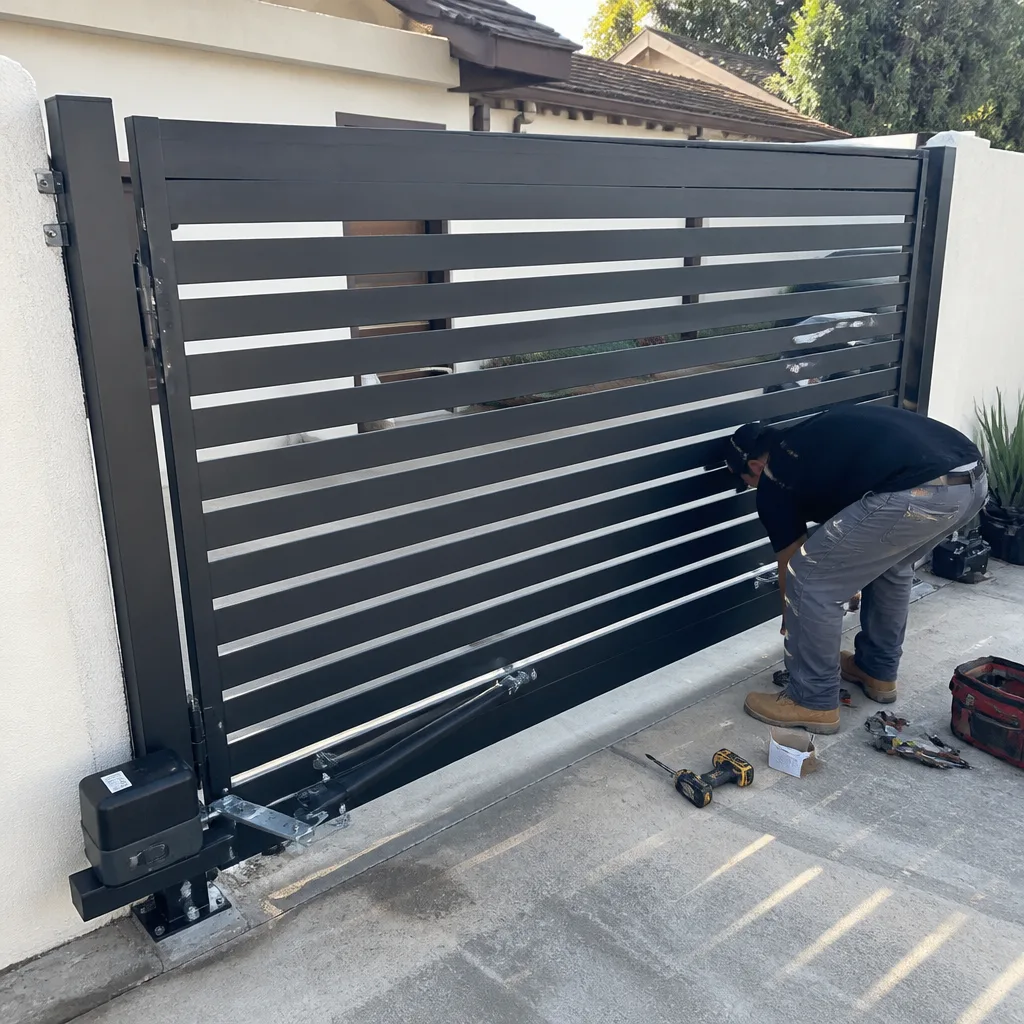
After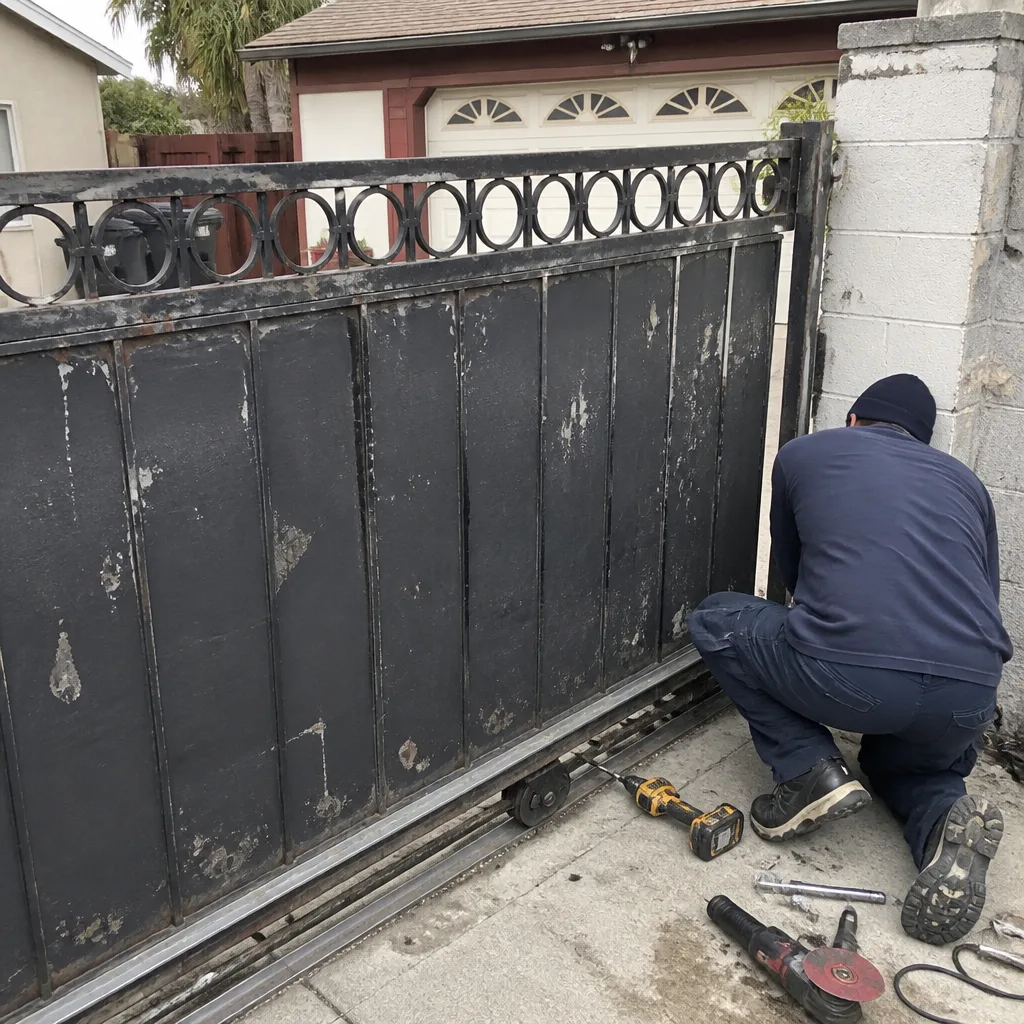 Before
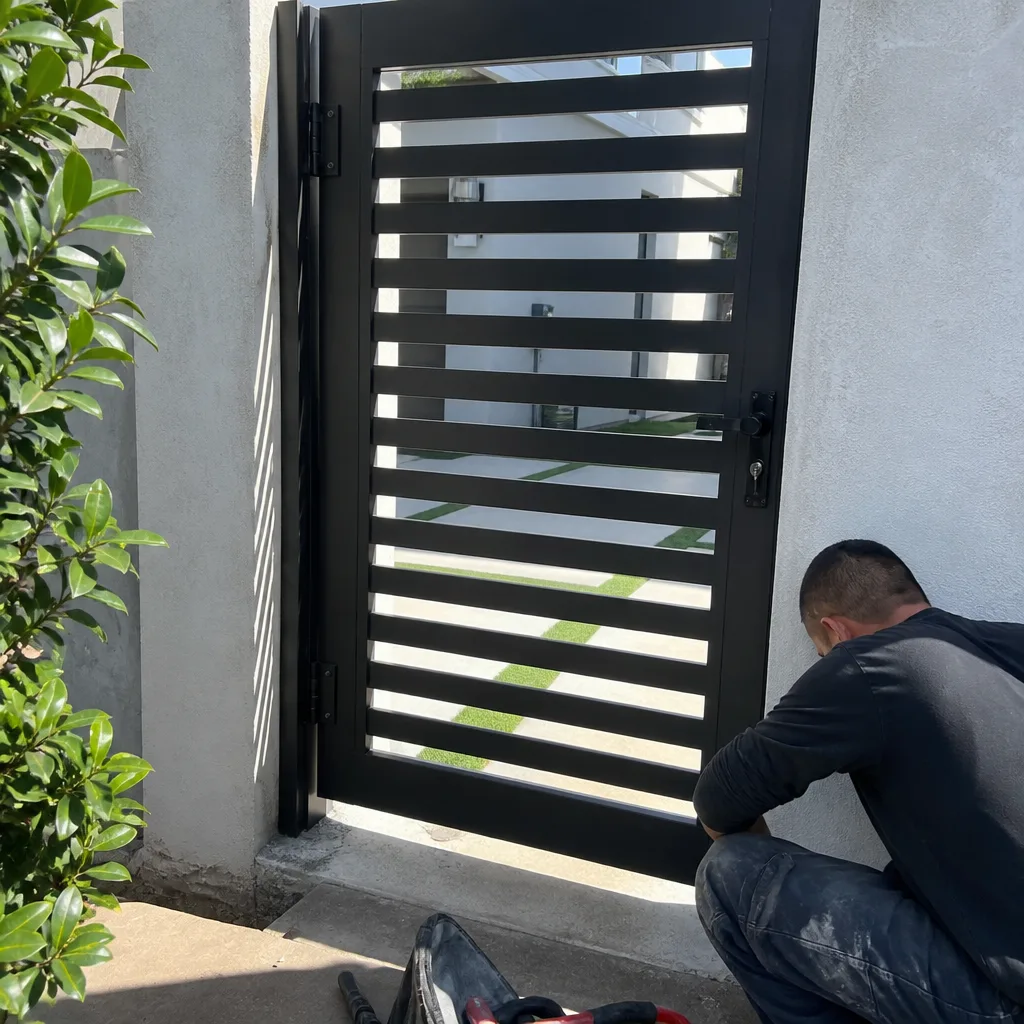 After
After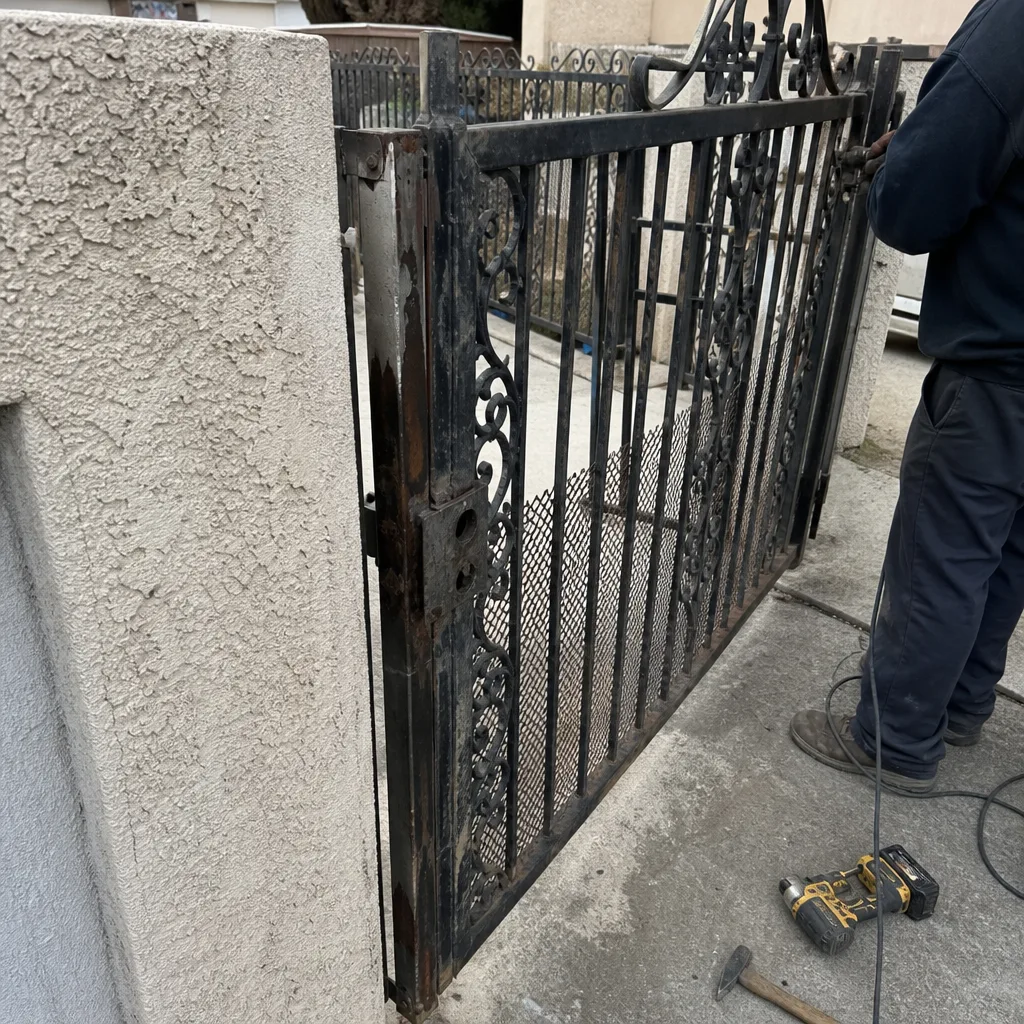 Before
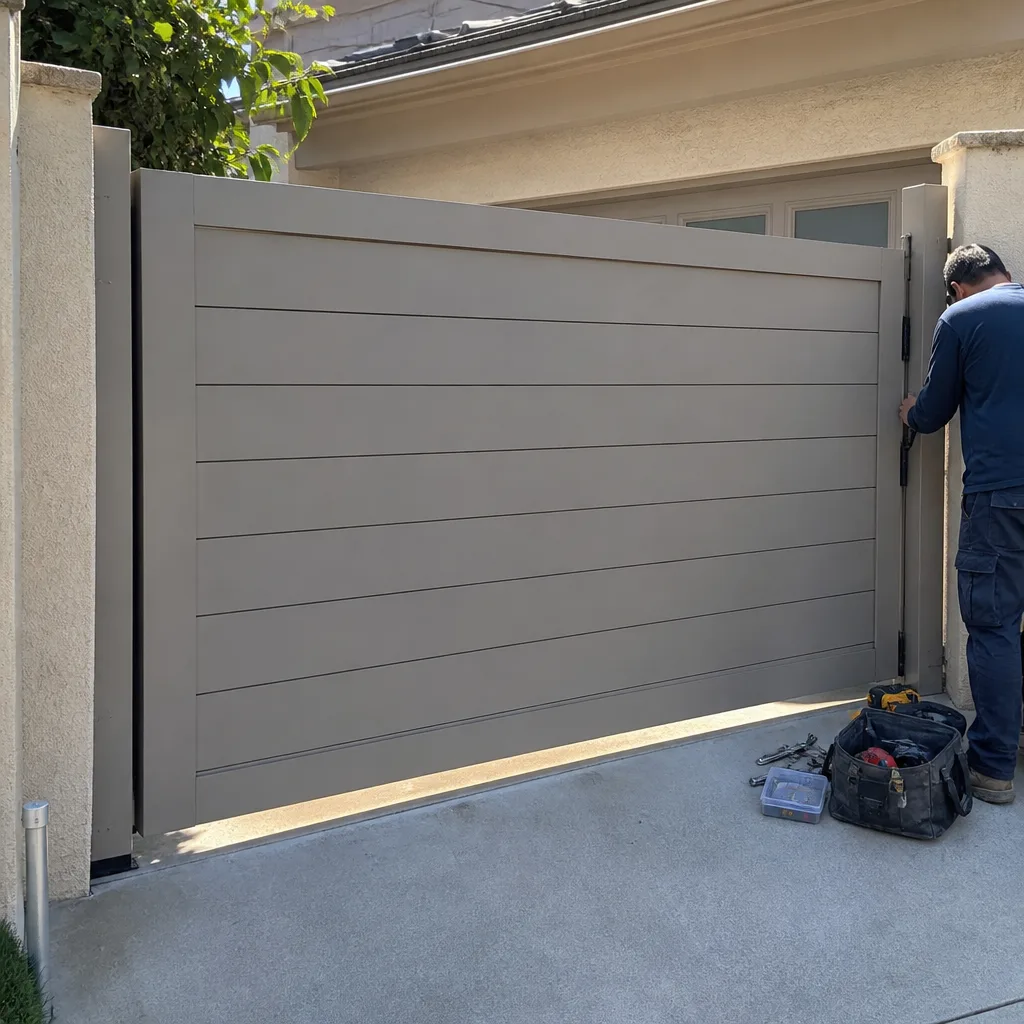 After
AfterGate Closes on Its Own
A gate that closes by itself almost always has one of three causes: a misconfigured auto-close timer in the operator’s settings, a faulty or misaligned safety sensor that’s reading a phantom obstruction, or a control board that’s sending close commands on its own due to a wiring fault or moisture damage. In most cases, the gate is not broken beyond repair – it’s responding to a bad signal or a changed setting. But until a technician confirms which one it is, keep people and vehicles clear of the gate’s path, because an unpredictable gate is a real pinch-and-crush hazard.
The tricky part is that these three causes look almost identical from the outside. The gate closes. You didn’t press anything. You don’t know why. The difference between a setting you can adjust in five minutes and a control board that needs replacement isn’t something you can tell from watching the gate move. What you can do is pay attention to the pattern – does it close once and stop, or does it keep cycling? Does it close slowly or does it slam? Those details point a technician straight to the source.
Why It Happens
The Auto-Close Timer Is Set Too Short (or Got Reset)
Most electric gate operators include an auto-close feature that automatically shuts the gate after a set number of seconds. If that timer is set too aggressively, or if a power blip reset it to a factory default, the gate will close well before you expect it to. This is the most common cause of “closes on its own” calls. The giveaway: the gate closes at a predictable interval after it opens – say, 10 seconds or 30 seconds every single time, like a clock.
A Safety Sensor Is Misfiring
Photoelectric sensors and loop detectors are designed to hold a gate open when they detect something in the path. When a sensor is dirty, misaligned, or beginning to fail, it can flip between “clear” and “blocked” on its own, which sends a close command even with nothing in the way. Look at the sensor eyes on either side of the gate opening – a steady LED means they’re aligned. A blinking or completely dark LED usually means they’ve lost their beam. Mud, spider webs, and direct afternoon sun are surprisingly common culprits.
A Wiring Fault or Water Intrusion Is Triggering the Control Board
The control board inside the operator is what interprets every signal – open, close, stop, hold. If a wire has chafed against a metal edge, a terminal has corroded, or water has found its way into the housing after heavy rain, the board can receive phantom close signals it didn’t earn. This one is harder to diagnose by eye because the evidence is usually inside the operator enclosure. What you might notice: the gate behaves erratically, not just closing on its own but sometimes reversing mid-travel or refusing to open fully.
A Remote or Keypad Is Sticking or Transmitting Intermittently
A remote with a stuck button, a keypad key that’s partially depressed due to debris, or a receiver that’s picking up radio interference from a nearby device can send repeated close commands without anyone deliberately pressing anything. This one is easy to rule out: unplug or remove batteries from all remotes and keypads temporarily, then watch whether the gate still closes on its own. If it stops, you’ve found your culprit.
What to Do Right Now
- Stop using the gate for normal entry until the cause is identified. An auto-closing gate can strike a car, a bike, or a person with real force. Use a secondary entrance if you have one.
- Check the sensor LEDs. Walk to both sides of the gate opening and look at the small sensor housings near ground level. Note whether the indicator lights are solid, blinking, or off – photograph what you see. That photo is useful information for a technician.
- Remove batteries from all remotes and disable the keypad if you can. This rules out a stuck button as the cause and takes about two minutes.
- Look at the operator housing for signs of water entry. Water stains on the inside of the lid, rust around terminals, or visible condensation on the circuit board are worth photographing. Do not attempt to test or dry a board yourself – mains voltage runs through that enclosure and the risk of shock is real. Photograph from outside, then close the lid and call.
- Note the pattern. Does the gate close after a fixed number of seconds every time? Does it close multiple times in a row? Does it happen only at certain times of day? Write it down. A clear pattern cuts diagnostic time significantly.
How We Fix It
When your local Warden Gate Repair technician arrives, the first thing they do is run a full diagnostic on the operator – checking the auto-close timer setting, testing each sensor, inspecting wiring terminals for corrosion or chafe damage, and reviewing the control board for fault codes. Most operators from LiftMaster, FAAC, BFT, Linear, Viking, Ghost Controls, DoorKing, Elite, and Mighty Mule store diagnostic data that tells a trained technician exactly what signal triggered the last close command.
Before any part is touched or replaced, you get a written price. That’s not a ballpark – it’s the actual number for this specific job, in writing, before work starts. No surprise line items at the end. Most sensor alignments and timer corrections take under an hour. A wiring repair or control board swap typically runs two to three hours depending on the operator model. Every repair is covered by the 365-Day Done Right Promise: if the fix doesn’t hold, the return visit is free. The service that resolves this is electric gate repair – and in some cases, gate motor repair if the board or drive components are involved.
Frequently Asked Questions
Yes, it can be. A gate moving without a command is unpredictable, and modern operators generate enough force to seriously injure a person or damage a vehicle. Until the cause is confirmed and corrected, treat the gate as you would any piece of equipment with a fault – don’t leave children or pets near it and don’t position a car under the gate’s arc. Call (828) 426-7081 to get a technician out as soon as possible.
It shouldn’t wait if the gate is actively closing on vehicles or people – that’s an immediate safety issue. If you’ve disabled the auto-close feature temporarily and the gate is staying open until you manually close it, you have a window to schedule a repair, but the underlying fault won’t fix itself. Call (828) 426-7081 and your local Warden team will walk you through your options.
Call (828) 426-7081 and a live person – not a voicemail, not a bot – will pick up and check availability for your area right then. We answer 24 hours a day, 7 days a week, 365 days a year, so if you’re calling at 7pm on a Sunday, someone is there.
Possibly. If the pattern is exactly “gate closes X seconds after opening, every single time,” the auto-close timer is a reasonable first suspect, and your operator’s manual will show you where that setting lives. But if you’ve ruled that out and the gate is still closing on its own, the cause is almost certainly electrical – a sensor, a board, or a wiring fault – and those components carry mains voltage. At that point, stop troubleshooting and call a technician. The free written estimate costs you nothing, and knowing the real cause is worth the call.
Get It Fixed
Call (828) 426-7081 – a live person answers around the clock. Your local Warden Gate Repair team will diagnose the cause, hand you a written price before any work starts, and back the repair with the 365-Day Done Right Promise. Book online or call now.
Written by Cole Rafferty, Owner at Warden Gate Repair, part of the Threshold Group family since 2008.
What Our Customers Say
"Fair price and no pushing a whole new gate when all I needed was a new motor capacitor."
- Shirley A."The vetted tech thing was important since our gate protects the whole property. Careful, polite, and walked me through every safety sensor."
- Russell W."Swing gate wouldn't latch after the hinge sagged. He re-hung it, adjusted the hinge pins, and fixed the latch. Quoted before starting."
- Annette R.