
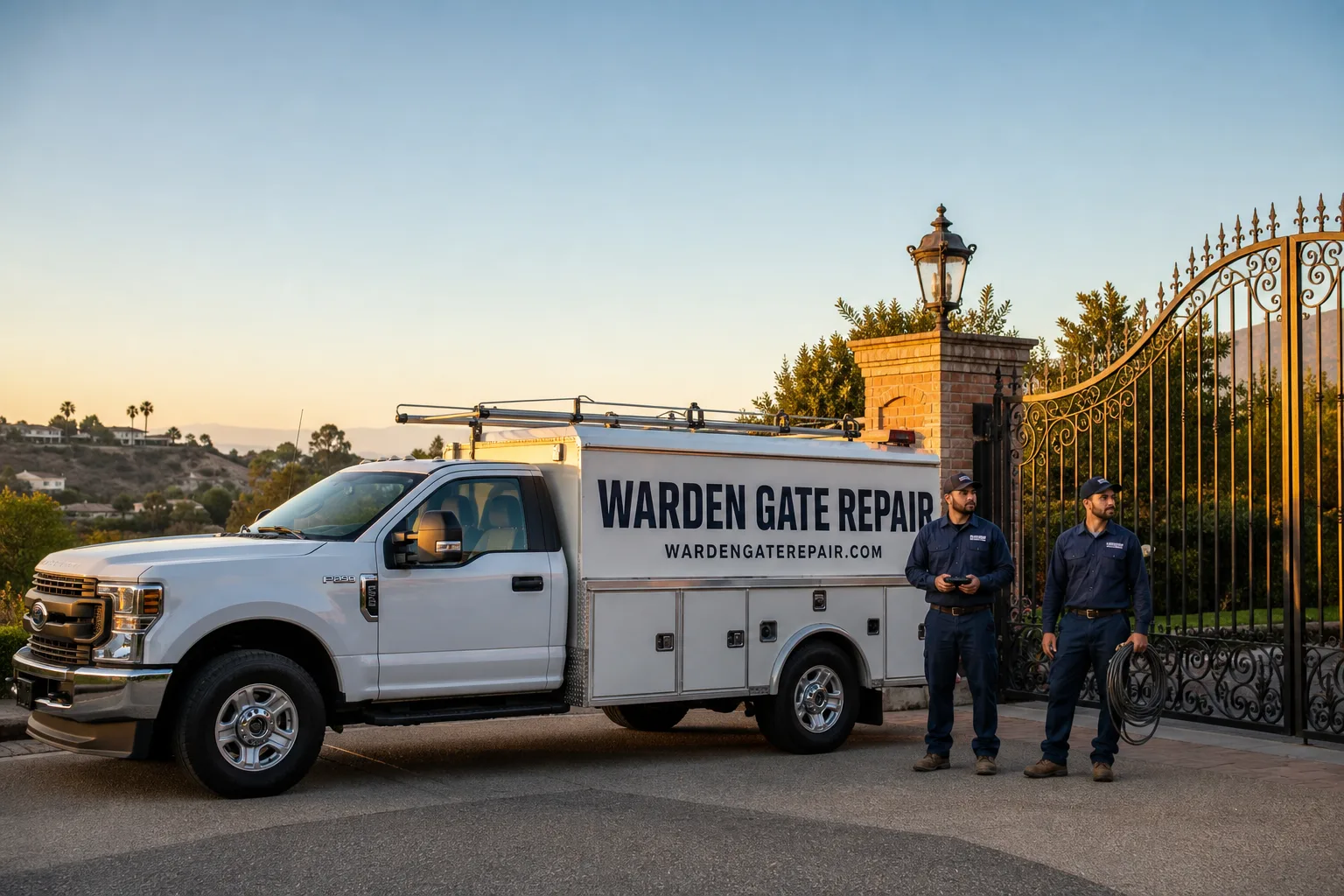
Free on-site gate assessment - hinges, posts, and your LiftMaster or Nice gate operator checked before anything is quoted
The assessment is free and the quote is the invoice.

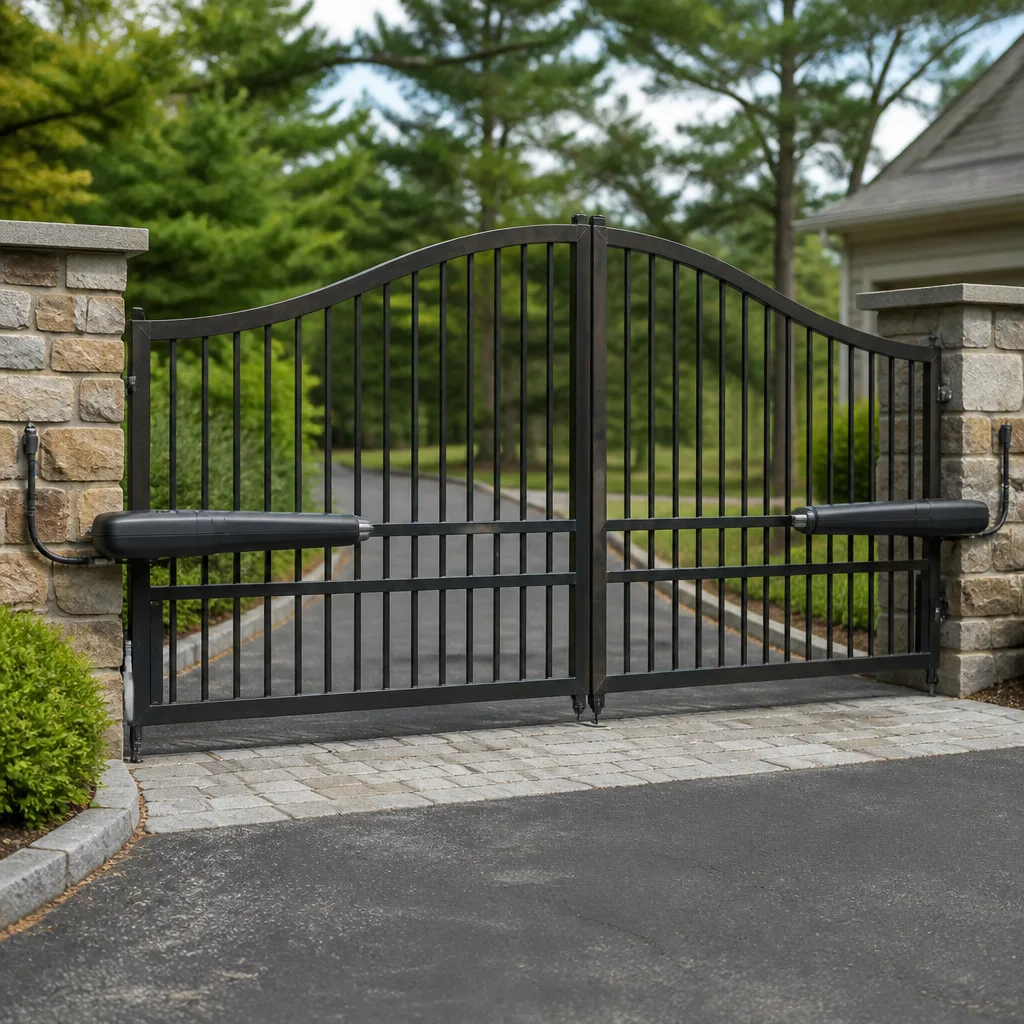
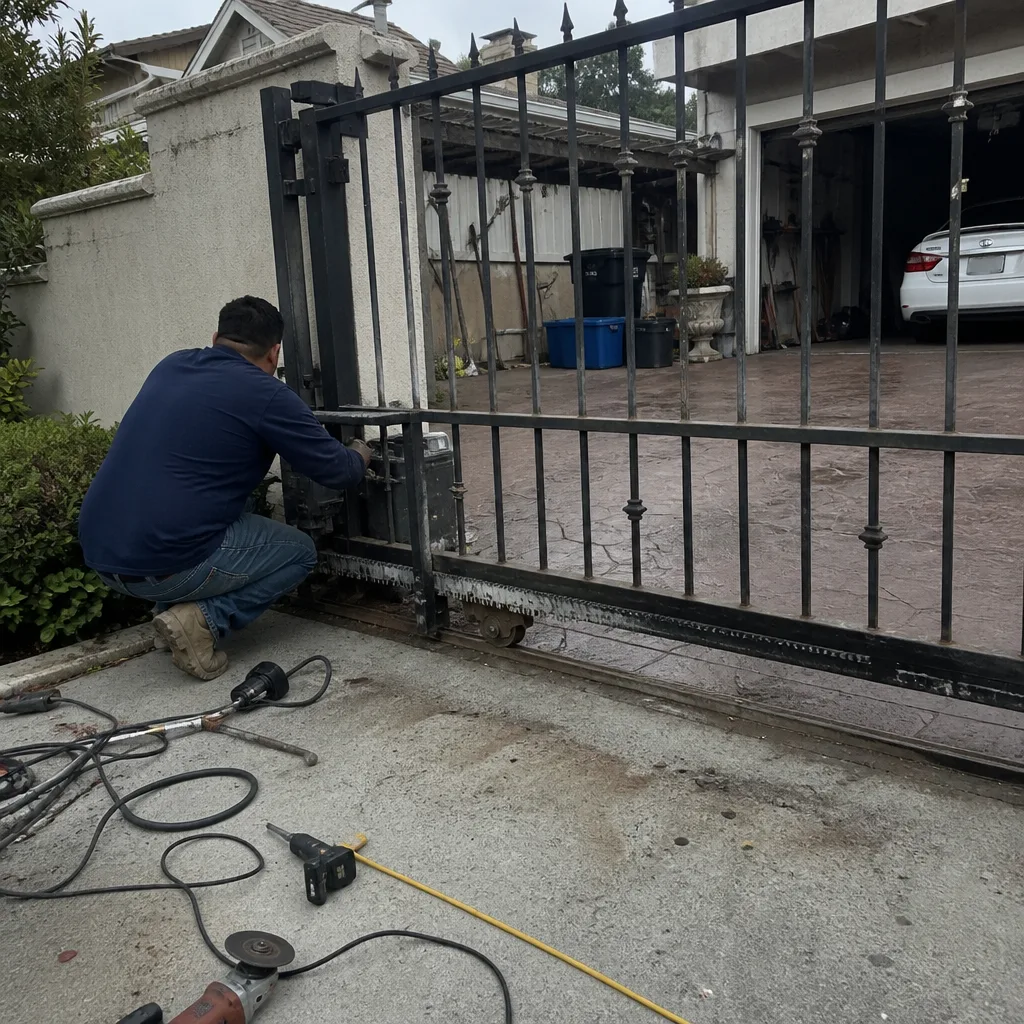 Before
 After
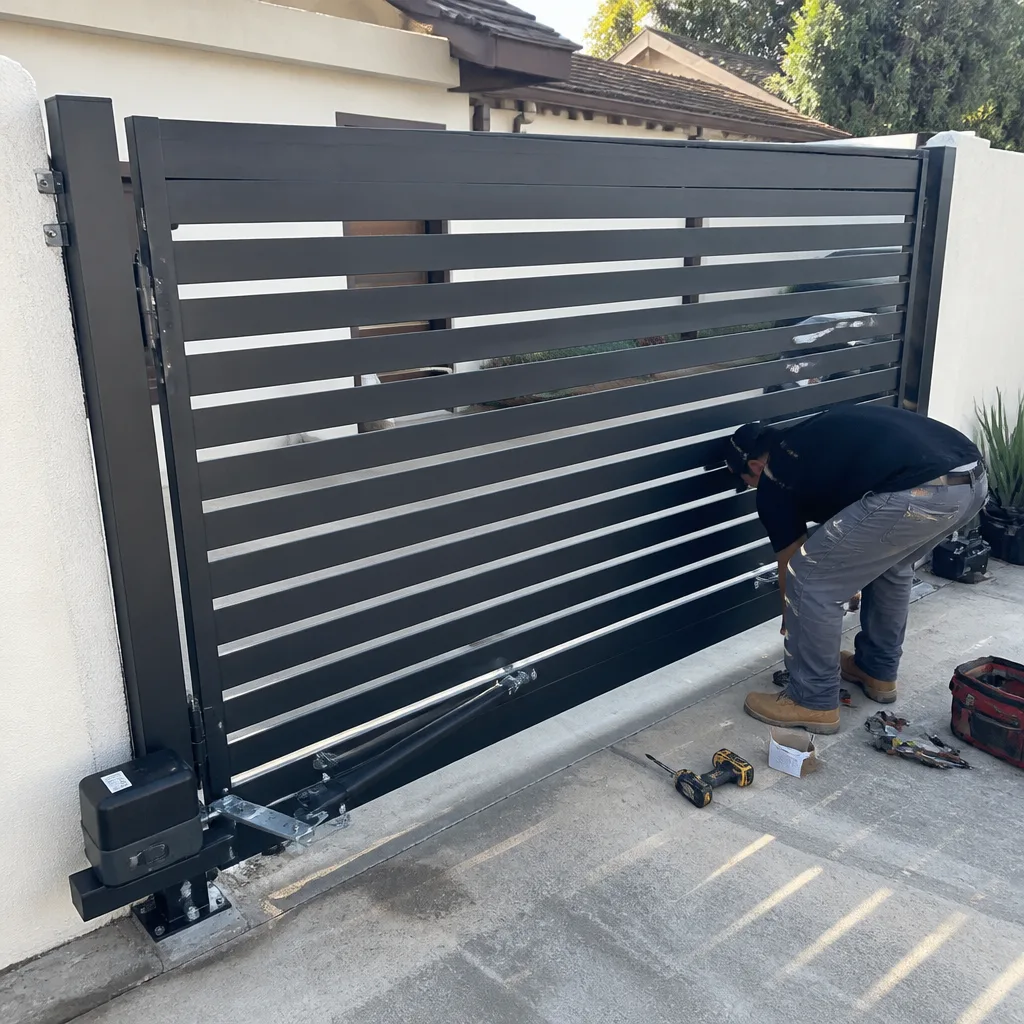
After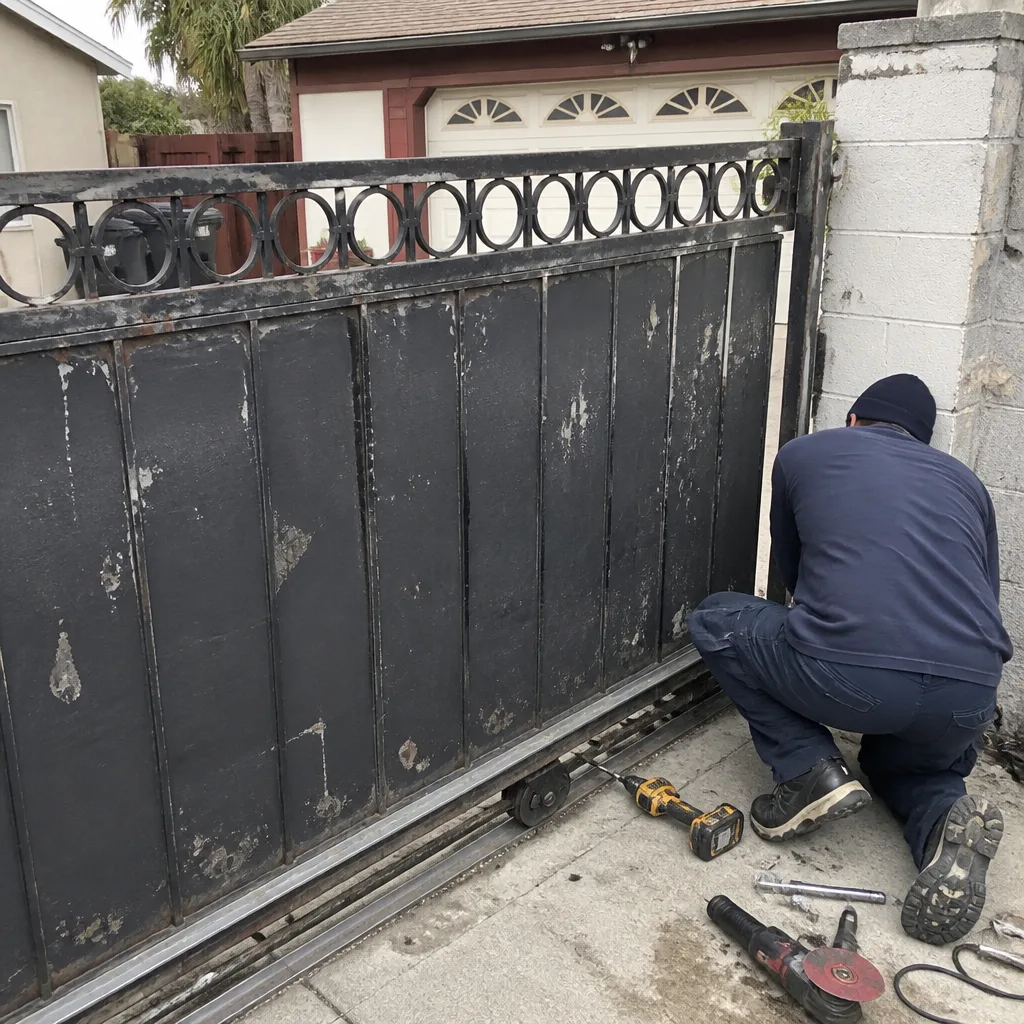 Before
 After
After Before
 After
AfterLoud Grinding When the Gate Moves
A grinding gate is almost always telling you one of three things: the drive gear inside the motor unit is worn or broken, the track or rollers are running dry and metal is dragging against metal, or the gate itself has shifted out of alignment so the hardware is fighting itself every time it moves. Any of these will get worse with every cycle, not better. Left alone, a grinding gate usually becomes a gate that stops moving entirely.
The good news is that the cause is usually visible once you know where to look, and your local Warden Gate Repair team can trace it quickly on arrival. What follows is a plain explanation of the four most likely causes, what you can safely check yourself, and how we fix it.
Why It Happens
Worn or Stripped Drive Gear
Inside most electric gate openers – LiftMaster, Linear, Mighty Mule, and others – a plastic or nylon drive gear meshes with a metal worm gear to move the gate. That softer gear is designed to wear first, on purpose, to protect the motor. When it starts to strip, the motor still spins but the teeth skip and chew instead of gripping. The sound is a rhythmic, low grinding or a chatter that matches the gate’s speed. If the gate moves slower than usual and the grinding is coming clearly from the motor housing, a worn drive gear is the most likely culprit.
Dry or Damaged Rollers and Track
Sliding gates run on a track, and rolling gates use hinges and pivot pins that need lubrication to move smoothly. When grease dries out or debris packs into the track, metal grinds against metal the entire length of travel. You can usually spot this one by crouching down and looking at the track – visible rust streaks, debris buildup, or dry roller bearings are the giveaway. The grinding sound on this type of problem tends to be continuous across the whole stroke, not just at the start or end.
Gate Misalignment
Posts shift, concrete settles, and hinges loosen over time. When a gate drifts out of its intended plane, it can drag along the ground, catch the frame, or bind against the stop. That friction creates a grinding or scraping noise that often comes with a visible wobble or a gate that stops partway and reverses. If your gate looks crooked in the opening, or if you can see where it’s rubbing against the frame or ground, misalignment is likely the source.
Failing or Seized Operator Arm or Chain
On swing gate operators, the actuator arm connects the motor to the gate leaf. On slide gates, a chain or rack system does that job. Either can corrode, seize, or develop a tight spot that the motor has to force through every cycle. The grinding here often happens at one specific point in the gate’s travel rather than throughout – listen for whether the worst noise happens at the same position each time. That pattern points strongly to a mechanical bind in the drive linkage.
What to Do Right Now
- Stop using the gate. Every additional cycle grinds away at whatever is failing. If the gate is currently open, leave it open and call. If it’s closed, leave it closed. Forcing it risks snapping a gear tooth, bending a track, or burning out the motor.
- Take a short video on your phone. A 20-second clip of the gate moving and grinding tells our technician a lot before they even arrive – the rhythm of the noise, where in the travel it’s worst, and whether the gate is visibly dragging or binding.
- Walk the track or hinge line and look, don’t touch. Debris in the track, visible rust, a gate rubbing on concrete – these are safe to observe and photograph. Do not try to manually push or pull a gate that is connected to a powered operator; the motor creates resistance in both directions and you can injure yourself or damage the mechanism.
- Do not lubricate anything yourself yet. Adding grease to a worn gear or a bent track can mask the real problem and make diagnosis harder. The technician will lubricate what needs it after the repair, with the right product for each component.
- If you smell burning plastic or see smoke from the motor housing, shut the circuit off at the breaker immediately and call. A seized gate can overheat a motor in minutes. This is not a wait-and-see situation.
How We Fix It
When your local Warden Gate Repair technician arrives, the first thing they do is run a full diagnostic – they’ll cycle the gate manually, listen to where the noise is loudest, and inspect the drive gear, rollers, track, and operator arm before touching a single part. That takes about 15 to 20 minutes and gives a complete picture of what’s failing.
Once they know the cause, you get a written price before any work starts. That’s not a policy we bend on; it’s how every Warden job works. No work begins until you’ve read the number and agreed to it.
Most grinding issues – a drive gear swap, a track clean-and-realignment, or a roller replacement – resolve in a single visit under two hours. Operator arm work may take a little longer if parts are needed. Every repair is covered by our 365-Day Done Right Promise: if the repair fails within a year, the return visit is free. The services that typically resolve a grinding gate are gate repair and, where the motor or drive system is the source, gate motor repair.
Frequently Asked Questions
Yes – continuing to run a grinding gate risks a sudden failure that leaves it stuck open (a security problem) or stuck closed (a real inconvenience, or worse, an emergency if you need to get in or out). The mechanical stress each cycle puts on an already-worn part shortens the window before something breaks completely. Stop using it and call (828) 426-7081 so we can assess it before the situation goes from grinding to stuck.
A grinding gate is at the “don’t wait” end of the spectrum. The problem that’s causing the sound is actively getting worse with use, not staying the same. If you’re hearing metal-on-metal contact or the gate is already slowing down, a few days of continued use could turn a gear replacement into a full motor replacement. Call (828) 426-7081 – our phones are answered by a live person 24 hours a day, 7 days a week, so you can reach someone right now.
Call (828) 426-7081 and a live person will check your local team’s current availability. We handle repair and motor calls as quickly as scheduling allows, and a grinding gate that’s getting worse is exactly the kind of job we prioritize. We’ll tell you honestly what the window looks like when you call.
The honest answer is that the price depends on what’s causing it – a drive gear swap is a different job from a track realignment or an operator arm replacement. What we can tell you is that your written price is given before any work starts, and it doesn’t change when the job is done. Call (828) 426-7081 or book online and we’ll send a technician to diagnose it and give you that number in writing, at no charge, before anything happens.
Get It Fixed
A grinding gate is telling you something is about to fail. Call (828) 426-7081 – a live person answers 24/7 – or book online, and your local Warden Gate Repair team will diagnose it, put the price in writing before any work starts, and back the repair with our 365-Day Done Right Promise.
Written by Cole Rafferty, Owner at Warden Gate Repair, part of the Threshold Group family of gate repair specialists, serving communities across the country since 2008.
What Our Customers Say
"Fair price and no pushing a whole new gate when all I needed was a new motor capacitor."
- Shirley A."The vetted tech thing was important since our gate protects the whole property. Careful, polite, and walked me through every safety sensor."
- Russell W."Swing gate wouldn't latch after the hinge sagged. He re-hung it, adjusted the hinge pins, and fixed the latch. Quoted before starting."
- Annette R.