
Free on-site gate assessment - hinges, posts, and your LiftMaster or Nice gate operator checked before anything is quoted
The assessment is free and the quote is the invoice.
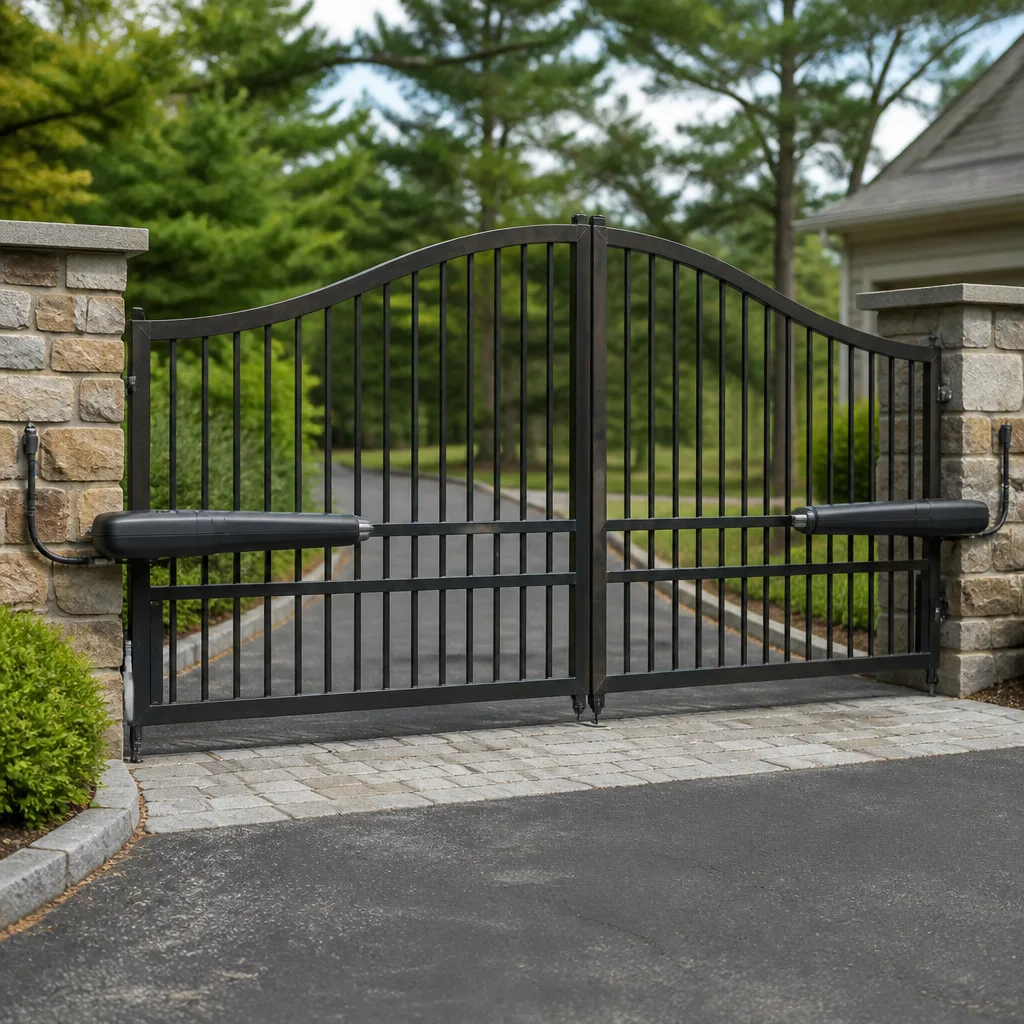
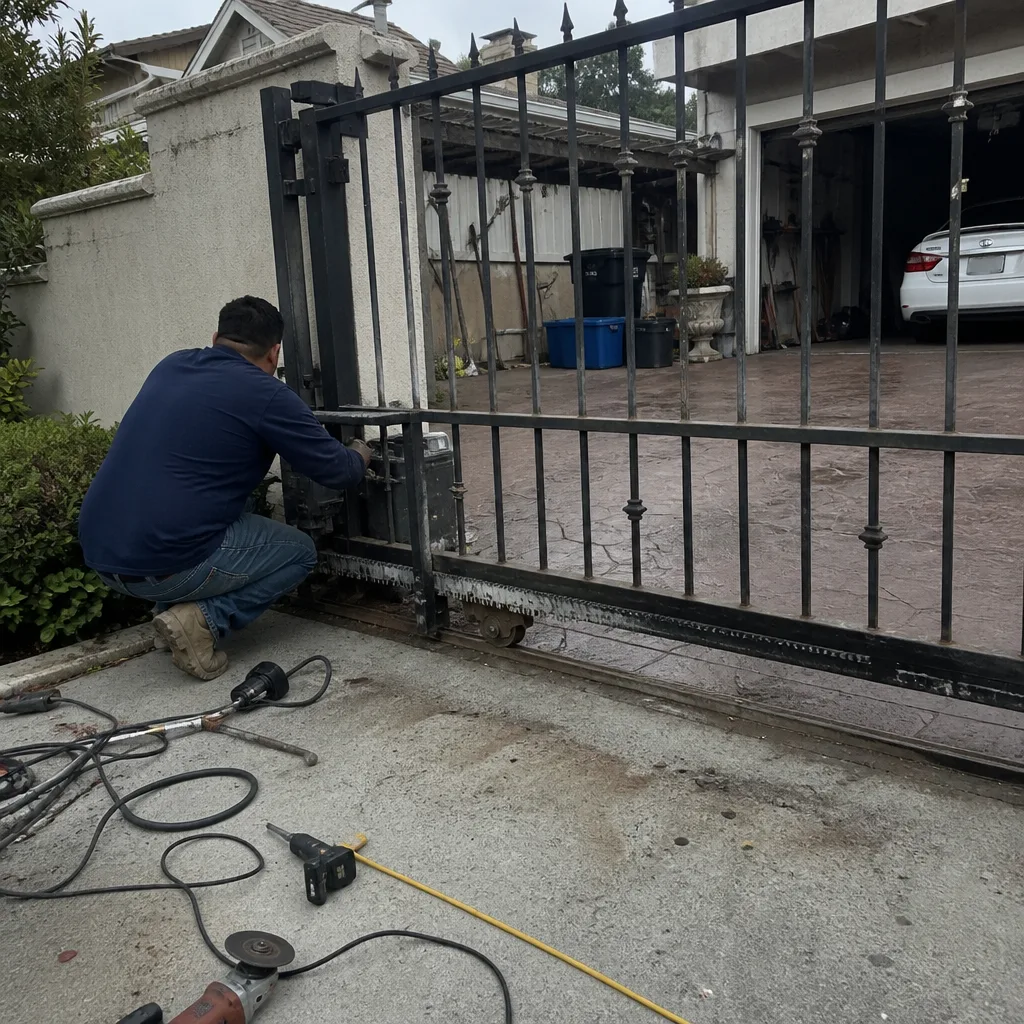 Before
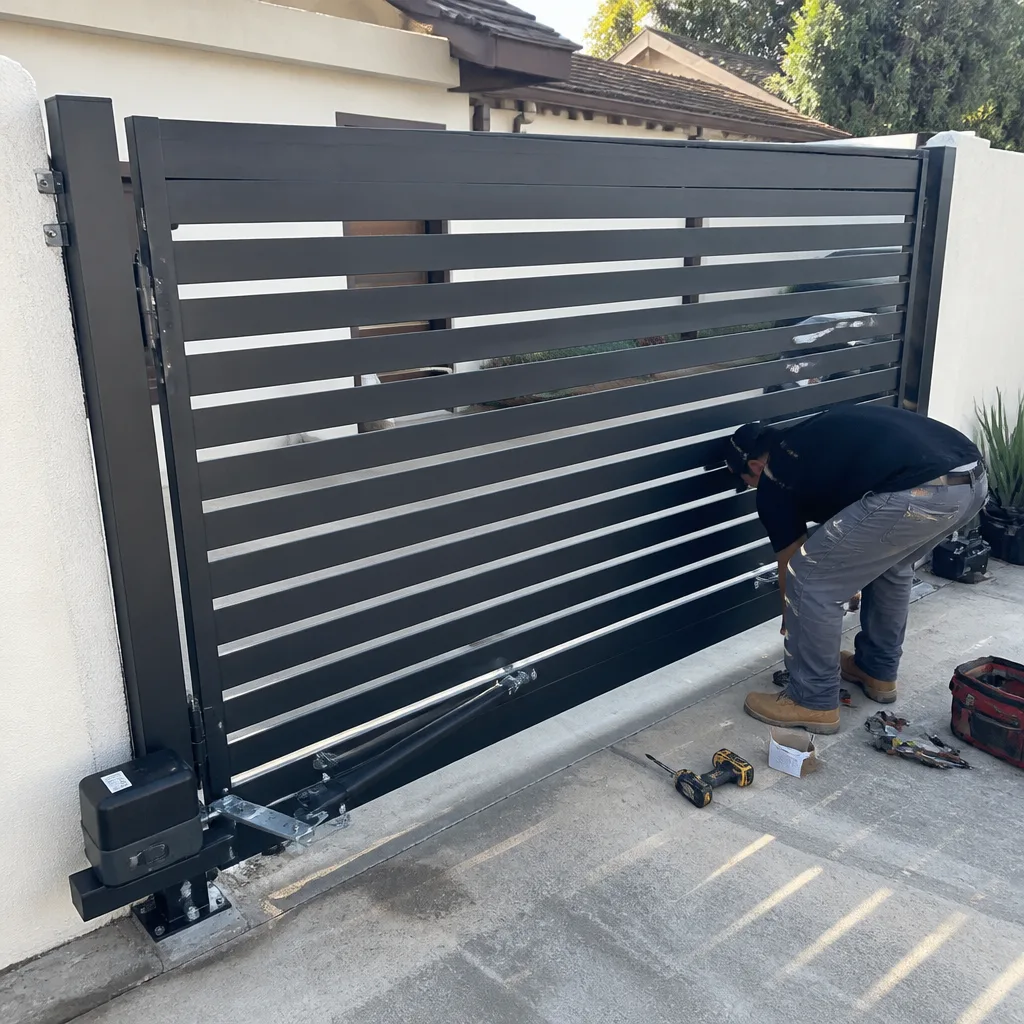 After
After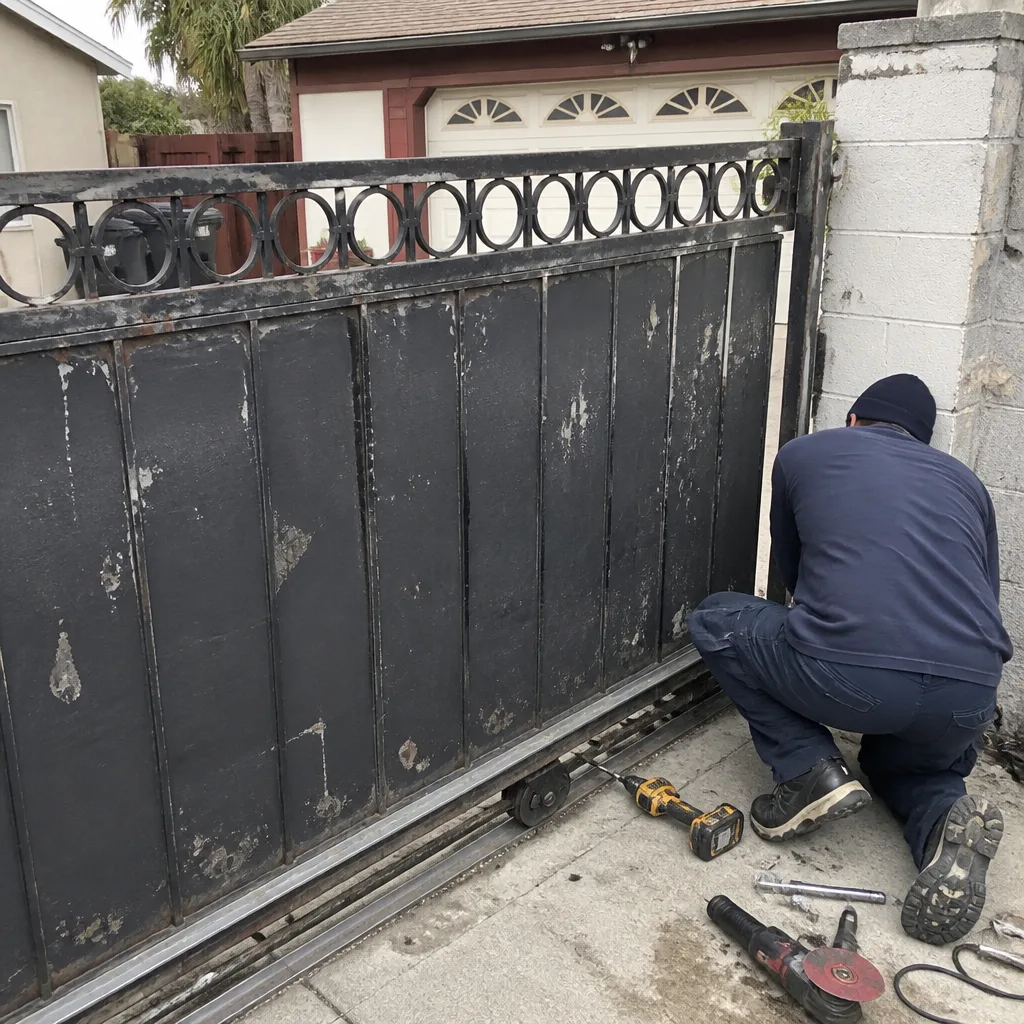 Before
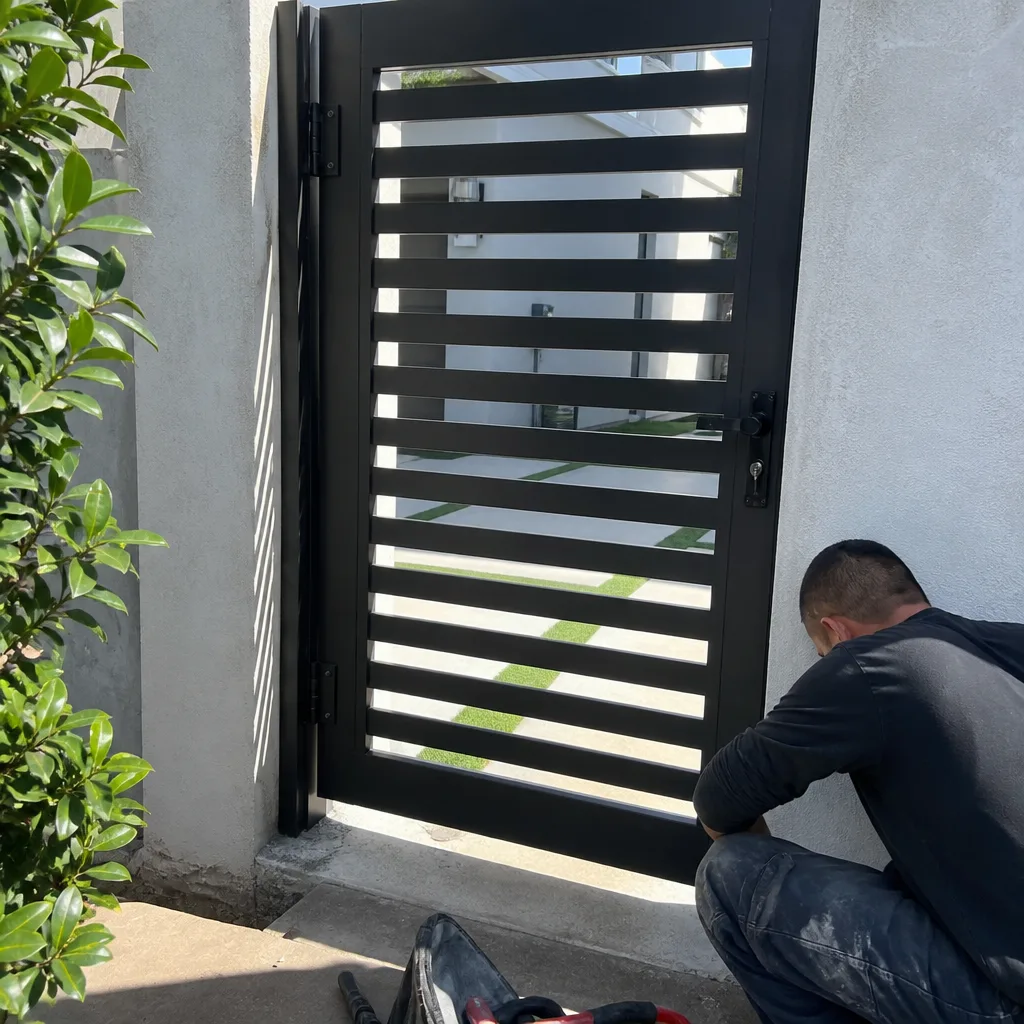 After
After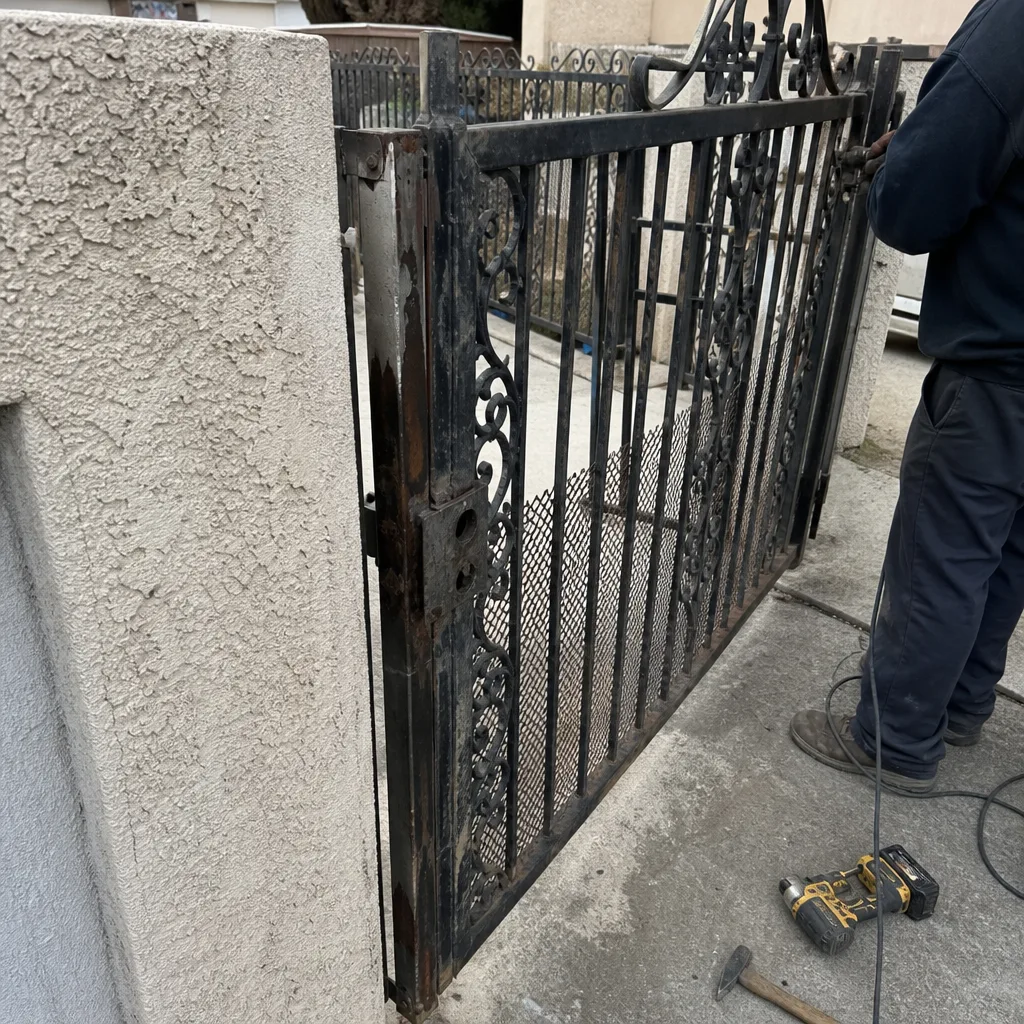 Before
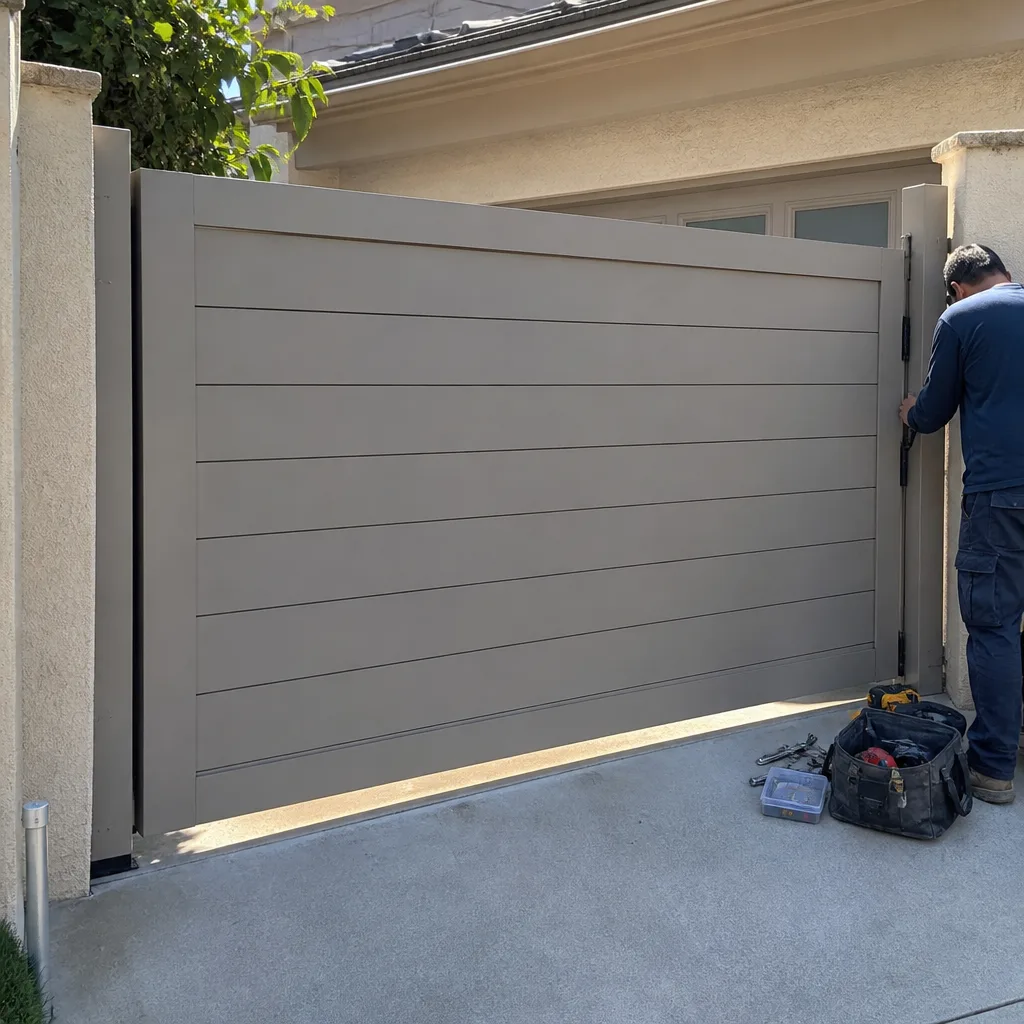 After
AfterFAAC Access Control Installation: The Los Angeles Owner’s Guide
FAAC access control installation in Los Angeles typically runs $450 – $1,150 installed, depending on whether we’re mounting a keypad, card reader, or full intercom-integrated entry system onto your existing FAAC operator. We stock FAAC-compatible access control hardware on our trucks, so most installs happen same-day once we confirm your exact operator model. The way most owners discover this job is straightforward: the keypad stops accepting codes, the card reader goes dead, or the intercom stops releasing the gate. In Palms, where half the driveways still have a gate that barely works, we see this call once or twice a week.
The good news is that a failed access control module rarely means you need a new gate operator. It means the brain and the keypad aren’t talking anymore, or the keypad itself gave out after years of sun and smog. We match the right FAAC-compatible part to your exact series, write the price down before touching anything, and get you back to opening your gate without rolling down the window.
Which FAAC Models This Applies To
FAAC has been building gate operators since 1965, but the access control side splits into a few distinct families. The 400 series (412, 415, 422) and the 700 series (740, 750, 770) are the two we see most often behind Los Angeles gates. The 400 is the compact slide-gate workhorse, and the 750 is the heavy swing-gate operator you’ll find on wider driveways in the hills above Studio City and Sherman Oaks. Both accept FAAC’s own keypads, card readers, and the XKP series wireless keypads that pull power from the operator board itself.
Here’s the compatibility gotcha most owners hit: the older FAAC 400 boards use a terminal-strip connection for accessories, while newer 400 and 750 operators switched to a plug-in ribbon connector. The same keypad won’t fit both. Before we quote a price, we ask for the model number off the side of the operator box and a photo of the control board. You’d be surprised how many gates have had a board swap at some point, and the board is what dictates which access control parts will actually work. If the label is faded, we can usually match it from the board’s connector style.
On the OEM-vs-aftermarket question: FAAC OEM keypads and readers are built for Italian coastal weather, which means they hold up well in Los Angeles, but they’re priced accordingly. We’re authorized to install FAAC OEM parts, and we also stock quality aftermarket equivalents that meet the same voltage and weather-sealing specs. For most homeowners, the aftermarket keypad or card reader is the right call at roughly 60 – 70% of the OEM price. For commercial properties in Los Angeles where an inspector or HOA is involved, we recommend staying OEM so the documentation matches.
We’re an independent service provider, not affiliated with FAAC, but we’ve been installing and repairing their equipment across Los Angeles since 2008. We also carry access control parts for LiftMaster, Mighty Mule, and Ghost Controls operators when a property has mixed brands on the same lot.
Signs Your FAAC Access Control Installation Is Failing
- Keypad accepts the code but the gate doesn’t move. This usually means the keypad is fine and the relay or the connection between the keypad and the operator board has failed. It’s the most common failure we see, and it’s usually a $175 – $300 fix, not a full replacement.
- Keypad is completely dead, no backlight, no beep. The keypad has lost power or its internal circuit board has corroded. In Los Angeles, the coastal salt air from the beach neighborhoods accelerates this. If the operator still opens the gate from the remote, the keypad is the problem.
- Card reader flashes red on every card, including ones that worked yesterday. The reader has lost its programming or its antenna has failed. If the cards are fine when you hold them to a different reader, it’s time to replace this one.
- Intercom call connects but the gate release button does nothing. The audio circuit and the relay circuit are separate. When the relay goes, you can hear the visitor but you can’t open the gate. This is a board-level repair on the access control module.
- Gate opens randomly or won’t hold closed when the access control unit is connected. A shorted wire or a failing relay can cause phantom trigger signals. We’ve seen this after heavy rain in the Los Angeles winter months when conduit fills with water and the low-voltage wiring gets compromised.
Replacement Cost & What’s Included
For a single access control point on a FAAC operator in Los Angeles, expect $450 – $1,150 installed. That includes the part, the wiring, the programming, and testing with your existing remotes and safety devices. A basic digital keypad install sits at the lower end. A proximity card reader with a weatherproof enclosure and new wiring runs higher. Some jobs hit the top of the range when we’re pulling new low-voltage wire through existing walls or integrating with an intercom system that needs extra relay work.
We quote the full amount before any work starts, and the price printed on that work order is the price you pay. That’s how we’ve always run it. Cole Rafferty built this company on the habit of writing the price down first, because if a man won’t put his number in writing, he doesn’t believe his own number. We honor that on every job, and we back the access control installation with the 365-Day Done Right Promise. If it fails within a year, the return visit is free.
DIY or Call Us?
There are two things you can safely check before calling. First, confirm the operator still works from the remote and the wall button. If it does, the problem is isolated to the access control unit and you’ve saved the diagnostic time. Second, look at the keypad or reader for visible damage: cracked housing, rust on the screws, a backlight that flickers and dies. Those are replacement jobs, not repair jobs.
Beyond that, this work involves low-voltage wiring, relay connections, and programming that talks to your operator’s control board. If the wrong wire touches the wrong terminal, you can burn out the board and turn a $500 keypad job into a $900 operator repair. We’ve fixed that exact mistake at least a dozen times in Los Angeles. The safety line is simple: if you’re comfortable with basic wiring and have a multimeter, you can diagnose. If not, call (828) 426-7081 and we’ll send a tech who’s done this hundreds of times.
FAQs
Most single-point access control installs take 90 minutes to 2 hours on site. If we’re pulling new wire or integrating an intercom, plan for a half day. We confirm the timeline before we start, and the price is fixed regardless of how long it takes.
Sometimes. If the issue is a corroded terminal or a loose wire, we can repair it on the spot for $120 – $200. If the internal board is dead or the keypad is more than 8 years old, replacement is the honest call. We’ll show you the failed part and explain the decision before we quote either path.
We stock FAAC-compatible keypads, card readers, and common relay modules on our service vehicles. For less common parts, like a specific intercom integration board, we can usually source it from our Los Angeles suppliers within 1 – 2 business days. Call (828) 426-7081 and we’ll confirm before you schedule.
Yes. We program the new keypad or reader to work alongside your existing remotes, safety photo eyes, and gate loop detectors. We test everything together before we leave, and the 365-Day Done Right Promise covers the whole integration.
If your FAAC access control is dead or dying, call us at (828) 426-7081. We’ll answer in person, give you a straight price, and send a background-checked technician with a photo badge and a name you’ll know before they arrive. Write the price down first. Everything else follows from there.
Written by Cole Rafferty, Owner, Warden Gate Repair at Warden Gate Repair, serving Los Angeles and nearby areas.