
Last updated October 9, 2026
Free on-site gate assessment - hinges, posts, and your LiftMaster or Nice gate operator checked before anything is quoted
The assessment is free and the quote is the invoice.
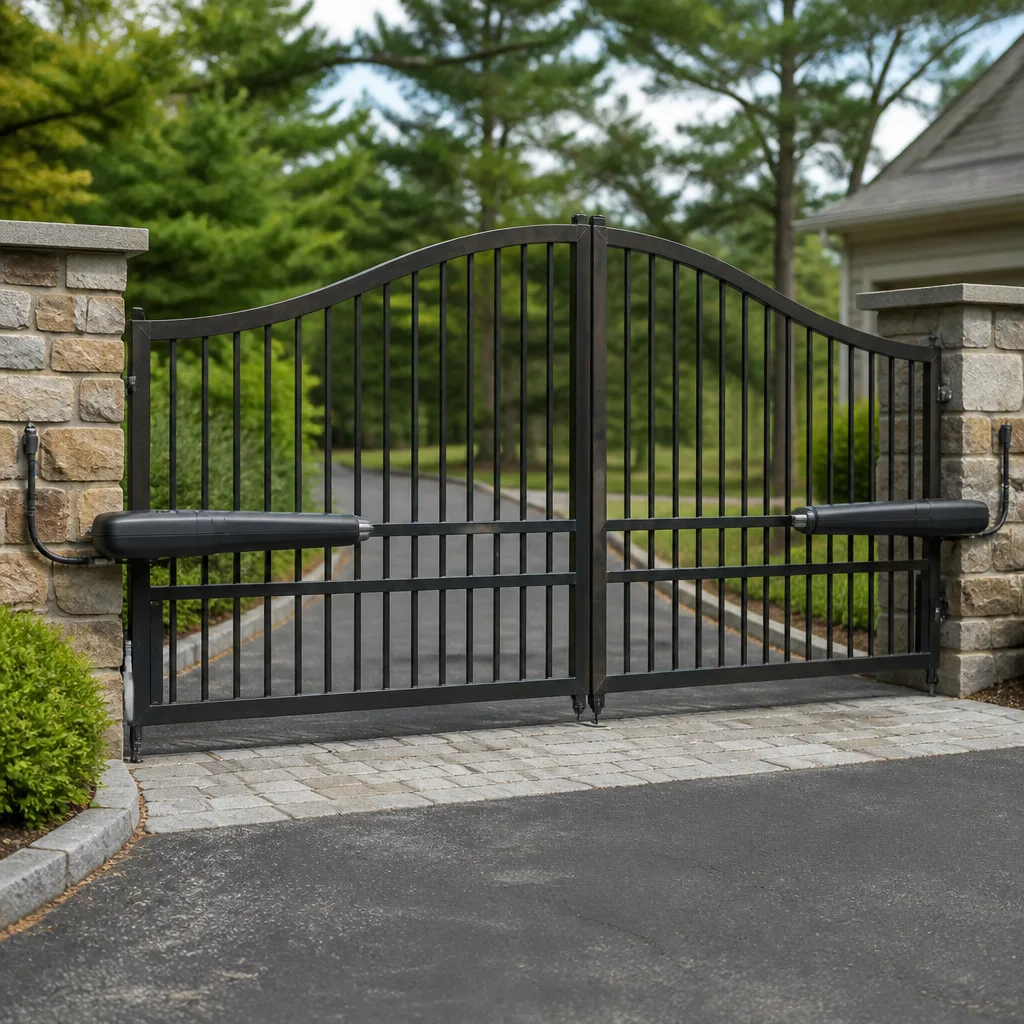
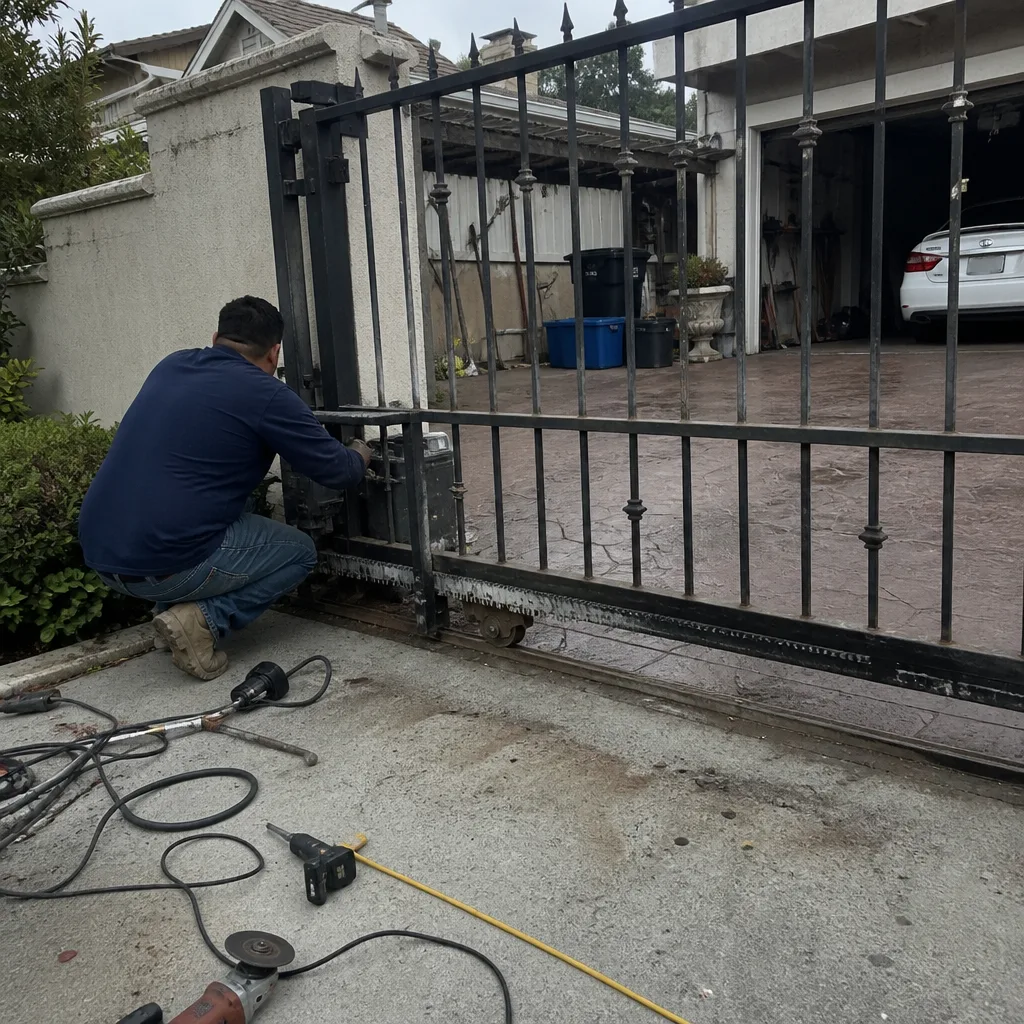 Before
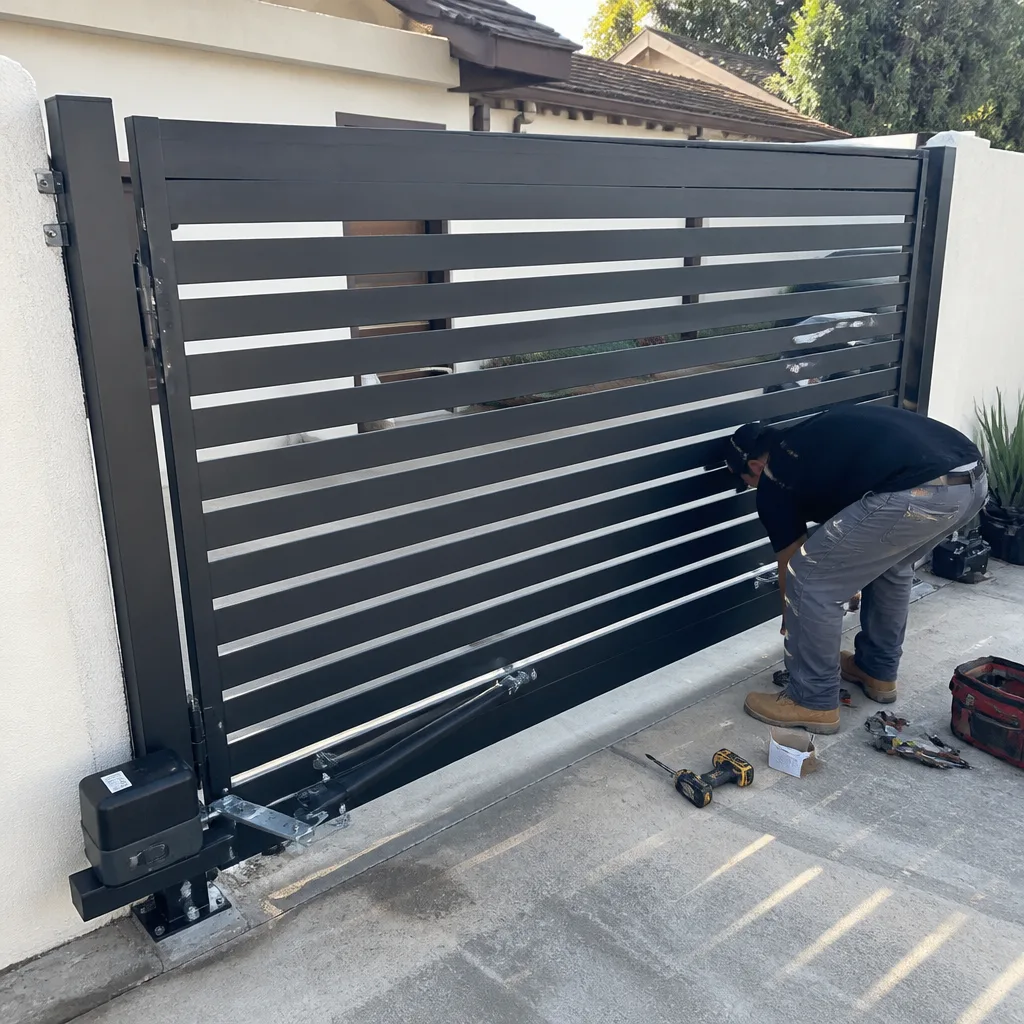 After
After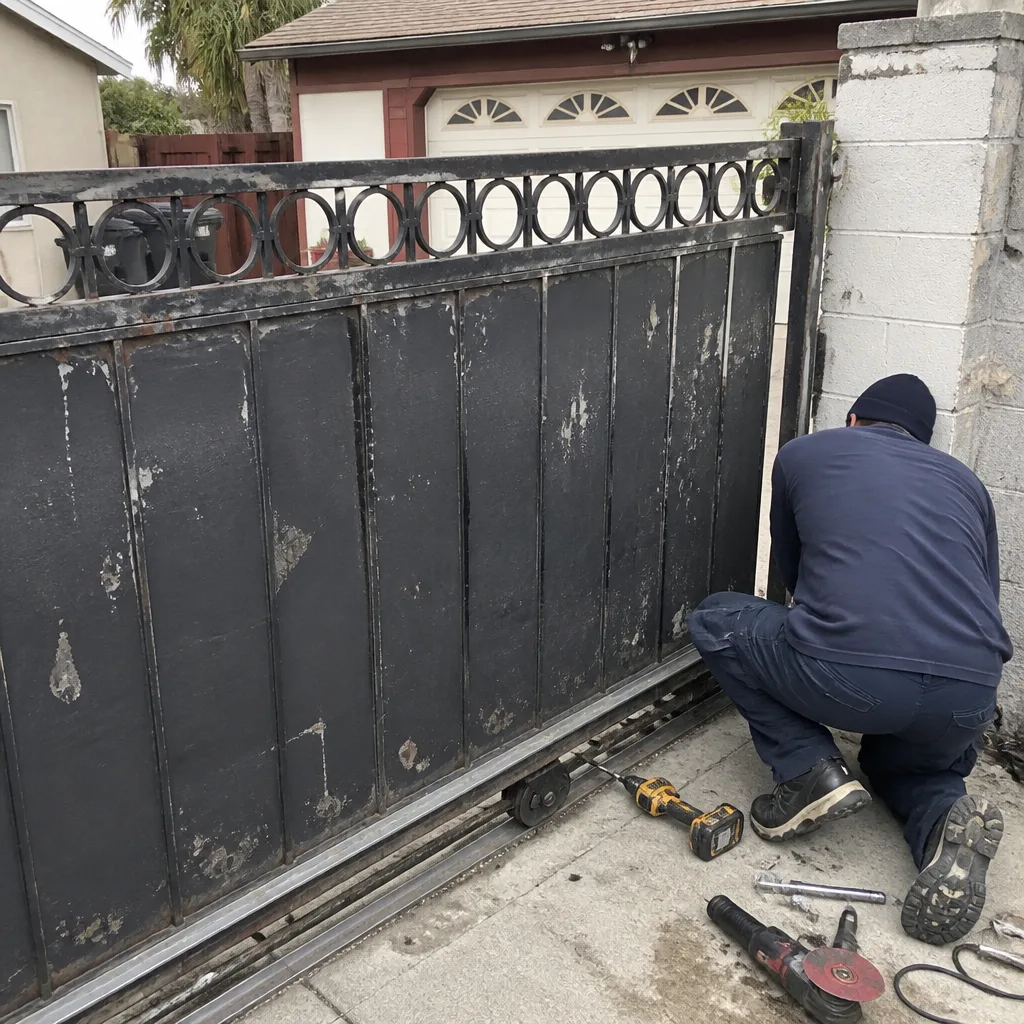 Before
 After
After Before
 After
AfterChoosing the Right Gate Repair Brand: A Buyer’s Guide for Los Angeles
Most Los Angeles homeowners pick a gate operator brand the same way they’d pick a brand of lightbulb: whatever the technician happens to have in the truck. That default choice quietly locks in your repair costs, parts wait times, and service options for the next decade. A brand that’s everywhere in Phoenix or Dallas can have surprisingly thin support in Los Angeles County, where the market has its own dominant players and its own orphaned brands. This guide walks through the five questions that actually matter when choosing a gate operator brand in Los Angeles, and it names the brands that hold up locally.
Quick Answer
The best gate repair brands in Los Angeles for most homeowners are LiftMaster, DoorKing, and Elite, because they combine deep local authorized-service networks, fast parts availability through LA-area distributors, and proven durability in coastal and inland Southern California conditions. For high-traffic multi-tenant communities, Viking and FAAC also hold strong positions in Los Angeles. The wrong brand choice usually isn’t a performance problem; it’s a parts-and-service problem that shows up two to five years later when a control board fails and only one shop in a fifty-mile radius is authorized to stock it.
Table of Contents
- The Brands Broken Down: What Actually Matters in Los Angeles
- Parts Availability in Los Angeles: The Real Wait Times
- Matching the Brand to Your Gate Type and Usage
- Warranty Terms Compared: What Each Brand Actually Covers
- The Ecosystem Question: Intercoms, Keypads, and Access Control
- Authorized Service Networks: Where LA Gets Thin
- Los Angeles-Specific Considerations: Climate, Codes, and Coastal Air
- A 7-Point Selection Checklist
The Brands Broken Down: What Actually Matters in Los Angeles
When we replace a gate operator in Los Angeles, we’re not choosing a brand based on catalog specs. We’re choosing based on three things that determine how the next ten years will go: whether parts are stocked within driving distance, whether the brand’s control boards hold up to Southern California’s climate, and whether the manufacturer answers the phone when a technician calls with a programming question. Those factors weed out several brands that look great on paper but underperform in this specific market.
LiftMaster is the closest thing Los Angeles has to a universal standard for residential gate operators. The LA5250 swing gate operator and the SL585U slide gate operator account for a huge share of what we service across the San Fernando Valley, the Westside, and down into South Bay. That installed base matters, because it means every parts distributor in the region keeps LiftMaster control boards, limit switches, and remotes on the shelf. When we order a LiftMaster part in Los Angeles, we typically have it in hand the same day or the next morning. That’s not a manufacturer promise; it’s a function of how many contractors in this city already run that brand.
DoorKing has a different profile. It’s a Southern California company, headquartered in Inglewood, and that local presence shows up in how the brand is supported here. DoorKing dominates the multi-tenant and small-commercial market in Los Angeles: apartment buildings, condo complexes, and industrial yards. Their 9150 and 6050 swing operators, and their 1601 and 6500 slide operators, are workhorses in this city. The fact that the factory is in the same county means warranty replacements and unusual parts move faster for Los Angeles customers than they do anywhere else in the country. For a homeowner, that local factory presence is a real advantage, not marketing.
Elite sits in the middle. The brand, formally Elite Access Systems, is based in Lake Forest, Orange County, which again gives Los Angeles customers a geographic advantage. Elite’s SL slide operators and CSW swing operators are common on higher-end residential properties and light commercial gates in neighborhoods like Bel Air, Brentwood, and the Hollywood Hills. The build quality is genuinely strong, and the brand has managed to keep its programming interface simple enough that we see fewer DIY disasters with Elite boards than with some other brands.
Mighty Mule deserves an honest mention. It’s the brand most homeowners find first when they search online, because it dominates retail channels like Home Depot and Amazon. The hardware is affordable, and for a low-traffic residential swing gate, a Mighty Mule can run fine for years. The issue in Los Angeles is support: Mighty Mule’s model is do-it-yourself installation with phone support, not a deep network of authorized independent service shops. When a Mighty Mule gate stops working, homeowners often struggle to find a technician who stocks Mighty Mule parts and knows the programming. We do service Mighty Mule, but someone buying new should understand that the low upfront cost can mean longer repair lead times later.
Parts Availability in Los Angeles: The Real Wait Times
Here’s the part most brand comparisons skip: when your gate breaks, the question isn’t which brand is best, it’s which brand’s part can be in a technician’s hand before the end of the week. In Los Angeles, that answer varies dramatically by brand, and it has more to do with distribution geography than with engineering quality.
As of 2026, here’s what we’re seeing across the Los Angeles market:
- LiftMaster: 1 to 2 days for common parts (control boards, remotes, photo eyes) through regional distributors. Less common parts like specific transformer kits run 3 to 5 days.
- DoorKing: 1 to 3 days for most boards and mechanical parts, due to the Inglewood factory and warehouse. Some obsolete board revisions can take 2 to 3 weeks, which is an argument for replacing rather than repairing very old DoorKing units.
- Elite: 2 to 4 days for standard control boards and gearboxes through Orange County distribution. Special-order items like gate-specific loop detectors can stretch to a week.
- Viking: 2 to 5 days for common parts. Viking has a smaller Los Angeles distribution footprint than its commercial reputation would suggest, and some solenoid and hydraulic components are routinely backordered nationally.
- Linear: 2 to 5 days for most residential parts, but the brand’s declining presence in the Los Angeles residential market means some older Linear parts are now only available as refurbished or third-party replacements.
- FAAC: 3 to 7 days. FAAC’s hydraulic operators are well-regarded in Europe and on some LA estates, but the US parts supply chain is thinner, and Los Angeles shops that stock FAAC parts are fewer than they were a decade ago.
- Ghost Controls: 2 to 4 days, primarily through retail channels. It’s a newer brand, and its service network in Los Angeles is still developing.
- BFT: 3 to 7 days. BFT has loyal installers in some LA neighborhoods, but parts availability is the brand’s weakest point here.
Those numbers assume normal supply chains. During the 2020-2022 period, every brand stretched badly, and some Los Angeles homeowners waited six to eight weeks for European-sourced parts. That experience changed how we advise customers: brands with regional warehouses and Southern California factories recovered faster, and that resilience pattern still holds.
Matching the Brand to Your Gate Type and Usage
Before choosing a brand, define the job. A gate that opens four times a day for a single-family home in Pasadena has completely different needs than a gate that cycles forty times a day at a six-unit apartment building in Koreatown. Matching brand to usage is where a lot of Los Angeles purchases go wrong from the start.
Low-traffic residential swing gate (fewer than 10 cycles per day): A Mighty Mule or a basic Linear can work. These are light-duty machines with light-duty prices. The caveat is the support issue we mentioned: when it breaks, you’ll need a shop that knows the brand. In Los Angeles, those shops exist, but they’re not as dense as they are for LiftMaster.
Standard residential swing gate (10 to 25 cycles per day): LiftMaster and Elite are the sweet spot here. Both build operators designed for daily residential use, both have strong parts pipelines in Los Angeles, and both brands have enough installed base that any competent gate technician in the city has worked on them before. For motor-specific issues, see The Complete Gate Motor Repair Guide for Los Angeles Homeowners.
Heavy residential or light commercial swing gate (25+ cycles per day): DoorKing and Viking become the serious contenders. DoorKing’s 9150 swing operator is built for exactly this job, and Viking’s hydraulic swing operators handle heavy ornamental gates that would burn out a residential motor. In Los Angeles, where steep driveways and heavy wrought-iron gates are common in hillside neighborhoods, this category matters.
Slide gates of any volume: Slide gates, whether chain-driven or rack-driven, put different stress on the operator. DoorKing, Viking, and LiftMaster all make capable slide operators. For residential use, LiftMaster’s slide line is the default choice in much of Los Angeles. For commercial and multi-tenant, DoorKing and Viking are the brands property managers in this city already know.
Warranty Terms Compared: What Each Brand Actually Covers
Warranty comparisons are where we see the most confusion among Los Angeles homeowners. Every manufacturer lists a warranty number, but what that number means in practice depends on three things the fine print controls: what components are covered, what the warranty period actually is for electronics versus mechanical parts, and who is allowed to do the warranty work.
Here’s the practical landscape as of 2026:
- LiftMaster: Typically 1 year on the operator and motor for residential units through authorized dealers. Accessories like remotes and keypads often carry 1 year as well. Warranty service can be performed by any authorized LiftMaster dealer, not just the original installer.
- DoorKing: 5 years on residential and commercial operators sold through authorized installers, covering the operator unit and major components. This is among the strongest in the industry. DoorKing’s warranty is honored through any authorized DoorKing dealer, which matters because the original installing company doesn’t hold your warranty hostage.
- Elite: Typically 5 years on residential operators, with one of the more straightforward warranty processes we deal with. Elite’s warranty is also honored through any authorized Elite dealer, not just the original installer.
- Viking: Usually 2 years on residential and commercial operators. Viking’s warranty has some of the tightest fine print in the industry, particularly around required annual service documentation in commercial settings.
- Mighty Mule: Typically 1 year for most models, with options for extended coverage on newer units. Warranty claims run through the company’s support line, not through independent shops, which means the homeowner is often the one packaging and shipping a defective part.
- FAAC, BFT, Linear, and Ghost Controls: Generally 1 to 3 years depending on model and installation path. These brands are more likely to require original-installation documentation for warranty claims.
The critical question to ask before buying: does warranty service require the original installer, or will any authorized dealer do? In Los Angeles, where service companies come and go, a warranty that dies with the original installer is worth far less than a warranty that follows the equipment.
The Ecosystem Question: Intercoms, Keypads, and Access Control
A gate operator never works alone. It talks to the keypad at the curb, the intercom at the front door, the phone app in your pocket, and sometimes the security camera above it. That ecosystem is where brand mismatches create long-term headaches in Los Angeles, especially now that more systems include internet connectivity.
LiftMaster’s ecosystem is the most unified in the residential space, largely because of the MyQ platform and the Chamberlain group’s dominance of the residential opener market. The LiftMaster operator, the keypad, the remote, and the smartphone app are designed to work together from day one. Adding a LiftMaster video keypad to a LiftMaster operator is a ten-minute programming job. That integration is a real reason LiftMaster has become the default Los Angeles residential choice.
DoorKing’s ecosystem is built around telephone entry and multi-tenant access. DoorKing’s entry systems, keypads, and operators share the same programming logic, and an experienced Los Angeles access control company can typically wire and program a full DoorKing system in a single visit. The brand’s local factory support extends to its access control components too, which is why so many local apartment managers standardize on DoorKing.
Elite’s ecosystem is more modular. Elite operators work fine with third-party access control, and many Los Angeles high-end residential properties pair an Elite operator with a separate intercom brand. The advantage is flexibility. The disadvantage is that mismatch problems take longer to diagnose, because no single company owns the integration between your operator and your intercom.
The practical rule in Los Angeles: if you’re buying a new gate operator and a new access system at the same time, buy both from the same brand. Mismatched systems are serviceable, and in some cases they’re even preferable for technical reasons, but every boundary between brands is a boundary where troubleshooting stalls. The more complex the system, the more that stall time costs you.
Authorized Service Networks: Where LA Gets Thin
This is the point most brand comparisons miss, and it’s the one that matters most for a Los Angeles homeowner buying for the long term. Every brand has a list of “authorized” service providers. The depth of that list in Los Angeles County varies more than you’d expect.
LiftMaster and DoorKing have the deepest authorized networks in Los Angeles by a wide margin. That’s a function of installed base: more units in service means more technicians got factory training, means more shops stock the parts, means more warranty work flows through the area. When a customer in Van Nuys calls us about a DoorKing problem, we can usually schedule the visit and have the part in hand in the same week. When a customer in Santa Clarita calls about a less common brand, the story is different.
Brands like FAAC, BFT, and Ghost Controls have real strengths, but their Los Angeles authorized-service footprint is thinner. The authorized provider list for some of these brands in LA County can be counted on one hand. That doesn’t mean you can’t get service; it means you may be waiting longer, paying more, or working with a shop that’s excellent but overbooked because it’s one of the only authorized options in the region.
Before choosing a brand, ask a simple question: how many authorized service providers does this brand have within thirty miles of my home in Los Angeles? If the answer is one or two, factor that into your decision. The brand isn’t bad. The local support is thin.
Los Angeles-Specific Considerations: Climate, Codes, and Coastal Air
Los Angeles is not one climate. A gate operator in Pacific Palisades endures salt fog and marine layer moisture. The same model in Woodland Hills endures triple-digit summer heat and dry dust. Understanding which environmental stress your location applies helps explain why some brands perform differently in this city than their national reputation would suggest.
Coastal corrosion: In neighborhoods within a few miles of the ocean, from Malibu down through the South Bay, salt air shortens the life of steel components, zinc hardware, and unprotected electronics. Operators with corrosion-resistant coatings and sealed control boards do better. In our experience, DoorKing and Elite units in coastal Los Angeles hold up better than average, while some budget brands show visible rust on mounting hardware within three years.
Inland heat: The San Fernando Valley, Pasadena, and the Inland corridor regularly see summer temperatures above 100°F. Control boards with poor heat dissipation fail earlier in these areas. LiftMaster’s residential boards have proven resilient in Valley heat, and DoorKing’s metal enclosures with built-in ventilation help as well. Brands with plastic housings and tightly packed electronics tend to fail earlier in this climate.
City of Los Angeles codes: The city’s Department of Building and Safety has specific requirements for automatic gates, including safety photo eyes, reverse-on-contact systems, and, for commercial and multi-tenant properties, periodic safety inspections. Any gate operator installed in the city of Los Angeles must meet UL 325 safety standards, and the city enforces that through its permitting process on new installations. When we install a new operator in Los Angeles, we always check the specific safety sensor requirements for the installation type, and we recommend that homeowners verify any operator they’re considering is UL 325 listed. Every brand we’ve discussed in this guide meets that standard, but it’s worth confirming before purchase.
A 7-Point Selection Checklist
Here’s the decision process we walk Los Angeles customers through when they’re replacing a gate operator. It’s ordered by what actually determines long-term satisfaction in this market:
- Count your daily gate cycles. Under 10 suggests light-duty hardware. Over 25 points you toward DoorKing or Viking, regardless of what was there before.
- Check the brand’s authorized-network depth in Los Angeles. Call the manufacturer’s local line and ask how many authorized service providers operate within thirty miles of your zip code. If the answer is under three, proceed with caution.
- Ask about parts availability before you buy. A good question: “If my control board fails in two years, how long until a replacement is in hand?” If the seller can’t answer, that’s an answer.
- Read the warranty through the lens of who can service it. If the warranty says “original installer only,” that warranty is weaker than a shorter one honored by any authorized dealer.
- Keep the ecosystem in one brand. Operator, keypad, intercom, app. Same brand if possible. Every brand boundary is a future troubleshooting delay.
- Factor your microclimate. Coastal Los Angeles means salt air. Valley Los Angeles means heat. Choose accordingly, and ask specifically about corrosion resistance and board heat tolerance.
- Verify UL 325 compliance and City of Los Angeles permit requirements before installation. If an installer suggests skipping the safety sensors or the permit, find another installer.
Common Mistakes to Avoid
- Buying whatever the previous owner had. Just because a gate ran on Brand X for twenty years doesn’t mean Brand X is the right choice for the next ten, especially if that brand’s Los Angeles service network has thinned since the original installation.
- Choosing a brand based on a national top-ten list. A brand that leads in Phoenix or Dallas lists may have only one or two Los Angeles authorized providers. National rankings don’t reflect local parts pipelines.
- Ignoring the ecosystem. Pairing a new operator with an existing intercom from a different brand is the single most common cause of repeated service calls we see in Los Angeles. The install works on day one and the integration problems start on day ninety.
- Shopping by upfront price alone. A budget operator can save $400 today and cost $800 in parts and labor within three years, especially if the brand is a retail-first product with thin LA service support.
- Skipping safety sensors to save money. No legitimate Los Angeles installer will do this. If someone offers to, the savings aren’t worth the liability.
- Assuming the warranty travels. Some warranties die with the original installer. Before you sign, confirm in writing that any authorized dealer can perform warranty service in Los Angeles.
- Forgetting the cycles-per-day math. A residential operator used on a shared multi-tenant gate wears out years early. The gate’s usage volume, not its location, should drive the brand decision.
When to Call a Professional
Some brand decisions are best made with a technician looking at the actual gate, not a website. For more guides & resources, explore our blog. Call a professional when the gate is showing signs of mechanical stress, when it’s tied to an existing access control system you don’t fully understand, or when the gate itself is heavy custom ironwork that a consumer-grade operator won’t move safely. A gate that cycles more than 25 times a day, a gate on a steep Los Angeles hillside driveway, or any commercial or multi-tenant gate should always be specified by someone who has seen the installation. Warden Gate Repair offers free estimates in Los Angeles, and we’ll help you match the brand to the gate, the site, and the budget before any work is quoted. Call (828) 426-7081 to set up a site visit.
Frequently Asked Questions
For most Los Angeles single-family homes, LiftMaster is the strongest all-around choice because it combines deep local parts availability, a straightforward residential feature set, and the most unified ecosystem of operators, keypads, and remotes in the residential market. Elite is a close second for higher-end homes, and DoorKing is the right call if the gate shares duty with a multi-tenant or commercial setup. Call (828) 426-7081 and we’ll walk through the specifics of your gate.
A complete gate operator replacement in Los Angeles typically runs $1,200 to $4,500 depending on the brand, gate type, and whether the access control components need replacing at the same time. Light-duty residential swing operators start near the low end; commercial-grade slide operators with new access control run toward the high end. Warden Gate Repair gives a written price before any work starts, so you’ll never get a surprise invoice. Call (828) 426-7081 for a free estimate.
Yes, Warden Gate Repair services Mighty Mule operators even when the original installer is no longer in business or the homeowner did the original installation themselves. The main challenge with Mighty Mule in Los Angeles is parts sourcing, which can take longer than for door-deep brands like LiftMaster or DoorKing, but the repair work itself is straightforward. Call (828) 426-7081 and we’ll give you a straight answer on your specific model.
DoorKing has its factory and warehouse in Inglewood, which gives Los Angeles customers the fastest parts access of any brand. Elite is based in Lake Forest in Orange County. LiftMaster maintains deep stock through regional distributors serving the Los Angeles market. These three brands offer the shortest typical parts wait times for Los Angeles homeowners.
If the operator and the intercom are from different brands and the system is more than eight years old, it’s usually cheaper in the long run to replace both at once with components from the same brand, because every brand boundary creates a future troubleshooting delay that costs service-call dollars. If the existing intercom is newer and in good working order, a new operator can often be integrated to run alongside it. Warden Gate Repair can assess your setup on-site and give you a written price either way. Call (828) 426-7081 to schedule a visit.
Most gate operator warranties cover parts only, not labor, and the labor to diagnose and replace a warranty part is usually the customer’s cost. That’s true across brands, including LiftMaster, DoorKing, Elite, and Viking. Some brands offer extended warranties with labor coverage for an added cost at purchase. Before buying, ask specifically whether the warranty covers labor, and whether any authorized dealer can perform the work or only the original installer. Call (828) 426-7081 if you want help interpreting a warranty from a specific Los Angeles installer.
The Bottom Line
The best gate operator brand in Los Angeles isn’t a universal answer. It’s a function of your gate’s daily cycle count, your distance from the coast, your access control ecosystem, and the depth of the brand’s authorized service network in Los Angeles County. For most residential Los Angeles homeowners, LiftMaster, DoorKing, and Elite represent the strongest local-support-to-price ratio, with Viking and FAAC earning their keep in specialized heavy-duty and high-traffic applications. Whatever you choose, confirm parts availability, warranty portability, and safety compliance before the warranty card gets registered. A gate operator is a ten-year commitment, and in Los Angeles, the right brand choice is the one that keeps your gate running, not the one that looks best in a brochure.
Written by Cole Rafferty, Owner at Warden Gate Repair, serving Los Angeles since 2008.