
Last updated October 9, 2026
Free on-site gate assessment - hinges, posts, and your LiftMaster or Nice gate operator checked before anything is quoted
The assessment is free and the quote is the invoice.
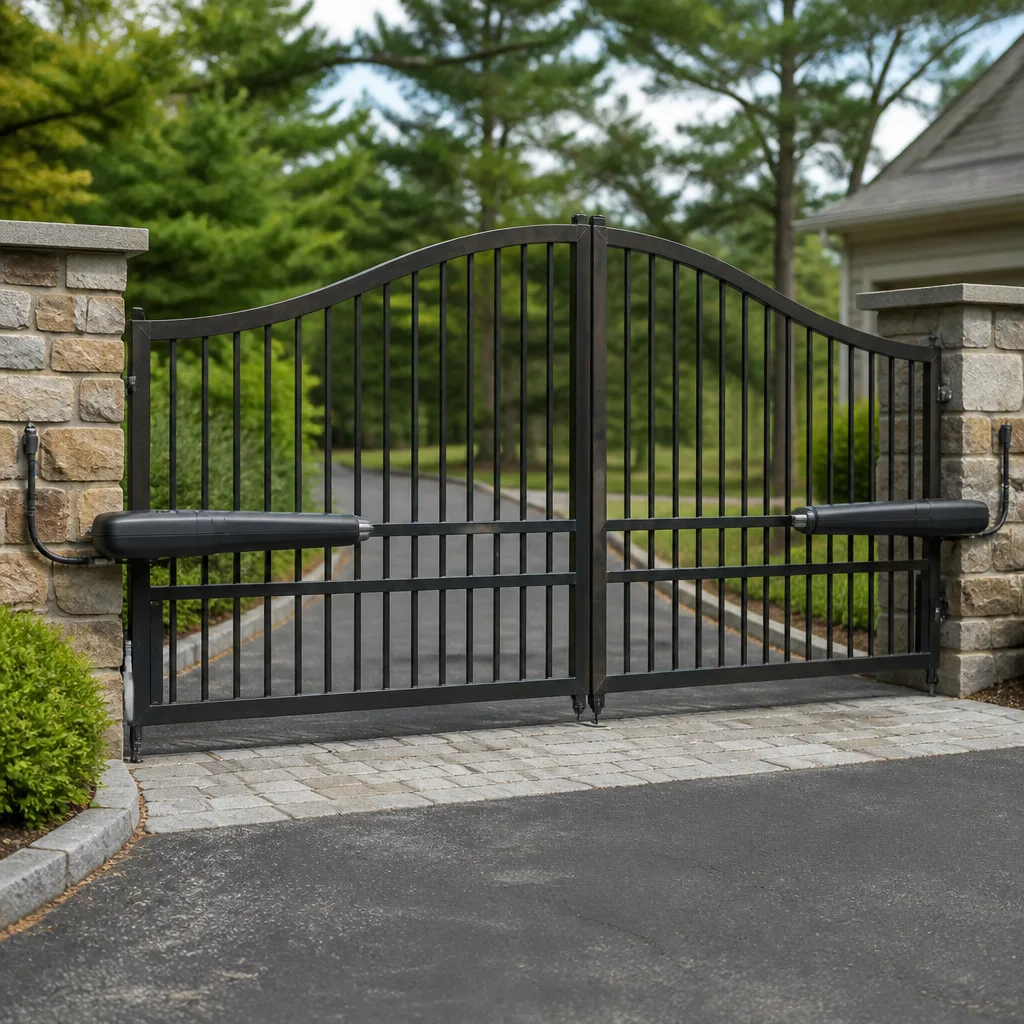
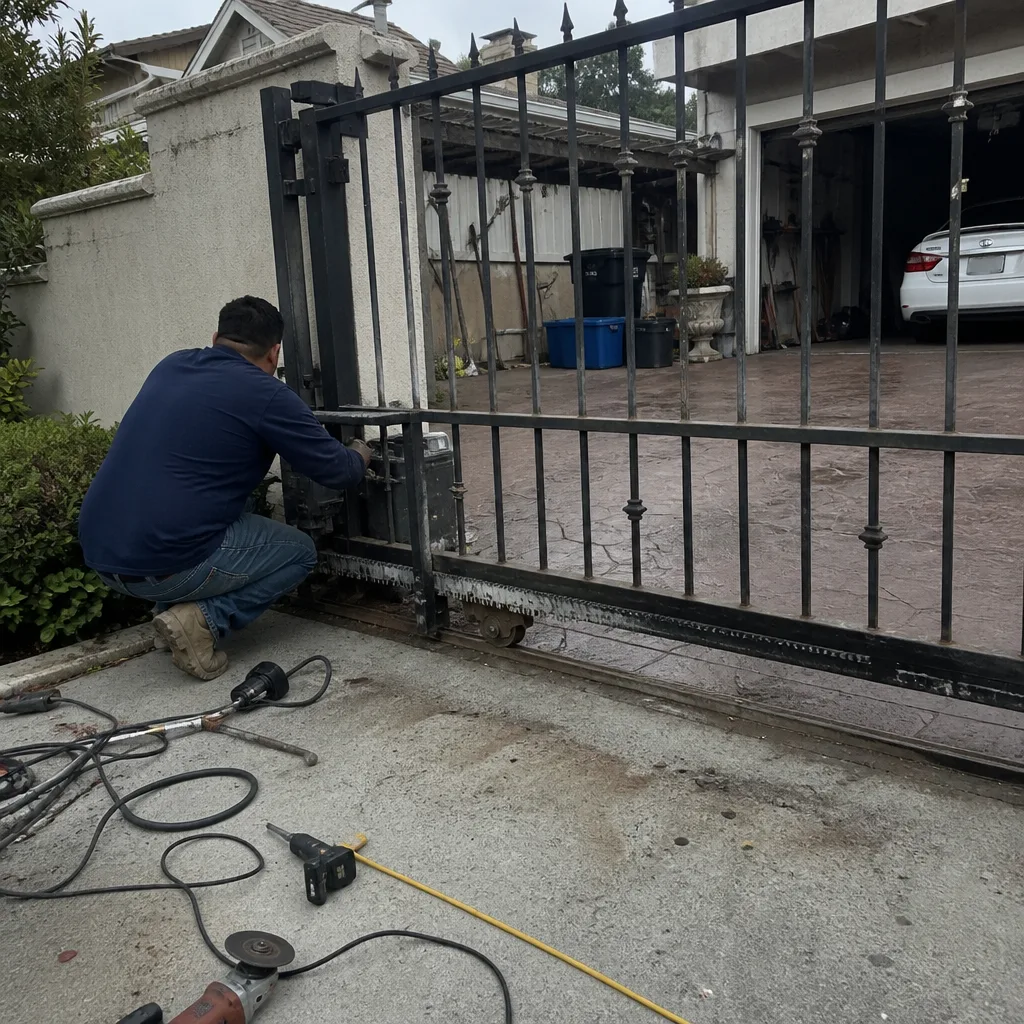 Before
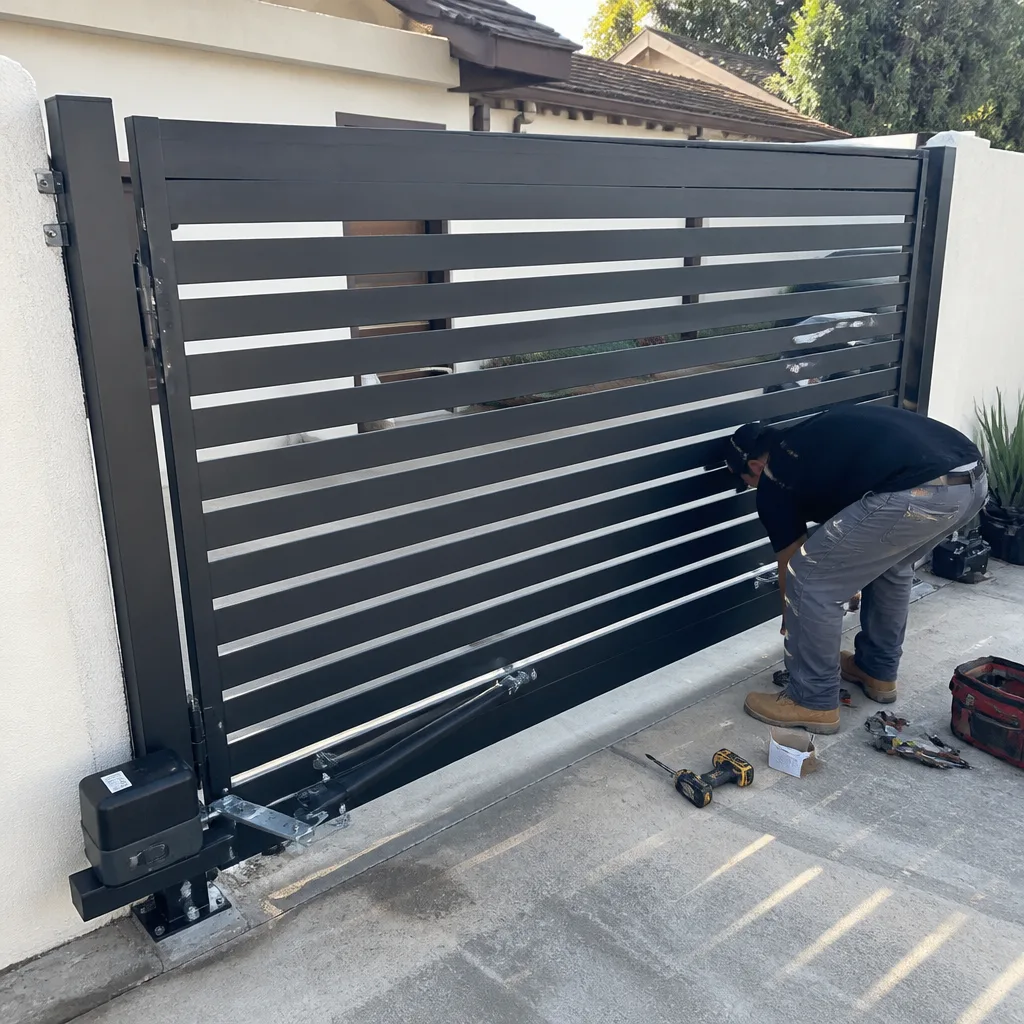 After
After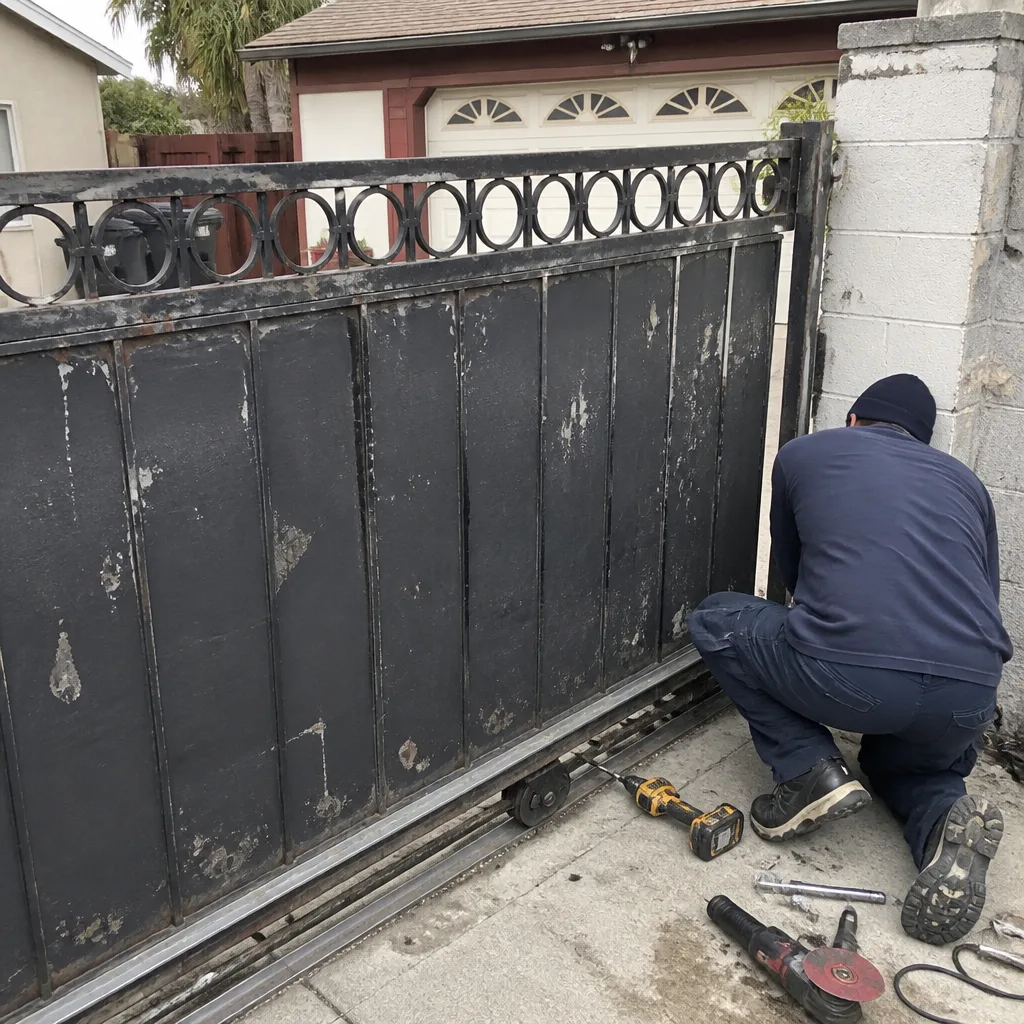 Before
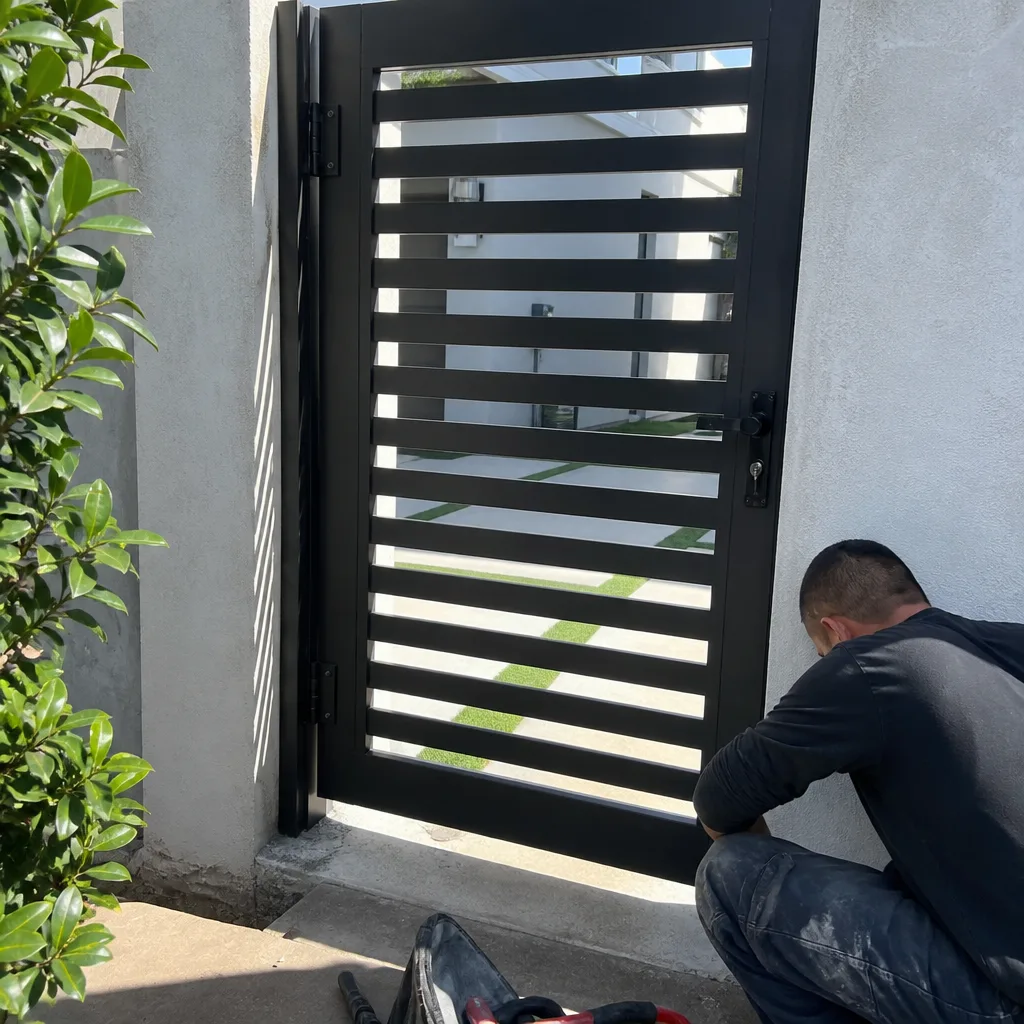 After
After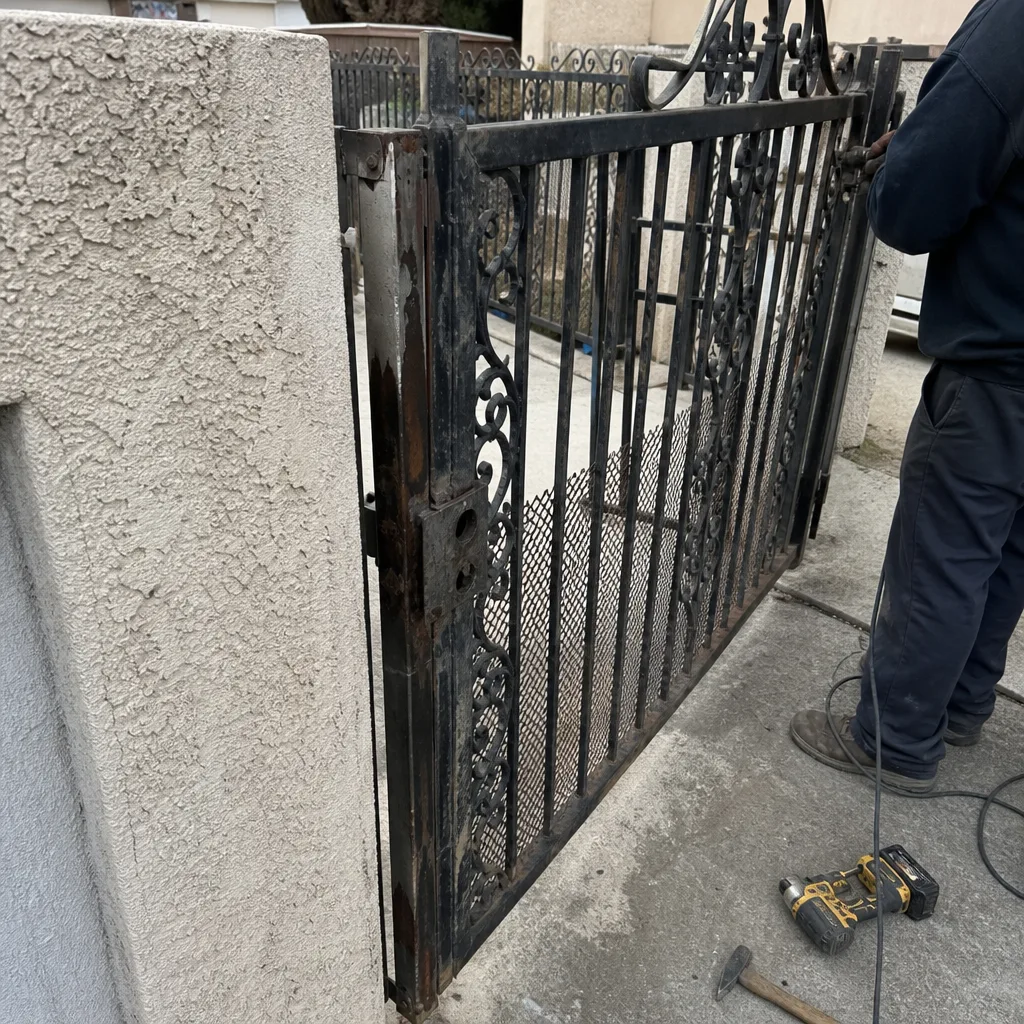 Before
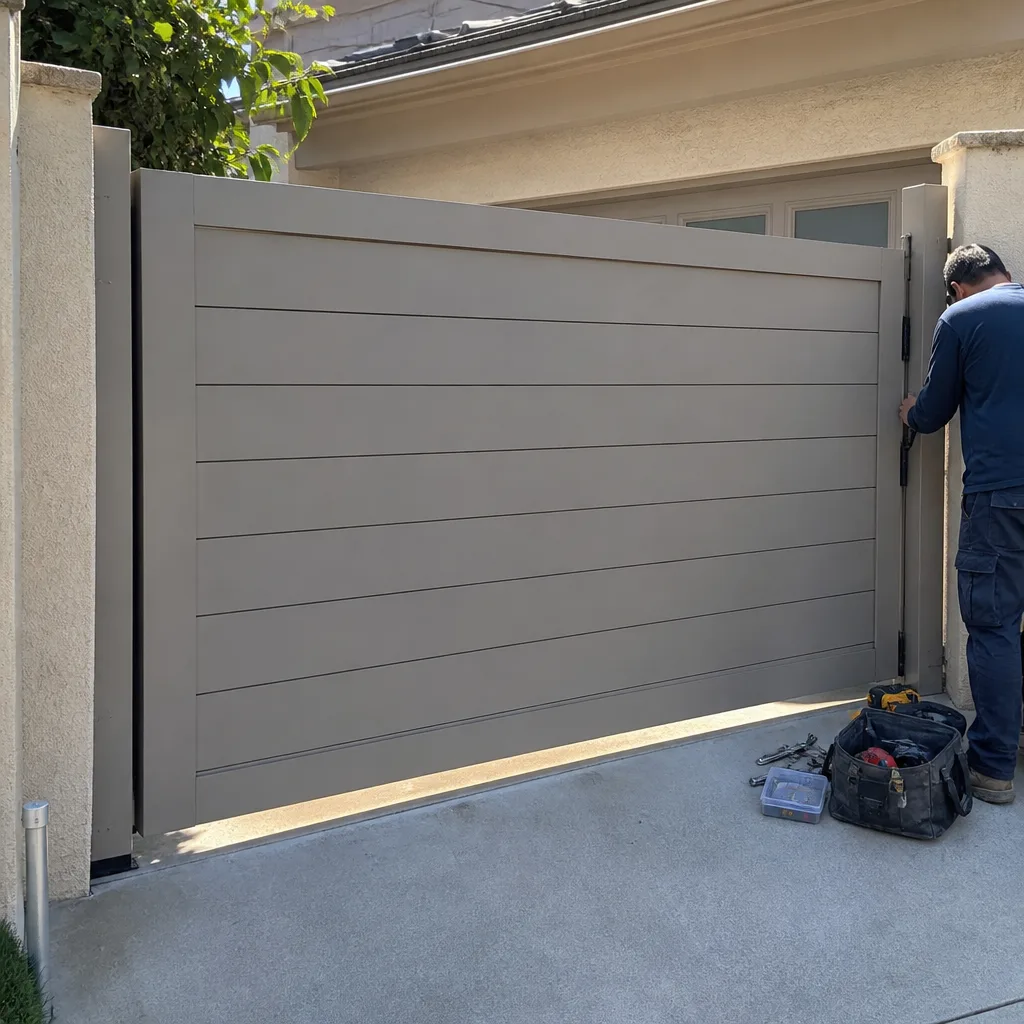 After
AfterGate Repair Warning Signs Every Homeowner Should Know
A gate that pauses for two seconds before moving used to move instantly. That two-second hesitation is a motor working harder than it should, and it typically precedes complete failure within 60 to 90 days. Most Los Angeles homeowners don’t recognize the early distress signals their gate sends, which is why our Gate Repair Warning Signs: A Los Angeles Homeowner’s Reference Guide covers the specific sounds, movements, and timing changes that signal trouble. This guide catalogs the specific sounds, movements, and timing changes that signal trouble, matched to the component causing them, so you know what needs attention this week and what means stop using the gate today.
Quick Answer
The clearest gate repair warning signs are changes in sound (grinding, clicking, scraping, humming), changes in movement (drift, shudder, uneven swing), and changes in timing (slower operation, delayed start, unexpected reversal). A gate that’s suddenly slower is generally more urgent than one that’s noisy, because timing changes mean the motor is straining. In Los Angeles, where automatic gates run thousands of cycles per year, catching these signs early usually means a Gate Repair costing $150 to $400 instead of a $1,200 to $3,000 full replacement.
Table of Contents
- The Sound Catalog: What Your Gate Is Telling You
- Movement Patterns: Structural vs. Mechanical Problems
- Timing Changes: The Most Underrated Warning Sign
- Rust: Cosmetic vs. Structural
- Same-Week Service vs. Stop Using the Gate Today
- Why Los Angeles Gates Fail Differently
- Common Mistakes to Avoid
- When to Call a Professional
- Frequently Asked Questions
The Sound Catalog: What Your Gate Is Telling You
Most gate failures announce themselves audibly weeks before anything actually breaks. The problem is that homeowners hear these sounds, mentally file them under “the gate’s always done that,” and keep pressing the remote. Here’s what each sound actually means.
Grinding is the sound of metal on metal with no lubrication between them. On a sliding gate, it usually means the V-groove wheels or the track have worn past their bearing surface, and the gate is now riding on raw steel. We see this constantly in Los Angeles hillside neighborhoods like Mount Washington and Silver Lake, where fine dust from dry slopes works into the track and accelerates wear. On a swing gate, grinding often points to the hinge pins or the gate motor’s internal gears.
Clicking that repeats in a steady rhythm while the gate moves typically indicates a failing capacitor or a relay inside the gate motor. A single click when you press the remote, followed by nothing, means the motor’s start circuit is receiving power but can’t turn over. That’s a capacitor issue in most LiftMaster and Mighty Mule units. Clicking that happens after the gate stops moving usually means a limit switch is failing to register the closed position.
Scraping is different from grinding. Scraping has an irregular, dragging quality, like something is being pulled along. On sliding gates, it’s frequently the gate’s bottom guide rollers wearing out and the gate beginning to ride on the track itself. On swing gates, scraping at the latch post means the gate has settled or sagged and is now physically dragging against the receiver. The fix may be a hinge adjustment or a gate wheel replacement, but ignoring it turns a simple correction into a bent frame.
Humming without movement is the most misdiagnosed sound. When you press the remote and hear a low hum but the gate doesn’t move, the motor is receiving power and trying to run, but something is physically preventing movement. This could be a stripped gear inside the motor, a seized bearing, or simply an obstruction on the track. In Los Angeles, we also see this with salt-air corrosion on coastal properties from Malibu down through Long Beach, where the motor’s internal components have corroded enough to lock up. If your gate hums but doesn’t move, stop pressing the remote. Repeated attempts burn out the motor completely.
Each sound points to a specific component, and knowing which one tells you whether you’re looking at a lubrication job, a part replacement, or a motor rebuild. That’s the difference between a $150 service call and a $1,800 motor replacement.
Movement Patterns: Structural vs. Mechanical Problems
Sound tells you something is wrong. Movement tells you where. When a gate changes how it moves, you’re seeing the physical consequence of the underlying issue, and the pattern reveals whether the problem is structural (the gate itself) or mechanical (the motor and controls).
Drift is when a gate no longer stops exactly where it should. A sliding gate that used to close flush against the stop post now leaves a two-inch gap, or overshoots and bounces back. A swing gate that used to rest against the latch now stops three inches short. Drift usually means the limit switches or magnetic sensors that tell the motor where to stop have fallen out of adjustment or failed. This is a mechanical issue, and it’s usually a straightforward fix: recalibrating the limits or replacing a sensor.
Shudder is a visible vibration or jerking motion as the gate travels. This is different from the noise of grinding; here you can see the gate shaking. Shudder indicates resistance somewhere in the travel path: a wheel that’s seized, a track that’s bent, a hinge that’s binding, or debris caught in the track. In Los Angeles, where many properties in the San Fernando Valley have long runs of track exposed to direct sun and wind, track expansion and contraction visibly affects movement. A gate that shudders in the morning but runs smooth by noon may be fighting thermal expansion in the track. Shudder usually precedes a full stall, so it’s worth addressing within the week.
Uneven swing arc on a swing gate is a structural warning. When a swing gate opens smoothly for the first 60 degrees and then visibly sags or dips, the hinge post is no longer plumb. This happens when the post’s concrete footing has cracked or settled, which is common in Los Angeles neighborhoods where soil shifts with the wet-dry cycle, places like Studio City and Sherman Oaks see it regularly. A sagging gate puts enormous strain on the motor because the motor is now lifting weight, not just swinging it. Left untreated, the post eventually fails completely and the gate falls.
Movement changes matter because the same symptom can have very different causes and costs. A gate that drifts might need a $200 limit-switch adjustment. A gate that sags might need a $1,500 post reset. The movement pattern tells you which end of that range you’re facing.
Timing Changes: The Most Underrated Warning Sign
Noise gets your attention. A gate that’s moving more slowly does not. That’s exactly why timing changes are the warning sign most homeowners miss, and the one that most reliably predicts a motor failure-something we break down in How Long Does Electric Gate Repair Take? Timelines and What to Expect.
A gate motor has a designed operating speed for a reason. The motor is sized to move a specific weight of gate across a specific distance within a specific time window. When the gate starts taking ten seconds to open instead of seven, the motor is working against increased resistance. That resistance might be failing bearings, a gear train that’s losing teeth, a capacitor that’s not delivering full starting torque, or simply accumulated grime loading down the mechanism. Whatever the cause, the motor is now running hotter and working harder on every single cycle.
We’ve seen this pattern repeat hundreds of times across Los Angeles. A gate in Burbank that used to close in eight seconds starts taking eleven. A gate in Pasadena that used to start instantly develops a two-second delay between the remote click and the first movement. The homeowner notices, decides the gate is “just getting old,” and lets it go. Three months later the motor burns out completely.
The delay-before-start is the most specific warning you can get. When you press the remote and the gate pauses before moving, that pause is the starting capacitor discharging through a weakened circuit. The capacitor is the component that gives the motor its initial jolt of power, and when it starts to fail, it takes longer to build up enough charge to turn the motor over. A healthy gate motor starts moving within half a second of the signal. If yours is taking two seconds or more, the capacitor is likely in its final 60 to 90 days of life.
Here’s the key distinction: a noisy gate is annoying, but a slow gate is dying. Noise can often be fixed with lubrication and adjustment. Slowness means a motor or its supporting components are nearing end of life. If your gate has gotten quieter but slower, that’s not an improvement; it means something that used to make noise while working has stopped working altogether.
Rust: Cosmetic vs. Structural
Los Angeles is not a rusty city, which means when rust appears on a gate, homeowners here often underestimate it. Surface rust on a gate in Los Angeles is usually cosmetic. Scale rust, flaking rust, or rust at specific stress points is structural, and it’s the difference between a repaint and a gate that fails under its own weight.
Here’s the distinction in practical terms:
- Cosmetic rust is orange or brown discoloration on the surface of the metal with no visible flaking or pitting. It’s usually uniform across an area, like a patch on a gate panel. In Los Angeles, where coastal fog in places like Pacific Palisades and Playa del Rey leaves a fine salt film on metal, cosmetic rust appears even on modern gates. Sanding and repainting addresses this.
- Structural rust is rust that has penetrated the metal. You’ll see flaking, pitting, or rust that crumbles when touched. Structural rust at welds, hinges, bolt holes, or the base of gate posts matters most because these are the load-bearing points.
- Rust at the bottom rail of a sliding gate is a particular concern. This is where moisture collects, and in Los Angeles, irrigation overspray from lawns and landscaping keeps the bottom rail perpetually damp. Once the bottom rail rusts through, the gate’s structural integrity is compromised and the gate becomes a fall hazard, especially on larger driveway gates.
- Rust streaks running down from bolts or hinges indicate the fasteners themselves are corroding from the inside. The gate may look fine, but the connections holding it together are weakening.
The rule of thumb: if you can see rust flaking off, or if a screwdriver pressed against the rust dents the metal, the rust has compromised the structure. If it’s just discoloration on the surface, it’s cosmetic. In either case, the rust should be addressed, but structural rust means you should stop relying on the gate’s physical security until it’s evaluated. A rusted-through gate in a Los Angeles neighborhood like Hancock Park, where wrought iron gates are often original to the house, is a liability, not an aesthetic issue.
Same-Week Service vs. Stop Using the Gate Today
Not every warning sign is equal. Some mean “schedule service in the next few days.” Others mean “disengage the motor and stop using this gate tonight.” Here’s the breakdown.
Schedule same-week service for:
- New or worsening grinding noise that hasn’t yet changed how the gate moves. Catch it now and it’s usually lubrication and minor adjustment.
- Drift of an inch or two in the gate’s stopping position. Limit switches need recalibration before they fail completely.
- Mild shudder or vibration that doesn’t affect the gate’s ability to open and close fully.
- Cosmetic rust that has appeared or spread recently.
- A remote that works intermittently. This is often a receiver or antenna issue, and it’s typically a quick fix on brands like DoorKing and Elite, but it will not fix itself.
Stop using the gate today for:
- The humming motor with no movement. Continue pressing that remote and you’re converting a repairable stall into a full motor replacement.
- A gate that reverses direction mid-travel without an obstruction. This means the safety sensors or force settings are failing, and the gate can no longer be trusted to stop when it should. On a heavy gate, that’s a crush hazard for kids and pets.
- A gate that sags visibly, drags on the ground, or swings unevenly. Structural failure is imminent and the gate may fall.
- Any gate that has come off its track or its hinges, even partially. The gate is no longer safely supported.
- A clicking sound from the control board every time the gate cycles, especially if accompanied by a burning smell. That’s an electrical fault and a potential fire hazard.
The threshold for “stop using” is also the threshold for an emergency call. If your gate falls into the second list, disengage the motor using the manual release (usually a red handle or key on the side of the motor housing) and leave the gate in a fixed position until a professional arrives.
Why Los Angeles Gates Fail Differently
Living in Los Angeles changes the math on gate maintenance. The climate, the air, the soil, the way Angelenos use their homes, all of it shapes how gates fail here, and knowing the local failure patterns helps you recognize warning signs earlier.
Heat and sun exposure. Los Angeles gates run in 90-plus degree temperatures for months at a time. Heat degrades plastic components inside gate motors, bakes lubricants out of bearings faster than in cooler climates, and causes metal track sections to expand and contract daily. In the San Fernando Valley, where summer temperatures regularly exceed 100 degrees, we replace capacitors at a higher rate than anywhere else in the city. The heat literally shortens the life of that component.
Dust and dry air. Los Angeles is dry. The Santa Ana winds and the general absence of rain mean fine dust and grit get into every moving part. Track wheels, hinge pins, limit switches, all of it gets coated in a fine abrasive paste. This is one reason why Los Angeles gates need lubrication more frequently than gates in, say, Seattle or Chicago. The dry dust absorbs what little lubrication is there and grinds the moving surfaces.
Coastal salt air. Properties within a few miles of the coast, from Santa Monica down through Manhattan Beach, deal with salt-air corrosion even though Los Angeles is not a “salt water” city in the way that Miami is. The marine layer that rolls in every morning carries fine salt particles that settle on metal and accelerate rust. Coastal gates typically rust at the welds and fasteners first, and coastal gate motors corrode internally at a rate we don’t see inland.
Soil movement. Los Angeles has famously unstable soil in many areas. Hillside neighborhoods, anything built on fill, and areas with expansive clay soils experience more post movement than flat, stable lots. A gate post in Echo Park or Mount Washington is more likely to settle or shift than one in a flat neighborhood like Lakewood. Even small, imperceptible soil shifts are transmitted directly into gate hinges and tracks, and the warning signs of post movement, sag, uneven arc, drift, all appear gradually before the post actually fails.
Usage patterns. Los Angeles gates see heavy daily use. Multiple cars per household, deliveries, gardeners, pool service, ride-share pickups, all of it adds cycles. A gate in a two-car Los Angeles household may run 20 to 30 cycles a day, which is 7,000 to 11,000 cycles a year. Gated communities and apartment buildings can triple that. More cycles means components reach the end of their service life faster, and warning signs that might take years to appear elsewhere show up in months here.
If you’re a Los Angeles homeowner, the practical takeaway is this: pay attention to your gate more often than a homeowner in another city would. The warning signs appear earlier, progress faster, and cost more to ignore in this climate.
Common Mistakes to Avoid
- Lubricating a gate that’s already grinding. Adding grease to a bearing that’s already failed doesn’t fix it; it masks the symptom briefly and lets the underlying damage progress. If it’s grinding, something has already worn past tolerance. Lubrication should be preventive, not curative.
- Ignoring a slower gate because it’s quieter. A gate that’s quieter but slower has often lost a bearing or gear tooth that was making noise while it failed. The noise stopped because the part broke, not because the gate healed.
- Adjusting limit switches without checking why the gate drifted. If the gate’s stopping position changed, something caused that change. Adjusting the sensor back to the right position without finding the cause just postpones the recurrence. Limit switch drift is often a symptom of a gate that’s binding or a motor that’s working harder.
- Waiting for the gate to fully fail before calling. Los Angeles homeowners are busy. A gate that “still works” even though it’s noisy, slow, or dragging, stays at the bottom of the priority list until it stops working entirely. Then it’s an emergency, and emergencies cost more. The repair that would have been $300 becomes $1,500 because a motor burned out in the meantime.
- Trying to reset a tripped safety sensor without checking the actual safety system. If your gate reverses because the safety edge detected something, and you override or reset the system without checking why it tripped, you’re disabling the feature that protects your family. A gate that reverses randomly is telling you the safety system is failing, not that it’s being overly cautious.
- Assuming all gate repair companies are equivalent. Gate repair is a specific trade. A gate motor is not the same as a garage door opener, and a gate hinge is not the same as a fence hinge. General handyman services often take gate jobs without the training to diagnose motor controls, safety systems, or the electrical architecture behind them. In Los Angeles, where many homes have high-end systems from brands like LiftMaster and FAAC, the wrong diagnostic can multiply the repair cost.
- Replacing the entire gate when only a component failed. We see homeowners quoted full gate replacements for problems that needed a $250 wheel or a $400 motor gear. Before you replace a gate, get a second opinion from a gate specialist. A failed component does not mean a failed gate.
When to Call a Professional
You’ve read the warning signs. The gate is grounding, or humming without moving, or reversing mid-travel, or sagging at the hinge post. Now what?
Call when you can identify the sign but not the cause. Call when the gate has been slow for a month and you’re not sure whether it’s the motor or the track. Call when you see rust at the welds and you can’t tell if it’s structural. Call when you’ve already tried the obvious fix, cleaning the track, clearing debris, and the gate is still misbehaving.
Warden Gate Repair offers free estimates in Los Angeles. We’ll come out, diagnose the issue, and give you a written price before any work starts. You’ll know exactly who’s coming, because we send you the technician’s name and photo before they arrive, and they’ll show you photo ID at the door. Call (828) 426-7081.
Frequently Asked Questions
A grinding noise means metal is moving against metal without lubrication, and in most cases it’s the gate wheels, track, or hinges that have worn past their bearing surface. In Los Angeles, dry dust and grit accelerate this wear, especially in hillside neighborhoods. The fix may be as simple as replacing the worn wheels and lubricating the track, but if the grinding has been going on for weeks, the motor gears may also be damaged. Call us for a diagnosis before the repair becomes a replacement.
That pause is the starting capacitor struggling to deliver enough power to turn the motor over, which means the capacitor is likely in the final weeks of its life. A healthy gate motor starts moving within half a second. If yours takes two seconds or more, the gate motor is working harder than it should, and complete failure usually follows within 60 to 90 days. Replacing a capacitor now costs far less than rebuilding the motor later. Call (828) 426-7081 for a free estimate.
Gate repair in Los Angeles typically runs from $150 for minor adjustments and lubrication to $400 for component replacements like wheels, hinges, or capacitors. Motor replacements generally range from $800 to $1,800 depending on the brand and model. Full gate replacements start around $1,200 for simple steel gates and go up from there. Both LiftMaster and Mighty Mule parts are readily available in the Los Angeles market, which keeps parts costs reasonable. The exact price depends on the gate, the motor, and the failure, which is why we give you a written quote before any work begins.
For many common problems like limit switch adjustment, capacitor replacement, or wheel replacement, yes, we can often provide same-day service if we have the part in stock. We stock common components for major brands like DoorKing, Elite, and LiftMaster, and we answer the phone 24/7 with a live person, so you can reach us when the gate fails. For more involved repairs that require special-order parts, we’ll give you a written estimate and a clear timeline. Call us at (828) 426-7081 and we’ll tell you exactly what’s possible for your situation.
We service nine major gate and gate motor brands: LiftMaster, FAAC, BFT, Linear, Viking, Ghost Controls, DoorKing, Elite, and Mighty Mule. If your gate motor is one of these brands, we have factory training and access to the correct parts. If it’s something else, we can still diagnose the gate and often the issue, but we may not carry the specific parts for it. When you call, tell us the brand and model if you know it, and we’ll confirm coverage before we schedule a visit.
Yes, gate motor repair includes the electrical work on the motor side, including power runs to the motor, safety edge installation, and control board replacement. We’re licensed for the low-voltage and line-voltage work involved in automatic gate systems. In Los Angeles, where many gates also have intercom, keypad, and safety loop systems, we commonly handle the integration of those components with the gate motor. Every repair includes a written price before work starts, and our 365-Day Done Right Promise means that if the repair isn’t right, the return visit is free.
The Bottom Line
Gate failure rarely happens without warning. The gate tells you what’s wrong through sound, movement, and timing changes that most homeowners simply don’t recognize as distress signals. A grinding gate needs attention this week. A slower gate needs attention now. A gate that hums without moving, reverses mid-travel, or sags at the hinge post needs to be disengaged and inspected immediately. In Los Angeles, where dust, heat, salt air, and soil movement all stress gate components, early intervention is worth even more. The repair that costs $250 today costs $1,500 if you wait until the motor burns out. Learn the signals, act on them early, and explore more guides & resources when you’re not sure what you’re hearing. Call (828) 426-7081 for a free estimate, and we’ll send a technician with a name, a photo, and a written price before any work begins.
Written by Cole Rafferty, Owner at Warden Gate Repair, serving Los Angeles since 2008.