
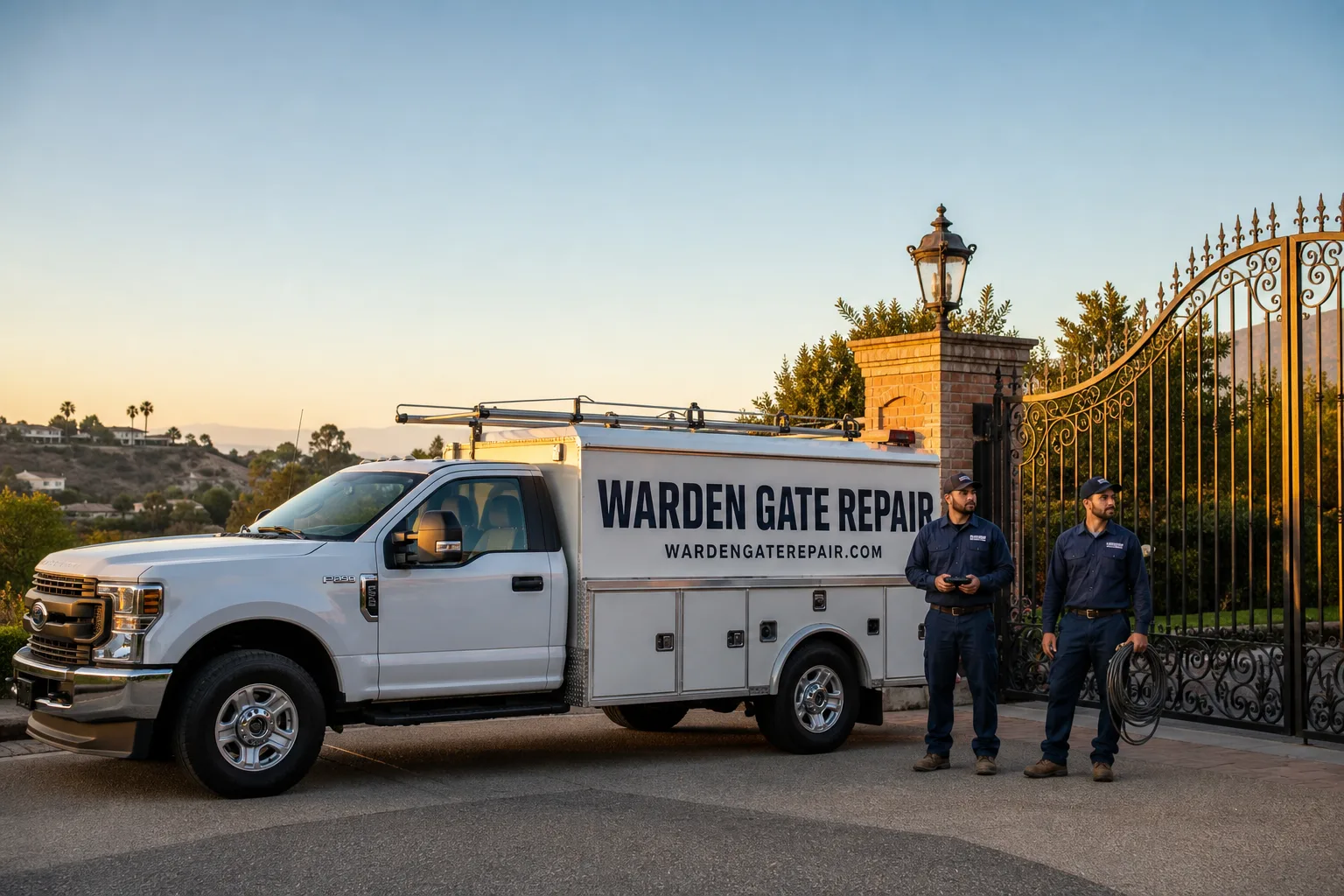
Free on-site gate assessment - hinges, posts, and your LiftMaster or Nice gate operator checked before anything is quoted
The assessment is free and the quote is the invoice.

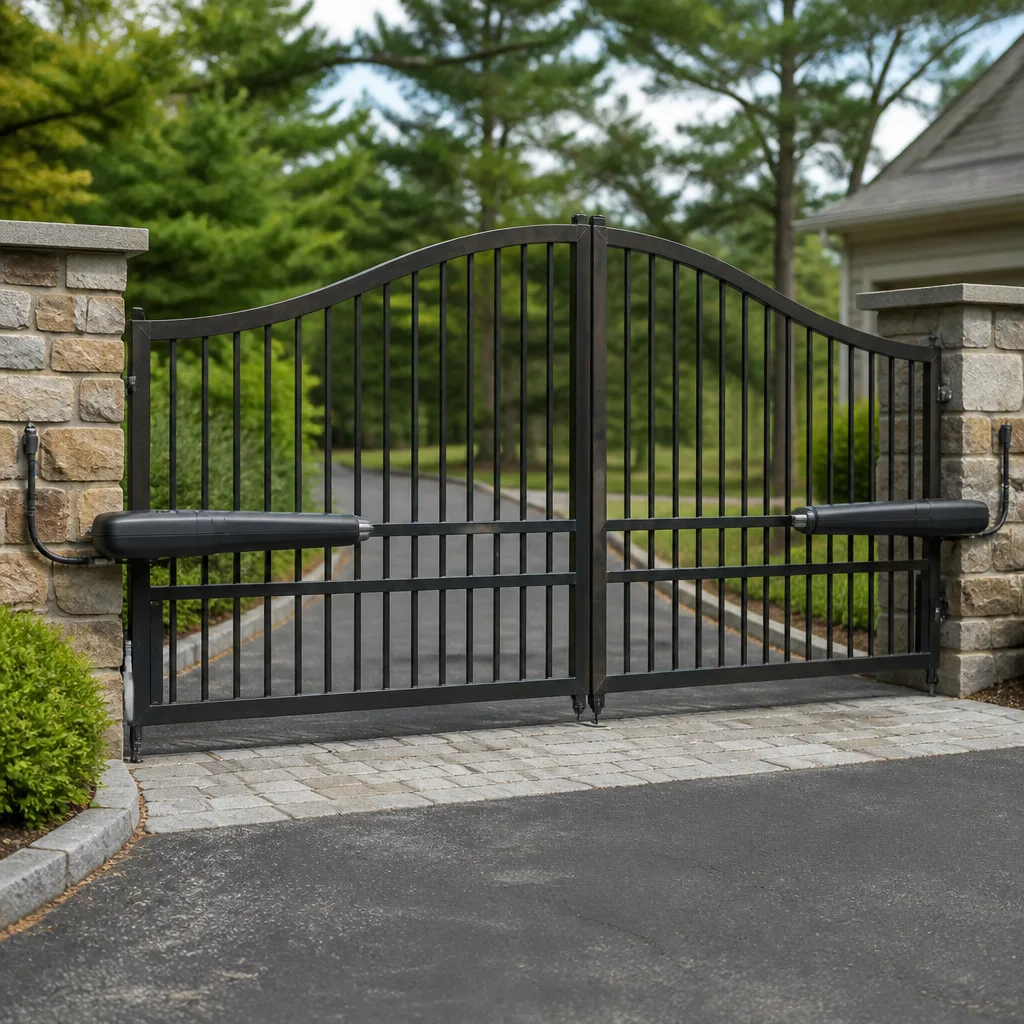
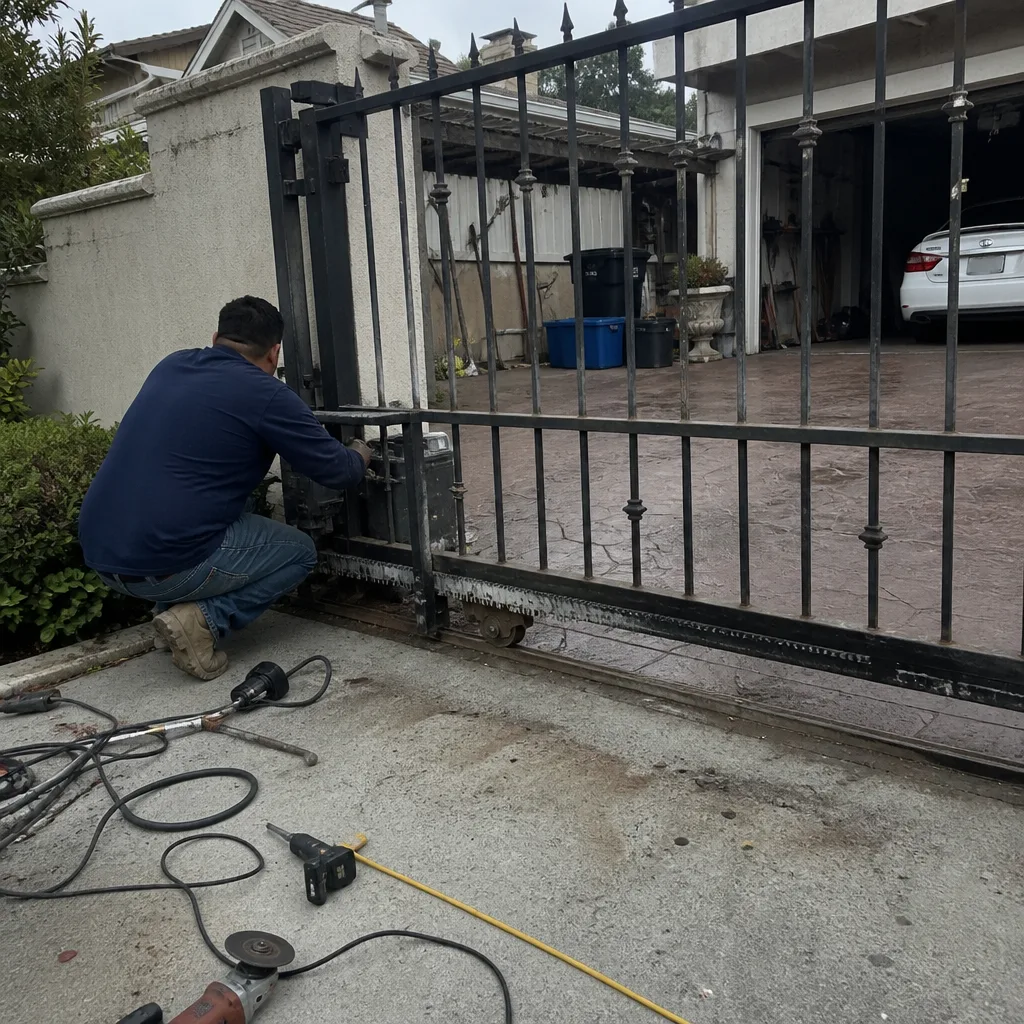 Before
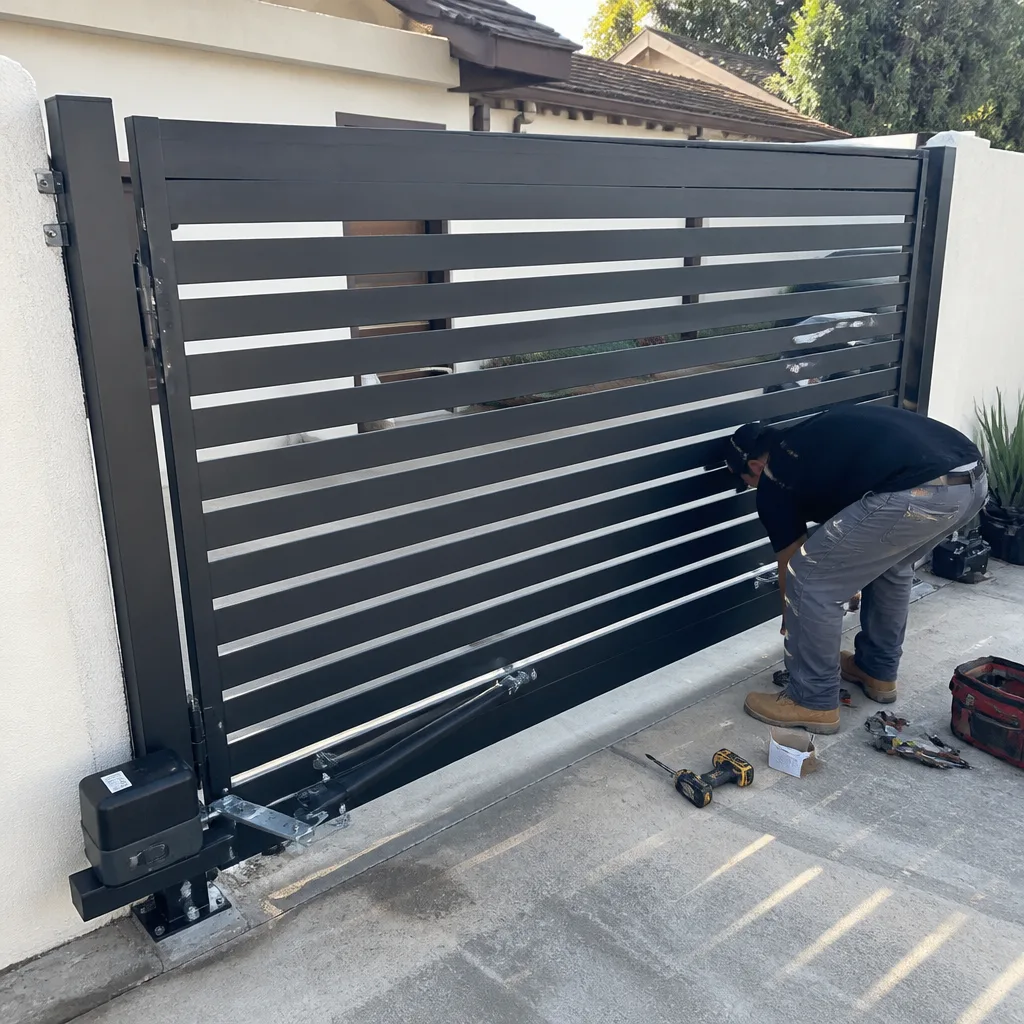 After
After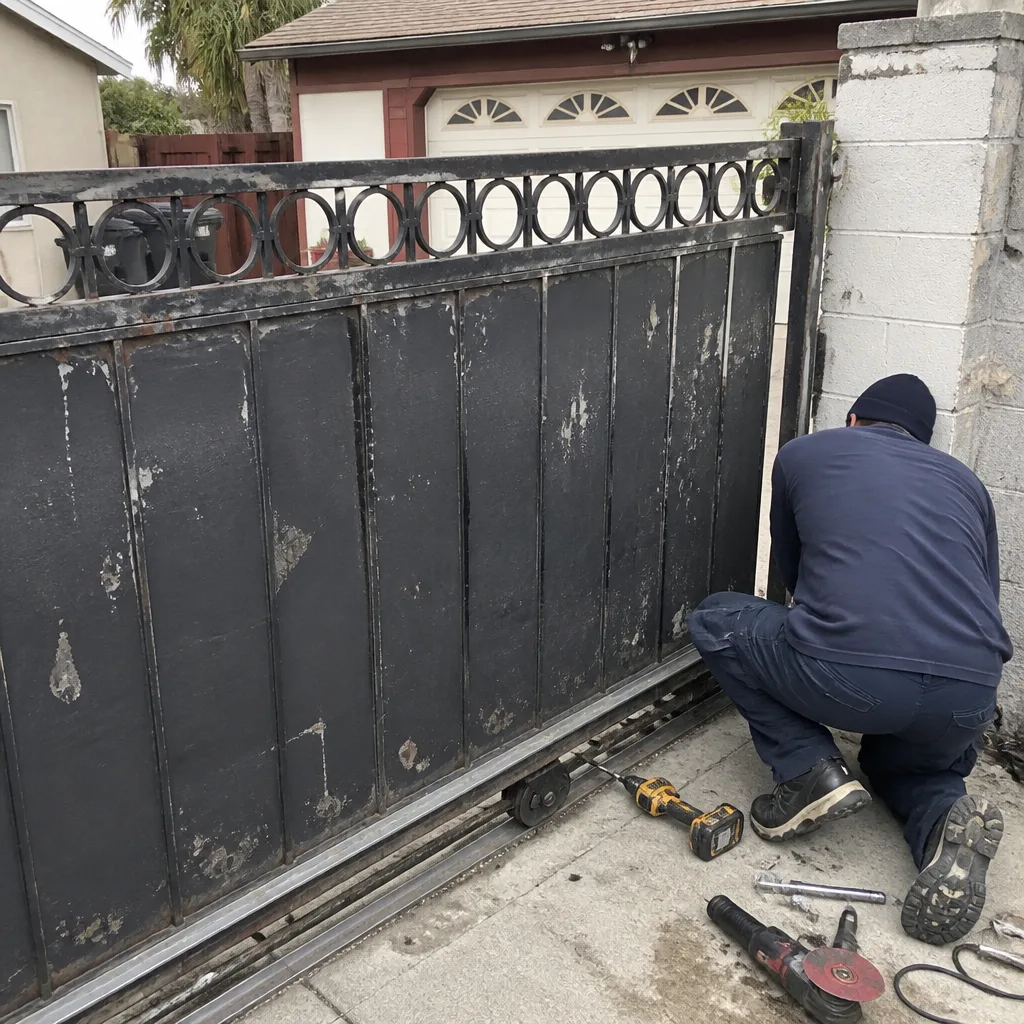 Before
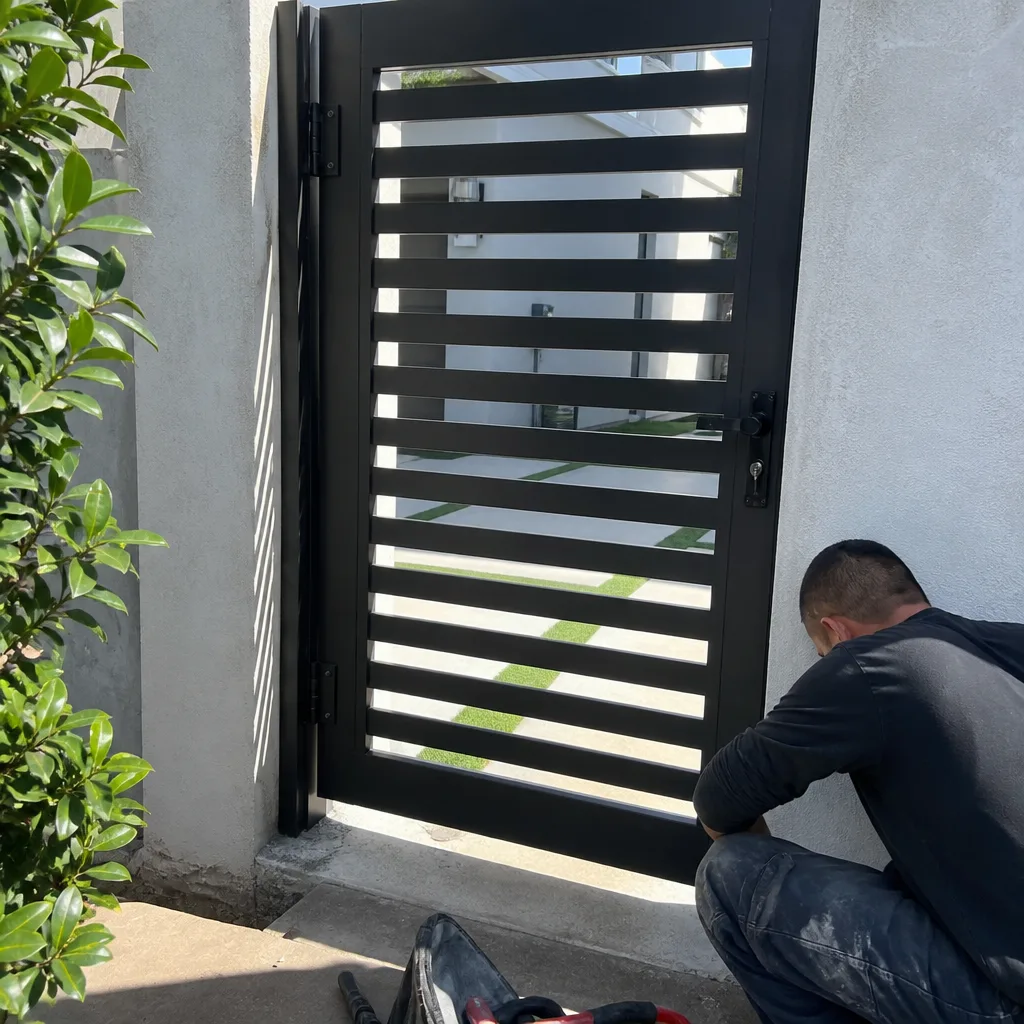 After
After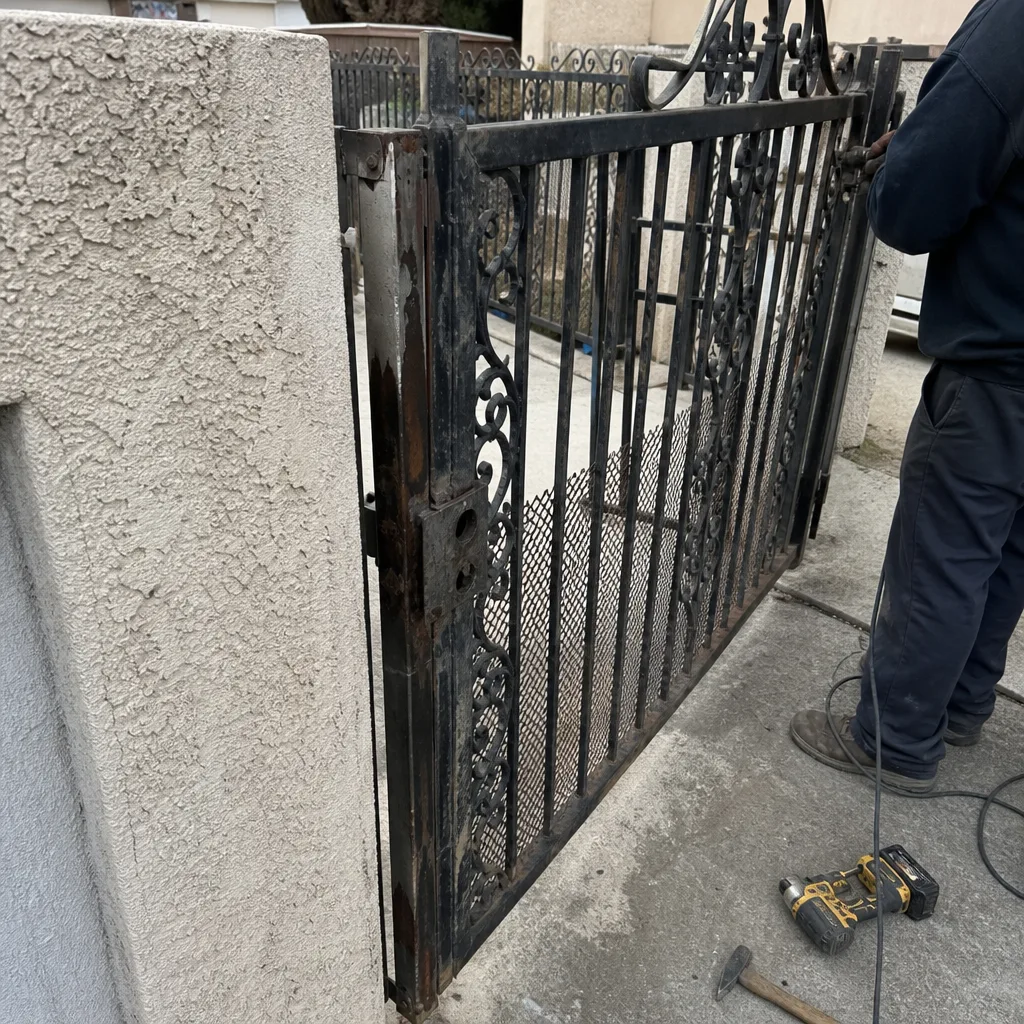 Before
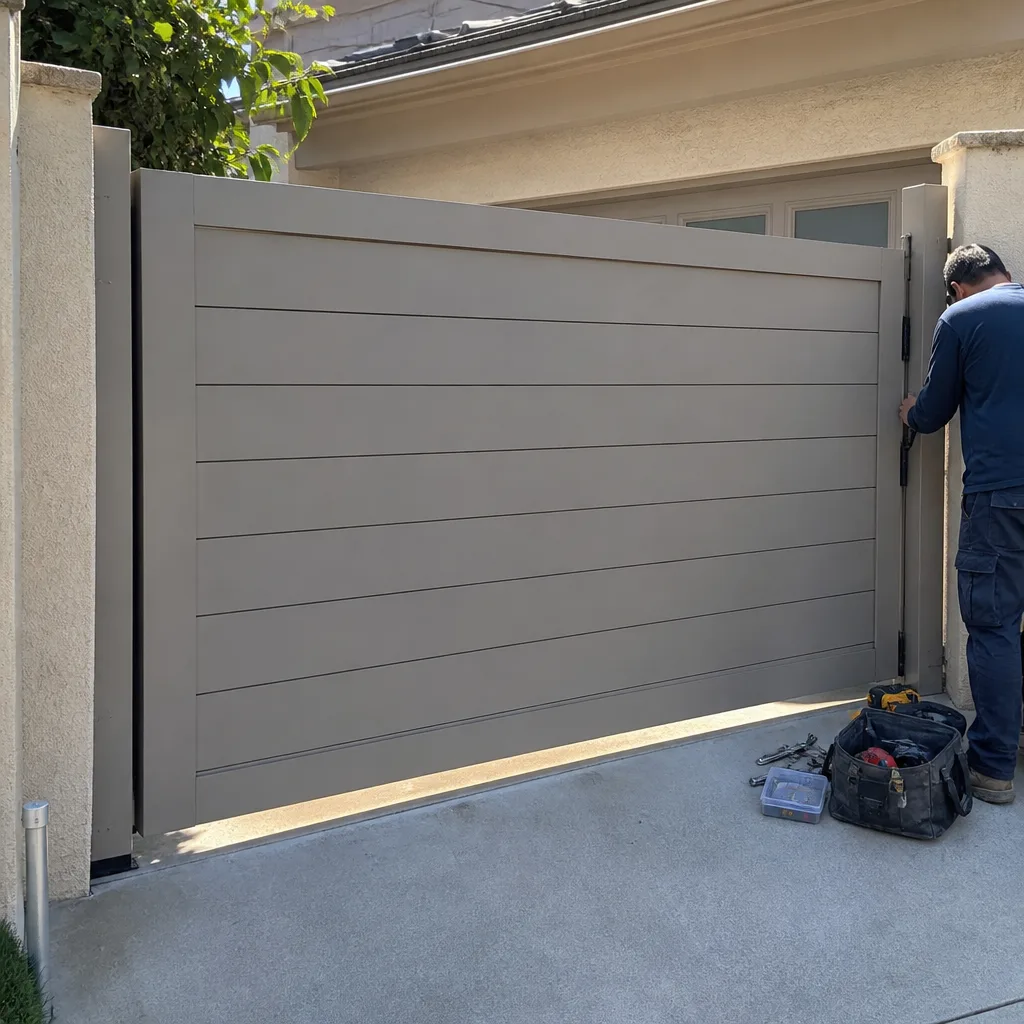 After
AfterGate Hinges Sagging or Dragging on the Ground
A gate that sags or drags on the ground almost always means one or more hinges have failed, the gate posts have shifted, or the frame itself has racked out of square. Left alone, the dragging gets worse fast – the gate grinds a rut into the surface below it, the remaining hardware takes on more stress than it was built for, and what started as a hinge job can turn into a full gate replacement. The good news: caught early, a sagging gate is usually a straightforward repair.
The hinge is the pivot point that carries the full weight of the gate leaf. When a hinge starts to fail – through rust, loose fasteners, cracked welds, or a post that’s slowly leaning – the gate drops on its hanging side. Even a small amount of sag changes the geometry of the whole gate. The latch stops aligning. The gate catches on the ground before it gets to the latch. An electric opener tries to push through resistance it was never designed to handle, and that shortens the motor’s life. None of that is dramatic when it starts, which is exactly why homeowners miss it until the gate won’t open at all.
Why It Happens
Hinge Wear or Failure
Hinges have a finite lifespan, especially on heavy gates that cycle dozens of times a day. The barrel of the hinge wears oval over time, letting the pin rattle loose and the gate leaf drop. You can usually spot this by grabbing the hanging edge of the gate and trying to lift it – if it moves up half an inch or more, the hinge barrel has worn out. Rust that coats the outside of the hinge but hasn’t eaten through it yet is cosmetic; rust that’s made the metal flaky or soft is structural and the hinge needs to come off entirely.
Loose or Stripped Fasteners
Gate hinges are typically bolted through a post or welded to a frame. On wood posts, lag screws can strip their holes over years of vibration and seasonal swelling. On metal frames, weld points can crack under the repeated shock of the gate swinging and stopping. Look at the face of each hinge plate: if you can see daylight between the hinge and the post face, or if the screws turn without biting, the fastener connection has given out. This is different from a worn hinge – the hinge itself may be fine, but it’s no longer anchored.
Post Movement or Foundation Shift
The post the gate hangs from is set in the ground, and ground moves – from frost, from soil settling, from erosion near a driveway edge, or simply from years of the gate’s weight pulling on it. When the post leans toward the gate, the gate drops on the hanging side. You can check this with a level held against the post face: if the post is off plumb by more than a degree or two, that’s your culprit. A shifted post puts every hinge on the gate under an angle it wasn’t designed for, and no amount of hinge tightening fixes a leaning post.
Gate Frame Racking or Bend
A gate frame that’s racked – parallelogram-shaped instead of square – will drag at the bottom corner opposite the hinges even when the hinges themselves are fine. This usually happens after a vehicle impact, after a long period of the gate being forced open or closed when it was misaligned, or after a weld on a steel frame cracks at a corner. Stand back and look at the gate from the front: if the top rail slopes downward toward the latch post, or the diagonals of the frame aren’t equal, the frame has racked and the geometry has to be corrected before new hinges will hold.
What to Do Right Now
- Stop operating the gate with the motor. If you have an electric opener, disconnect it or put it in manual mode. A dragging gate forces the motor to work against ground resistance – that kind of strain can burn out a motor board or strip a drive arm in minutes. The repair bill grows fast when the motor goes along with the hinge.
- Photograph the sag and the hinges. Take a photo from straight in front of the gate showing the bottom gap (or lack of it) between the gate and the ground. Take a close-up of each hinge showing any visible rust, separation from the post, or cracked welds. These photos are exactly what your local Warden Gate Repair team will want to see when you call, and they speed up parts sourcing.
- Check whether the post is plumb. Hold a level against the hinge post. If it’s leaning, note which direction. You don’t need to measure it precisely – just knowing whether the post is the problem helps the technician arrive with the right materials.
- Don’t attempt to weld, re-drill, or re-pour the post yourself. Welding on a gate frame that carries an electric operator involves components that may still hold a charge, and re-setting a gate post involves concrete work and load calculations that depend on the gate’s weight. These are not quick fixes and doing them wrong makes the structural repair harder and more expensive.
- Block the gate in place if it’s in a closed position. A gate resting on the ground can still be wedged or chocked so it stays closed until a technician arrives. This keeps the remaining hardware from stressing further and keeps the entry secure while you wait.
How We Fix It
When your local Warden Gate Repair technician arrives, the first thing they do is a full inspection – hinges, post plumb, frame geometry, and the gate’s interaction with the opener if there is one. They’ll check each hinge for barrel wear, test the fastener points, and measure how far out of square the gate has drifted. Before a single tool comes out for the repair, you get a written price. That’s not a range and not an estimate that changes at the end – it’s the number, in writing, before any work starts.
The repair itself usually involves replacing worn hinge barrels or full hinge assemblies, re-anchoring fasteners with larger-diameter hardware or new weld points, and adjusting the gate’s hang so it swings level and latches cleanly. If the post has shifted, re-plumbing it is part of the same visit where possible. The whole job typically wraps in a couple of hours on a straightforward hinge repair. Every fix is covered by our 365-Day Done Right Promise – if the repair fails within a year, the return visit is free, full stop. This falls under our Gate Repair service, and if the opener took damage from the dragging, our Electric Gate Repair team handles that in the same visit.
Frequently Asked Questions
A sagging gate is a security and safety risk that gets worse the longer it runs. A gate that drags on the ground can jam partway open, leaving your property unsecured. It can also fail suddenly – a hinge that’s been stressed past its limit doesn’t always give a warning before it lets go, and a heavy gate dropping off its post can injure anyone standing nearby. If your gate is dragging, we’d treat it as urgent. Call us at (828) 426-7081 and a live person will pick up right now, any time of day or night.
Your local Warden Gate Repair team handles gate repairs on an urgent basis – our phones are answered 24 hours a day, 7 days a week, 365 days a year by a real person, not a voicemail. Availability depends on your location and the current schedule, but calling immediately gives you the best chance of a same-day visit. Call (828) 426-7081 and tell us what you’re seeing – we’ll give you an honest answer on timing right then.
In most cases, the gate itself is fine and only the hinges, fasteners, or post need attention. A sagging gate doesn’t usually mean the gate is beyond repair – it means the hardware or foundation holding it has given out. The technician will tell you exactly what needs to be replaced after the inspection, and you’ll have that assessment in writing as part of the upfront price before any work starts.
Before the technician leaves for your address, we send you their name and photo. When they arrive, they show a photo ID badge at the door – every time, no exceptions. Every technician working under the Threshold Standard is background-checked and identity-verified before they’re ever sent to a customer’s home. If someone shows up who you weren’t told to expect, that visit is on us and we make it right. We know opening your gate to a stranger is a real consideration, and we take that seriously.
Get It Fixed
A dragging gate doesn’t get better on its own. Call (828) 426-7081 – a live person answers 24/7 – or book online, and your local Warden Gate Repair team will come out, diagnose the problem, and give you a written price before any work starts. The 365-Day Done Right Promise covers every repair we make.
Written by Cole Rafferty, Owner at Warden Gate Repair, part of the Threshold Group family since 2008.
What Our Customers Say
"Fair price and no pushing a whole new gate when all I needed was a new motor capacitor."
- Shirley A."The vetted tech thing was important since our gate protects the whole property. Careful, polite, and walked me through every safety sensor."
- Russell W."Swing gate wouldn't latch after the hinge sagged. He re-hung it, adjusted the hinge pins, and fixed the latch. Quoted before starting."
- Annette R.