
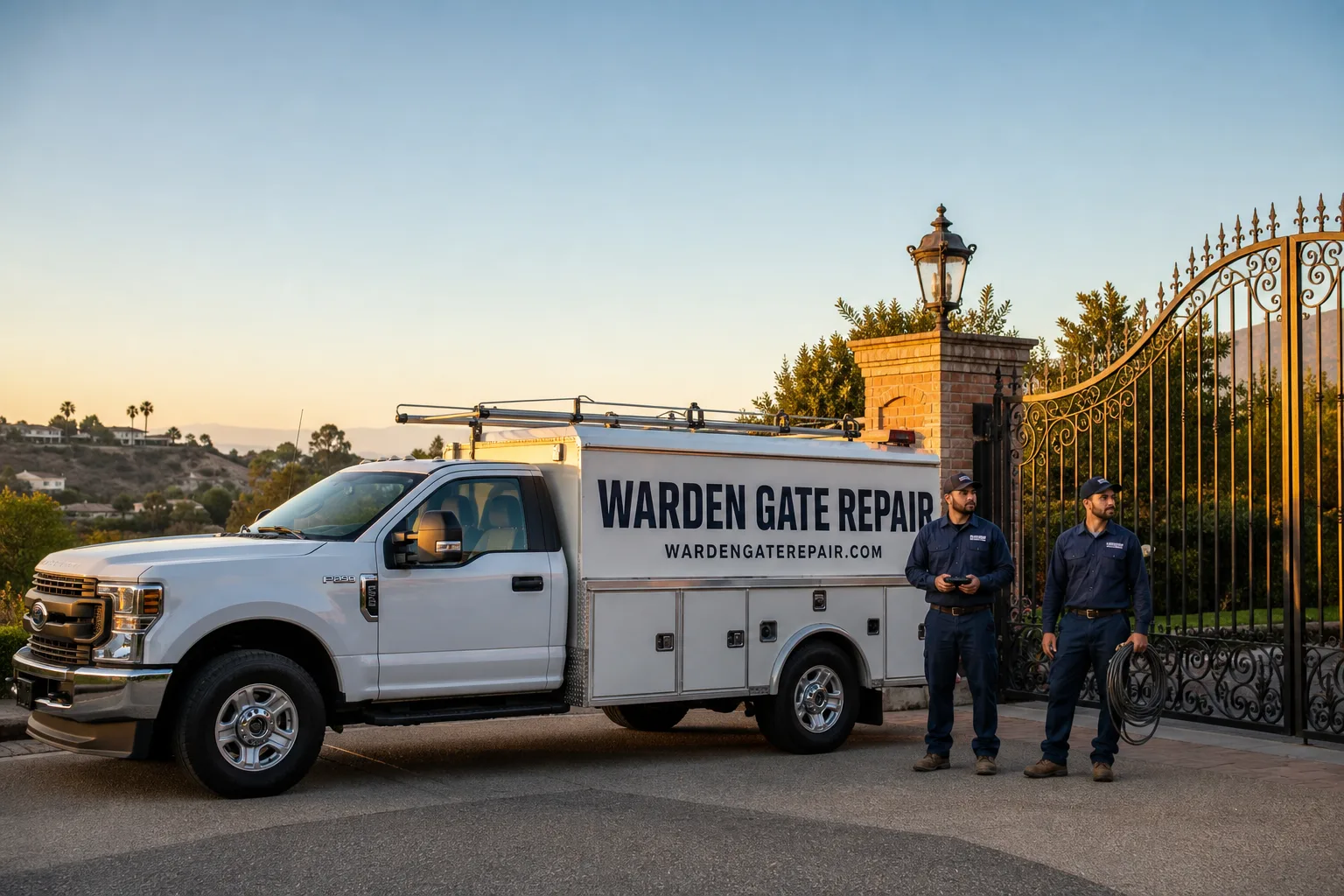
Free on-site gate assessment - hinges, posts, and your LiftMaster or Nice gate operator checked before anything is quoted
The assessment is free and the quote is the invoice.

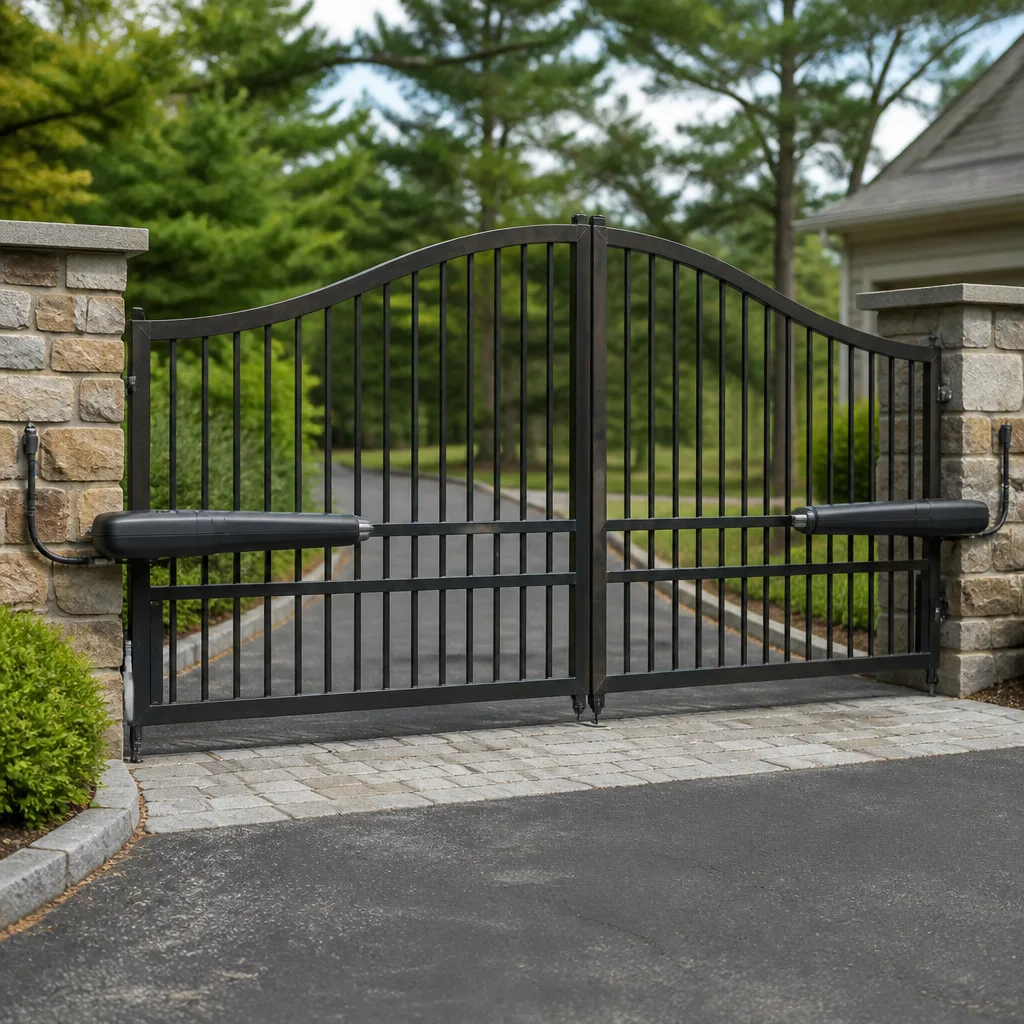
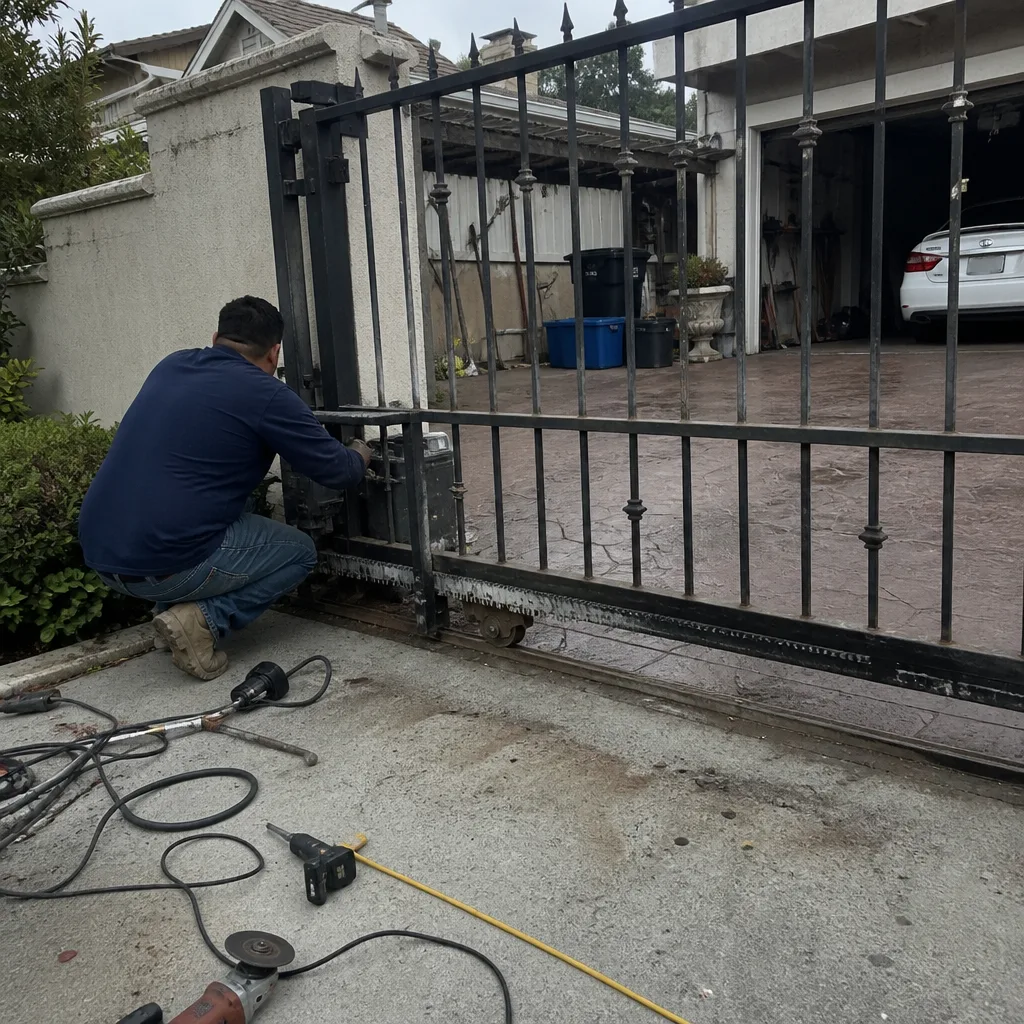 Before
 After
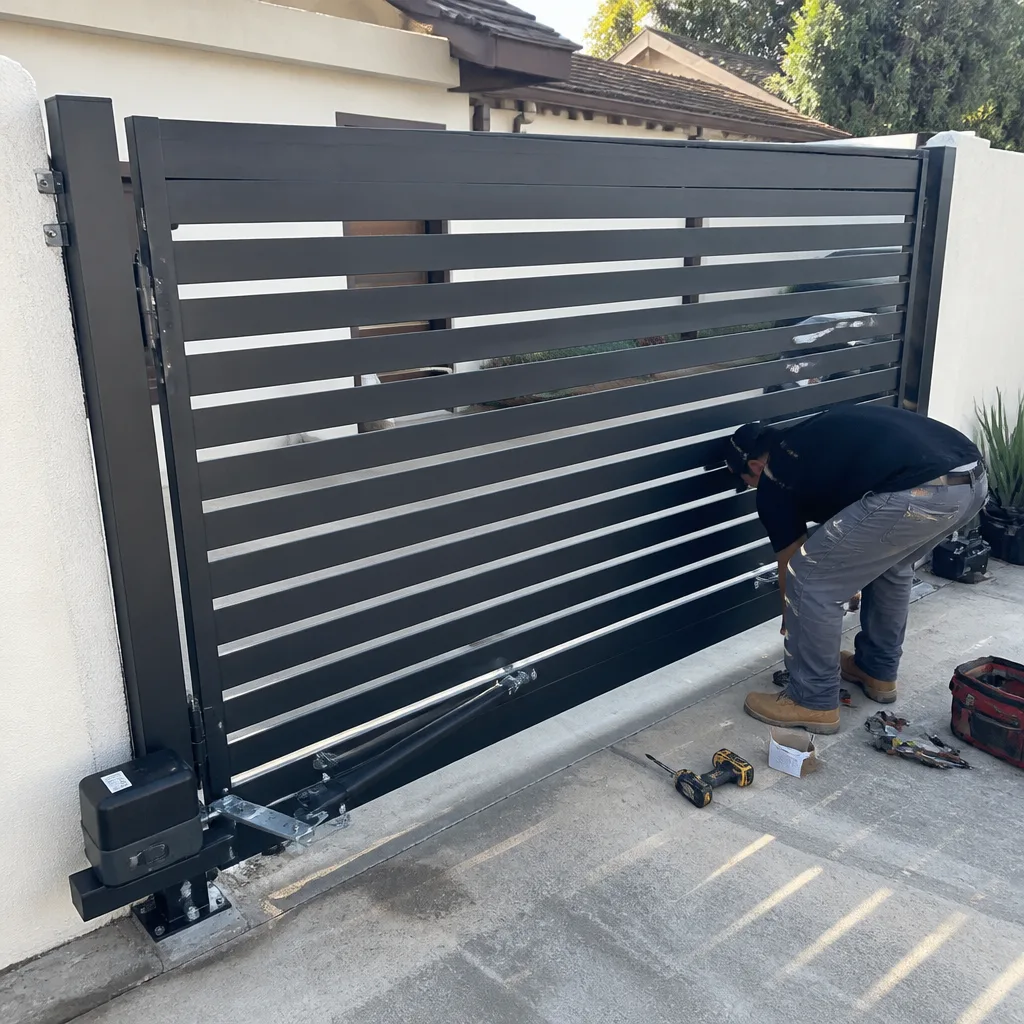
After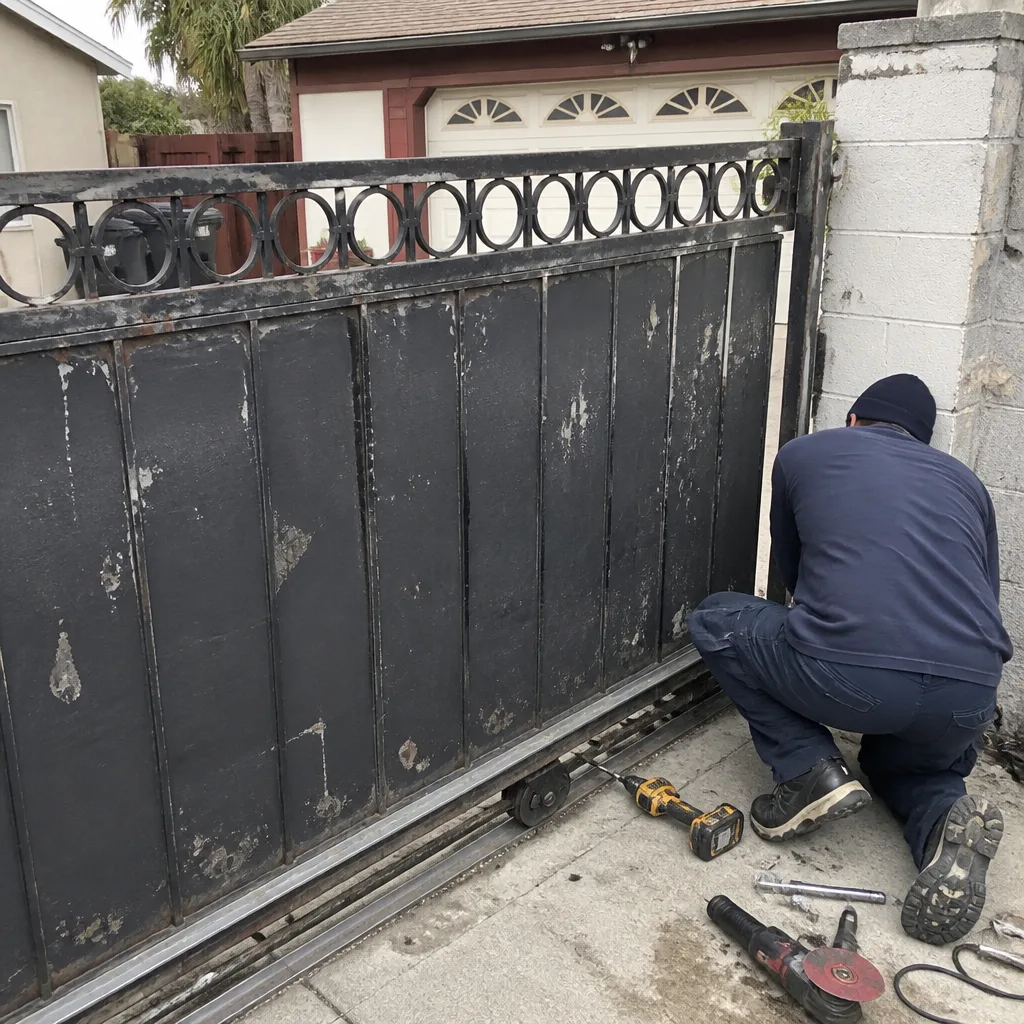 Before
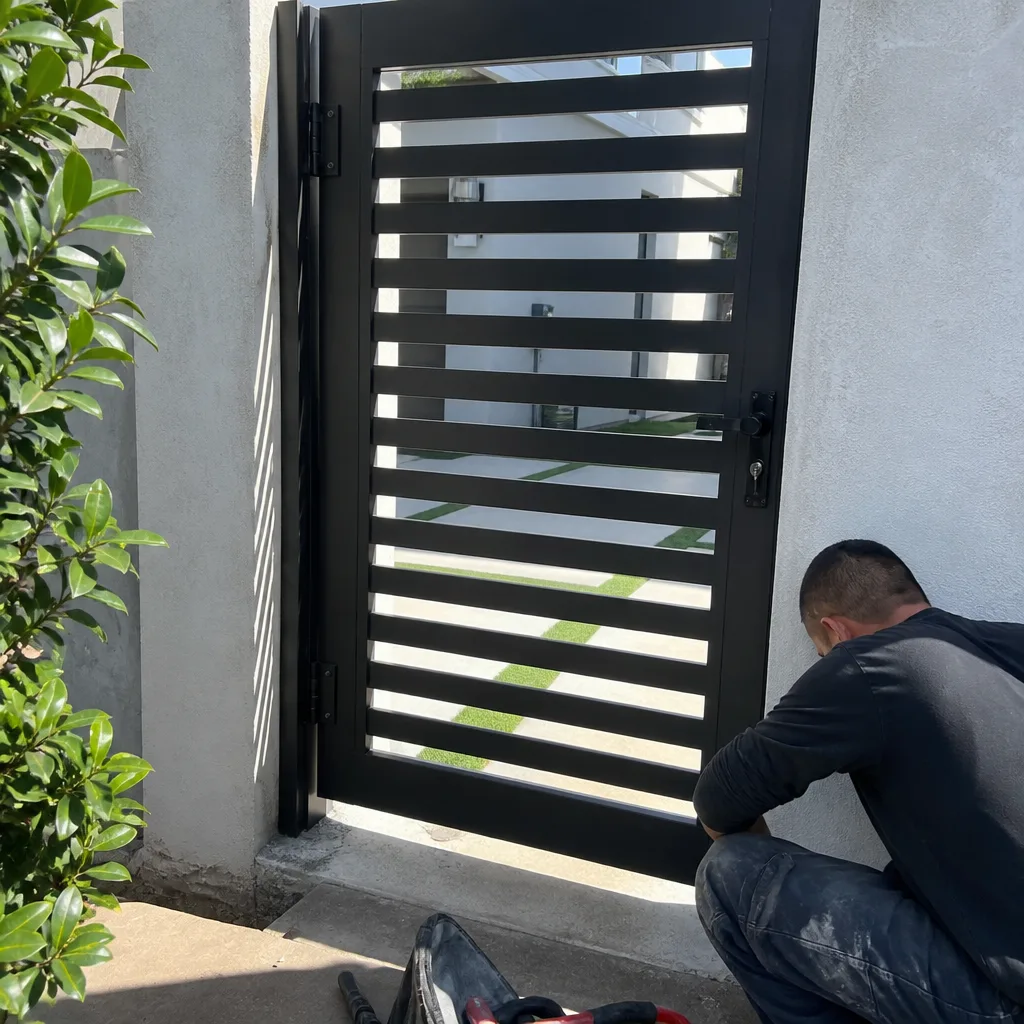 After
After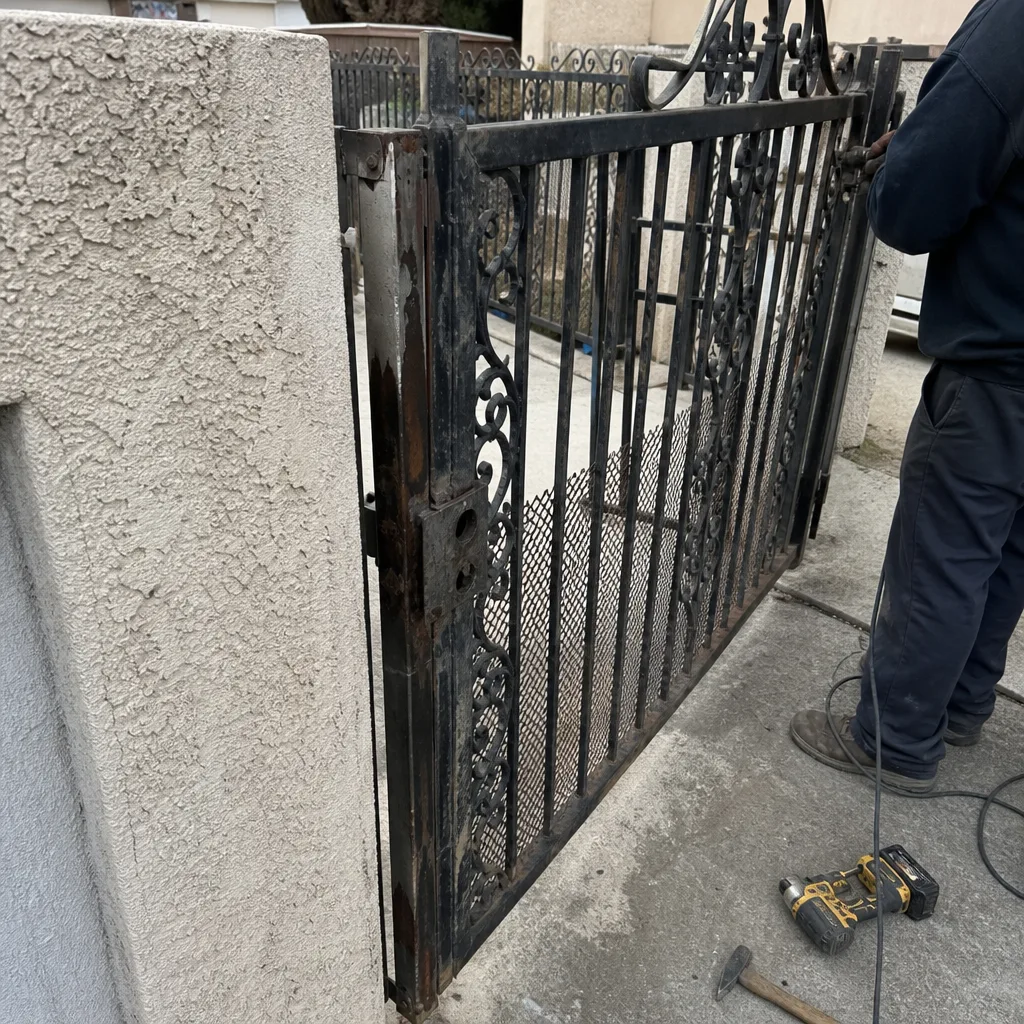 Before
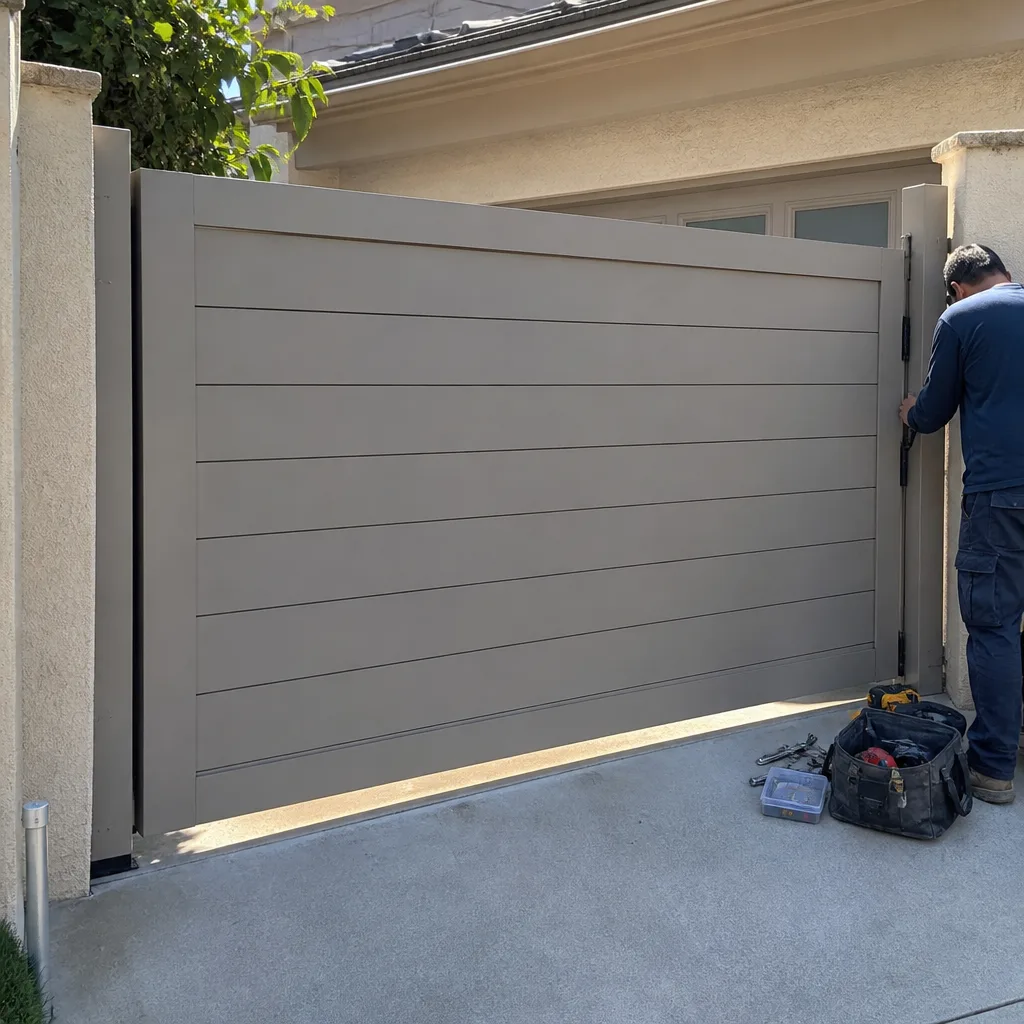 After
AfterGate Won’t Open or Close
A gate that refuses to move almost always comes down to one of three things: a failed motor or operator, a broken mechanical component like a hinge or rack gear, or a loss of power or signal reaching the operator. In most cases, the gate itself is fine – the problem lives in the part that drives it or tells it to move. A technician can usually trace the cause within the first few minutes on site.
That said, “gate won’t open or close” covers a lot of ground. A gate that stopped mid-cycle is a different problem from one that never responded to the remote at all, and a gate that groans and strains before stopping is telling you something different than one that sits completely silent. The sections below walk through the most common causes so you can get a clearer read on what you’re looking at before anyone arrives.
Why It Happens
The Operator Has Lost Power or Its Control Board Has Failed
This is the most common reason a powered gate goes dead without any obvious damage. The operator – the motor unit mounted on the gate or post – needs a continuous power supply and a working control board to function. If your gate is completely silent when you press the remote or push the button at the keypad, check whether any indicator lights are on at the operator unit itself. No lights at all usually means no power is reaching it. Lights on but no movement often points to a control board fault, which requires a technician to confirm.
A Broken Gear, Rack, or Drive Component
Slide gates run on a rack – a toothed strip along the bottom of the gate that meshes with a drive gear inside the operator. Swing gates use a different linkage, but the principle is similar: the motor transfers force through a mechanical chain, and if any link in that chain cracks or strips, the motor runs but nothing moves. You can often hear this as a humming or running sound from the operator with zero gate movement. Sometimes you’ll see a snapped piece of plastic or metal near the base of the gate on a slide gate, or a bent arm on a swing gate.
A Damaged, Stiff, or Misaligned Hinge or Roller
If the operator is running and the mechanical connection seems intact but the gate still won’t move freely, the obstruction is often physical – a hinge that’s seized, a roller that’s cracked or come off its track, or a gate that’s shifted out of alignment and is dragging on the ground or frame. You might see the gate start to move then stop, hear grinding or scraping, or notice the gate sitting visibly crooked when it’s closed. This kind of resistance can also burn out a motor over time if it’s left unaddressed.
A Dead Remote, Keypad, or Signal Problem
Before assuming the worst, it’s worth confirming the gate won’t respond to anything – not just one remote or one keypad. If the gate opens from the keypad but not the remote, or vice versa, the problem is in that specific device, not the operator. Remotes lose their programming after a power outage, and keypad batteries die more often than people expect. If nothing triggers a response, including any wall-mounted button inside the property, then the issue is upstream of the controls and needs a proper diagnosis.
What to Do Right Now
- Stop forcing it. If the gate is stuck mid-cycle or dragging, don’t keep pressing the remote hoping it will work through it. Repeated attempts against a mechanical obstruction can damage the operator, the rack, or the gate frame itself.
- Check the power at the operator. Look for indicator lights or a display on the operator unit. A completely dark unit may just be a tripped breaker or a blown fuse in the disconnect. If you find the breaker has tripped, reset it once – but if it trips again immediately, leave it off and call. Do not probe wiring yourself; gate operators carry live current and the wiring should only be handled by a trained technician.
- Look for anything obvious at ground level. Debris in the track, a roller off its rail, or a visibly broken rack piece are things you can safely see from a few feet away. Don’t reach into the track or try to move components by hand while the operator still has power.
- Take a short video. If the gate does anything at all when you try to operate it – hums, starts and stops, grinds – a 15-second video is genuinely useful for the technician before they arrive. It can confirm which component is failing before the truck even pulls up.
- Photograph the operator unit and gate position. A still photo of the operator, the gate position, and any visible damage gives the technician a head start and helps with parts if something needs to be ordered.
How We Fix It
When your local Warden Gate Repair technician arrives, the first thing they do is a full diagnostic – checking power at the operator, testing the control board, running the motor through its sequence, and physically inspecting the drive components, hinges, rollers, and gate alignment. The goal is to confirm the root cause, not just treat the symptom that’s visible.
Once the diagnosis is complete, you get a written price before any work starts. That’s not a policy we bend – it’s how every job runs. The technician names the part, names the labor, and hands you a number. You decide. If you approve, repairs typically cover gate repair or electric gate repair depending on whether the fault is mechanical, electrical, or both. In most cases a non-parts job is completed the same visit.
Every repair is backed by our 365-Day Done Right Promise: if the repair isn’t right, we return at no charge. That’s in writing, included with every job.
Frequently Asked Questions
It can be, depending on where the gate is stuck. A gate frozen in the open position leaves your property unsecured. A gate stuck closed and won’t release manually can trap vehicles or block emergency access. Most operators have a manual release – a handle or lever that disconnects the motor so you can push the gate by hand – but if you can’t locate it or it won’t disengage, don’t force it. Call (828) 426-7081 and a live person will walk you through safe options right now.
If the gate is stuck open, don’t wait – your property is exposed and a stuck operator left in that state can develop further faults. If it’s stuck closed and you have manual access, it’s safer to hold but still worth addressing within a day or two, since a failing operator often has secondary problems building behind the visible one. Either way, calls to (828) 426-7081 are answered by a live person around the clock, so there’s no wrong time to reach out.
Contact your local Warden Gate Repair team at (828) 426-7081 and a live person – not a voicemail – will tell you exactly what availability looks like. We know a gate that won’t move isn’t something most people can schedule around a week from now. Call us and we’ll work out the fastest path to getting a technician to you.
Yes, always. The written price comes before any work starts – no exceptions. Once the technician completes the diagnostic, you receive a written quote that covers parts and labor. Nothing gets added at the end. If you decide not to proceed, you’re not obligated. The price you approve is the price you pay.
Get It Fixed
Call (828) 426-7081 and a live person will answer right now – no voicemail, no chatbot. Your local Warden Gate Repair team handles the diagnostic, gives you a written price before anything starts, and backs every repair with the 365-Day Done Right Promise. Gates and openers that just work – that’s the job.
Written by Cole Rafferty, Owner at Warden Gate Repair, part of the Threshold Group family of gate repair specialists serving communities nationwide since 2008.
What Our Customers Say
"Fair price and no pushing a whole new gate when all I needed was a new motor capacitor."
- Shirley A."The vetted tech thing was important since our gate protects the whole property. Careful, polite, and walked me through every safety sensor."
- Russell W."Swing gate wouldn't latch after the hinge sagged. He re-hung it, adjusted the hinge pins, and fixed the latch. Quoted before starting."
- Annette R.