
Last updated October 9, 2026
Free on-site gate assessment - hinges, posts, and your LiftMaster or Nice gate operator checked before anything is quoted
The assessment is free and the quote is the invoice.

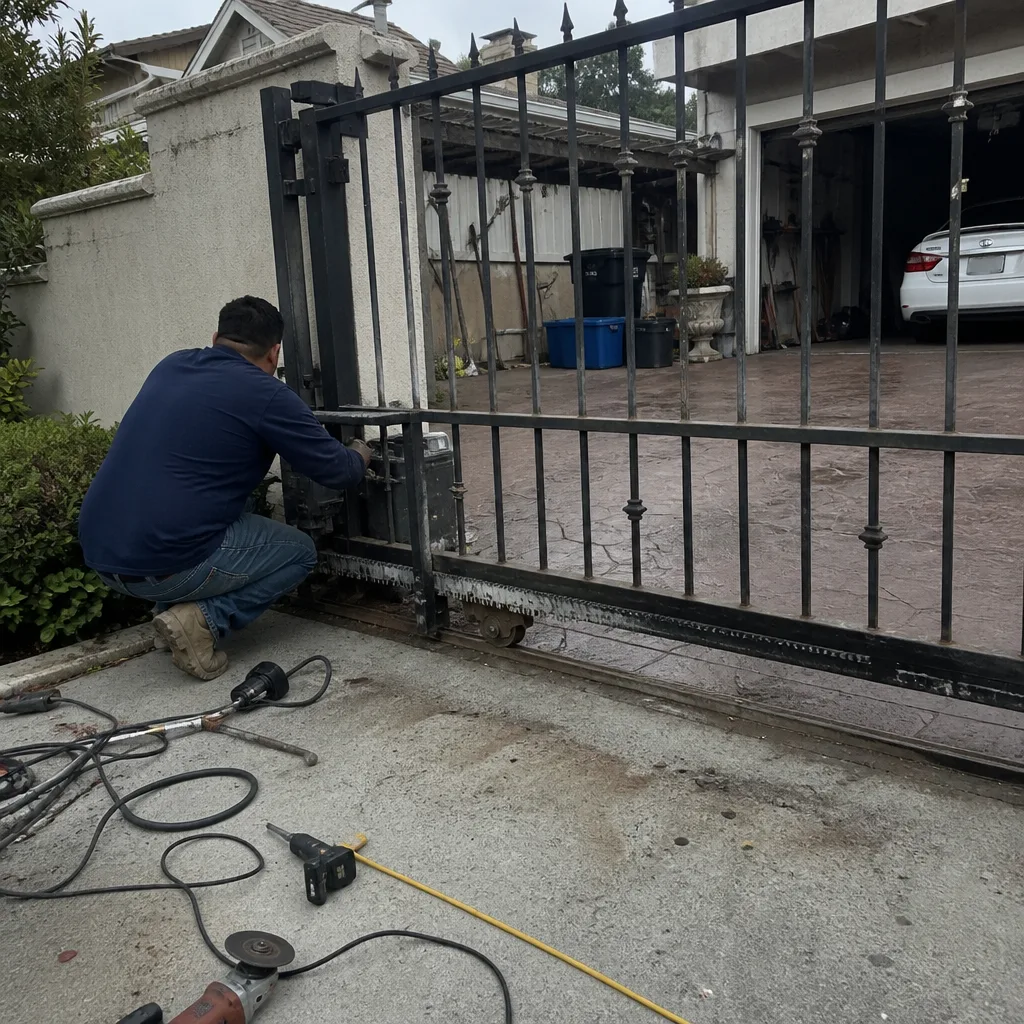 Before
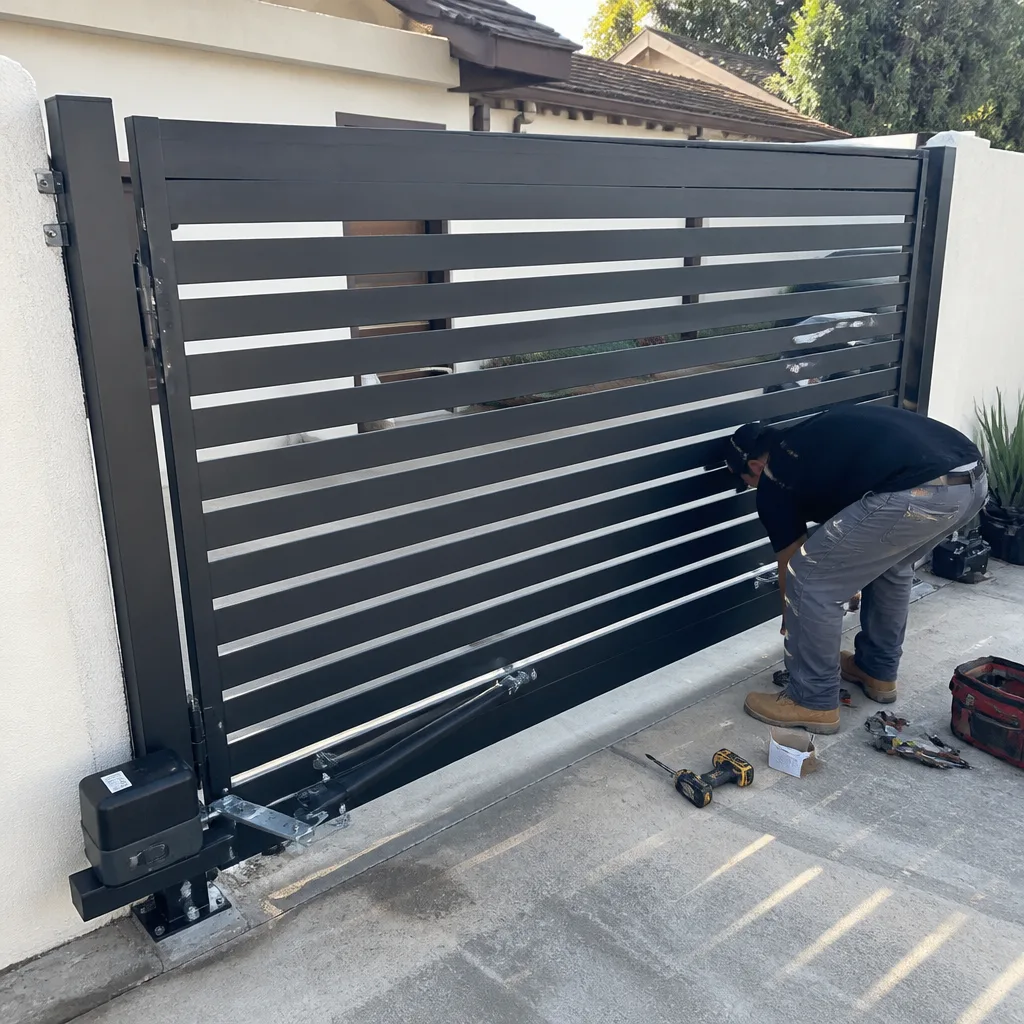 After
After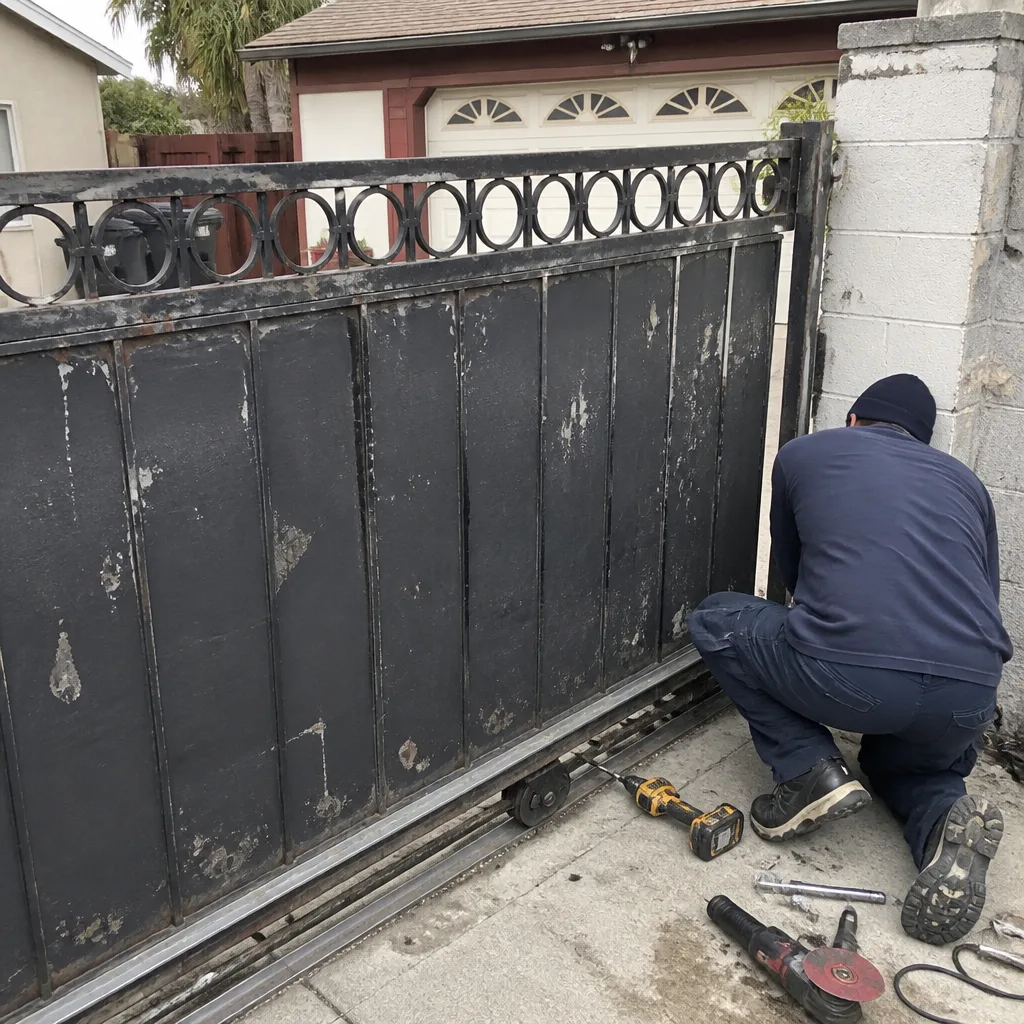 Before
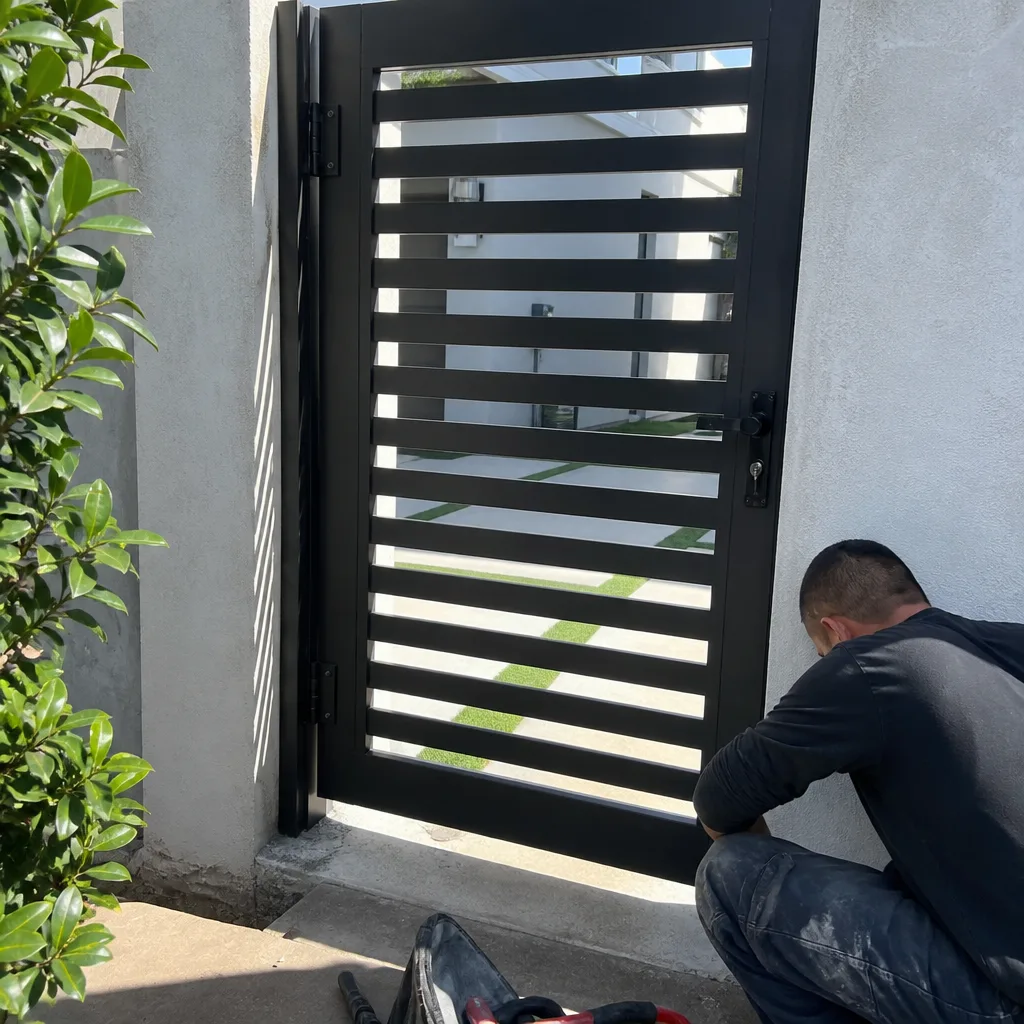 After
After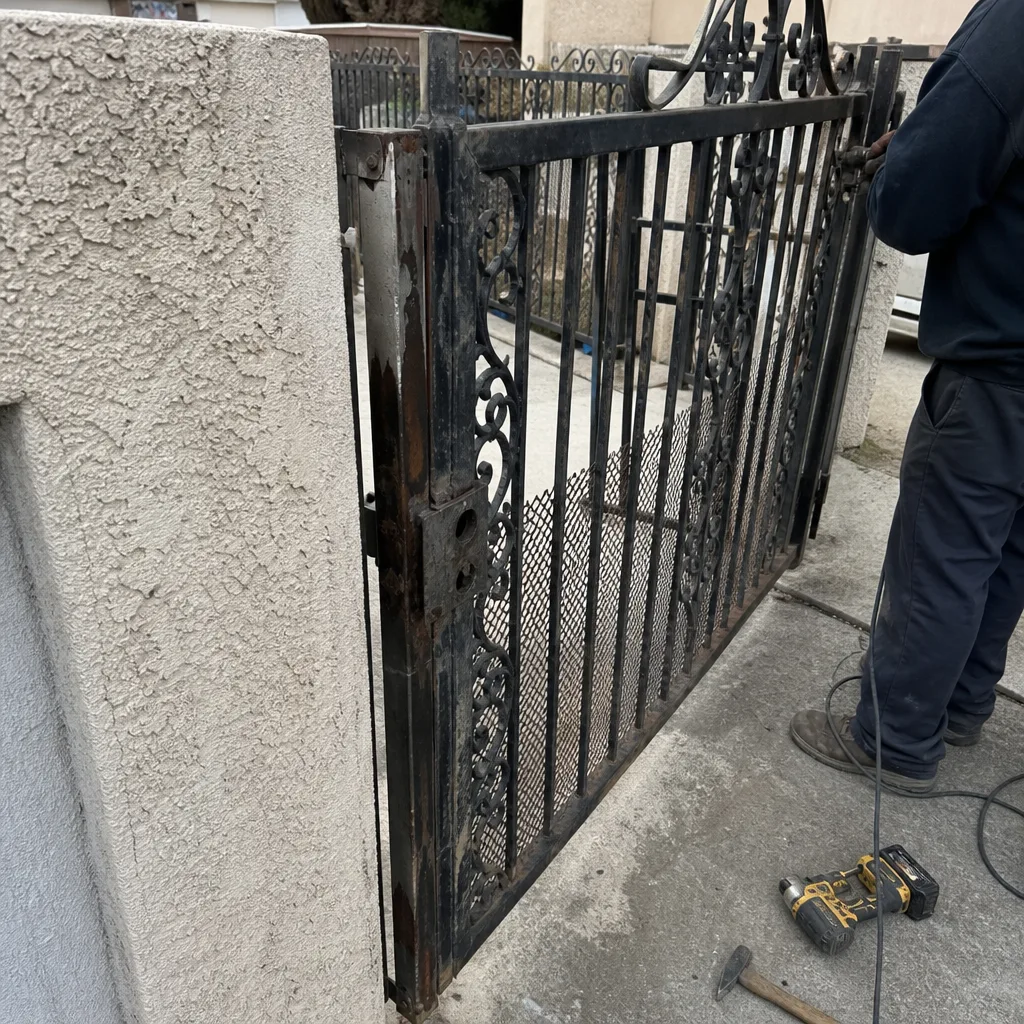 Before
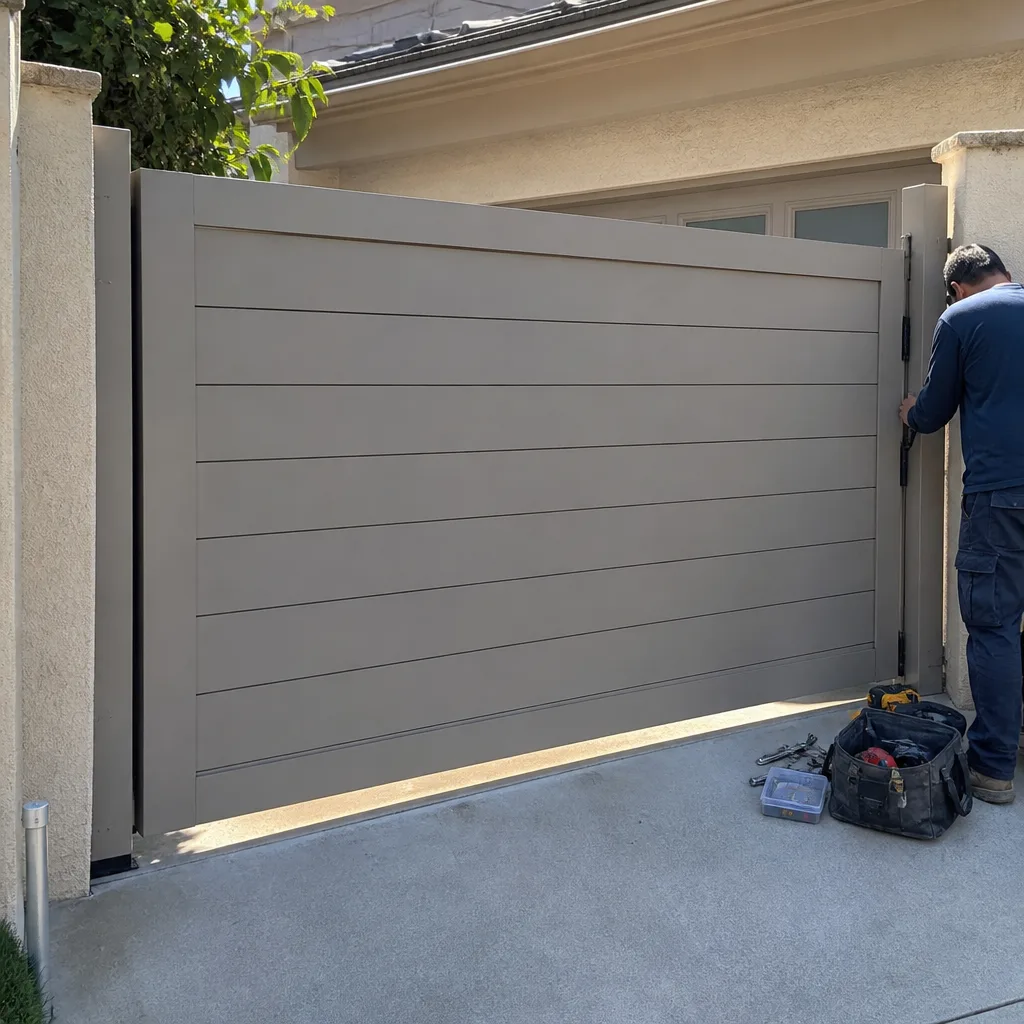 After
AfterSeasonal Gate Repair Care for Los Angeles: Year-Round Homeowner’s Guide
October in Los Angeles is not fall. For your gate motor, it’s the most mechanically stressful month of the year. Santa Ana winds exceeding 60 mph load swing gates with lateral force they were never designed to handle repeatedly, and the surge claims more gate arms in six weeks than the rest of the year combined. This guide breaks down what actually wears out your gate in Los Angeles, month by month, so you can catch problems before they strand your car in the driveway or leave your property open overnight. For hands-on help, see our Gate Repair services.
Quick Answer
Seasonal gate care in Los Angeles means tracking four stress cycles instead of four seasons: winter rain saturation, spring pollen and debris buildup, summer heat expansion, and fall Santa Ana wind loads. A homeowner who spends about 20 minutes per season on the checks in this guide can prevent most common gate failures, including motor burnout, hinge sag, and sensor misalignment. The two tasks that matter most are keeping the gate track and hinges clear of debris, and having a professional inspect the motor and safety sensors once a year.
Table of Contents
- Los Angeles’s Four Real Seasons: What Actually Wears Out Your Gate
- Winter Rain Saturation: January Through March
- Spring Pollen and Debris: April Through June
- Summer Heat Expansion: July Through September
- Santa Ana Wind Season: October Through December
- Month-by-Month Gate Maintenance Calendar for Los Angeles
- Heat, Batteries, and Control Boards: What Fails and Why
- Ash, Sensors, and Motor Vents: The Post-Fire-Season Cleanup Step
- Common Mistakes to Avoid
- When to Call a Professional
- Frequently Asked Questions
- The Bottom Line
Los Angeles’s Four Real Seasons: What Actually Wears Out Your Gate
A gate in Los Angeles doesn’t fail because winter froze it or summer humidity rusted it. It fails because four distinct weather patterns, spread across the calendar in ways that don’t match any traditional season, each attack a different part of the system. If you know which part is under stress during which months, you can check that part before it breaks.
In our experience as a gate repair company serving Los Angeles, most homeowners call us after a failure, not before one. That’s understandable, gates are quiet machines that sit at the edge of the property. But the failure was usually building for weeks or months before the gate stopped moving. Here’s how the four cycles work:
- Winter rain saturation (January through March): Water is the enemy of low-voltage wiring, concrete gate posts, and any underground conduit. Los Angeles gets most of its annual rainfall in these months, often in a handful of intense storms rather than steady drizzle. The ground saturates, concrete absorbs moisture, and wiring connections corrode.
- Spring pollen and debris accumulation (April through June): Los Angeles’s long growing season means trees, shrubs, and vines push new growth directly into gate tracks, hinge areas, and sensor paths. Pollen coats photo-eye lenses and clogs motor vents. A gate that worked fine in March can be fighting a half-inch of compacted debris in its track by June.
- Summer heat expansion (July through September): Steel and aluminum expand in sustained heat. Los Angeles regularly sees weeks above 90 degrees, and gate metal can reach 140 degrees or more in direct sun. Expansion changes the geometry of hinges, tracks, and gate arms. Meanwhile, motor components and control boards bake inside their housings.
- Santa Ana wind season (October through December): The most destructive cycle, and the least expected. Santa Ana winds in Los Angeles routinely hit 40 to 60 mph, with gusts higher in foothill neighborhoods and canyon passes. A swing gate acts like a sail. Every gust pushes lateral force through the gate arm, hinge bolts, and motor gearbox that those components were never meant to absorb repeatedly.
Winter Rain Saturation: January Through March
Los Angeles gets most of its annual precipitation between January and March, and the rain doesn’t fall gently. It arrives in concentrated bursts that saturate the ground quickly. For a gate system, that water finds its way into three places: the concrete around the posts, the conduit that carries low-voltage wire underground, and the electrical connections inside the motor housing and junction boxes.
What rain actually does to a gate system:
- Concrete post saturation: Gate posts set in concrete can shift when the surrounding soil expands with water. A post that moves even a quarter inch changes the alignment of the entire gate, causing the motor to work harder and the gate to catch or bind. In Los Angeles’s clay-heavy soils, which absorb water slowly and release it slowly, this movement can persist for weeks after the rain stops.
- Underground conduit intrusion: The low-voltage wiring that connects your gate motor to its power source and to keypads, intercoms, and safety sensors often runs through buried conduit. Old conduit joints, or conduit that was never properly sealed, let groundwater seep in. The water sits against wire insulation, and over time the connection corrodes. The first symptom is usually an intermittent gate, it works one morning, then stops responding by the afternoon.
- Motor housing condensation: When cold rain hits a warm motor housing, condensation forms inside. Most motors have some ventilation, but those vents can’t dry everything out. Moisture on a control board leads to corrosion on solder points and connectors. This is why gate failures spike in Los Angeles two to four weeks after a major storm, not during it.
The drainage check that prevents $2,000 in water damage:
- Walk the length of your gate’s travel path and look for standing water or areas where runoff pools against the gate posts or the motor housing.
- Check that downspouts and yard drains are directed away from the gate area. In Los Angeles, many driveways slope toward the street, which is good, but landscape beds next to the gate can trap water against posts.
- Look at the base of each gate post. If you see a gap between the concrete footing and the surrounding soil, water is running down into that seam. Fill it with a concrete-compatible sealant rated for outdoor use.
- Open the motor housing cover (if it’s accessible without tools and you’re comfortable doing so) and look for signs of moisture, white mineral deposits, or rust. If you see any, call a professional before the board fails.
- If your gate has an underground wire run and it’s more than 10 years old, have the wire insulation tested before the rainy season. Replacing aging conduit during dry months costs less than emergency wire repair after a storm.
Spring Pollen and Debris: April Through June
Los Angeles doesn’t get a spring thaw. It gets growth. From April through June, everything with roots is pushing new shoots, and that growth collides with your gate in ways that are easy to see and easy to ignore.
What accumulates in Los Angeles gate tracks and hinges:
- Pollen: Los Angeles’s diverse tree canopy, plus ornamental grasses and flowering shrubs, produces pollen in volumes that coat every horizontal surface. On a gate system, pollen builds up on photo-eye sensor lenses. A lens covered in yellow film can’t see the beam, and the gate’s safety system will refuse to close or reverse repeatedly.
- Leaf litter and twigs: Eucalyptus, sycamore, and oak trees common in Los Angeles drop leaves and small branches throughout spring. On a sliding gate, debris in the track acts like sandpaper, grinding against the gate rollers and wearing flat spots into the wheels. On a swing gate, leaves pack into the hinge area and hold moisture against the metal.
- Vine and shrub encroachment: Bougainvillea, ivy, and jasmine grow aggressively in Los Angeles spring weather. A vine that wraps around a gate arm or grows into the motor housing can block the gate’s travel, strain the motor, and eventually snap the arm or strip the gearbox.
The 20-minute spring gate maintenance routine:
- Clear the full length of the gate track. For a sliding gate, use a stiff brush or a leaf blower to remove everything from the track channel. Pay attention to the ends, where debris gets compacted by the gate wheels.
- Wipe the photo-eye lenses with a dry microfiber cloth. If pollen has hardened, dampen the cloth slightly. Do not use chemical cleaners on the lenses.
- Trim back any plant growth within six inches of the gate’s travel path and within a foot of the motor housing. In Los Angeles, this often means cutting back the same vines two or three times during the spring growth period.
- Test the gate’s auto-reverse safety feature by placing a cardboard box in the gate’s path and closing the gate. It should reverse on contact. If it doesn’t, stop using the gate and call for service. This is a safety issue, not a convenience issue.
A note on sensors: when we respond to electric gate repair calls across Los Angeles in spring, the single most common finding is a photo-eye lens coated in pollen. It’s a five-minute fix that many homeowners don’t know to look for. Check the lenses before you assume the motor is failing.
Summer Heat Expansion: July Through September
Los Angeles summer heat doesn’t just make people uncomfortable. It changes the physical dimensions of your gate and pushes electronic components toward their operating limits. Understanding what heat does mechanically will help you spot problems before they strand you in the driveway.
What heat expansion does to a metal gate:
Steel expands by roughly 0.0000072 inches per inch per degree Fahrenheit. A 12-foot steel gate that starts the morning at 70 degrees and heats to 140 degrees in direct sun will grow by about three-sixteenths of an inch. That doesn’t sound like much until you remember that the gaps between a gate and its posts, or between a sliding gate and its track, are often tighter than that. The gate that glides smoothly at 8 a.m. can bind at 3 p.m.
Aluminum expands even more than steel, nearly double the rate. Los Angeles has thousands of aluminum driveway gates, and they’re the ones most likely to show heat-related binding. If your gate is aluminum and faces west, expect the hottest part of the day to be when problems appear.
Heat’s effect on motors and control boards:
Gate motors generate their own heat during operation. When the ambient temperature inside the motor housing climbs past about 120 degrees, the motor’s thermal protection circuit may trip, shutting the gate down until it cools. That’s a protection feature working correctly, but it’s frustrating when you’re trying to leave for work.
Control boards have a more serious heat problem. LiftMaster and Linear boards, two of the most common brands we service as part of our gate motor repair work in Los Angeles, are rated for reliable operation up to roughly 140 degrees Fahrenheit internal temperature. On a 100-degree day, with the sun beating on a metal housing, the internal temperature can exceed that threshold. The board doesn’t fail completely. It starts to misfire, random open commands, intermittent failure to respond, a gate that opens but won’t close. Homeowners often describe it as “the gate has a mind of its own.”
What to check during Los Angeles summer months:
- Listen for a change in the motor’s sound. A motor that runs hotter will sometimes sound strained or sluggish.
- If your gate binds in the afternoon but works in the morning, note the time and temperature. That pattern points to heat expansion, not a failing motor.
- Check the motor housing vents. They need airflow. If they’re clogged with dust, pollen, or spiderwebs, the internal temperature climbs faster.
- If your gate has a battery backup, summer is when batteries show their age. Heat shortens battery life, and an older battery that worked fine in spring may fail to hold a charge by August.
Battery backup systems and summer heat:
Many Los Angeles homes have gates with battery backup, either for power outages or for solar-powered openers. Heat accelerates the chemical degradation inside lead-acid and lithium batteries. A battery that’s three or four years old may lose significant capacity during a single Los Angeles summer. If your gate runs on battery power and starts moving slowly or stopping mid-cycle in July or August, the battery is the first thing to suspect. Replacement is straightforward for a professional, and the battery itself usually costs less than the service call.
Santa Ana Wind Season: October Through December
The Santa Ana wind season is the most dangerous time of year for Los Angeles gates, and most homeowners don’t see it coming because the weather is otherwise pleasant. The winds arrive with no rain, often after weeks of dry conditions, and they apply forces to your gate that it was never designed to handle.
What Santa Ana winds do to a swing gate:
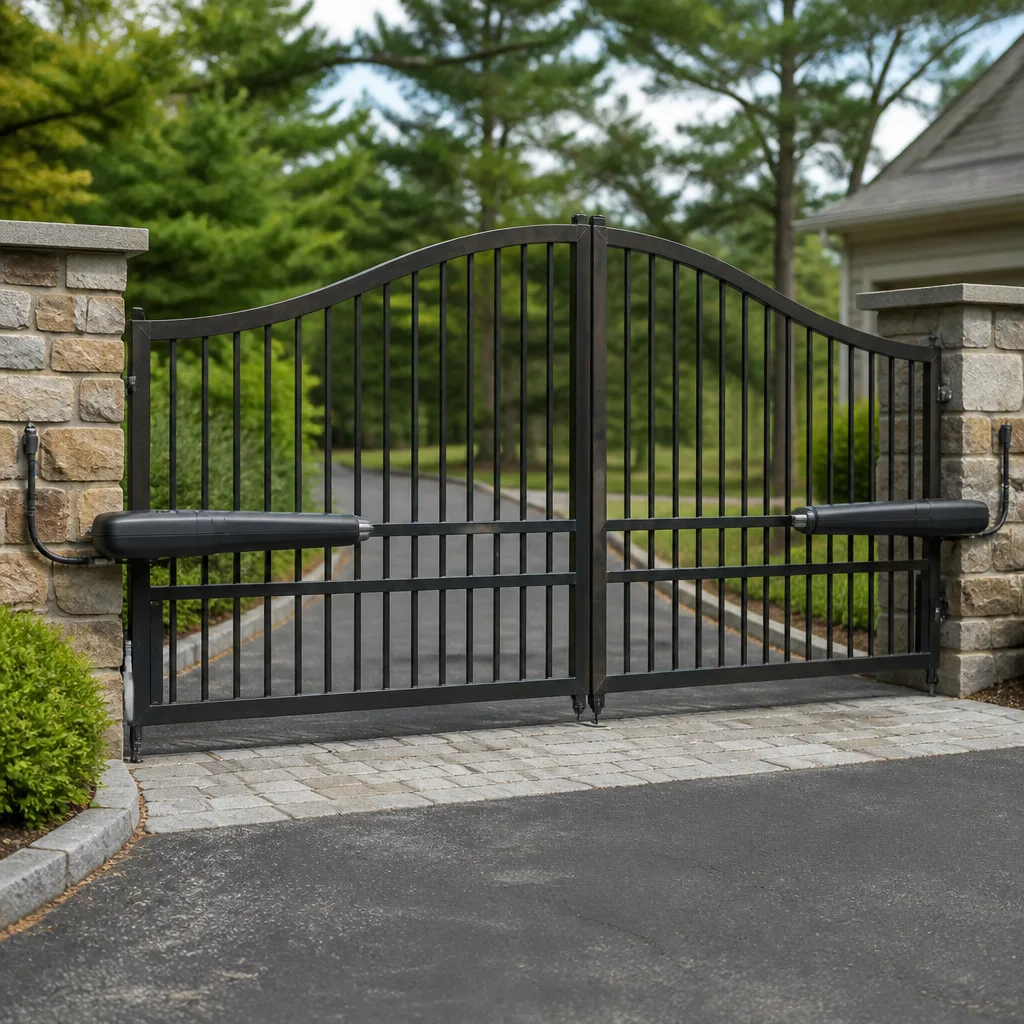
A solid swing gate is essentially a flat panel mounted on hinges. When wind hits that panel, it applies lateral force. At 40 mph, a 12-foot solid gate can experience hundreds of pounds of force. At 60 mph gusts, which are common in Los Angeles foothill and canyon neighborhoods during Santa Ana events, that force can exceed the structural rating of the gate arm and hinge hardware.
The component that usually fails first is the gate arm, the metal bar that connects the motor to the gate itself. Wind-load ratings on gate hardware specify how much wind pressure a given arm and hinge set is rated to withstand. Most residential gate systems in Los Angeles are installed with hardware rated for average local conditions, but Santa Ana gusts are not average conditions. They’re extreme, and they come in pulses, which is harder on metal than a steady push. Think of bending a paper clip back and forth: it doesn’t break on the first bend, it breaks after enough repetitions. Santa Ana winds do the same thing to gate arms over the course of a single windy day.
How to prepare a swing gate before a forecasted Santa Ana event:
- If your gate has a manual lock or latch, engage it before the winds peak. This is the single most effective thing you can do to prevent wind damage. For gates with a separate manual lock, lock it. For gates that rely only on the motor to hold position, release the motor and manually close and latch the gate if your system allows it.
- Clear the gate’s path. A gate that can swing freely through its full range of motion absorbs wind more gracefully than one that’s fighting debris.
- Inspect the gate arm and hinge bolts visually. If you see cracks, loose bolts, or rust around stress points, do not wait for the wind to do more damage. Call for service.
- If you have a telescoping or articulated gate arm, check that the joints move freely. A stiff joint concentrates wind stress in one spot instead of distributing it.
- After the winds pass, inspect the gate for any change in how it opens and closes. Listen for new noises. Check the gate arm connection points for hairline cracks.
Sliding gates and wind:
Sliding gates are less vulnerable to wind than swing gates because they’re supported along the track for their full length. But they’re not immune. Wind-blown debris, palm fronds, tree branches, plastic bags, all of it ends up in the track. A sliding gate that hits a branch wedged in the track can jump the rail or damage a roller. After any significant Santa Ana event in Los Angeles, inspect the track before you run the gate.
If your gate is damaged during a wind event, disconnect the motor (most systems have a manual release) and operate the gate by hand or leave it secured in the closed position until a professional can assess it. Running a motor against a damaged gate arm or misaligned track turns a $300 repair into a $1,500 motor replacement. We’ve seen it happen. For deeper reading, see The Complete Electric Gate Repair Guide for Los Angeles Homeowners.
Month-by-Month Gate Maintenance Calendar for Los Angeles
Here’s the full year, mapped to what’s actually happening in Los Angeles rather than to a generic seasonal template. Use this as your reference card.
January: Post-storm inspection month. After each significant rain, check for standing water near gate posts, test the gate, and listen for changes in motor sound. If the ground is saturated, watch for post movement.
February: Drainage month. This is the time to fix downspouts, regrade low spots, and seal gaps around post footings before the next round of storms.
March: Wiring inspection month. With most rain behind you, have the low-voltage connections checked. Corrosion from winter moisture shows up now.
April: First pollen check. Wipe photo-eye lenses, check motor vents, and clear the gate track.
May: Vegetation control month. Trim back spring growth around the gate, the motor, and the sensor path. Watch for vines reaching toward the gate arm.
June: Second pollen and debris check. Los Angeles’s late-spring bloom means a second round of buildup. Clear the track again and test the auto-reverse feature.
July: Heat expansion watch. Note any afternoon binding or sluggish operation. Check battery backup health if your system has one.
August: Peak heat inspection. This is the month when control boards and batteries are most likely to show symptoms. If your gate is acting erratically, don’t wait for it to fail completely.
September: Pre-Santa Ana preparation. Inspect gate arms, hinges, and bolts for cracks or looseness. Order any replacement parts before the wind season hits.
October: Santa Ana wind readiness. Know where your manual release is. Lock the gate before forecasted wind events. Clear the track after each event.
November: Post-first-event assessment. If any Santa Ana event has already hit, check the gate carefully. Small cracks from wind stress get worse over time. Have them addressed in the fall, not after a January failure.
December: Year-end professional inspection. This is the most valuable hour you can spend on gate maintenance all year. A professional inspection catches the slow failures, worn rollers, corroding connections, fatigued metal, before they strand you. Not sure who to trust? Read Choosing the Right Gate Repair Brand: A Buyer’s Guide for Los Angeles.
If you only do one thing from this entire calendar, do the December inspection. If you only do two things, add the pre-Santa Ana gate lock and post-event track clearing in October and November.
Heat, Batteries, and Control Boards: What Fails and Why
Los Angeles homeowners often assume gates fail because of mechanical wear, and sometimes they do. But in our service calls across Los Angeles, a significant share of “broken gate” diagnoses trace back to two electronic components: the battery backup and the control board. Both are vulnerable to heat, and Los Angeles delivers heat in long, sustained doses.
Battery backup systems:
Most battery backups in the gates we service are lead-acid or lithium, and both degrade faster in high temperatures. The chemistry is straightforward: heat accelerates the internal reactions that drain battery capacity even when the battery is idle. A battery stored at 90 degrees loses capacity faster than one stored at 70 degrees. In a Los Angeles summer, the inside of a gate motor housing can reach 110 to 130 degrees for hours every day. That’s a hostile environment for a battery.
Symptoms of a heat-degraded battery include: the gate moves slower than usual; the gate stops mid-cycle and needs to reset; the battery discharges quickly after a power outage; the gate beeps or throws an error code you haven’t seen before. If you notice any of these during July through September in Los Angeles, the battery is the most likely culprit. It’s a relatively inexpensive fix compared to the control board.
Control boards and heat thresholds:
Control boards from brands like LiftMaster, Linear, BFT, and FAAC are built to operate within a specified temperature range. When the internal temperature of the motor housing exceeds the board’s rated threshold, which we’ve observed in Los Angeles conditions to happen on days when the ambient temperature is in the high 90s or above and the sun is direct on the housing, the board’s components begin to behave unpredictably.
The failure is rarely immediate and total. More often, the board starts to misfire in specific conditions: the gate won’t close when the sun is on the housing; the gate opens spontaneously; the remote range drops dramatically at midday. Homeowners sometimes live with these symptoms for weeks, assuming the gate is “just glitchy.”
If your gate’s behavior changes with the temperature, that’s a diagnostic clue. Tell the technician exactly when the problem occurs, what the weather was like, and whether the gate recovered once the temperature dropped. That information points directly at the heat-sensitive components and saves diagnostic time.
Ash, Sensors, and Motor Vents: The Post-Fire-Season Cleanup Step
Los Angeles fire season overlaps with the hottest and driest months of the year, and even if your property is never directly threatened, the air quality effects reach every gate in the region. Wildfire smoke carries fine ash, soot, and particulate matter that settles on everything. For a gate system, that residue lands on photo-eye lenses, motor vents, and electrical connections.
What ash does to gate components:
- Photo-eye sensors: Ash is finer than pollen and clings more stubbornly. A thin film of ash on a sensor lens diffuses the infrared beam, causing the safety system to think something is in the gate’s path. The gate refuses to close, or reverses repeatedly. Wiping the lenses with a dry cloth is a temporary fix; the ash film often re-forms within days during active fire season.
- Motor vents: Ash particles are small enough to enter the motor housing through ventilation openings. Inside, they coat the control board and internal connections. Ash is not inert dust, it carries trace chemicals from whatever burned, and those residues can be slightly corrosive over time. A motor that runs hot because its vents are clogged with ash is a motor that’s working toward an early failure.
- Electrical connections: Ash settling on exposed terminals and connectors can create a conductive path, especially when combined with the moisture from morning marine layer condensation that’s common in Los Angeles coastal neighborhoods. This causes intermittent shorts and erratic behavior.
The post-fire-season cleaning step most technicians skip:
Most gate service calls in Los Angeles don’t include a detailed cleaning of the motor’s interior. The standard approach is to fix the reported problem and leave. We think that’s a missed opportunity, especially after a bad fire season. Here’s what a thorough post-fire-season service should include:
- Remove the motor housing cover and blow out the interior with compressed air at low pressure. This clears ash from the board, terminals, and internal surfaces.
- Inspect the control board for visible residue and clean it with an electronics-safe contact cleaner if needed.
- Wipe the photo-eye lenses and the inside of the sensor housing.
- Check that all vents are clear and that the motor has adequate airflow.
- Test every function: remote operation, keypad entry, auto-reverse, manual release, and battery backup if equipped.
If you live in a Los Angeles neighborhood that was downwind of a significant fire, schedule this cleaning even if your gate seems to be working fine. The damage from ash residue builds slowly, and by the time the symptoms appear, the board may already be compromised.
Common Mistakes to Avoid
- Ignoring a gate that moves slower than it used to. A slowing gate is always a symptom of something: low battery, worn rollers, binding track, or a motor fighting extra resistance. Every month you ignore it, the underlying problem gets more expensive to fix.
- Lubricating the track of a sliding gate. Gate tracks should be clean and dry, not lubricated. Grease and oil attract dust, and in Los Angeles’s dry conditions that dust turns into an abrasive paste that accelerates roller wear. Lubricate the rollers and hinges, not the track.
- Waiting until the gate fails to test the manual release. Every gate motor has a manual release mechanism for power outages. If you don’t know where yours is or how to use it, you’ll be locked out of your own driveway during the next outage. Find it now, before you need it.
- Treating a reversing gate as a minor annoyance. If your gate reverses when nothing is in its path, the safety sensors are misaligned or dirty. The fix is usually simple, but the safety risk is real. A gate that’s not sensing correctly can close on a person, a pet, or a car. Address it immediately.
- Letting vines and shrubs grow against the gate arm. Plant growth doesn’t look like a mechanical problem, but a vine wrapped around a gate arm is applying constant resistance. Over months, that resistance overworks the motor and can snap the arm or strip the gearbox.
- Running the gate after noticing a new noise. New sounds, grinding, squealing, clicking, mean something has changed inside the mechanism. Running the gate after the noise starts is how a $50 roller replacement becomes a $500 motor repair. Stop using the gate and have it looked at.
- Skipping the post-Santa-Ana inspection. The wind may have caused damage you can’t see from the driveway. Hairline cracks in the gate arm or loose hinge bolts are easy to miss but set the gate up for a bigger failure later. Walk the gate and inspect the connections after every significant wind event.
When to Call a Professional
Some gate maintenance tasks are reasonable for a homeowner: clearing debris, wiping sensors, testing the auto-reverse, watching for changes in how the gate operates. Others are not. Gate motors, control boards, gate arms, and high-tension components carry real risk. A gate arm under spring tension can release with enough force to cause serious injury. Control boards carry voltage even when the gate is disconnected. If you’re dealing with a component you don’t fully understand, a trained professional is the right call. Explore more guides & resources on our blog.
Here are the situations where you should stop and call: the gate is reversing with nothing in its path and cleaning the lenses doesn’t fix it; the motor makes a grinding or clicking noise; the gate binds repeatedly, especially at certain times of day; the battery backup won’t hold a charge; you see visible cracks in the gate arm or hinge hardware; you need to replace a motor, board, or safety sensor. Warden Gate Repair offers free estimates in Los Angeles, and every estimate is a written price before any work begins. Call (828) 426-7081.
Frequently Asked Questions
A professional gate inspection and seasonal maintenance visit in Los Angeles typically costs between $125 and $250, depending on the gate type and the age of the system. Repairs found during the inspection are quoted separately. Warden Gate Repair provides a written price before any work starts, and the annual inspection usually catches problems while they’re still inexpensive to fix. Call (828) 426-7081 for a free estimate on seasonal maintenance.
Once a year, at minimum. We recommend December as the ideal month for a Los Angeles gate inspection, because it catches problems after the Santa Ana wind season but before the winter rain cycle. Gates that are used heavily, multiple vehicles per household, commercial traffic, or exposed to strong winds in foothill areas may benefit from twice-yearly service.
Yes, the most important step is something you can do yourself: engage the manual lock or latch before a forecasted wind event. You can also clear the gate’s path, inspect the gate arm and hinges for visible cracks or looseness, and clear the track after the winds pass. If you see cracks, loose bolts, or any damage, call a professional before running the gate again.
Heat is the most likely explanation. Los Angeles summer temperatures push control boards and batteries toward their operating limits. When the internal temperature of the motor housing climbs, the board can misfire, opening spontaneously, failing to respond, or behaving erratically. If the behavior changes with the temperature, note that pattern when you call for service. It’s a valuable diagnostic clue. Call (828) 426-7081 for help diagnosing a heat-related gate problem.
Yes, but the damage is usually delayed. Los Angeles rain saturates the soil, which can shift concrete gate posts and let groundwater into buried conduit and low-voltage wiring. The corrosion from moisture takes weeks to develop, which is why gate failures spike two to four weeks after major storms rather than during them. Checking drainage around your gate posts each winter prevents most of this damage.
The 365-Day Done Right Promise is Warden Gate Repair’s written guarantee on every repair. If the repair isn’t right, the return visit is free. It’s that simple. The promise covers the work we performed, and it’s part of every job we do in Los Angeles, not an upsell or an add-on. If a repair fails within a year, call us and we’ll make it right with a free second visit.
The Bottom Line
Your gate doesn’t need four-season maintenance. It needs four-cycle maintenance: rain saturation in winter, debris accumulation in spring, heat expansion in summer, and Santa Ana wind loads in fall. Each cycle attacks a different part of the system, and each has its own set of checks you can do in about 20 minutes per season. The payoff is a gate that opens reliably when you need it, closes securely when you leave, and doesn’t surprise you with a four-figure repair bill. If any part of this guide raises a question about your own gate, call Warden Gate Repair at (828) 426-7081 for a free estimate and a written price before any work begins.
Written by Cole Rafferty, Owner at Warden Gate Repair, serving Los Angeles since 2008.