
Last updated October 9, 2026
Free on-site gate assessment - hinges, posts, and your LiftMaster or Nice gate operator checked before anything is quoted
The assessment is free and the quote is the invoice.

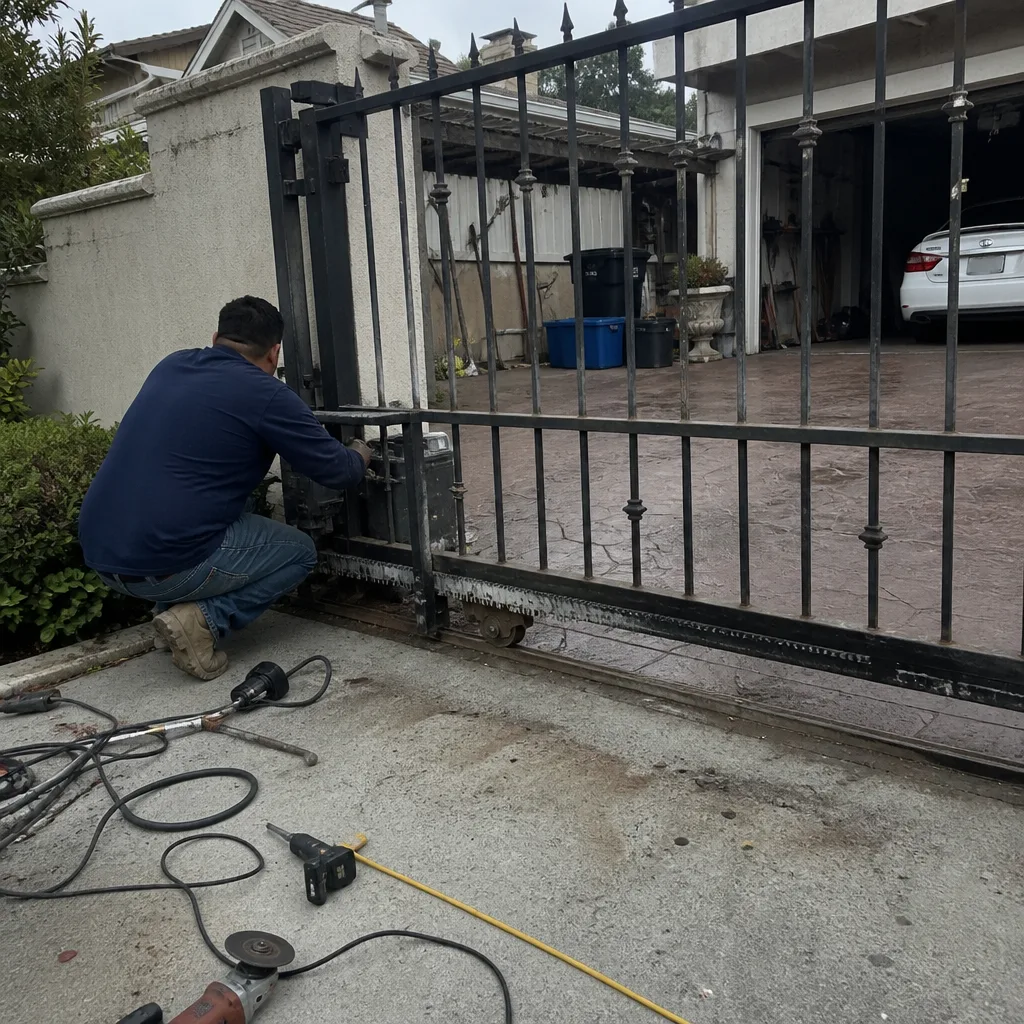 Before
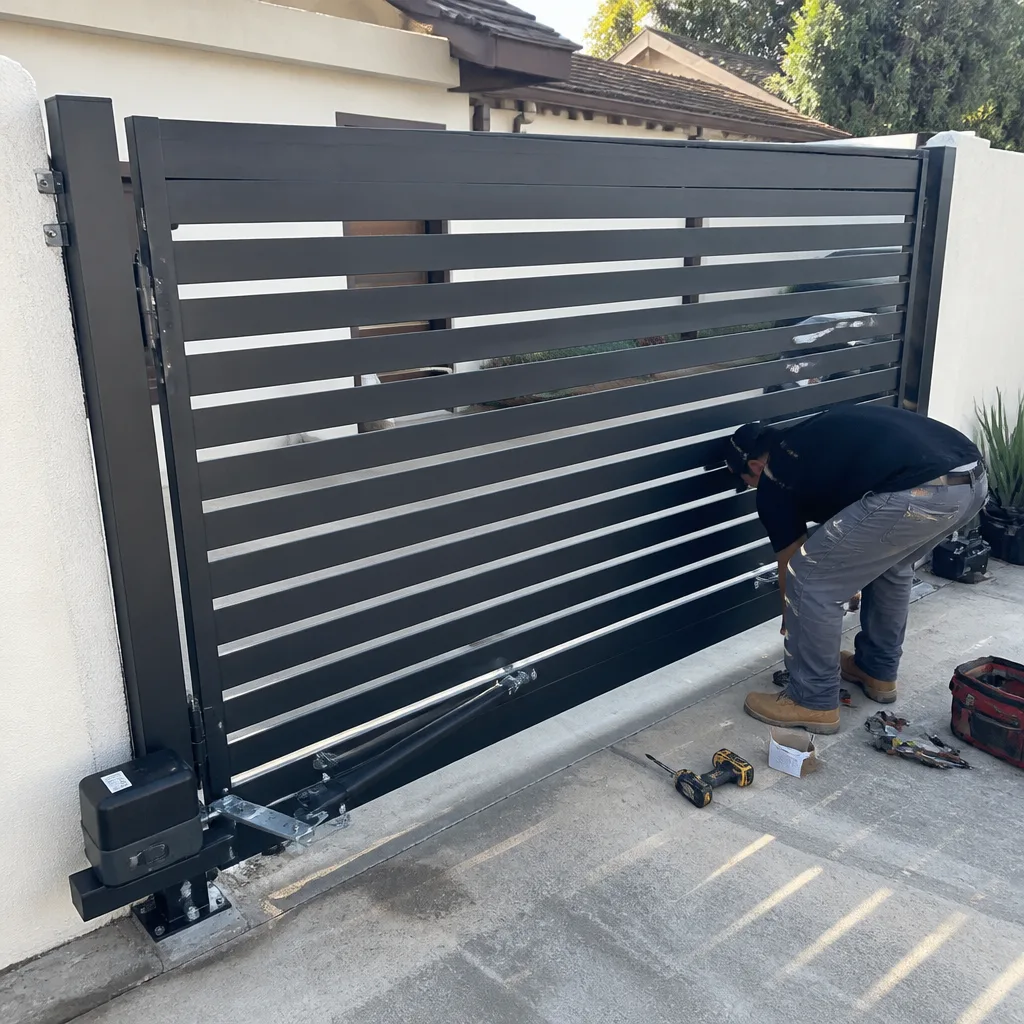 After
After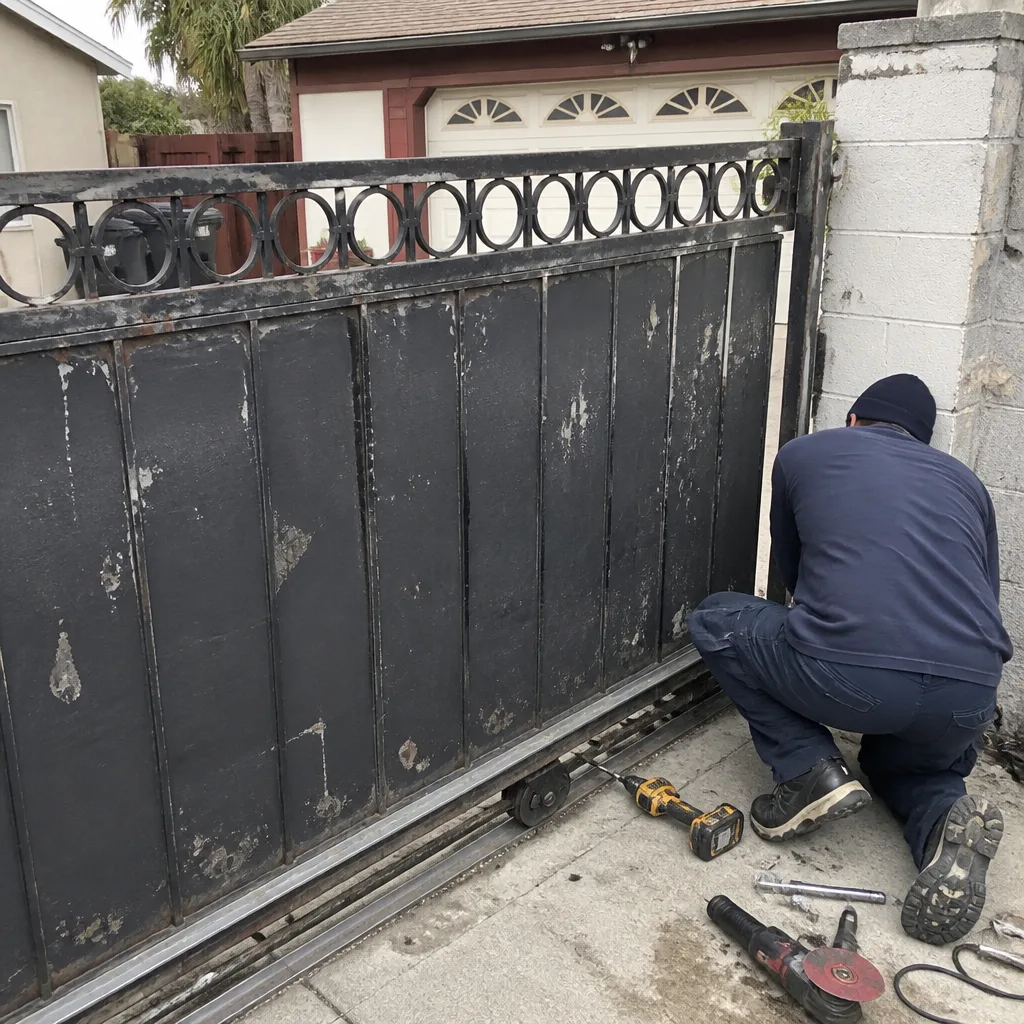 Before
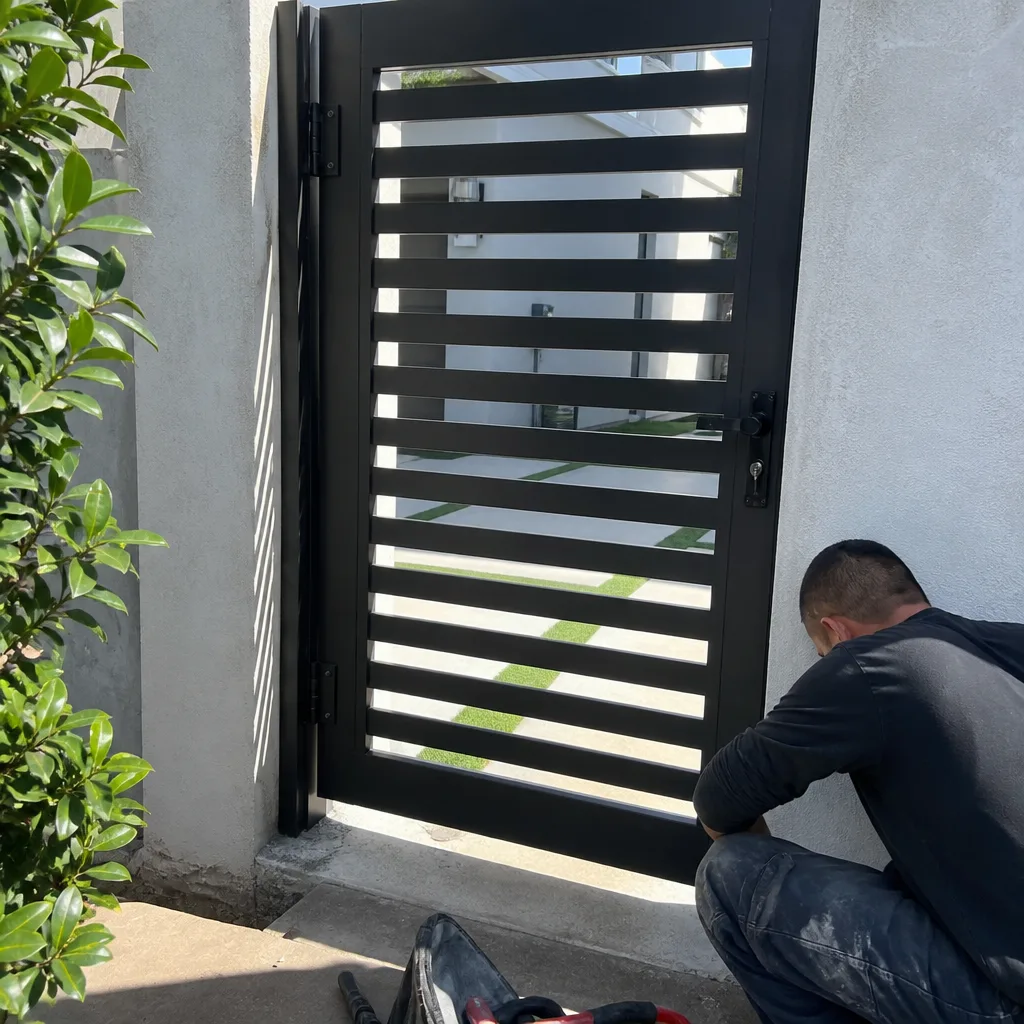 After
After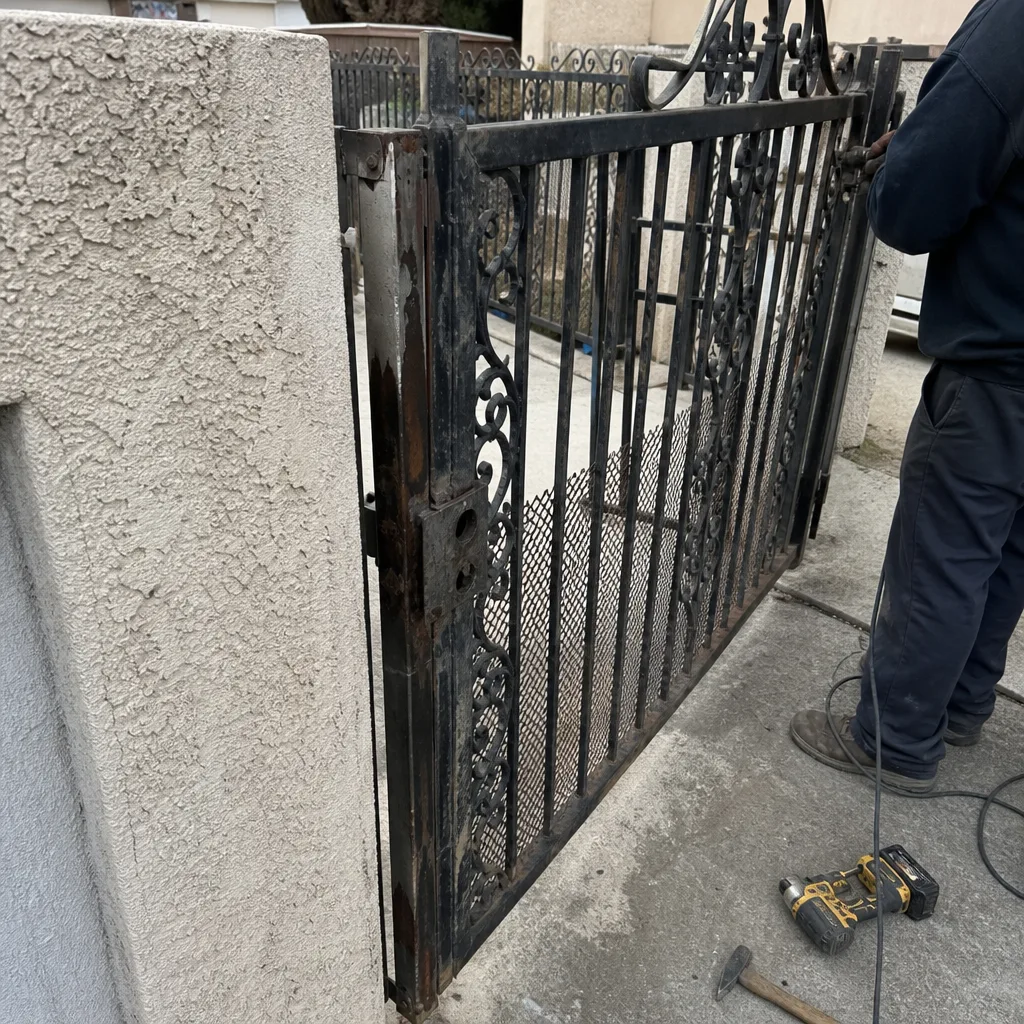 Before
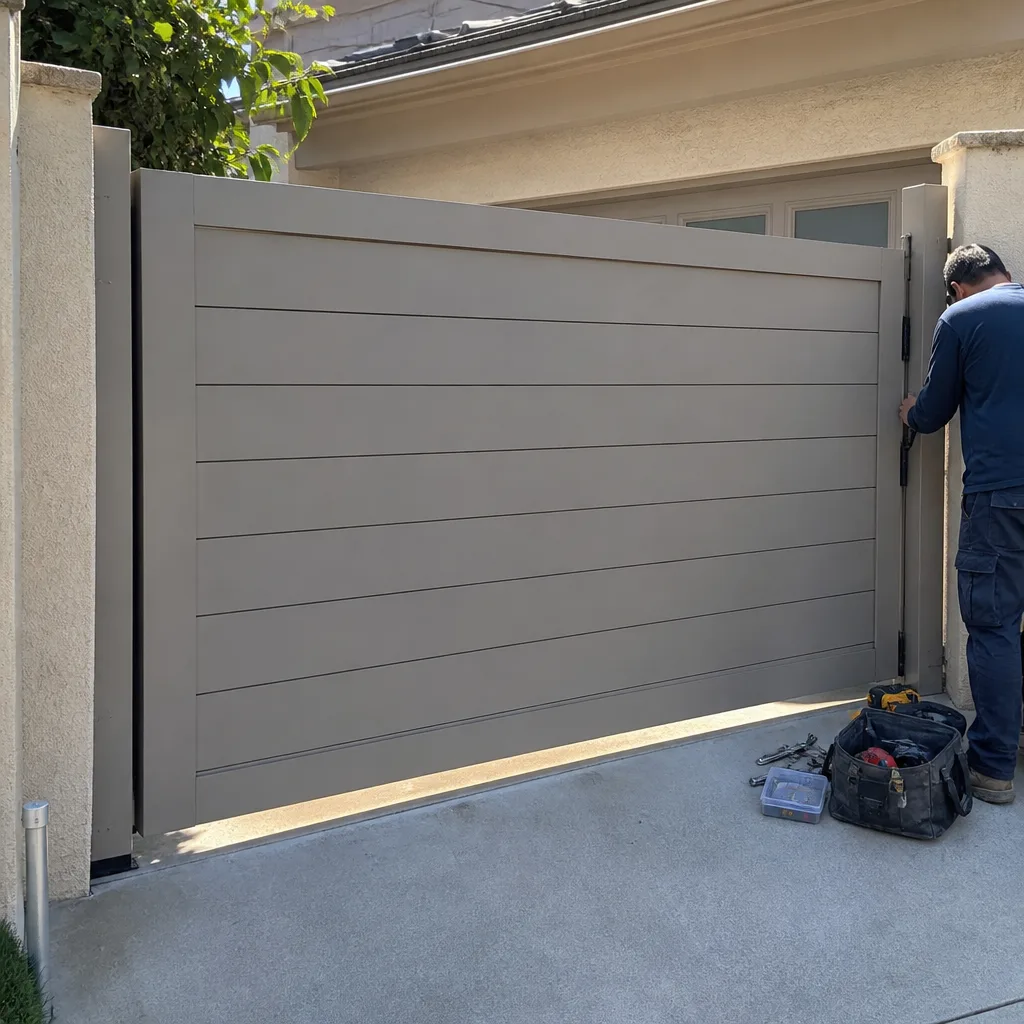 After
AfterElectric Gate Repair Warning Signs Every Homeowner Should Know
A gate that hesitates for two seconds before opening isn’t being quirky. It’s telling you the photo eye is partially blocked or the battery backup is failing. Most Los Angeles homeowners ignore that pause for six months, then pay for a motor replacement that could have been avoided with an $80 sensor cleaning. This guide walks you through every warning sign an electric gate gives before it dies, what each sign actually means, and which ones demand immediate action versus which ones you can watch for a week. For more guides & resources, visit our blog.
Quick Answer
An electric gate warns you it’s failing through specific sounds (grinding, clicking, humming with no movement), odd behaviors (reversing mid-cycle, drifting open, hesitating before responding), and slower-than-normal operation. Catching these signs early usually means a $80 to $250 repair instead of a $600 to $1,200 motor replacement. Here’s how to read each signal.
Table of Contents
- Sounds That Mean Something Is Wrong
- Movement Patterns That Signal Trouble
- Remote and Keypad Lag
- Los Angeles Climate Warning Signs
- Reading Control Board Error Codes
- Documenting Warning Signs Before You Call
- Which Signs Are Urgent and Which Can Wait
- Common Mistakes to Avoid
- When to Call a Professional
- Frequently Asked Questions
Sounds That Mean Something Is Wrong
Electric gates are not silent. A healthy gate makes a low, steady hum while moving and a soft thunk when it reaches the stop. When the sound changes, the gate is telling you something specific. We’ve repaired thousands of gates across Los Angeles, and we can usually diagnose the problem from a ten-second phone video of the sound alone.
Grinding or scraping is the most common sound we hear on service calls. Nine times out of ten, it means the gate’s wheels or track have worn down or shifted out of alignment. On slide gates, the wheels underneath wear flat over time, especially on heavier steel gates like the ones common in the hills around Studio City and Sherman Oaks. Flat wheels drag instead of roll, and the grinding sound is metal on metal. The fix is usually a wheel replacement, $120 to $250 depending on the gate’s weight. If you ignore it, the motor works harder every cycle until it burns out prematurely.
Clicking with no movement is a different animal. That click is the control board sending power to the motor and the motor failing to respond. On BFT and Linear operators, a rapid clicking sound when you press the remote usually means the capacitor is dead. The capacitor is the small electrical component that gives the motor its initial kick. It fails after five to eight years of use, which is exactly when most Los Angeles gates installed during the 2015-2018 building boom start having trouble. The part itself is $40 to $90, and labor puts the total repair at $180 to $300. The motor itself is usually fine at that point.
Humming with no movement means the motor is receiving power and trying to move the gate, but something physical is stopping it. On swing gates, this is often a hinge that has seized from rust, particularly on coastal properties in Pacific Palisades and Manhattan Beach where salt air accelerates corrosion. On slide gates, it’s typically a rock or debris jammed in the track. Check for visible obstructions first. If the track is clear and it’s still humming, stop pressing the remote and call a professional. Every second the motor strains against a seized hinge, it’s pulling more amps and shortening its life.
Movement Patterns That Signal Trouble
How the gate moves tells you as much as how it sounds. A healthy electric gate moves at a consistent, deliberate speed from start to finish. When that changes, the gate is warning you.
Hesitation before movement is the sign most people ignore. You press the remote and there’s a pause of one, two, maybe three seconds before the gate responds. That pause is the photo eye sensor receiving a weak or partially blocked signal and the control board processing conflicting information. In Los Angeles, common culprits include spider webs across the sensor lens, dust buildup from Santa Ana winds, or a sensor that has shifted slightly out of alignment. Cleaning the photo eye lenses with a dry cloth and making sure nothing hangs in their path solves most cases in five minutes. If the hesitation persists after cleaning, the battery backup on the control board is likely failing and is due for replacement, usually a $90 to $150 job.
Reversing mid-cycle means the gate is closing and suddenly stops and reverses back open, or opens and reverses back closed without reaching the stop. This is the gate’s safety system doing its job. It senses resistance that shouldn’t be there and reverses to avoid crushing whatever it detected. But when no obstacle is present, the reversal means the clutch is slipping or the force settings on the control board need adjustment. On Viking and Ghost Controls operators, force settings drift over time with temperature changes, and a gate that worked fine in January may start reversing on a hot August afternoon because the steel expanded slightly and the system now reads normal movement as resistance. A technician can adjust the force settings and clutch tension in about an hour. Expect to pay $150 to $250 for this diagnosis and adjustment.
Drifting open or closed on its own is a swing gate problem. A properly balanced swing gate stays where it stops. If yours slowly drifts open after closing, or sags closed after opening, the gate has come out of square or the hinges are wearing. In Los Angeles, summer heat causes steel gates to expand and sag, especially wide double gates like you see in the San Fernando Valley and along Mulholland Drive. Drifting is a warning sign that the hinges are under stress, and if a hinge breaks, the gate can fall. That’s a safety hazard, not just an inconvenience. Hinge replacement or gate resquaring typically runs $300 to $600 depending on gate size and hinge type.
Remote and Keypad Lag
When the gate responds slowly to the remote, most people assume the remote battery is dying. Sometimes that’s true, and a $3 battery fixes it. But remote lag can also point to problems inside the control board, and knowing the difference saves you money.
Test the remote first. Stand within 20 feet of the gate with a clear line of sight. Press the button. If the gate responds immediately, your remote and receiver are fine and the earlier lag was distance or interference. If it still hesitates from close range, replace the remote battery and test again. Still hesitating? The problem is not the remote. It’s the receiver or the control board’s input processing, which means the gate is telling you about a deeper issue.
Intermittent response (works sometimes, not others) is the hardest problem to diagnose because it’s so unpredictable. We’ve found that intermittent response on LiftMaster, BFT, and Linear systems in Los Angeles is often caused by one of three things: a failing capacitor (the component gives partial voltage that works when cool and fails when hot), a loose wire connection at the terminal block (common on gates near busy streets like Sunset Boulevard where constant vibration works connections loose), or radio frequency interference from nearby cell towers and new-car remote systems (increasingly common in dense neighborhoods like Koreatown and West Hollywood).
Keypad codes that work sometimes and fail other times usually indicate corroded contacts inside the keypad itself. Los Angeles coastal homeowners in Marina del Rey and Playa del Rey report this more than inland residents because the salt air corrodes the internal contact points. The fix is a keypad replacement, $120 to $200 installed. If the keypad lights up but the gate doesn’t respond, that’s a wiring or control board issue, not the keypad.
Los Angeles Climate Warning Signs
Los Angeles has a climate that electric gates earn their living in. That means certain warning signs appear here more than anywhere else, and they’re worth knowing specifically.
Heat expansion causing gate sag is the big one. Los Angeles regularly hits 90-plus degree days from July through October, and steel gates expand measurably in that heat. Black gates are the worst offenders, absorbing solar heat and expanding enough to change how the gate sits on its hinges. If your gate sags or scrapes in the afternoon but moves fine in the morning, you’re seeing thermal expansion. The permanent fix is a tension adjustment and, on some gates, a steel truss rod installed across the gate frame to hold its shape. That’s a $250 to $400 job, but it prevents the hinges from wallowing out over repeated summers.
Marine layer corrosion affects coastal properties from Santa Monica through Palos Verdes up to Malibu. The morning marine layer carries salt and moisture that settles on gate hardware. Over time, hinges rust, control boards inside non-sealed enclosures corrode, and photo eye connections oxidize. Warning signs specific to coastal corrosion include green or white powder around screw heads and wire connections, rust streaks running down from hinge pins, and photo eyes that work in the afternoon but fail in the morning when condensation has formed on the sensors overnight. The fix for corrosion is earlier intervention than inland: replace hinges at the first sign of rust streaks, and make sure the control board is in a sealed, weatherproof enclosure. Explaining this to coastal clients is a recurring part of our work at Warden Gate Repair home, where we see corrosion damage on gates less than five years old in beachfront neighborhoods.
Santa Ana wind damage shows up as loose mounting hardware and gates that suddenly stop latching properly. During Santa Ana events, sustained 40-60 mph gusts push against swing gates and can shift gate posts slightly in the ground. The gate still moves, but it doesn’t seat correctly at the closed position. The warning sign is a gate that closes but doesn’t quite reach the latch, or a gate that rattles in the wind because the mounting bolts have backed off. Check all visible bolts on the gate and opener mount, and tighten any that have loosened. If the post has shifted, don’t try to pull it back with the motor. That’s a professional resquaring job.
Reading Control Board Error Codes
Manufacturers build diagnostic systems into their control boards, but most homeowners never learn to read them. That’s a shame, because the LEDs on your LiftMaster or Linear board are telling you exactly what’s wrong.
LiftMaster boards use a diagnostic LED on the control board, visible inside the opener housing. The LED blinks in patterns that correspond to specific faults. Here’s how to read the most common patterns:
- One blink, pause, repeat: Photo eye obstruction or misalignment. Clean the lenses and check alignment. This is the most common code we see in Los Angeles, usually from dust or spider webs.
- Two blinks, pause, repeat: Force reversal triggered. The gate encountered more resistance than the system allows. Clear any physical obstruction, then check hinge and wheel condition.
- Three blinks, pause, repeat: Motor overheat or overload. Let the gate cool for 15 minutes and test again. If it trips repeatedly in summer heat, the motor may be undersized for the gate or on its way out.
- Four blinks, pause, repeat: Battery backup fault. On LiftMaster systems with battery backup, this means the battery is failing or disconnected. If your gate has a backup battery and you’ve never replaced it, plan on replacement every three to five years.
Linear boards use a similar blink-code system, but their codes read differently. On Linear slide gate operators common on commercial properties across Los Angeles, the LED patterns indicate limit switch faults, obstruction detection, or edge sensor problems. One of our most frequent calls is for Linear edge sensor false trips: the rubber safety edge on the gate’s leading edge has developed a small tear or the internal sensing strip has degraded from sun exposure, and the system thinks something is in the gate’s path. The fix is edge sensor replacement, $180 to $320 installed. If you see your gate close halfway and reverse every time but can’t find an obstacle, this is your likely answer.
Before you open the control board housing, turn off power to the gate at the breaker. Control boards operate at low voltage, but the incoming line is 120V and will bite. If you’re not comfortable working near electrical components, skip the diagnosis and call someone who is. We provide Gate Motor Repair in Los Angeles for homeowners who’d rather not open the board themselves, and we’ll always tell you the code reading we find.
Documenting Warning Signs Before You Call
The single most useful thing you can do when your gate starts acting strangely is capture it on video. A fifteen-second phone video of the gate behaving badly will cut diagnosis time in half, and sometimes more. Here’s why that matters and how to do it well.
Why video beats a description. When a homeowner calls and says “my gate is making a weird sound,” we have to guess. When they text a video of the gate grinding, hesitating, or reversing, we can usually identify the fault before we arrive. That means the technician comes prepared with the right parts on the first visit instead of diagnosing, driving to get parts, and returning. In Los Angeles traffic, driving across town for a part can add two hours to a repair. A video saves you that time.
What to capture in the video:
- Stand where you can see the gate and the opener motor if possible. Frame the shot so the whole gate travels through the frame.
- Press the remote on camera. Capture the full sequence: press, any delay, the gate moving, any noise, and where it stops.
- If the gate reverses or stops mid-cycle, keep filming until it stops moving.
- Narrate what you notice in your own words. “It’s been doing this for about a week and it’s getting worse” is genuinely useful information.
- If it’s a slide gate, film the track and wheels from ground level. If it’s a swing gate, film the hinges.
What not to do: don’t provoke the fault by holding the remote button or forcing the gate. A good video of the gate doing its normal failing behavior is enough. Forcing it can cause additional damage. We also appreciate photos of the opener brand label (usually inside the housing) so we can confirm which system we’re servicing before we arrive.
For Los Angeles homeowners looking for Electric Gate Repair in Los Angeles, video documentation means a faster, cheaper visit. If you’re not sure whether what you caught on video is a real problem, send it to a professional for an honest read. Most reputable companies will tell you over the phone whether it needs attention.
Which Signs Are Urgent and Which Can Wait
Not every warning sign demands same-week service. Knowing the difference between “watch this” and “stop using the gate” prevents both unnecessary repairs and dangerous situations. Here’s how we triage gate warning signs in Los Angeles.
Safe to monitor (fix within a month):
- Slight hesitation (under one second) before the gate responds, if cleaning the photo eyes doesn’t fix it
- Remote range that has slowly decreased over months
- Keypad button that needs a firmer press than it used to
- Intermittent grinding noise that comes and goes
- Gate that closes fully but no longer latches every time
These signs suggest wear that will need attention, but the gate is still operational and safe. Watch for the sign becoming more frequent or severe, and schedule service when convenient. Waiting a week or two for a non-emergency appointment is fine.
Same-week service needed:
- Consistent grinding or scraping every cycle
- Gate that reverses mid-cycle regularly, not just occasionally
- Humming with no movement that doesn’t resolve after clearing the track
- Battery backup warning beeping from the opener
- Gate drifting noticeably open or closed after stopping
These signs mean active wear that’s causing additional damage each day you continue operating the gate. A grinding wheel is destroying the track. A reversing gate is wearing the clutch. A humming motor is overheating. Schedule our Gate Repair services the same week you notice these. The repair will be smaller now than in a month.
Lock the gate out immediately:
- Gate that doesn’t reverse when it hits an obstacle while closing
- Sparks or smoke from the opener motor or control board
- Gate that has partially fallen or is visibly sagging at one hinge
- Gate that opens or closes on its own without any remote or keypad input
- Any gate that has struck a person, pet, or vehicle
These are safety failures, not maintenance issues. The gate can injure someone. Turn off power at the breaker, physically secure the gate in the open or closed position (whichever is safer for your property), and place a lock or chain on it so it cannot move. Then call for emergency service. The 24/7 live phone line is there for exactly these situations, and someone will answer day or night.
Common Mistakes to Avoid
- Ignoring the hesitation. The two-second pause before the gate moves is the earliest and cheapest-to-fix warning sign you’ll get. Every month it goes unaddressed, the underlying problem compounds. A photo eye cleaning is $80. A motor replacement is $900.
- Lubricating the hinges with WD-40. WD-40 is a solvent, not a lubricant. It temporarily frees a squeaky hinge but strips whatever lubrication was there, and the hinge wears faster afterward. Use white lithium grease on gate hinges, or have a professional service the gate annually.
- Adjusting the force settings yourself. Homeowners sometimes open the control board and increase force settings to “fix” a gate that’s reversing mid-cycle. What they’ve done is told the safety system to allow more resistance, which means the gate now pushes harder before reversing. That’s making the problem worse and creating a pinch hazard. Force settings should be handled by someone who understands the safety standard.
- Waiting until the gate stops working entirely. Gates rarely go from healthy to dead overnight. They telegraph the failure through the warning signs in this guide for weeks or months first. By the time the gate won’t move, the cheap fix has become an expensive one.
- Replacing the remote when the receiver is the problem. People buy a new remote, program it, and the gate still hesitates. The $75 remote wasn’t the issue, and now they’re out $75 and still have the problem. Video the gate’s behavior before spending money on parts.
- Not knowing where the manual release is. Every automatic gate has a manual release mechanism that disconnects the gate from the motor. When the gate fails during a power outage or motor problem, the manual release lets you open it by hand. Most Los Angeles homeowners don’t know where theirs is until they’re locked out of their own driveway. Find it now, before you need it.
When to Call a Professional
Call a professional when the gate shows any same-week or immediate warning sign listed above, when you’ve cleaned the photo eyes and the hesitation persists, when the gate makes any sound it didn’t make before, or when you simply don’t want to diagnose it yourself. Gate repair is not a hobby. The electrical components carry voltage, the gate carries mass, and the safety systems exist for a reason. A technician who services gates full-time will identify the problem faster and fix it more safely than a weekend diagnostic session. Gate Repair in Los Angeles costs less than you probably expect when problems are caught early. Warden Gate Repair offers free estimates across Los Angeles. Call (828) 426-7081 and a live person will answer, day or night.
Frequently Asked Questions
Grinding or scraping sounds during operation is the most common warning sign, and it usually means worn wheels on a slide gate or worn hinges on a swing gate. The repair typically runs $120 to $400 if caught early, versus $800 to $1,400 for a motor replacement if the grinding is ignored for months. Call (828) 426-7081 and describe the sound, or send a short video for a read on what you’re hearing.
The hesitation is usually a photo eye sensor that’s dirty, misaligned, or partially blocked, which forces the control board to process conflicting input before moving the gate. Clean both photo eye lenses with a dry cloth first, then test the gate. If it still hesitates, the battery backup or control board may be failing, and the gate needs professional diagnosis. Estimates are free at Warden Gate Repair in Los Angeles.
Most electric gate repairs in Los Angeles fall between $120 and $450, with the most common repairs being photo eye cleaning or replacement ($80 to $200), wheel or hinge replacement ($150 to $400), and capacitor replacement ($180 to $300). Motor replacement is the big-ticket item at $600 to $1,400 depending on the system, which is exactly why catching warning signs early matters. Warden Gate Repair provides a written price before any work starts, every time.
Warden Gate Repair answers the phone 24/7 and offers same-week appointments for standard repairs, with emergency response available for safety failures like a gate that won’t reverse or a gate that has struck someone. The best way to speed up your repair is to document the problem with a phone video and send it ahead of the visit, which lets the technician arrive with the right parts. Call (828) 426-7081 to schedule.
Look for rust streaks running down from the hinge pin, the gate sagging noticeably at the latch end, or the gate drifting on its own after it stops. These signs mean the hinge is under increasing stress, and a cast hinge can snap without warning, dropping the gate. On Los Angeles coastal properties, check hinges at least twice a year because marine layer corrosion accelerates hinge wear dramatically.
Yes, in three specific ways. Summer heat expands steel gates and causes sagging, especially on dark-colored gates in inland areas like the San Fernando Valley. The marine layer deposits salt and moisture on coastal gates from Santa Monica to Palos Verdes, accelerating hinge and wire corrosion. And Santa Ana winds push against swing gates hard enough to shift posts and loosen mounting hardware, which shows up as gates that stop latching correctly.
The Bottom Line
Electric gates fail on a schedule they write themselves, and it’s printed in the sounds, pauses, and movements this guide describes. The homeowner who catches the grinding wheel today spends $200 on a repair. The one who catches it in six months spends $900 on a motor. The difference is attention, not luck. Watch your gate operate with fresh eyes this week. Film it on your phone if you notice anything odd. And if the reading isn’t clear, call someone who reads gates for a living. In Los Angeles, that call costs nothing, and it might save you the price of a new motor.
Written by Cole Rafferty, Owner at Warden Gate Repair, serving Los Angeles since 2008.
Request a Free Estimate
Tell us what you need - Warden Gate Repair responds fast. No obligation.