
Last updated October 9, 2026
Free on-site gate assessment - hinges, posts, and your LiftMaster or Nice gate operator checked before anything is quoted
The assessment is free and the quote is the invoice.

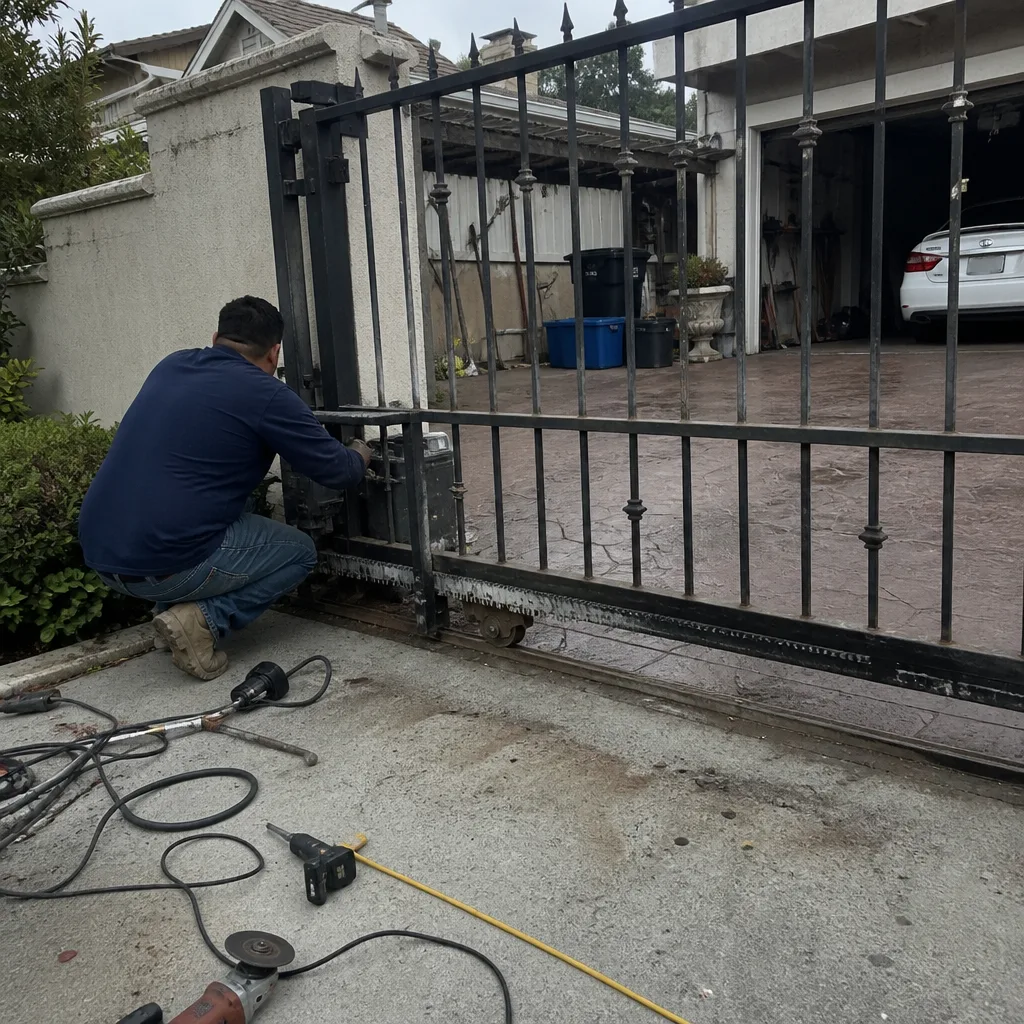 Before
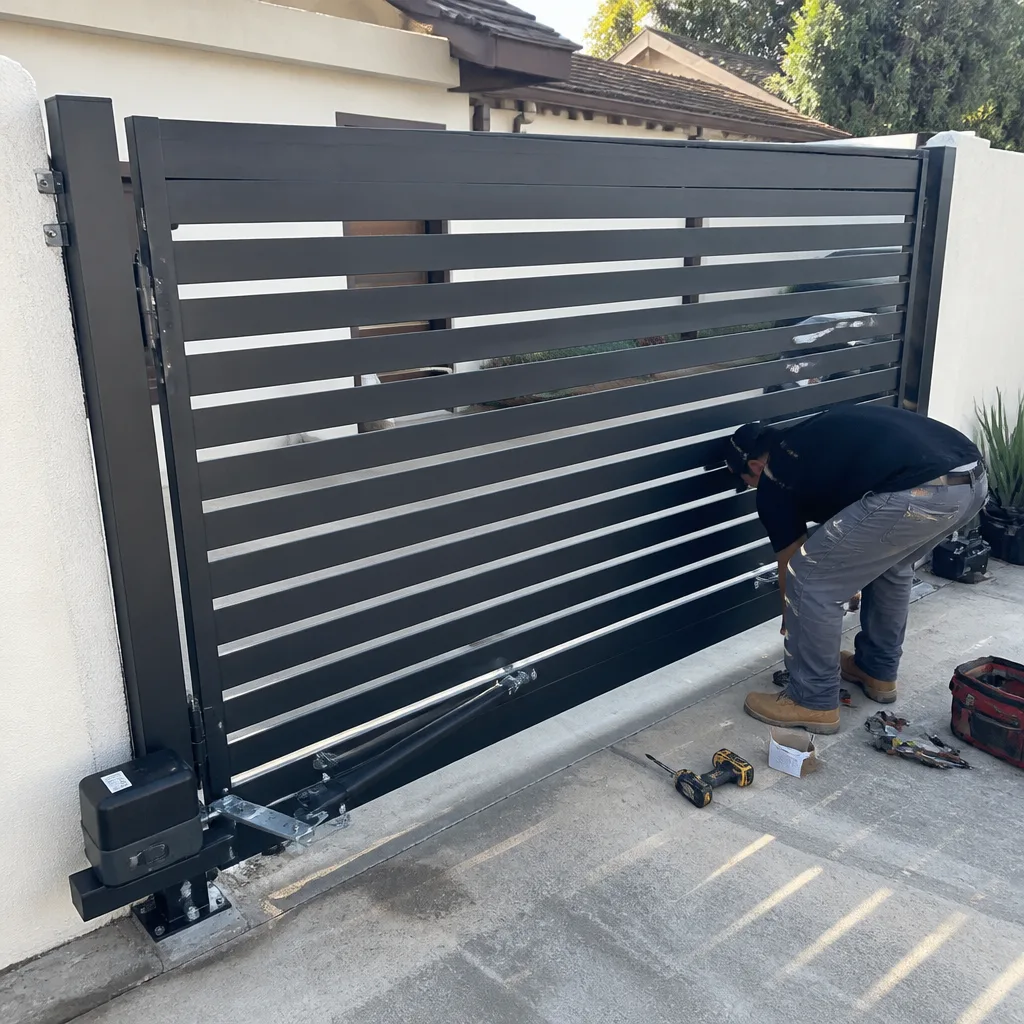 After
After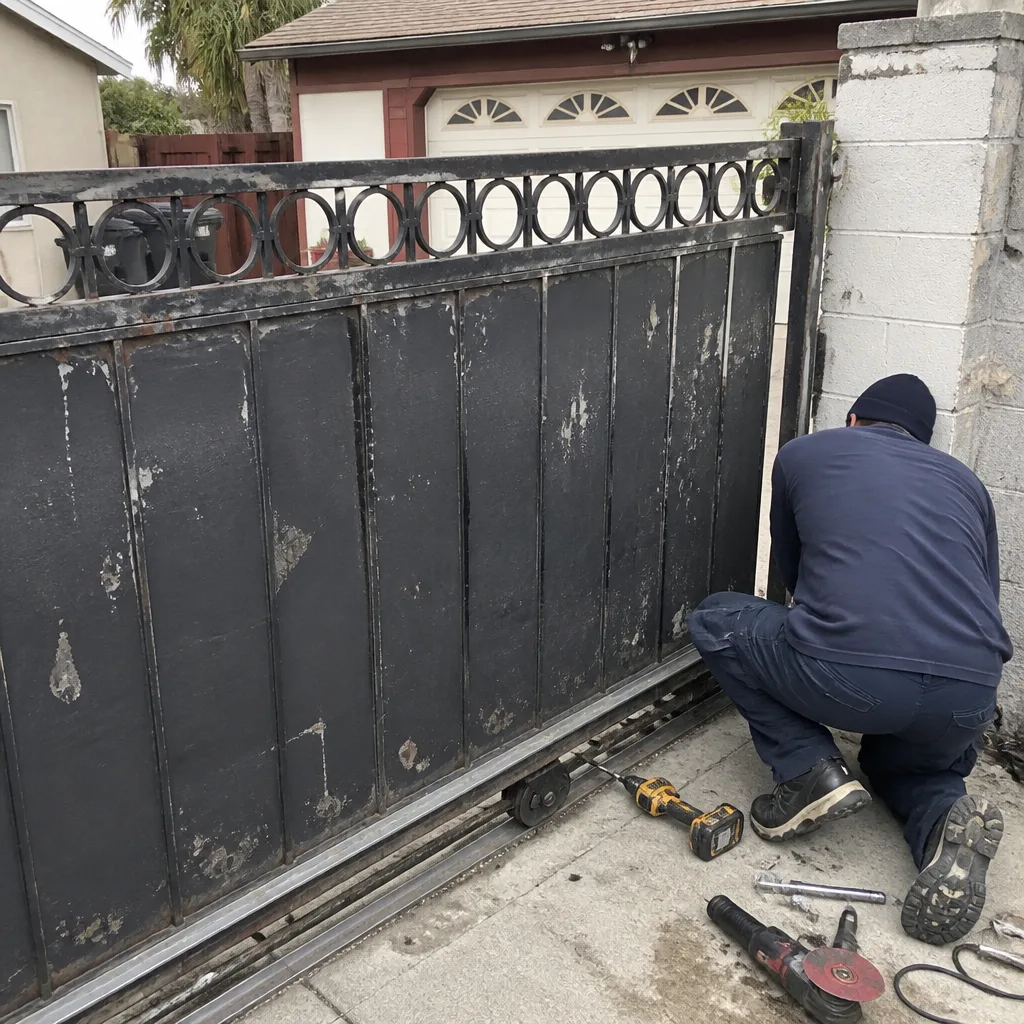 Before
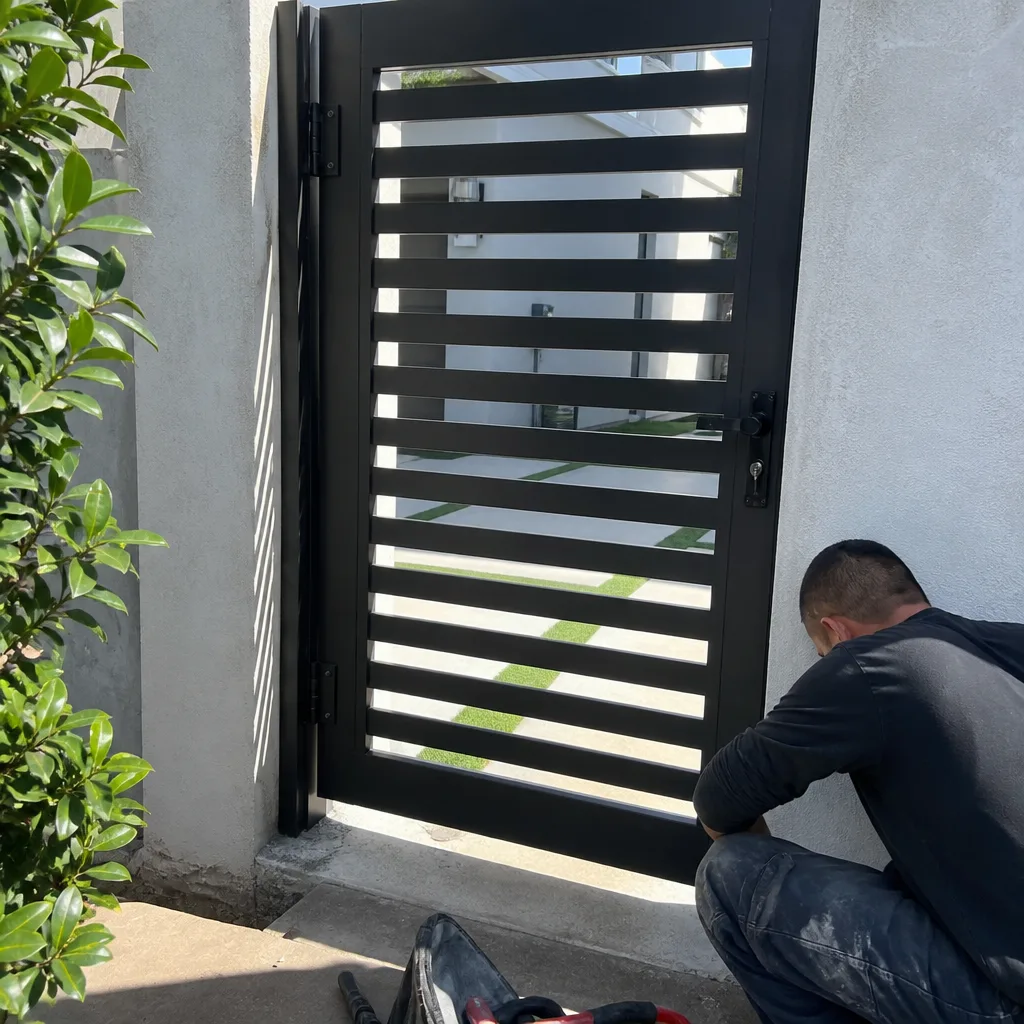 After
After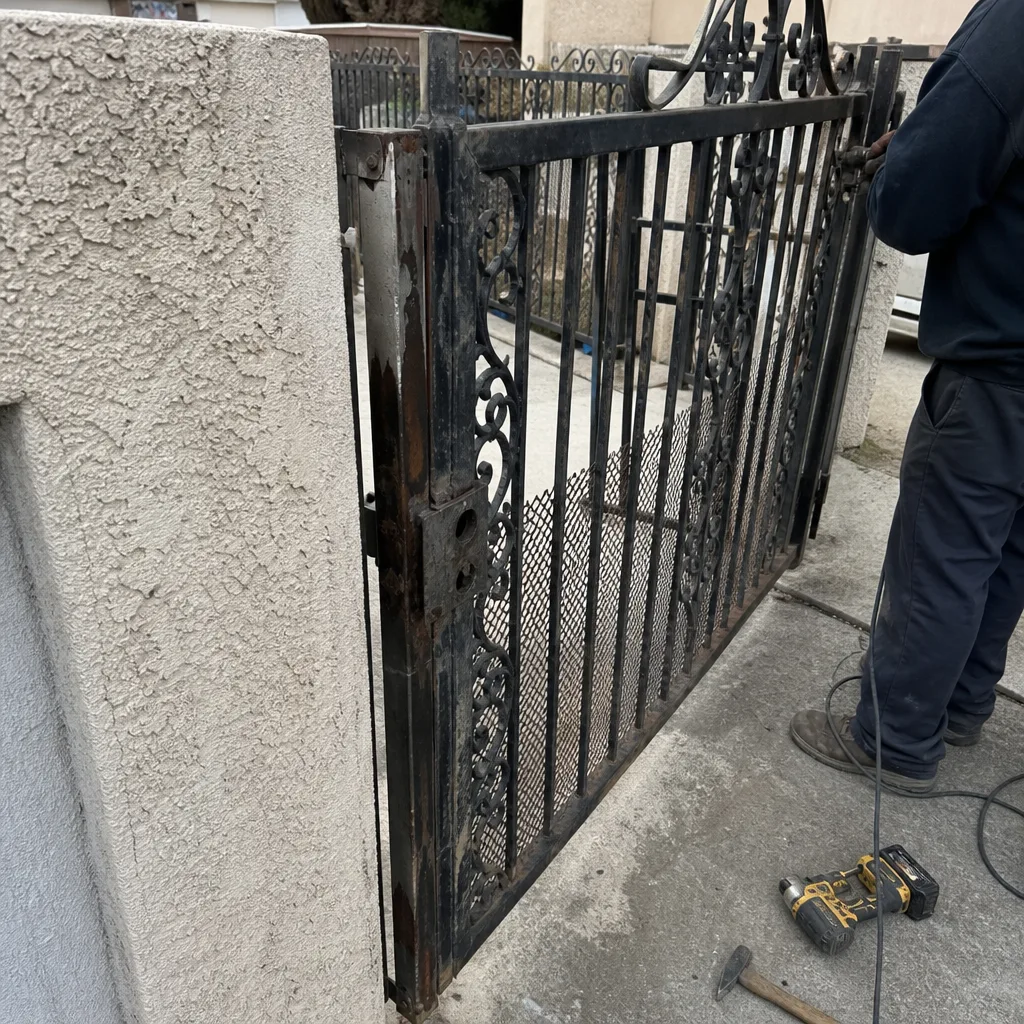 Before
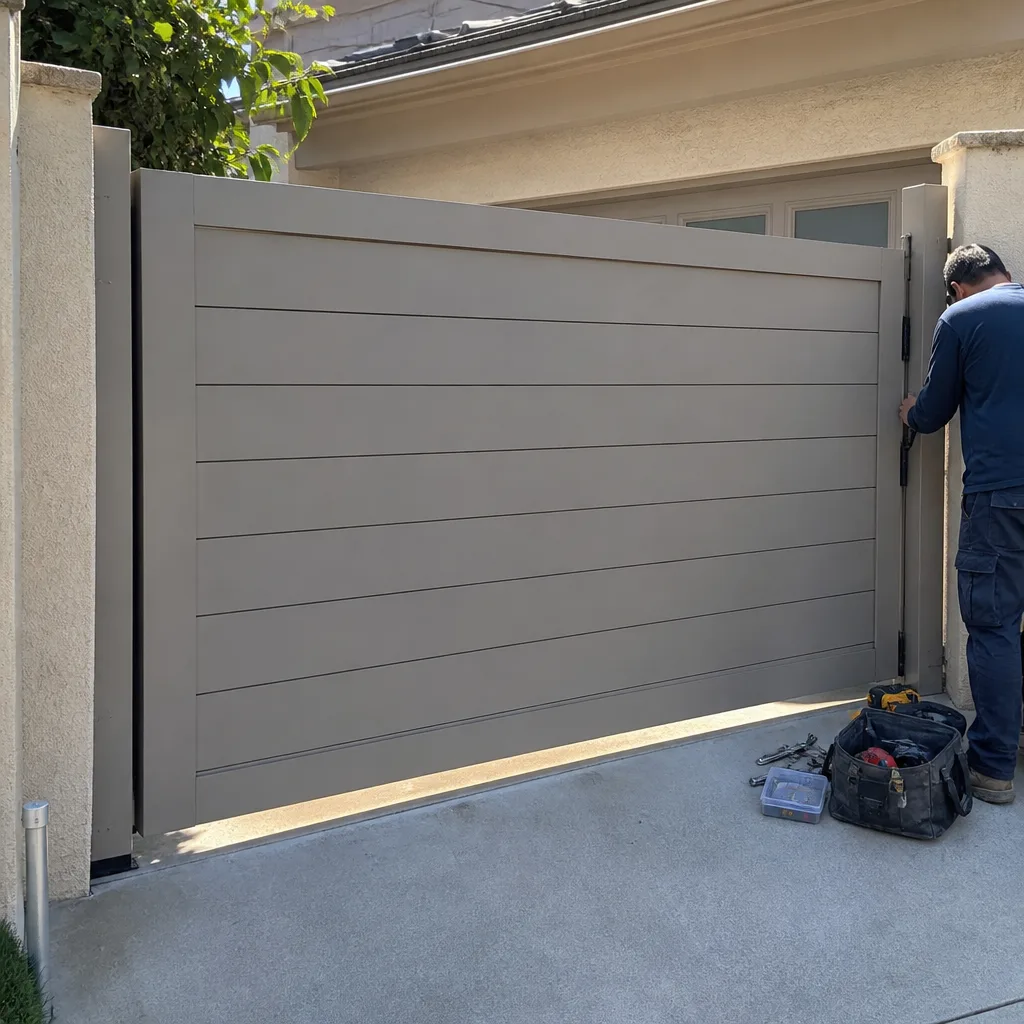 After
AfterGate Repair Troubleshooting: Common Problems and How to Fix Them
Here’s a number that surprises most Los Angeles homeowners: roughly seven out of ten gate failures we’re called to fix could have been caught weeks earlier if the owner had known what to listen for. A gate doesn’t usually die all at once. It sends signals first: a new creak, a slower cycle, a hesitation at the halfway point. The problem is that most troubleshooting guides stop at “call a professional” without giving you the tools to tell a $40 fix from a $900 one. This guide gives you that decision tree, built from eighteen years of our Gate Repair services across Los Angeles, so you can walk out to your driveway knowing exactly what you’re looking at and whether it’s safe to monitor or time to make the call.
Quick Answer
Gate repair troubleshooting starts with matching the exact symptom to a specific component. Most common gate problems fall into five categories: power issues, obstruction or sensor faults, worn mechanical parts, hinge or post settlement, and opener motor failure. The cost difference between catching a worn roller early and replacing a burned-out motor is often $500 or more, which is why this guide is organized as a symptom-first decision tree that ends in a clear repair-or-call verdict.
Table of Contents
- The Symptom Decision Tree: Matching the Sound to the Source
- “My Gate Is Slowing Down” – Four Causes, Four Price Points
- “My Gate Is Loud” – Grinding, Squealing, and the WD-40 Mistake
- “My Gate Stops Halfway” – Sensor, Force, and Track Issues
- Sagging Gates: Hinge Failure vs. Shifted Post (They Look Identical)
- “My Gate Won’t Open At All” – The Power Checklist
- What a Healthy Gate Cycle Looks Like (By the Numbers)
- Red Flags: Stop Using the Gate Immediately vs. Monitor for 30 Days
- Common Mistakes to Avoid
- When to Call a Professional
- Frequently Asked Questions
The Symptom Decision Tree: Matching the Sound to the Source
Before we get into individual symptoms, let’s establish the framework. Every gate problem expresses itself in one of four ways: sound, speed, position, or total silence. Your job during troubleshooting is to observe which of those four has changed, then use the tree below to narrow down the component. We’ve organized more than two thousand Los Angeles gate repair visits around this exact structure, and it holds up because gates are mechanical systems with predictable failure points.
Here’s the decision tree in order:
- Sound changed but movement is fine: You’re looking at a lubrication issue, a worn roller, or a chain/belt that’s loosened with age. Low urgency. Monitor and address within 30 days.
- Sound changed and the gate is slower: Component wear is adding resistance. The opener is working harder to compensate. Medium urgency. Fix within two weeks before the motor takes damage.
- Gate stops at the same spot every time but otherwise runs: This is a sensor or obstruction issue, not a mechanical failure. High probability of a misaligned photo eye or a physical block in the track. Low cost if caught early.
- Gate stops at random points: Force settings or a failing capacitor in the motor. Medium urgency. The motor is losing its ability to judge effort.
- No sound, no movement, keypad dead: Power or transformer issue. Start with the breaker, then the outlet, then the battery backup.
- Humming but no movement: Capacitor failure or a mechanical jam. Stop trying to operate the gate and diagnose before you burn out the motor.
Los Angeles homeowners deal with one factor the rest of the country doesn’t, as detailed in our Gate Repair Warning Signs: A Los Angeles Homeowner’s Reference Guide: coastal moisture accelerating corrosion on metal components. Gates within five miles of the ocean in neighborhoods like Venice, Playa del Rey, and San Pedro typically need roller and hinge replacement two to three years earlier than gates in the Valley or Pasadena. Salt air is hard on everything metal, and gate hardware is no exception.
“My Gate Is Slowing Down” – Four Causes, Four Price Points
A gate that’s visibly slower than it was six months ago is telling you something specific: resistance is increasing somewhere in the system. The opener motor is working harder to push or pull the same weight, and increased resistance always shortens motor life. Here are the four causes we see most often in Los Angeles, arranged from cheapest to most expensive to fix.
Cause 1: Dry or dirty rollers (typical repair cost in Los Angeles: $40 – $90). Grease breaks down, dust builds up, and the rollers that carry the gate along the track start dragging instead of rolling. The fix is cleaning, correct lubrication with dry lithium grease or a silicone-based lubricant, and inspection for flat spots. Most single-family residential sliding gates can be serviced in under an hour at this level.
Cause 2: Debris in the track (typical cost: $75 – $150 for clearing and track alignment). Los Angeles landscaping means ivy, jasmine, dirt, and decomposed granite all migrate into gate tracks over time. The gate has to push through the debris on every cycle. Clearing the track and aligning the guide wheels usually restores full speed immediately.
Cause 3: Opener force settings were never adjusted for the gate (typical cost: $120 – $200 for a full tune-up). New openers ship with generic mid-range force settings. After installation, the force limit and speed curve should be set to match the actual weight and travel of the gate. If the original installer skipped this step, the gate runs slower than it should from day one. A technician with access to the control board can correct it in one visit.
Cause 4: The motor is at end of life (typical cost: $450 – $900 for replacement depending on brand and gate length). Garage-style openers on single gates sit in the lower end. Heavy slide gates with LiftMaster or FAAC 24V operators sit higher. The giveaway for motor death is that the slowdown happens gradually over months, not suddenly, and the motor housing feels hot to the touch after a full cycle. At this stage, the right move is a written estimate and replacement before the gate fails entirely.
For Los Angeles-specific context: gates with electronic motors get dust intrusion during Santa Ana wind events, and the fine particulate that blows through the foothills works its way into the motor brushes over time. Homes in Altadena, La Crescenta, and the 210 corridor should have the motor housing checked annually for dust accumulation.
“My Gate Is Loud” – Grinding, Squealing, and the WD-40 Mistake
This is the section where we save you money. The single most common lubrication mistake we see in Los Angeles driveways is spraying WD-40 on gate rollers and tracks. WD-40 is a penetrating oil and water displacer, not a bearing lubricant. It strips away whatever grease was there and then evaporates, leaving the metal drier than before. Within two weeks, the grinding is worse, and now the roller bearings are running metal-on-metal with no protection. The correction costs more than the original problem would have.
Match the sound to the component using this guide:
- Squealing or shrieking from the wheels: Roller bearings are dry or failing. Clean the track and rollers, then apply dry lithium grease to the bearing and a silicone-based lubricant to the track. Never use standard WD-40.
- Deep grinding from the motor housing: The drive chain or belt is loose, or the motor gears are worn. On chain-drive openers we service across Los Angeles – primarily LiftMaster and Linear units – chain tension should be checked every 12 months. Grinding from the chain can also mean the sprocket is worn past spec.
- Metal-on-metal scraping from the gate body: Usually the anti-fall catch or the guide roller at the top of a sliding gate is making contact with the rail. This is an alignment problem, not a lubrication problem, and adding lubricant masks it without fixing it.
- Thumping or banging near the end of travel: The gate is hitting the physical stop too hard. End-limit adjustment is the fix, and it’s a 20-minute job for a tech with the right controller knowledge.
We’ve had callers in Silver Lake and Echo Park describe a “dying whale” sound from the gate. That is almost always a failing capacitor in the motor start circuit. The capacitor is a $25 part, but if the sound is ignored for two or three weeks, the motor windings overheat and the whole operator goes. The price difference between replacing a capacitor and replacing a motor is enough to pay for a few years of annual maintenance.
“My Gate Stops Halfway” – Sensor, Force, and Track Issues
A gate that stops at roughly the same position on every cycle is behaving rationally. Something is telling it to stop, and the most common messenger is a misaligned or obstructed photo eye. The photo eye is the small sensor pair near the base of the gate path that tells the opener whether anything is in the way. In Los Angeles, sun glare is a frequent culprit, especially on west-facing gates in the late afternoon. Direct sunlight hitting the receiver eye can overwhelm the signal and cause the gate to halt in the same spot during the same hours of the day.
But sensors aren’t the only cause. Here’s the full list to work through:
- Photo eye misalignment: Verify both eyes are level and facing each other. Look for a small LED indicator on each unit – solid green or solid red depending on brand – and confirm it’s not blinking. A blinking light means the beam is interrupted.
- Sun glare: West-facing Los Angeles gates in the 4pm – 7pm hours, especially in July through September, can trigger false obstruction stops. A small plastic hood or repositioning the receiver eye by a few degrees solves most cases.
- Physical obstruction in the track: A piece of wood, a child’s ball, or a chunk of decomposed granite can sit in the track and trip the force sensor. Check the full track path when the gate is fully open.
- Overactive force sensor: When the opener’s force setting is too sensitive, the motor believes the gate is hitting resistance and reverses. This shows up as random stops, not consistent-position stops. A technician can recalibrate the force limit in one visit.
- Track settlement: Los Angeles sits on expansive soils that move seasonally. After heavy rain years, the ground beneath a gate track can shift by a quarter inch or more, just enough to create a high spot that trips the force sensor at one location.
One important note on safety: if the gate reverses itself mid-cycle whenever the force sensor trips, do not stand in the path to test it. Stand to the side, trigger the gate, and observe. A gate under load can move unpredictably when the obstruction sensor engages.
Sagging Gates: Hinge Failure vs. Shifted Post (They Look Identical)
A swing gate that drags on the ground on the latch side looks exactly the same whether the problem is a worn hinge or a post that has shifted in the soil. The photo looks identical. The repair cost doesn’t: hinge replacement on a residential Los Angeles swing gate typically runs $180 – $350, while resetting a shifted post can run $600 – $1,200 depending on concrete work and gate weight. Knowing the difference before you call a contractor keeps you from paying for a post reset when all you needed was new hinges, or worse, paying to replace a hinge only to watch the gate sag again because the post was the real problem.
Here’s how to tell them apart without expensive equipment:
- Open the gate halfway and lift the latch end up. If the gate moves up at the latch end but the hinge side stays fixed, the hinges are worn. Hinge pins and bearings wear down over time, creating play that translates into sag at the opposite end.
- Look at the gap between the hinge-side edge of the gate and the post. If the gap is wider at the top than at the bottom, the hinge itself or the hinge mount is pulling away from the gate frame.
- Check the post with a level. If the post itself is out of plumb – leaning away from the gate – the post has shifted. A hinge can’t fix a shifted post. The post needs to be dug out, re-set in concrete, and cured before the gate is re-hung.
- Look for fresh cracks in any concrete around the post base. If the concrete around the post shows new separation from the post, water is getting in and the post is moving seasonally. This is very common in Los Angeles hillside areas, especially in the canyons and on slopes with clay-heavy soil.
In our Los Angeles repair work, we see shifted posts most often after two consecutive wet winters. The soil on hillside properties in neighborhoods like Mount Washington, Baldwin Hills, and the Hollywood Hills expands when saturated, and a gate post that was stable for a decade can start moving in one season.
“My Gate Won’t Open At All” – The Power Checklist
Total silence. No keypad response, no backup beep, no hum. Before you call anyone, walk through this checklist in order. Half of the “dead gate” calls we take in Los Angeles are resolved in under five minutes by the homeowner after the first or second step.
- Check the breaker. Gate openers are typically on a dedicated GFCI circuit. If it’s tripped, reset it once. If it trips again immediately, there’s a short and the gate should stay off until a technician evaluates it.
- Check the outlet or junction box near the gate motor. Sometimes the issue is a tripped GFCI outlet at the gate itself rather than the breaker in the panel. Look for a “Reset” button on the outlet face.
- Check for a power disconnect switch. Los Angeles building code requires a service disconnect near the gate operator. If it’s been switched off – by a landscaper, a painter, or a curious kid – the gate is dead even though the house has power. Switch it back on.
- Battery backup. Many modern LiftMaster, FAAC, and BFT operators have 12V or 24V battery backup. If the battery is dead and the primary power is out, the gate won’t move. Batteries last 3 – 5 years. If your gate is older than that, the battery is likely the culprit during a power outage.
- Keypad wiring. If you have a hardwired keypad at the pedestrian post, check for corrosion at the connection. Salt air near the Los Angeles coast shortens the life of outdoor low-voltage wiring.
If all five check out and the gate still won’t move, the problem is likely the control board, a failed transformer, or a motor that’s completely seized. Time to call. That’s not a DIY repair: transformers and control boards involve live voltage, and a mismatched replacement board can damage the motor or create an unsafe operating condition.
What a Healthy Gate Cycle Looks Like (By the Numbers)
Here’s the baseline that lets you know if your gate is changing. We use these numbers daily on Los Angeles service calls to establish whether a reported problem is genuinely out of spec or within normal operating range.
- Full cycle time: A single swing gate should complete open or close in 12 – 16 seconds. A sliding gate of up to 15 feet should take 15 – 20 seconds per direction. Anything significantly slower than that typically indicates added resistance.
- Sound level: Standing three feet away, a healthy residential gate in motion produces roughly the volume of a normal conversation: 55 – 65 decibels. If you have to raise your voice to talk over it, bearings or motor internals need attention.
- Stop position: A healthy gate stops gently against the physical end stop or the programmed limit without a visible bounce or bang. If the gate rebounds an inch or two after closing, the end-limit needs adjustment.
- Starting behavior: A healthy opener starts moving within half a second of the command. Any delay, hum, or grinding noise at startup is a warning sign, even if normal operation follows.
- Reversal: When the obstruction sensor detects something in the path, the gate should reverse and stop at the open position without slamming. “Soft start and soft stop” are the technical terms, and they’re standard on every quality opener we service, including LiftMaster, FAAC, and BFT.
If your gate has never hit these benchmarks because it was installed before you bought the house, that’s a different conversation. A tech can measure cycle time and current draw during a tune-up and tell you where your gate sits relative to factory spec.
Red Flags: Stop Using the Gate Immediately vs. Monitor for 30 Days
Not every symptom is an emergency. For deeper context, read our guide on Gate Repair Warning Signs Every Homeowner Should Know. Some gates can run for months with a known issue while you budget for the fix. Others are an injury or property-damage risk the day the symptom first appears. Here’s the split.
Stop using the gate immediately:
- Burning smell from the motor housing: The motor is overheating, and continued operation risks fire or permanent motor failure.
- Sparks or visible arcing at the control board or any wiring: This is an electrical fault. Cut power at the disconnect switch and leave it off.
- Jerky, unpredictable movement with no consistent pattern: The force sensor or the limit logic is failing. A gate that can’t reliably detect obstructions can close on a person, a pet, or a vehicle.
- A gate that has jumped its track and is resting at an angle: If a sliding gate has come off its rollers, the full weight is no longer properly supported. Structural collapse is possible.
- The obstruction sensor is visibly broken or has been bypassed: A gate without a working obstruction sensor should not be used in automatic mode. Period. The safety edges and photo eyes are not optional accessories; they’re mandated by UL 325 for a reason.
Safe to monitor for 30 days:
- New creaking or squealing at the rollers: Lubricate properly (see above) and book the service call. The gate is not at imminent risk.
- Slight slowdown that doesn’t progress: Dust or temperature-related. Monitor cycle time.
- Intermittent remote range loss: Could be a failing remote battery, a receiver antenna issue, or interference from new nearby devices. Change the remote battery first – $4 and ten seconds outranks a service visit every time.
- Surface rust on non-structural hardware: Clean, prime, and paint. Metal components in coastal Los Angeles neighborhoods need this attention annually anyway.
Our rule of thumb from years of Los Angeles service work: any symptom that involves the gate failing to respond predictably to commands is urgent. Any symptom that’s cosmetic or slow-developing can wait a few weeks. Predictability is the safety benchmark.
Common Mistakes to Avoid
- Lubricating everything with WD-40. WD-40 strips protective grease from bearings and evaporates. The correct product for gate rollers is dry lithium grease; for the track, a silicone-based lubricant. Use the wrong one and you’ll be buying new rollers months ahead of schedule.
- Ignoring a new sound because the gate “still works.” Every noise is a message. The grinding you ignore this month is the motor replacement you’re paying for in six months. Gates don’t heal.
- Assuming a sagging gate always means bad hinges. As covered above, shifted posts look identical to hinge wear. Test before you spend.
- Running the gate with a bypassed or broken obstruction sensor. This is the single most dangerous thing a homeowner can do with an automatic gate. The sensor exists to prevent injury. Bypassing it to “get by” for a few weeks is how accidents happen.
- Adjusting force and limit settings without understanding the controller. Improper settings can cause the gate to close with excessive force, which risks injury and violates the safety standard the opener was built to meet.
- Replacing the remote before checking the receiver. Los Angeles homes with multiple gates, garage openers, and alarm systems sometimes get radio frequency interference from neighboring devices. A replacement remote that also doesn’t work confirms the receiver or interference issue – money wasted on the remote.
- Waiting until a heavy rain to check the drainage around the post. When water pools at the base of a gate post during Los Angeles rain events, the wood or metal post swells and shifts. The fix is drainage correction before the post moves too far to reset.
When to Call a Professional
Call a professional when any of the following is true: there’s an electrical fault (sparks, burning smell, or a tripped breaker that won’t stay reset), the gate has jumped its track, the post is visibly out of plumb, the obstruction sensor is damaged or bypassed, or you’ve worked through the checklist above and the gate still isn’t operating predictably. Gate openers involve live voltage plus a heavy moving object – two things that demand trained attention when either is misbehaving. Warden Gate Repair offers free estimates in Los Angeles – call (828) 426-7081 and we’ll send a technician with the name, the photo, and the written price before any work starts.
Frequently Asked Questions
Most common gate repairs in Los Angeles fall between $150 and $500 for roller replacement, hinge work, sensor realignment, chain tensioning, and force-setting recalibration. Motor replacement runs $450 – $900 depending on the brand and the gate’s weight and length. The cheapest fix we regularly perform is a photo eye realignment at $90 – $150, while the most expensive single repair – resetting a shifted post – can exceed $1,200 with concrete work. Call (828) 426-7081 for a written estimate before any work begins.
We service LiftMaster, FAAC, BFT, Linear, Viking, Ghost Controls, DoorKing, Elite, and Mighty Mule – nine major brands, factory-trained. If your operator isn’t on that list, the best move is a call to Warden Gate Repair so we can check parts availability for your specific model rather than guessing.
We answer the phone 24/7 with a live person, and we discuss your exact schedule on that call – not a chatbot, not a voicemail. If the gate is stuck open or completely dead, tell us and we’ll prioritize the visit. Every Warden technician arrives with a name, a photo, a background check, and a photo ID badge shown at the door before entering.
It depends on why it’s stuck. If the gate stopped because the obstruction sensor tripped, the gate is safe to leave as-is overnight while you schedule a visit. If the gate jumped its rollers or the motor is humming without movement, cut the power at the service disconnect and leave it off until a technician arrives. If you’re not sure which case you have, call (828) 426-7081 and describe what you see – a live person can help you make that call from the driveway.
Every repair Warden Gate Repair performs is guaranteed in writing. If the repair isn’t right within 365 days, we return and make it right, and that second visit is free. No fine print, no prorated hours. The guarantee covers the repair itself – parts and workmanship on the specific issue we fixed – and it’s honored without a fight.
For most repair work – rollers, hinges, sensors, motor replacement, and force adjustments – no permit is required, because the work doesn’t change the gate’s footprint or electrical service entrance. New gate installation and post re-setting sometimes require permits depending on height, location, and whether new electrical is being run. When the work does require a permit, the inspection is the easy part; whoever does the work should know which one applies.
The Bottom Line
Gate repair troubleshooting is a matching exercise: symptom to component, component to cost. The difference between a $40 roller fix and a $900 motor replacement is usually attention and timing. Listen for new sounds, watch for changes in speed, know how to test a sagging gate the right way, and never bypass a safety sensor. If you’re in Los Angeles and you’ve worked through the decision tree and arrived at “call someone,” that’s exactly what Warden Gate Repair exists for: background-checked techs, written prices, and a 365-day guarantee on the work. For ongoing maintenance tips, see our more guides & resources. The number is (828) 426-7081.
Written by Cole Rafferty, Owner at Warden Gate Repair, serving Los Angeles since 2008.