
Last updated October 9, 2026
Free on-site gate assessment - hinges, posts, and your LiftMaster or Nice gate operator checked before anything is quoted
The assessment is free and the quote is the invoice.

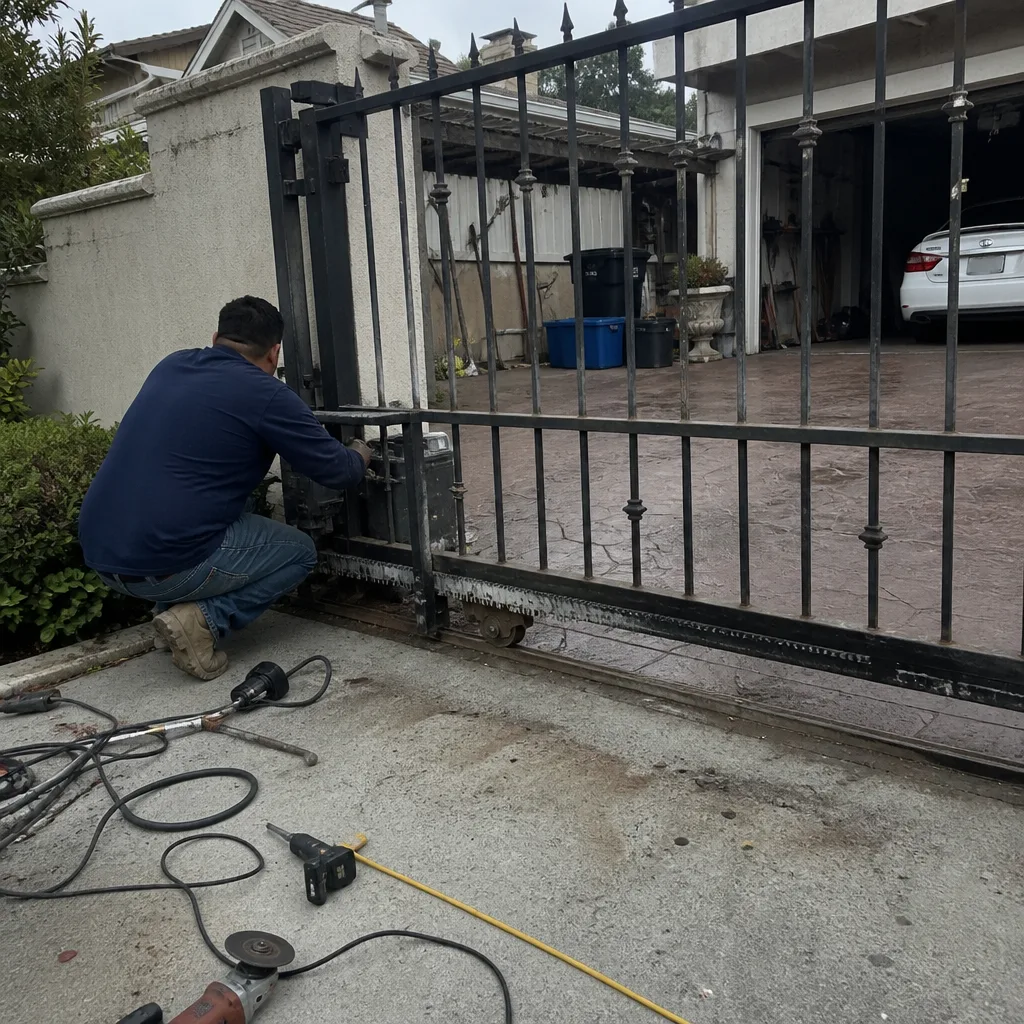 Before
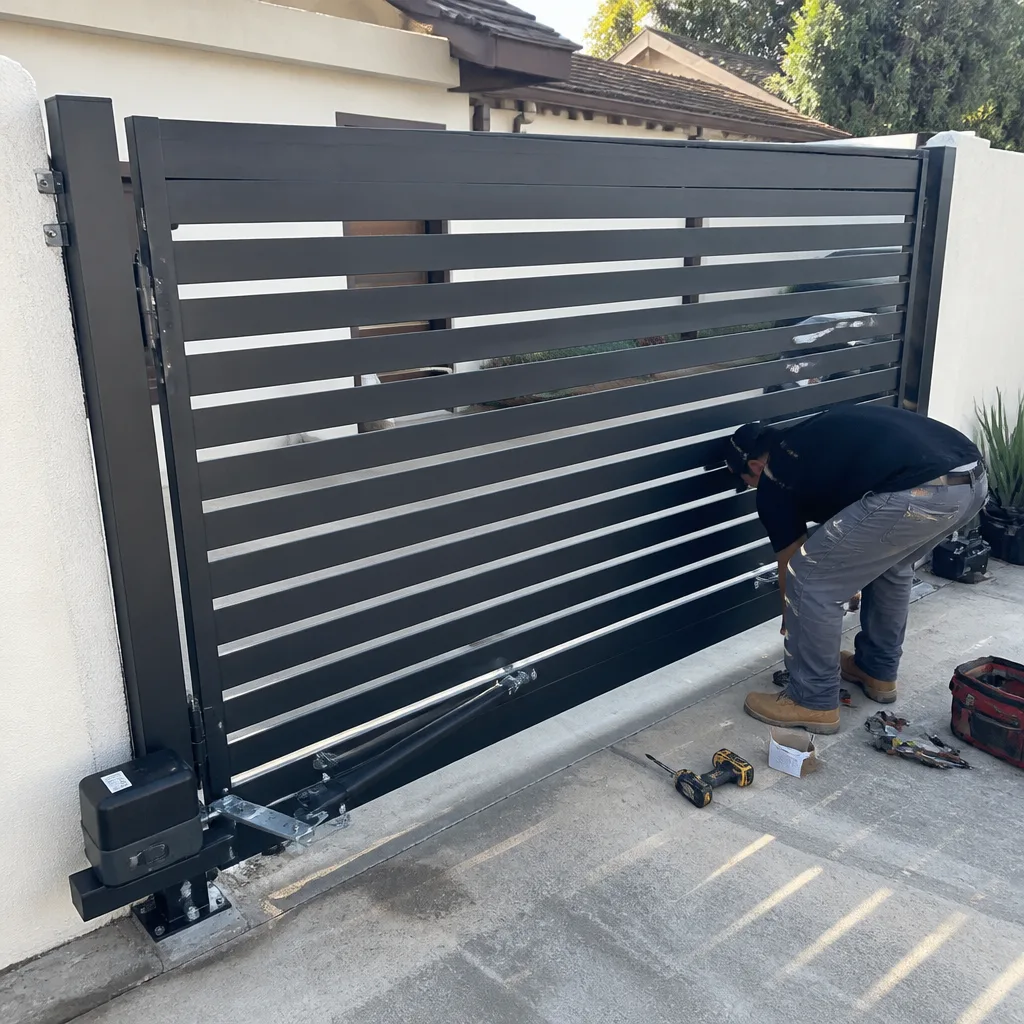 After
After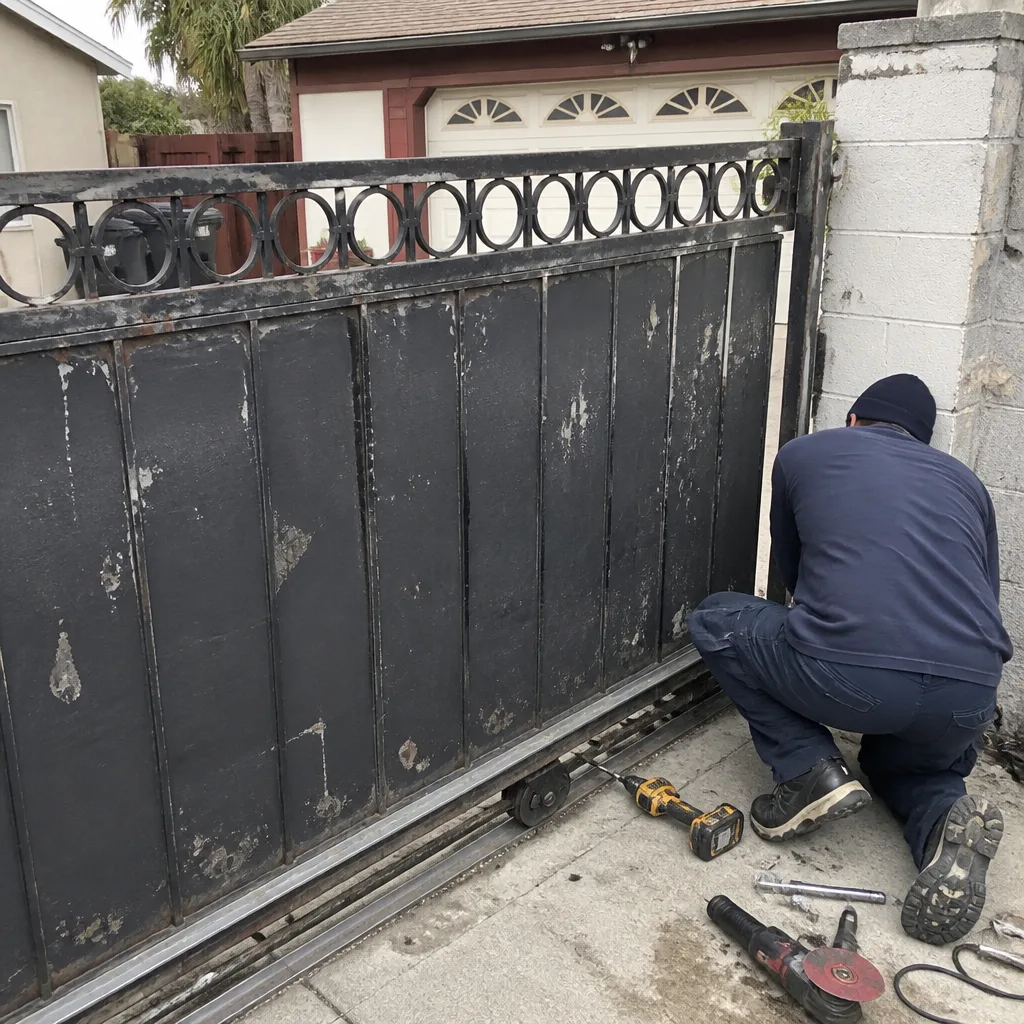 Before
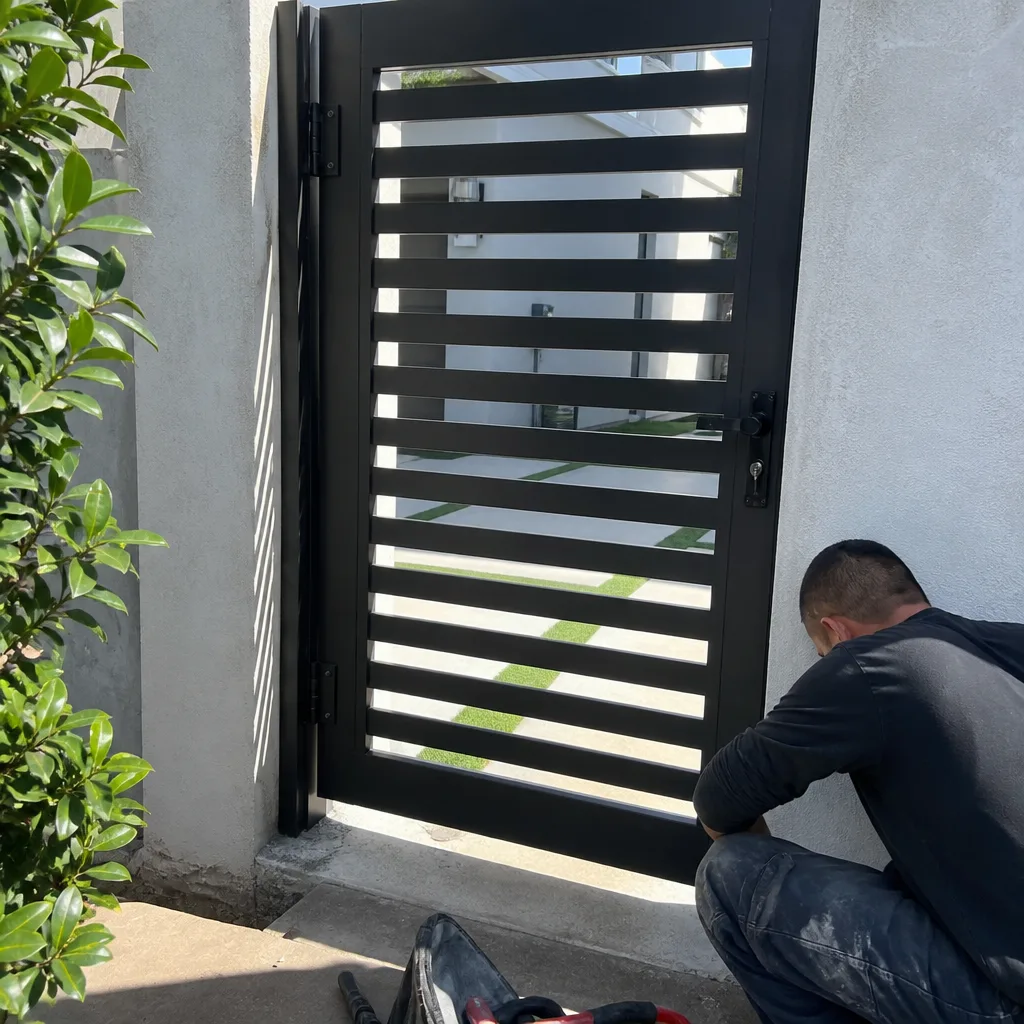 After
After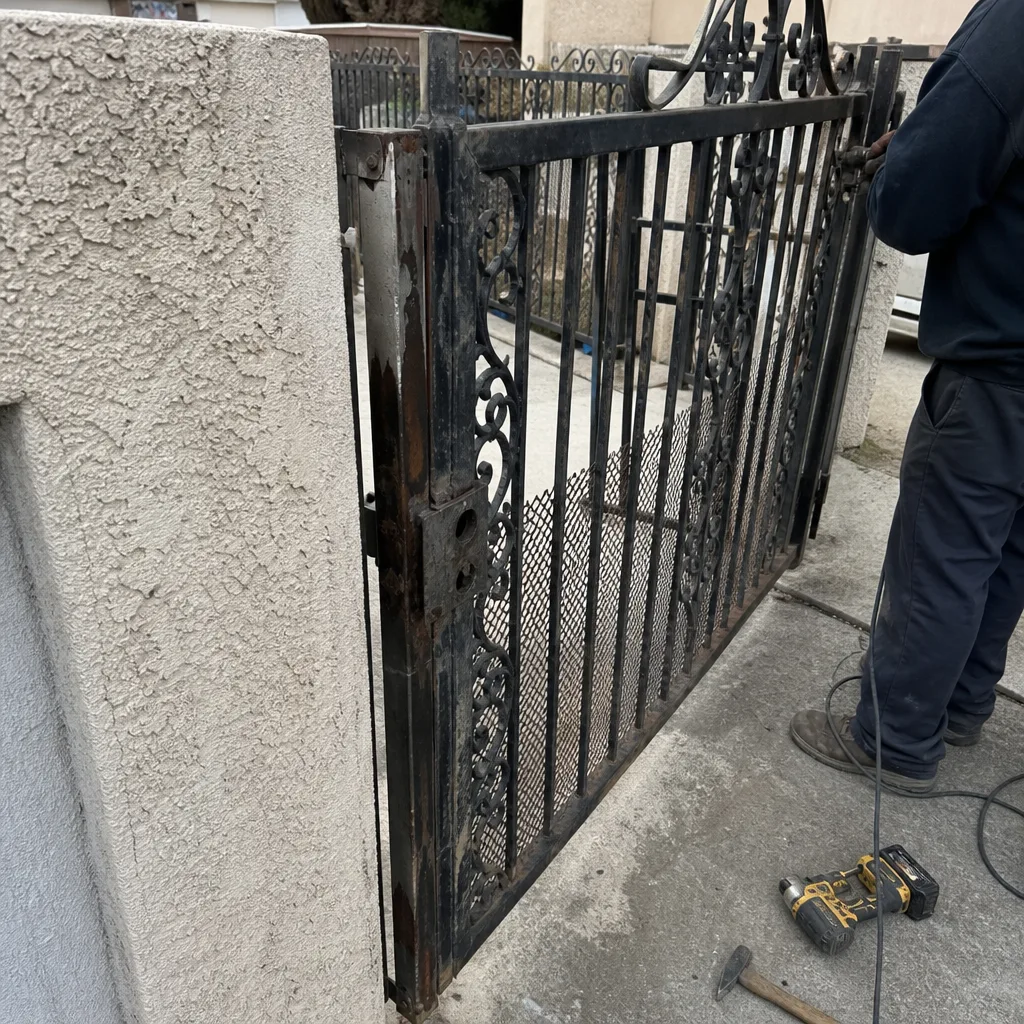 Before
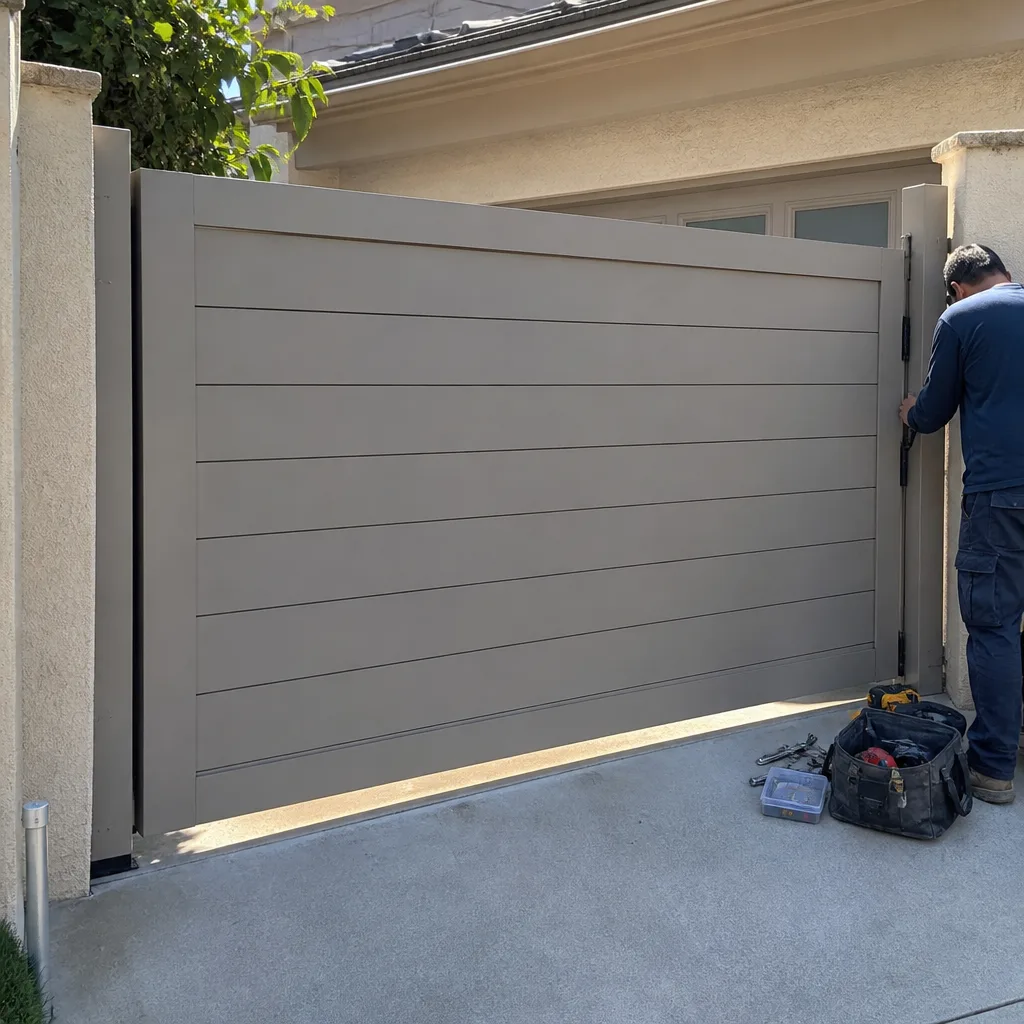 After
AfterGate Motor Repair Warning Signs Every Homeowner Should Know
A gate motor that runs hot to the touch after a single cycle isn’t aging gracefully, it’s a capacitor failure in progress. Ignore it for another month and you’re typically looking at a $400 motor replacement instead of a $95 part swap. Here’s the part nobody tells you: gate motor warning signs split into two groups. One gives you weeks of lead time to schedule service on your terms. The other means the motor dies within days, often with your car blocked in the driveway or your property left unsecured overnight. This guide separates the two, walks you through exactly what to check by hand and by ear, and explains why swing gate motors fail differently than slide gate motors in Los Angeles’s specific operating conditions. For professional help, see our Gate Motor Repair services.
Quick Answer
Gate motor warning signs worth acting on fall into three tiers: slow-developing signals you can monitor (changes in travel speed, new rattles at cold start, intermittent remote failures), signs that mean schedule service this week (motor running warm after a single cycle, repeated auto-reverse events that aren’t obstruction-related, burning smell after a long run), and signs that mean stop using the gate now (loud grinding or snapping during travel, the motor housing too hot to hold a hand against, visible smoke, or the gate reversing on its own repeatedly with no obstacle present). The single most dangerous warning sign in Los Angeles is the gate that suddenly starts working smoothly again after weeks of struggle, because that quiet period usually means the motor stripped its final drive component and the next cycle fails completely.
Table of Contents
- The Three-Tier Urgency System: Monitor, Schedule, Stop
- How Hot Is Too Hot? Checking Motor Temperature by Hand
- Listening for Bearing Wear vs. Gear Wear: What the Noises Mean
- Travel Speed Changes and What They Tell You
- Swing Gate Motors vs. Slide Gate Motors: Different Failures
- Excessive Amperage Draw: What It Looks Like in Practice
- The Danger of the Sudden “Fix”: When Smooth Operation Signals Failure
- Common Mistakes to Avoid
- When to Call a Professional
- Frequently Asked Questions
The Three-Tier Urgency System: Monitor, Schedule, Stop
Most gate motor failure guides read like a vague list of scary symptoms with no sense of timing. That’s not useful. What actually helps a Los Angeles homeowner is knowing whether you have time to plan a repair around your schedule or whether you need someone out today because your driveway gate is about to leave your car trapped and your property line open. For related planning resources, see our Gate Repair Emergency Preparedness Guide for Los Angeles Homes.
We organize every warning sign into one of three tiers:
Tier 1: Monitor It
These signs suggest the motor or its supporting components are wearing, but you have time. Check them weekly for two to three weeks. If they worsen, move up a tier.
- The gate travels slightly slower than it did six months ago, but you only notice it because you use the gate daily
- A new soft rattle when the gate starts moving from a dead stop on cold mornings, disappearing once the gate warms up
- The remote occasionally needs a second press to open, maybe once every ten uses
- The gate pauses for a half-second mid-travel but completes its cycle
Tier 2: Schedule Service This Week
These are early-stage mechanical or electrical faults that are actively getting worse. In our experience across Los Angeles, Tier 2 signs typically give you five to ten days before they become Tier 3.
- The motor housing feels noticeably warm to the touch after just one or two open-close cycles
- The gate auto-reverses on a clean rail with no visible obstruction, more than twice in a week
- You catch a faint electrical or burning smell after the gate has run, especially on hot days
- The gate groans or labors noticeably harder during the last third of its travel
- A circuit breaker dedicated to the gate trips once, resets, and trips again days later
Tier 3: Stop Using the Gate Now
These signals mean a component has already failed or is about to fail catastrophically. Continuing to operate the gate can turn a motor repair into a full operator replacement, or worse, create a safety hazard for anyone near the gate.
- Loud grinding, snapping, or popping sounds during travel
- The motor housing is too hot to hold your palm against for more than a few seconds
- Visible smoke or a strong acrid smell coming from the operator box
- The gate reverses direction repeatedly on its own with nothing in its path
- The gate becomes stuck mid-travel and the motor keeps running or clicking against it
Put the gate in manual mode (most operators have a manual release handle near the motor), unplug or shut off the breaker, and call for service. In Los Angeles, we see Tier 3 failures most often on gates that face direct afternoon sun, particularly in the San Fernando Valley, where ambient heat shortens capacitor life significantly.
How Hot Is Too Hot? Checking Motor Temperature by Hand
Every gate motor generates some heat during operation. The question is how much, and when. A healthy motor on a typical Los Angeles day, even a hot one, should feel warm but comfortable to the touch after three or four open-close cycles. You should be able to hold your palm against the housing for ten seconds without pulling away.
If the motor feels hot after one cycle, or too hot to touch after two, the unit is working against excessive resistance or an electrical component is failing. The most common culprit is a capacitor on the way out. Capacitors store and release the energy needed to start the motor rotation. As one fails, the motor draws more current to compensate, which creates heat. Left alone, that heat degrades the motor winding insulation, and the repair bill jumps from a $95 capacitor replacement to a $400-plus motor swap.
Here’s a simple field test we recommend to Los Angeles homeowners:
- Run the gate through a full open and close cycle, one time.
- Wait thirty seconds.
- Place your palm flat on the motor housing (the metal box attached to the gate operator, not the plastic cover of a remote receiver).
- Count to ten. If you pull away before ten because the surface is uncomfortable, the motor is running hotter than it should.
Weather matters here. On a 95-degree San Fernando Valley afternoon, any exposed motor will pick up ambient heat. But a motor mounted behind a proper weather hood that still burns your hand after one cycle is showing an internal electrical problem, not a sun problem. Note the nuance: a hot motor on a cool coastal morning in Santa Monica is a more serious signal than the same heat reading on a triple-digit Woodland Hills afternoon. Context changes the urgency tier.
Listening for Bearing Wear vs. Gear Wear: What the Noises Mean
Your gate motor talks to you every time it runs. Most homeowners tune it out until the sound is impossible to ignore, by which point the mechanical damage is done. Learning the difference between bearing noise and gear noise takes about five minutes and can save you from replacing an entire swing or slide gate operator when a rebuild kit would have handled it.
Bearing Wear: A High-Pitched Squeal or Whine
Bearings support the rotating shaft inside the motor and the drive assembly. As bearing grease breaks down, which happens faster in Los Angeles’s combination of heat and fine desert dust, the bearing surfaces begin to run dry. You will hear a high-pitched squeal or a continuous whine while the gate is in motion. The pitch usually rises as the gate travels and drops when it stops. This is a lubrication and bearing failure pattern, and the fix is typically a bearing replacement, often under two hundred dollars including labor, if you catch it while the noise is still audible but mild.
Gear Wear: A Low Grind or Chatter
Gear wear sounds different. Instead of a steady squeal, you’ll hear a rhythmic grind, chatter, or knock that follows the travel of the gate itself. Metal gear teeth that have worn down or chipped create a low, uneven rumble, almost like a cheap blender crushing ice. On swing gate motors with worm gear drives, the sound often appears first as a soft “chunk chunk chunk” at the beginning of the travel arc. On slide gate motors, gear wear frequently shows up as a shudder or a stutter in the gate’s movement accompanied by a low grind from the chain or rack drive assembly.
Here’s a practical way to distinguish them: bearing noise is smooth and continuous, like a tea kettle. Gear noise is rhythmic and mechanical, like a card in bicycle spokes but deeper. If you hear any gear noise at all, move the issue to Tier 2 immediately. A stripped nylon drive gear inside a LiftMaster or FAAC operator, for example, is a known weak point that fails suddenly under load. The repair is straightforward and far cheaper before the stripped teeth take out the mating worm gear with them. For more on how these components work together, visit our Warden Gate Repair home page.
Travel Speed Changes and What They Tell You
A gradual slowdown in gate travel speed is one of the easiest warning signs to miss, because it happens slowly. You use the gate every day. Your eye adjusts. Then one week, you realize the gate crawls through its last six feet like a heavy door in a dream. That change is diagnostic.
Travel speed on an electric gate is set at installation or last service, through limit switches and speed adjustments inside the operator. The gate should move at the same rate in the same temperature and wind conditions, every time. When speed drops without a load or weather change, something inside the system is failing.
The most common speed-stealing culprits in Los Angeles:
- Capacitor degradation: Reduced starting torque means the motor struggles to reach full operating RPM, especially in the first third of travel.
- Worn drive gears or chains: Mechanical resistance makes the motor work harder to push the gate through its run, which reads as slower travel.
- Low hydraulic fluid on hydraulic operators: Common on older swing gate systems. The gate gets sluggish, especially at the start of travel on cold mornings.
- Voltage drop at the circuit: This is more common in older Los Angeles homes where the gate circuit shares a run with landscape lighting or an outlet added later. The motor receives less current than it needs and runs slower.
Watch also for the opposite: the gate moving faster than it should, especially on a slide gate. A gate that slams to its stop with a bang may have a failing limit switch or a worn clutch, which means the motor is over-traveling at full torque, a state that will strip gears or crack a drive chain within weeks.
The speed check is simple. Time the gate’s full travel cycle once a month, ideally on a day without strong wind. A slide gate that covered its track in 12 seconds and now takes 18 seconds is telling you the motor is laboring. A swing gate that used to close in 8 seconds and now takes 14 seconds has a developing drive problem. Log the time in your phone. Numbers beat memory. This kind of slow, observable change is exactly the detail that helps a tech diagnose the problem over the phone, saving you a service trip.
Swing Gate Motors vs. Slide Gate Motors: Different Failures
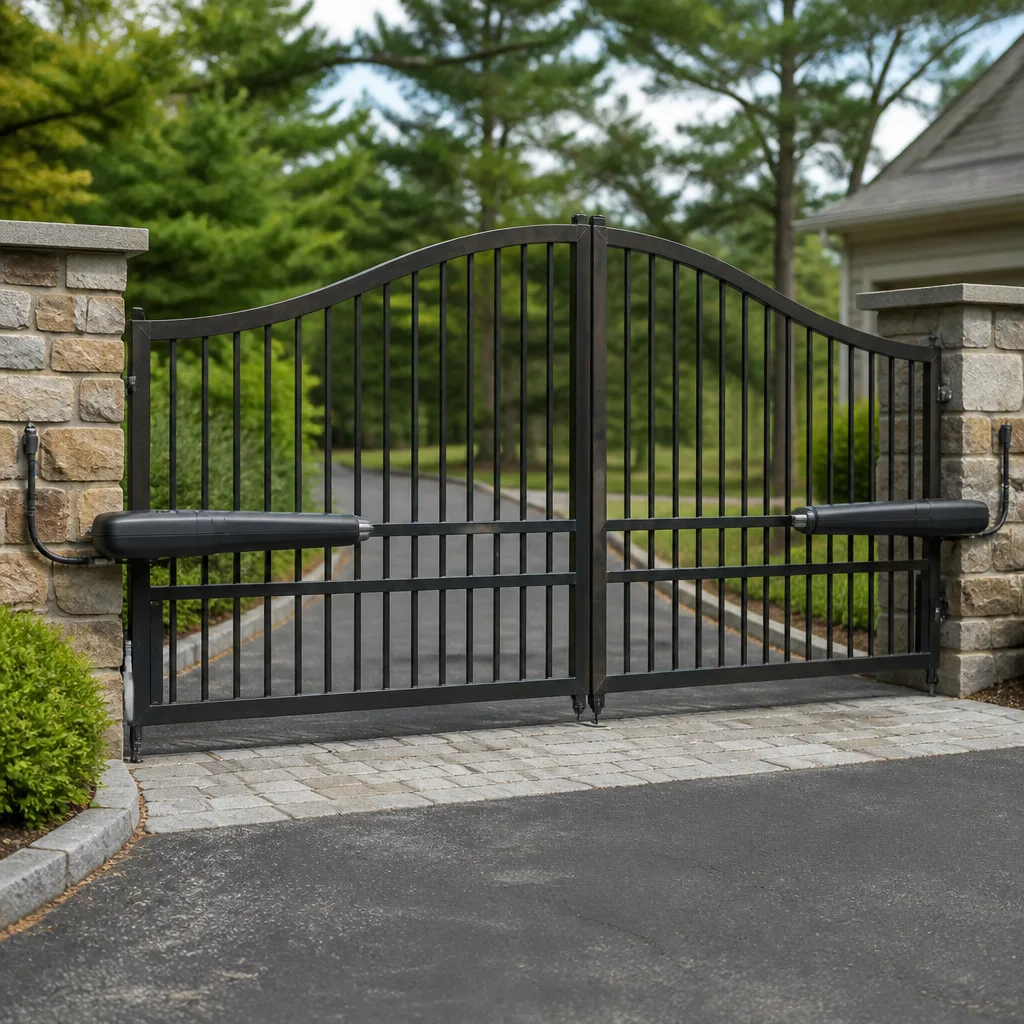
Gate motors are not interchangeable, and neither are their failure patterns. A swing gate motor (also called a gate operator arm) pushes a hinged gate panel through an arc, like a door. A slide gate motor drives a wheeled gate panel along a track or rail, like a heavy sliding door. The mechanical stress points are completely different, which means the warning signs differ too.
Swing Gate Motor Warning Signs
Swing operators deal with leverage. The motor arm attaches to the gate panel at a specific point, and every cycle loads the arm’s internal gears and the mounting bracket against the weight of the gate. Los Angeles’s combination of frequently shifting soil, especially in hillside neighborhoods, and occasional high winds from the Santa Ana season adds irregular loads to swing gates that track operators in flatter regions never experience.
Watch for these on a swing gate:
- The gate sags at the latch end and the motor arm struggles to push it through the last third of its arc
- The motor arm’s mounting bracket flexes visibly during operation, or the bolts show rust staining around the heads
- The gate judders or stutters at the start of a cycle, especially when opening against an uphill grade
- The motor arm leaks oil or grease around its base, which on hydraulic operators means a seal failure
- You hear a heavy “clunk” when the gate reaches its full open or closed position, which suggests a worn limit switch allowing over-travel
Slide Gate Motor Warning Signs
Slide operators deal with rolling resistance and track alignment. A slide gate’s motor drives a chain, rack, or belt attached to the gate panel, pulling it along a steel track. In Los Angeles, with its mix of coastal moisture, decomposed granite landscape dust, and extended dry spells that shrink soil and shift concrete pads, slide tracks go out of alignment more than people expect.
Watch for these on a slide gate:
- The gate rides up on its track wheels or produces a rhythmic thumping as it travels, indicating a wheel or track bearing issue
- The chain or rack drive shows visible slack, with the gate jerking slightly at each start
- Dust and grit accumulate on the chain teeth, which accelerates sprocket wear, especially on gates near unpaved drives
- The gate binds at one point in its travel, then releases, which means the track has a low spot or a wheel is failing
- The motor makes a high-pitched whine under load but the gate moves slowly, a classic sign of a drive chain too tight or a gearbox running dry
The takeaway: if you have a swing gate, pay attention to the arm and its bracket. If you have a slide gate, pay attention to the track, wheels, and chain. Different failures, different early warnings. If you’re in the Los Angeles area and uncertain which type of operator you have, our guide to Gate Motor Repair in Los Angeles includes photos of both systems.
Excessive Amperage Draw: What It Looks Like in Practice
Every gate motor has an amperage rating, the amount of current it’s designed to pull while operating. A healthy motor runs within that spec. A failing motor or a binding mechanical system forces the motor to draw more current, which is the electrical definition of the motor working harder than it was built to work. You’ll never see the amperage number without a meter, but you’ll see the downstream effects in three specific ways.
The Circuit Breaker Keeps Tripping
Gate motors are usually on a dedicated circuit. If that breaker trips more than once, and there’s no lightning storm or flood involved, the motor is drawing more current than the circuit was built to deliver. This is the clearest electrical symptom of mechanical or electrical failure. Reset it once. Note the date. If it trips again within thirty days, the motor is over-amping and needs diagnosis before the breaker failure becomes the motor failure.
Slow Operation on Hot Days
Heat increases electrical resistance. A motor that runs at normal speed on a 75-degree coastal morning but drags noticeably on a 95-degree Valley afternoon is working at the edge of its amperage rating. The heat pushes the system over its limit, and the slowing is the motor pulling maximum current just to turn. This is not the motor “taking a break.” It’s a pre-failure state.
The Gate Slows or Stops When You Add a Load
Here’s a simple diagnostic: run the gate empty. Time it. Then run the gate with two people standing on or pushing lightly against the panel (on a swing gate) or with a heavy box placed on the gate’s frame (on a slide gate). A healthy gate motor barely notices a small additional load. A motor already over-amping will slow dramatically or stall when the load increases. If adding a 20-pound push makes your gate slow by 30 percent or more, the motor is at the end of its working life.
Excessive amperage draw is the engine behind several of the Tier 2 and Tier 3 signs above. Heat, slow travel, breaker trips, and burned-wire smells are all the same root problem showing different faces. If you see two or more of these together, you’re not looking at an adjustment issue. You’re looking at a motor that is about to die. For Los Angeles homeowners, this tends to happen most in late summer, when the motor has spent three months running hot every day, and the first cool snap adds condensation to already damaged insulation.
The Danger of the Sudden “Fix”: When Smooth Operation Signals Failure
This is the warning sign almost every guide misses, and it’s the one that catches homeowners off guard. Your gate has been struggling for weeks. It groans, it labors, the remote takes two presses, the motor runs warm. You’ve been meaning to call someone. Then one afternoon, you press the button and the gate swings or slides open perfectly. Quiet. Smooth. You think: “Finally. Whatever it was, it worked itself out.” You close the app, delete the reminder, and move on.
That sudden smooth operation is often the last phase before a complete failure.
Here’s what’s happening. When a drive component, usually a nylon gear inside the operator or a clutch friction plate, has been slipping or binding, the gate moves with resistance. The motor fights the bad part. That’s the groaning period. Then the worn gear tooth finally shears off completely, or the clutch disc wears through to its backing plate, and suddenly there’s no more resistance. The gate moves freely for a few cycles. The motor isn’t working against the bad part anymore. The problem isn’t fixed. The bad part is no longer engaging at all, which means the remaining components are now running without the proper reduction or friction, accelerating their own wear.
In Los Angeles, we see this pattern most often on LiftMaster swing gate operators with nylon final-drive gears, and on older BFT slide operators with dry clutch packs. The gate runs quietly for a few days, sometimes a week or two. Then the surviving components fail under the uneven load, and the gate stops entirely, often in the open position, which leaves the driveway access exposed and the car unreachable.
The rule: if your gate has been struggling and then “gets better” on its own, do not trust it. A gate motor never heals itself. If the sound changes from loud to quiet without a service visit in between, a component has broken through to the next stage of failure. Treat that smooth, quiet operation as a Tier 2 reminder at best, and a reason to call for an inspection within the week. For more context on how these failures progress in Los Angeles’s specific conditions, our Electric Gate Repair in Los Angeles page covers operator internals in detail.
Common Mistakes to Avoid
- Lubricating everything in sight. Spraying WD-40 or lithium grease into the motor housing or onto electrical connections accelerates failure. The motor internals are not serviceable by hand. Lubricant on a chain or rack is sometimes correct, but the wrong product on a nylon gear will cause it to crack. If you’re unsure, don’t spray.
- Ignoring a tripped breaker because the gate still works after a reset. A breaker trip is not a one-time event; it’s a data point. The motor drew more current than the circuit allows, and it will do it again. Log the date and call if it repeats within a month.
- Assuming the remote is the problem. When a gate doesn’t respond or needs multiple button presses, Los Angeles homeowners often swap remote batteries first. That’s reasonable. But if the remote works from the house but not from the car in the driveway, the issue is usually the gate’s receiver board or the motor’s starting capacitor, not the handheld transmitter.
- Pushing the gate open manually while the motor is still engaged. Some operators allow manual release. Others will fight you, and forcing a motorized gate through its travel without disengaging the operator can strip gears that would have been repairable. Read the release mechanism instructions on your operator or call for guidance before forcing anything.
- Running the gate repeatedly to “test” whether a strange noise goes away. A failing component is not a hiccup. Every additional cycle under load does more damage. If you hear a new noise, run the gate one more time to record it on video for the technician, then stop operating it unless you’ve moved the issue to Tier 1.
- Fixing the symptom, not the source. Tightening a sagging gate panel improves things for a while, but if the motor has been running against that sag for six months, the motor itself may already be damaged. A good repair addresses both the mechanical alignment and the accumulated wear on the operator.
When to Call a Professional
If you have any Tier 3 sign, stop using the gate and call today. Do not run it again to confirm the noise. A motor that is too hot to touch, smoking, grinding, or reversing on its own is a safety issue for you and for anyone near the gate, especially children.
If you have two or more Tier 2 signs, schedule service this week. The repair is almost always cheaper and faster before the failing part damages what it’s connected to. If you have only Tier 1 signs, keep your monthly speed log and call when a sign worsens, or explore our more guides & resources for ongoing maintenance tips.
Warden Gate Repair offers free estimates in Los Angeles. We send a background-checked, photo-badged technician, by name and photo, before they arrive. You’ll know exactly who is coming to your door and exactly what the repair costs, in writing, before any work begins. Every repair is covered by our 365-Day Done Right Promise: if the fix isn’t right, we return free and make it right. Call (828) 426-7081 to talk with a live person, any hour, any day.
Frequently Asked Questions
The first signs are usually a gradual slowdown in gate travel speed, a new high-pitched whine or low grind during operation, or the motor housing feeling warm after just one or two cycles. Any of these means the motor or its drive components are working harder than they should, and catching the problem at this stage usually keeps the repair under $200. For detailed pricing context, see our Gate Repair Cost Breakdown: The Los Angeles Homeowner’s Reference for 2026.
In Los Angeles, a quality gate motor from a brand like LiftMaster, FAAC, or BFT typically lasts 7 to 12 years with proper maintenance, but gates in the San Fernando Valley and other high-heat areas tend to run 2 to 3 years shorter because consistent heat degrades capacitors and motor winding insulation faster. Coastal salt air affects motor housings and connectors as well, so location within the city matters.
A gate motor that feels uncomfortable to touch after one open-close cycle is drawing excessive current, usually because of a failing start capacitor, worn gears creating mechanical resistance, or a binding gate panel. Continued operation in this state damages the motor windings and turns a $95 capacitor repair into a $400 motor replacement.
Repeated auto-reversals with a clear path usually mean a failing safety sensor, a misaligned photocell, or a control board that is reading phantom obstructions due to moisture or an electrical fault. It can also mean the motor’s torque sensor is overreacting because of mechanical binding. Two or more mystery reversals in a week should be inspected.
With the right knowledge, you can replace remote batteries, clean the track or chain, and log travel-speed changes. But opening the motor housing to service capacitors, gears, or control boards is genuinely dangerous work; capacitors hold a charge that can injure you even when the unit is unplugged, and springs and drive components are under tension. Leave internal repairs to a trained professional.
Gate motor repair in Los Angeles typically runs from $95 for a simple capacitor replacement to around $400 for a full motor or drive-gear replacement, with most mid-level repairs like limit switch replacement or chain tensioning falling between $150 and $280. The final price depends on your operator’s brand, whether it’s a swing or slide system, and how much secondary damage the failing part has caused. Call Warden Gate Repair at (828) 426-7081 for an exact written quote before any work starts, estimates are free.
The Bottom Line
Gate motor failures don’t happen without warning. They happen without the homeowner recognizing the warning. The motor that runs hot after one cycle, the gate that slows by a third over six months, the breaker that trips twice in a row, the sudden quiet after weeks of groaning: each of these is the gate telling you something, in its own mechanical language. Learn the three urgency tiers, check the motor temperature with your palm once a month, log your travel speed, and trust a smooth period after a rough one about as much as a rattlesnake with a bow on it. In Los Angeles, where heat, dust, and shifting soil push gate motors hard every year, the cheapest gate motor repair is always the one you schedule in Tier 2, not the emergency you’re forced into at Tier 3. Warden Gate Repair’s factory-trained technicians service LiftMaster, FAAC, BFT, Linear, and the full range of major gate operator brands, with a written price before any work starts and the 365-Day Done Right Promise on every repair. For more on how we serve your neighborhood, see our Gate Repair in Los Angeles page.
Written by Cole Rafferty, Owner at Warden Gate Repair, serving Los Angeles since 2008.