
Last updated October 9, 2026
Free on-site gate assessment - hinges, posts, and your LiftMaster or Nice gate operator checked before anything is quoted
The assessment is free and the quote is the invoice.

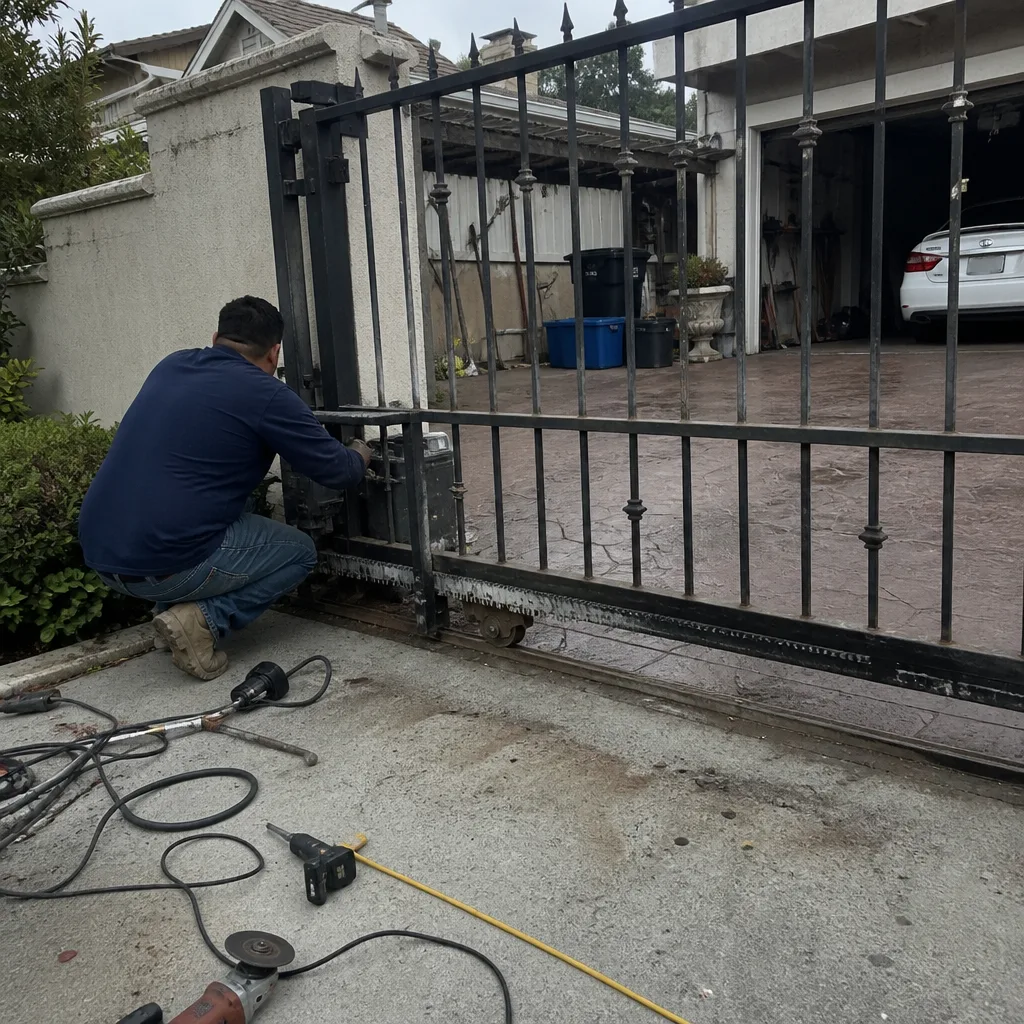 Before
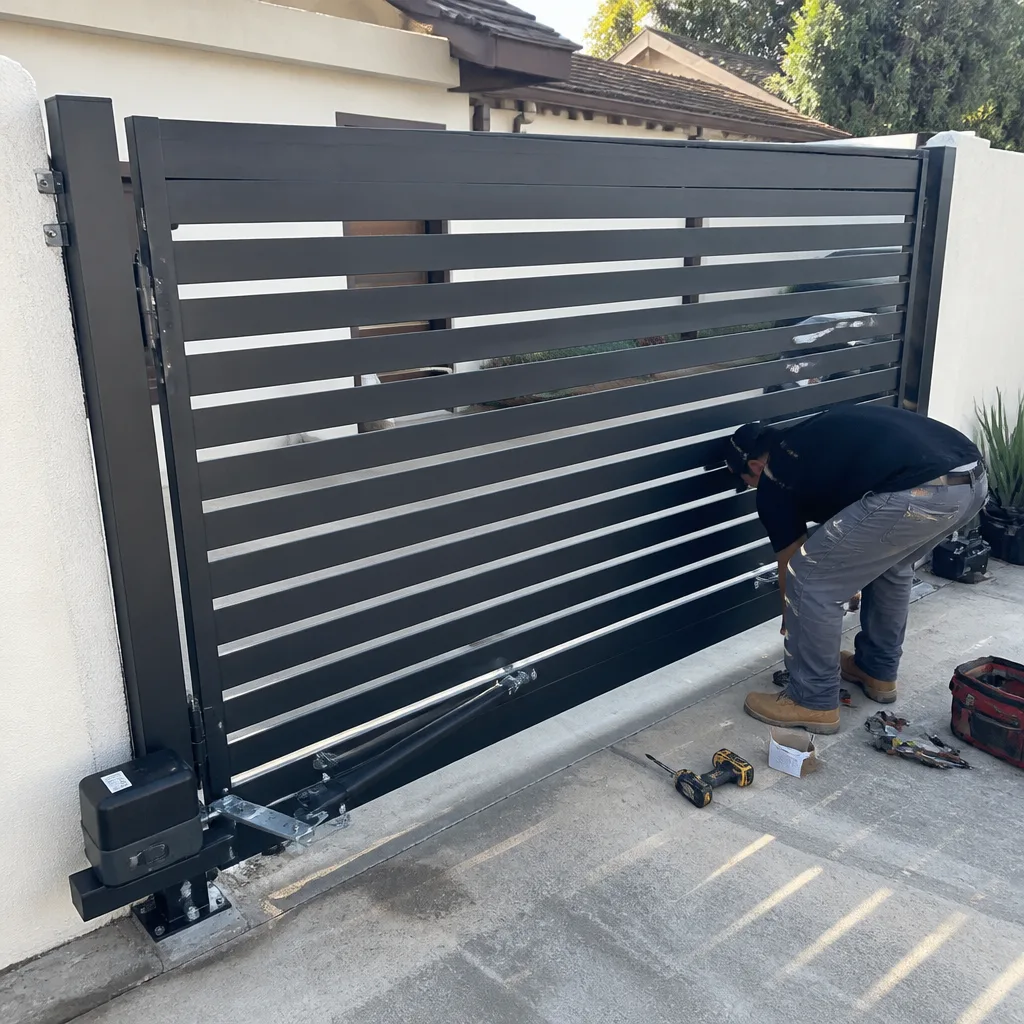 After
After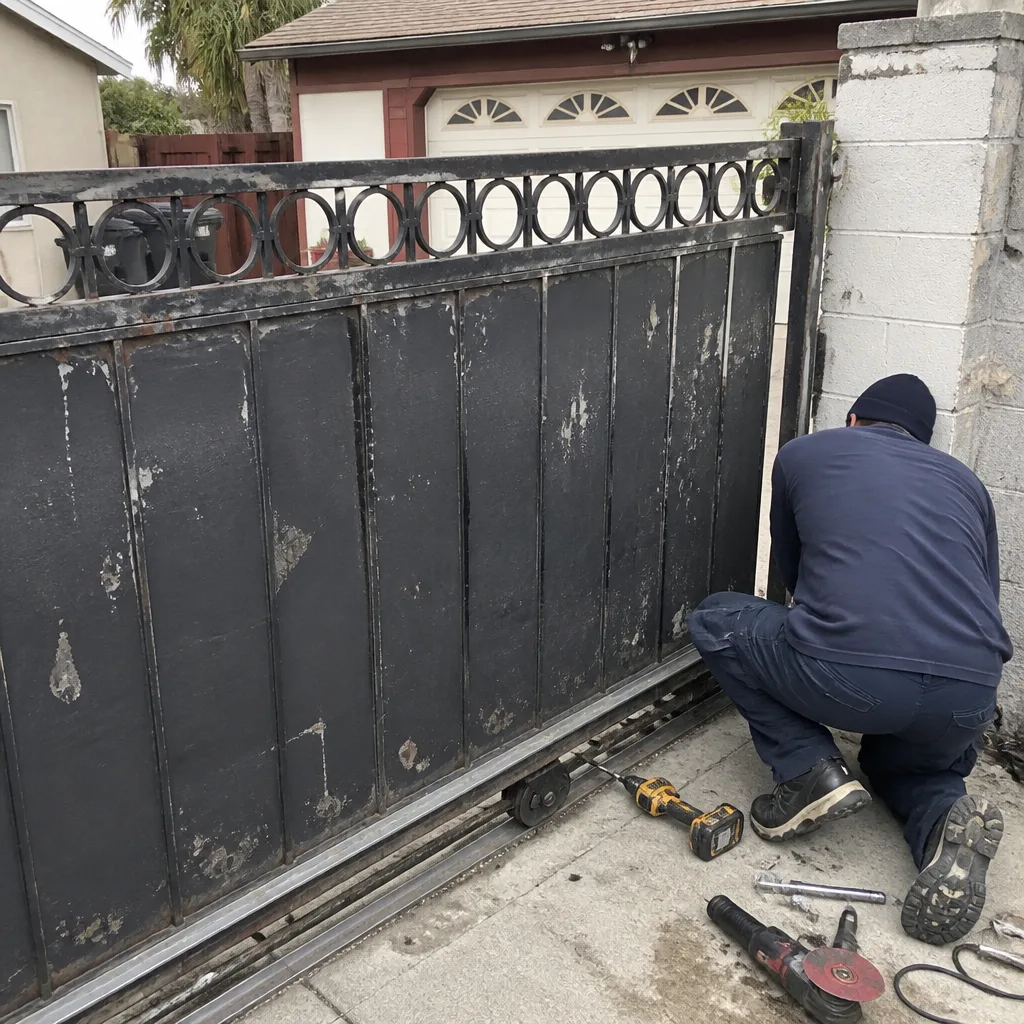 Before
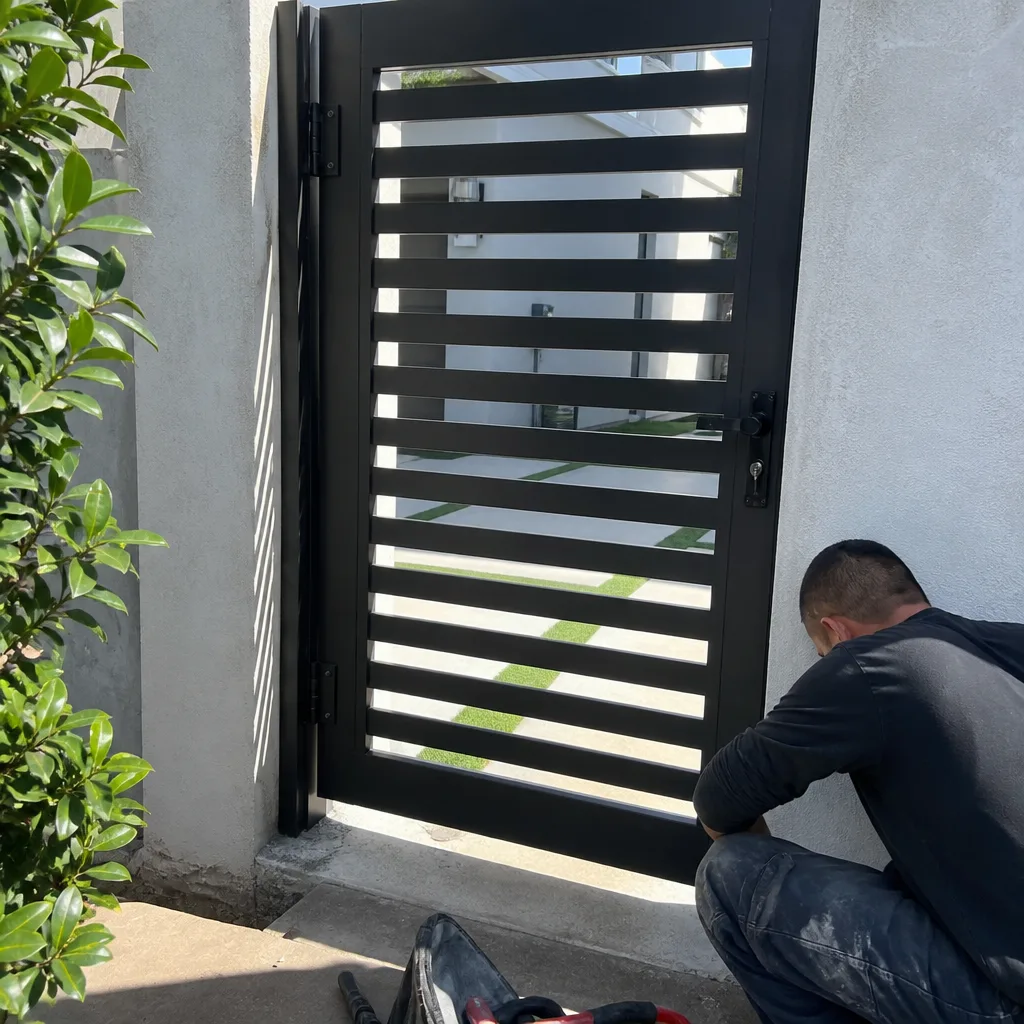 After
After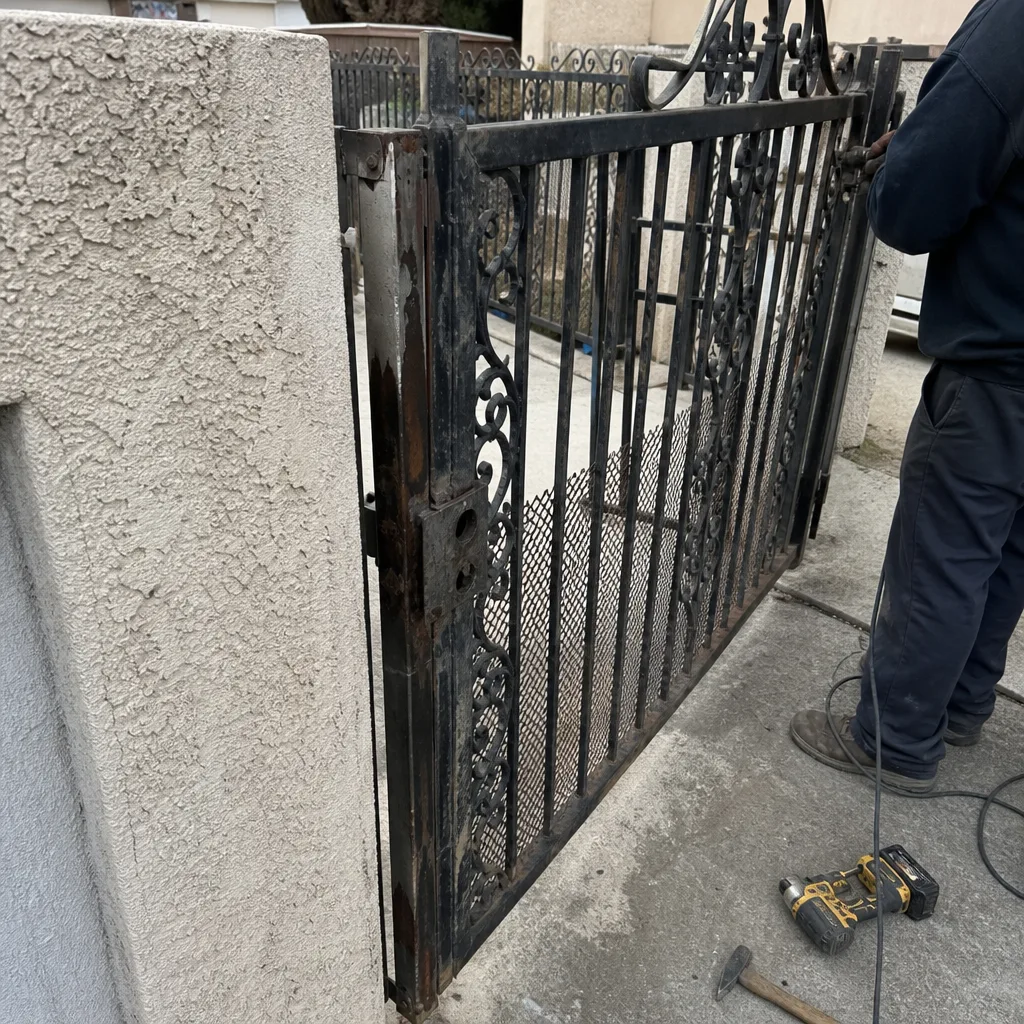 Before
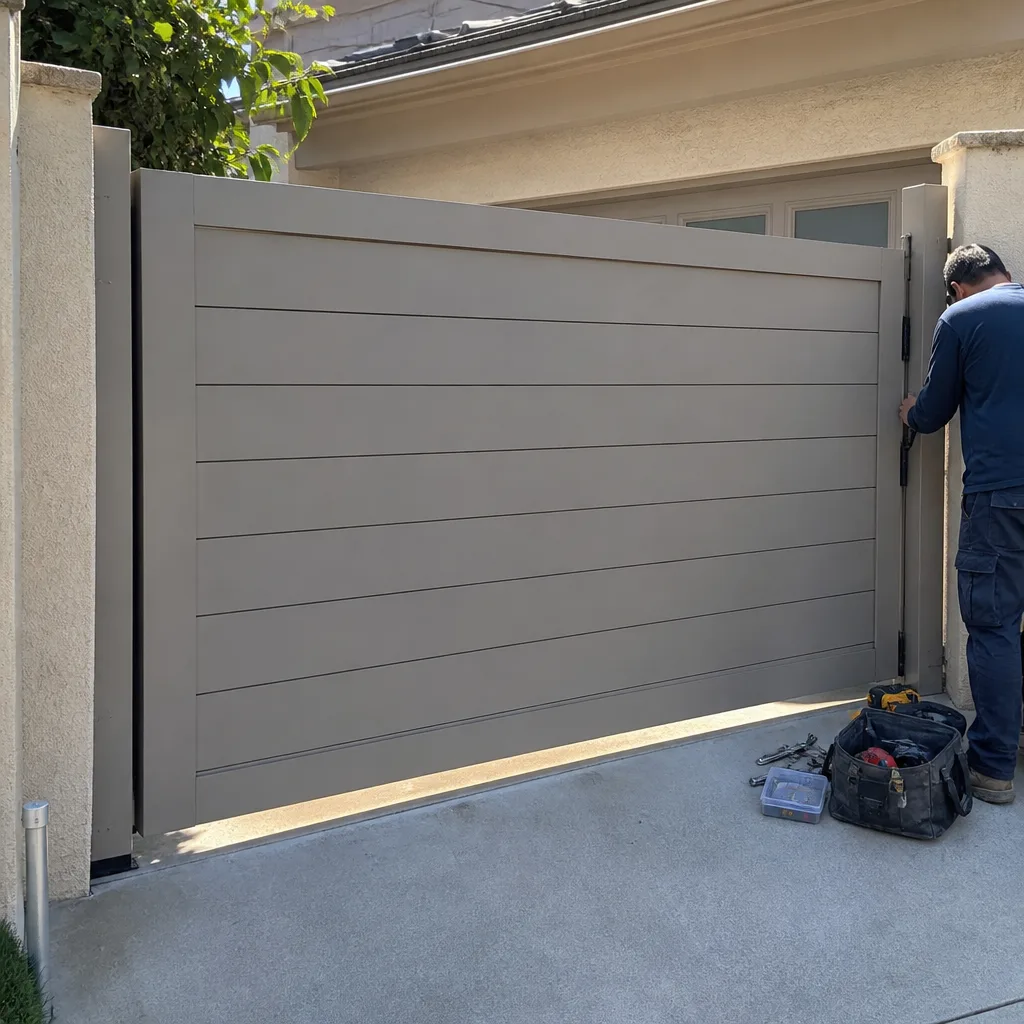 After
AfterGate Repair Emergency Preparedness Guide for Los Angeles Homes
During the 2019 Saddleridge fire evacuation, several homes in the Granada Hills area had automatic gates that couldn’t be opened because residents didn’t know their manual release location. The gate was never the problem. The preparation was. In Los Angeles, a gate emergency is rarely just a gate emergency. Power outages from wildfires, grid failures, and earthquakes can trap cars, block emergency access, and isolate elderly residents. This guide covers everything a Los Angeles homeowner needs to know before the next outage or evacuation order hits: how to release your specific gate motor by hand, how to size battery backup for LA’s outage patterns, what to teach your family and delivery drivers, and which hardware to inspect after a seismic event.
Quick Answer
Gate repair emergency preparedness in Los Angeles means knowing how to manually release your specific gate motor (LiftMaster, FAAC, Viking, Elite, Linear, or DoorKing) during a power outage, having backup power sized for LA’s typical multi-hour fire-season outages, and posting a gate emergency card with your model number, release method, and installer contact. Most LA gate failures during emergencies are not mechanical breakdowns; they are preparation failures. Every automatic gate sold in the United States has a manual release mechanism. Knowing where yours is, and having practiced it once, is the difference between a 60-second inconvenience and a trapped family.
Table of Contents
- Manual Release: Step-by-Step for the Six Most Common LA Gate Motors
- Battery Backup for Los Angeles Outage Patterns
- Who Needs to Know How to Operate Your Gate: Family, Housekeepers, and Delivery Drivers
- The Gate Emergency Card: Four Pieces of Information to Post in Your Garage
- After a Seismic Event: Gate Hardware to Inspect Before Resuming Automatic Operation
- Evacuation Scenarios: What Actually Happens When the Power Goes Out
- Common Mistakes to Avoid
- When to Call a Professional
- Frequently Asked Questions
- The Bottom Line
Manual Release: Step-by-Step for the Six Most Common LA Gate Motors
Every automatic gate operator has a manual release mechanism that disconnects the motor from the gate leaf, allowing you to push or slide the gate by hand. The location and operation differ by brand. Here are the six operators we see most often in Los Angeles homes, from Brentwood to Pasadena to Sherman Oaks.
LiftMaster
LiftMaster gate operators, including the LA400 and LA500 series used widely in Los Angeles residential properties, have a red or yellow manual release handle located on the side of the motor box. Pull the handle straight down and rotate it 90 degrees to lock it in the disengaged position. The gate can then be pushed manually. To restore automatic operation, rotate the handle back to its original position and pull up until it clicks.
FAAC
FAAC swing gate operators, common on hillside properties in the Hollywood Hills and Mount Washington, use a release key or lever located on the bottom of the operator housing. Insert the triangular key (usually stored on top of the operator or on a hook nearby) and turn counterclockwise. This releases the hydraulic piston. Push the gate leaf open. FAAC operators are hydraulic, so the gate will move more slowly by hand than a mechanical operator.
Viking
Viking operators, frequently installed on larger estate gates in Bel Air and Pacific Palisades, have a manual release knob on the front face of the operator. Turn the knob counterclockwise until it stops. This disengages the drive. Slide or swing the gate open. Viking release knobs are often painted black and located near the bottom of the unit.
Elite
Elite slide gate operators, popular in the San Fernando Valley, have a manual release lever inside the operator cover. Open the cover with the key, locate the lever on the drive chain assembly, and pull it upward. The chain disengages from the motor sprocket. Slide the gate manually. Keep the cover key in a known location; without it, you cannot access the release.
Linear
Linear operators, including the SL and SW series, have a manual release handle on the side of the chassis. Pull the handle outward and rotate it to disengage the gearbox. The gate can now be moved by hand. Linear operators are common in mid-century neighborhoods like Studio City and Encino where gate aesthetics favor a compact operator footprint.
DoorKing
DoorKing operators, which we’ve been servicing since Warden Gate Repair opened in 2008, have a manual release lever located directly on the gearbox inside the operator cabinet. Open the cabinet door, locate the lever (it is typically a flat metal bar), and push it down. This separates the gears and allows manual operation. DoorKing cabinets are usually beige or gray and stand about two feet tall.
Safety note: Before disengaging any gate operator, know whether your gate is a swing gate or a slide gate, and which direction it moves. A heavy gate leaf can injure a person if it swings unexpectedly. Stand to the side of the gate, not behind it, when releasing the mechanism. If your gate has a high-tension spring or counterweight, do not attempt to adjust it yourself. Call a professional.
If you’re not sure which operator you have, or you’ve found the release but can’t get it to move, call us at (828) 426-7081. We walk Los Angeles homeowners through manual release over the phone every fire season.
Battery Backup for Los Angeles Outage Patterns
Los Angeles power outages during fire season are not random events. They follow a pattern. LADWP and Southern California Edison preemptively shut down power in high-wind, low-humidity conditions to prevent transmission lines from sparking. During the 2025 fire season, some Los Angeles neighborhoods experienced preemptive outages lasting 24 to 72 hours. A gate motor without backup power becomes a manual gate for the duration. A gate motor with a correctly sized battery backup continues operating automatically.
Here is what we recommend for Los Angeles homes, based on the average outage durations we’ve seen across the city and our Gate Repair Maintenance Schedule: What to Do and When:
- 24-hour battery backup: The minimum for any Los Angeles home within a high-fire-risk zone, including the hillside neighborhoods of Granada Hills, Porter Ranch, Chatsworth, and the canyons between the 405 and the coast. A standard 12V 7Ah battery will run a typical residential slide gate motor for roughly 24 hours of intermittent use. If you’re in a fire zone, do not rely on this alone.
- 48-hour battery backup: Recommended for most Los Angeles homes. This means two 12V 7Ah batteries wired in parallel, or a single 12V 12Ah battery. It covers the typical LADWP outage window during red flag conditions and gives you a buffer if the outage extends.
- 72-hour battery backup: The configuration we recommend for homes where an elderly resident lives alone, or where a vehicle must be able to exit at all times. This typically means three 12V 7Ah batteries or a single 12V 18Ah battery, plus a solar trickle charger to keep the bank topped up between outages.
Battery backup is not the same as a surge protector. A surge protector guards against voltage spikes. A battery backup stores power. Many Los Angeles homeowners assume their gate has battery backup because the operator has a battery compartment. It does not necessarily have a battery inside it. We’ve opened hundreds of operators across Los Angeles over the years, and a surprising number have empty battery compartments because the original battery died and was never replaced.
Check yours now: Open the operator cabinet. If there is a battery, note the date on it. SLA batteries typically last three to five years. If the date is older than that, or there is no date, replace it before fire season. If you need help identifying the right battery for your LiftMaster, FAAC, Viking, Elite, Linear, or DoorKing operator, call us at (828) 426-7081 and we’ll walk you through it.
Who Needs to Know How to Operate Your Gate: Family, Housekeepers, and Delivery Drivers
A gate emergency plan is only as good as the people who can execute it. In Los Angeles, many households have people coming and going who are not the primary homeowners: housekeepers, nannies, gardeners, pool service, and regular delivery drivers. If the power goes out and you’re at work, can your housekeeper get the gate open? Can your teenager get the car out? Here is exactly what each person needs to know.
Your family (everyone old enough to drive):
- Where the manual release is located (which side of the operator, what it looks like).
- How to operate it (pull, turn, key, or lever; which direction).
- Where the backup battery is, if you have one, and how to check the indicator light.
- The fact that the gate gets heavier when the power is out. Swing gates especially require more effort to move manually.
Your housekeeper or nanny (people in the house during weekdays):
Do not expect them to know how to disengage a gate motor. Instead, give them a simpler instruction: where the emergency release is, and how to call you while they are doing it. The most useful thing a housekeeper can do is know where the manual release is and have the phone number of the person to call for help. Post the gate emergency card (see the next section) where they can see it.
Your regular delivery drivers:
Delivery drivers in Los Angeles face gated homes hundreds of times a day. If your gate is closed and the power is out, they cannot deliver. If you have a pedestrian gate or a walk-through, make sure they know it exists. If you have a gate code keypad with battery backup, test it during a power outage so you know whether it still works. Some keypads lose programming when power is interrupted; others retain it. Test yours before you need it.
In our experience at Warden Gate Repair, the single most common emergency call we get during Los Angeles power outages is from a homeowner or family member who cannot find the manual release. The motor is fine. The preparation was missing. Spending ten minutes showing the release to the people who live in your home removes most of that risk.
The Gate Emergency Card: Four Pieces of Information to Post in Your Garage
When an emergency hits, memory fails. People forget where the release is, what the model number is, and who installed the gate. We recommend every Los Angeles home with an automatic gate create a Gate Emergency Card-detailed in our Gate Repair Maintenance Checklist for Los Angeles Homeowners-and post it in the garage, on the inside of the door that leads from the garage into the house, and near the electrical panel. Here are the four pieces of information it should contain.
- Gate operator brand and model number. Example: LiftMaster LA500. This is printed on a label on the side of the operator. Write it down now while you can read it clearly.
- Manual release method. One sentence that says exactly what to do; e.g., “Pull red handle on left side of motor box, rotate 90 degrees, push gate open.” If your gate requires a key, note where the key is stored.
- Installer or service company contact. The phone number of the company that you trust to fix your gate. If you don’t have one, write down Warden Gate Repair at (828) 426-7081. We answer live 24/7, not with a voicemail or a chatbot.
- Battery backup location and status. Where the battery is (inside operator cabinet, in a separate box on the wall), when it was last replaced, and the model number of the replacement battery.
Laminate the card. Los Angeles garages get hot in the summer, and paper fades. A laminated card lasts for years. Make two copies: one for the garage and one for the kitchen drawer where you keep flashlights and emergency supplies.
This card solves the exact problem that trapped Grenada Hills residents during the Saddleridge fire evacuation. If the information is posted where anyone can see it, no one has to remember it. And when a emergency does happen, the person standing at the gate can read the card and act.
After a Seismic Event: Gate Hardware to Inspect Before Resuming Automatic Operation
Earthquakes move things. Gate posts shift. Rails flex. Chain tension changes. A gate that operated perfectly before a magnitude 5.0 earthquake in Los Angeles may not operate safely after. Running a gate with shifted posts risks injuring a person or damaging a vehicle because the gate can bind, derail, or fall. Here is the specific hardware to inspect after any seismic event strong enough to rattle windows.
- Gate posts: Check whether the post is still plumb. Sight down the post from two directions. If the post leans more than about a quarter inch over its height, the gate should be professionally inspected before automatic operation resumes.
- Gate leaf alignment: With the gate in the closed position, check the gap at the latch side. If the gap has narrowed or widened, the gate shifted. A swing gate that doesn’t meet the latch properly may fail to trigger the safety sensor, leaving the gate cycling or jammed.
- Slide gate rollers and rail: For slide gates, inspect the rail for cracks or separation at the joints. Earthquake movement can crack concrete rails, which then jam the gate rollers. Check the rollers themselves for chips or flat spots.
- Chain or drive belt tension: After shaking, the chain may be loose enough to jump a sprocket, or tight enough to strain the motor. Check for sag. A thumb should be able to press the chain about half an inch at its midpoint without excessive force.
- Operator mounting bolts: Inspect the bolts holding the operator to its concrete pad or post. If any are loose, the operator can shift under load and damage the drive.
- Safety sensors and photo eyes: Realign the sensors if they were knocked out of position. A misaligned photo eye will prevent the gate from closing, or worse, fail to detect an obstruction and close on a person.
Safety caveat: do not stand under or behind a gate while testing it after an earthquake. Stand clear and operate the gate from the keypad or remote. If it moves unevenly, grinds, or stops mid-cycle, disconnect the manual release and leave the gate in manual mode until a technician can inspect it. The cost of an inspection is small compared to the cost of a gate falling on a child or a car.
Warden Gate Repair offers post-earthquake gate inspections throughout Los Angeles. We check every item on this list, give you a written price for any repairs before we start work, and stand behind the repair with our 365-Day Done Right Promise.
Evacuation Scenarios: What Actually Happens When the Power Goes Out
Understanding what your gate does during a power outage helps you plan. Here are the three most common evacuation scenarios we see in Los Angeles, and what happens in each.
Scenario 1: The power is out, your gate is closed, and you need to leave. Without battery backup, your gate will not respond to your remote or keypad. You must release the gate manually using the procedure for your specific operator brand, then push or slide the gate open manually, then secure it open or closed depending on the situation. If you have battery backup, the gate will open and close normally until the battery drains.
Scenario 2: The power is out, your gate is open, and you need to close and lock it before evacuating. Many Los Angeles homeowners want to secure their property before leaving during a fire evacuation. If your gate is open and you lose power, you can usually release the manual mechanism and push or slide the gate closed by hand. However, most automatic gates do not have a manual locking mechanism. Some have a physical latch you can install; most rely on the motor to hold the gate closed. If the power is out and the gate has been released, it may not actually lock. Plan ahead: know whether your gate can be locked manually, and if not, consider this when deciding whether to leave the gate open or closed during an evacuation.
Scenario 3: The power is out, you’re not home, and your family is inside. This is where preparation makes the difference. If the people inside know how to release the gate manually, they can get out. If they don’t, they are trapped behind a metal gate until help arrives. This is the exact scenario the Gate Emergency Card solves. Post it in the garage and in the kitchen.
Los Angeles evacuation zones change quickly during fire season. Cal Fire and LAFD issue evacuation orders with little notice. The gate is the last thing between your family and the road. The time to learn the manual release is not the morning of an evacuation order.
Common Mistakes to Avoid
- Assuming your gate has battery backup without checking. Open the operator cabinet and look. Many empty battery compartments exist in Los Angeles gates. If there is no battery, or the battery is older than five years, you effectively have no backup power.
- Not knowing your operator brand and model. When you call for emergency service, the first question we ask is what operator you have. If you don’t know, we can help you identify it, but valuable time is lost. Write it on your Gate Emergency Card today.
- Never practicing the manual release. Reading about it is not the same as doing it. Pull the release once while the power is on. See how the gate feels. Some gates are heavy; you’ll know what you’re dealing with before you need it in an emergency.
- Storing the release key in a drawer that no one knows about. FAAC and Elite operators often require a key. The key gets lost or left in a garage cabinet. Store it on a hook directly next to the operator.
- Letting safety sensors drift out of alignment without fixing them. A gate that reverses every time it closes is annoying during normal times and dangerous during an emergency. If your gate is misbehaving, don’t wait for red flag season to fix it.
- Running the gate on generator power without a surge protector. Generator power can be dirty, with voltage spikes that damage gate control boards. If you power your gate from a portable generator during an extended outage, use a surge protector or a UPS between the generator and the operator.
- Ignoring visible gate damage because it still opens. A cracked post, a bent rail, or a loose hinge will not heal itself. In Los Angeles, the next earthquake or windstorm can turn minor damage into a gate that fails during an emergency.
When to Call a Professional
Some gate problems are DIY-safe, like checking a battery or practicing a manual release. Others are not. Call a professional if your gate motor makes a grinding noise, if the gate moves unevenly or jerks during operation, if the manual release is seized or requires tools you don’t have, or if you’ve had an earthquake and you are not certain the posts are still aligned. High-tension springs, counterweights, and slide gate chains under load can cause serious injury if handled incorrectly. A real expert always flags that danger. If you are in Los Angeles and need help, Warden Gate Repair offers free estimates. We send a photo-badged, background-checked technician to your home, and you receive a written price before any work starts. Call (828) 426-7081. We answer live, 24/7.
Frequently Asked Questions
To manually open your gate during a Los Angeles power outage, locate the manual release mechanism on your gate operator (a red handle on LiftMaster, a key on FAAC, a knob on Viking, a lever on Elite, or a lever inside the cabinet on DoorKing), disengage it, and push or slide the gate open by hand. The exact procedure varies by brand. Practice it once before you need it.
A standard 12V 7Ah battery can power a residential gate motor for roughly 24 hours of intermittent use, but Los Angeles preemptive outages during fire season can last 48 to 72 hours. We recommend a battery bank sized for at least 48 hours for most Los Angeles homes. Call (828) 426-7081 for help choosing the right battery for your operator.
After an earthquake in Los Angeles, inspect your gate posts for plumb, check gate leaf alignment, examine slide gate rollers and rails for cracks, test chain or belt tension, verify operator mounting bolts are tight, and realign safety sensors before resuming automatic operation. If anything looks shifted or loose, leave the gate in manual mode and call a professional for an inspection.
Yes, any automatic gate can be opened manually using its release mechanism, but only if you know where the release is and how to operate it. During the 2019 Saddleridge fire evacuation, some Granada Hills residents could not open their gates because no one knew the manual release location. Post a Gate Emergency Card with your operator model and release instructions where anyone can find it.
Yes. Warden Gate Repair specializes exclusively in gate repair in Los Angeles, including electric gate repair and gate motor repair. We service LiftMaster, FAAC, BFT, Linear, Viking, Ghost Controls, DoorKing, Elite, and Mighty Mule. We respond to emergency calls with a written price before any work starts, and every repair is covered by our 365-Day Done Right Promise. Call (828) 426-7081; a live person answers 24/7.
Emergency gate repair in Los Angeles typically ranges from $150 to $450 for the service call and diagnosis plus the cost of parts, depending on the operator brand and the nature of the failure. Simple fixes like a blown fuse or a disconnected wire run lower; replacing a gate motor control board can run $500 to $1,200 installed. Warden Gate Repair gives you a written price before any work starts, so there are no surprise line items. Call (828) 426-7081 for an exact quote; estimates are free.
The Bottom Line
A gate emergency in Los Angeles is usually a preparation emergency wearing a mechanical costume. The operators are reliable. The failures come from not knowing the manual release, not having battery backup, and not having a plan for the people inside the house. This guide gives you the exact steps to prepare: learn your manual release, size your battery backup for LA’s fire-season outage windows, teach your family and household help what to do, post a Gate Emergency Card, and inspect your gate after every earthquake. For more guides & resources, visit our blog. If you want help from a Los Angeles gate specialist that sends a photo-badged technician and a written price before any work starts, call Warden Gate Repair at (828) 426-7081. A live person answers, any hour of any day.
Written by Cole Rafferty, Owner at Warden Gate Repair, serving Los Angeles since 2008.