
Last updated October 9, 2026
Free on-site gate assessment - hinges, posts, and your LiftMaster or Nice gate operator checked before anything is quoted
The assessment is free and the quote is the invoice.

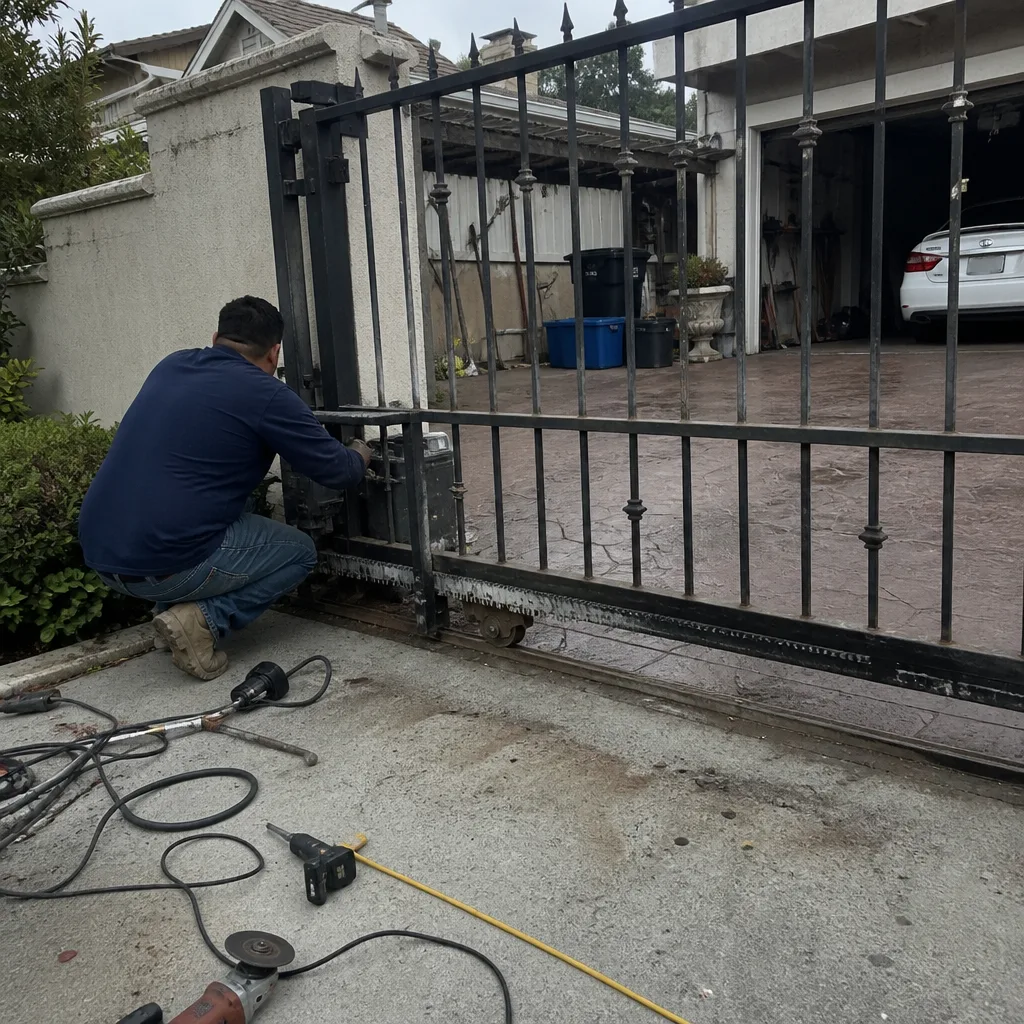 Before
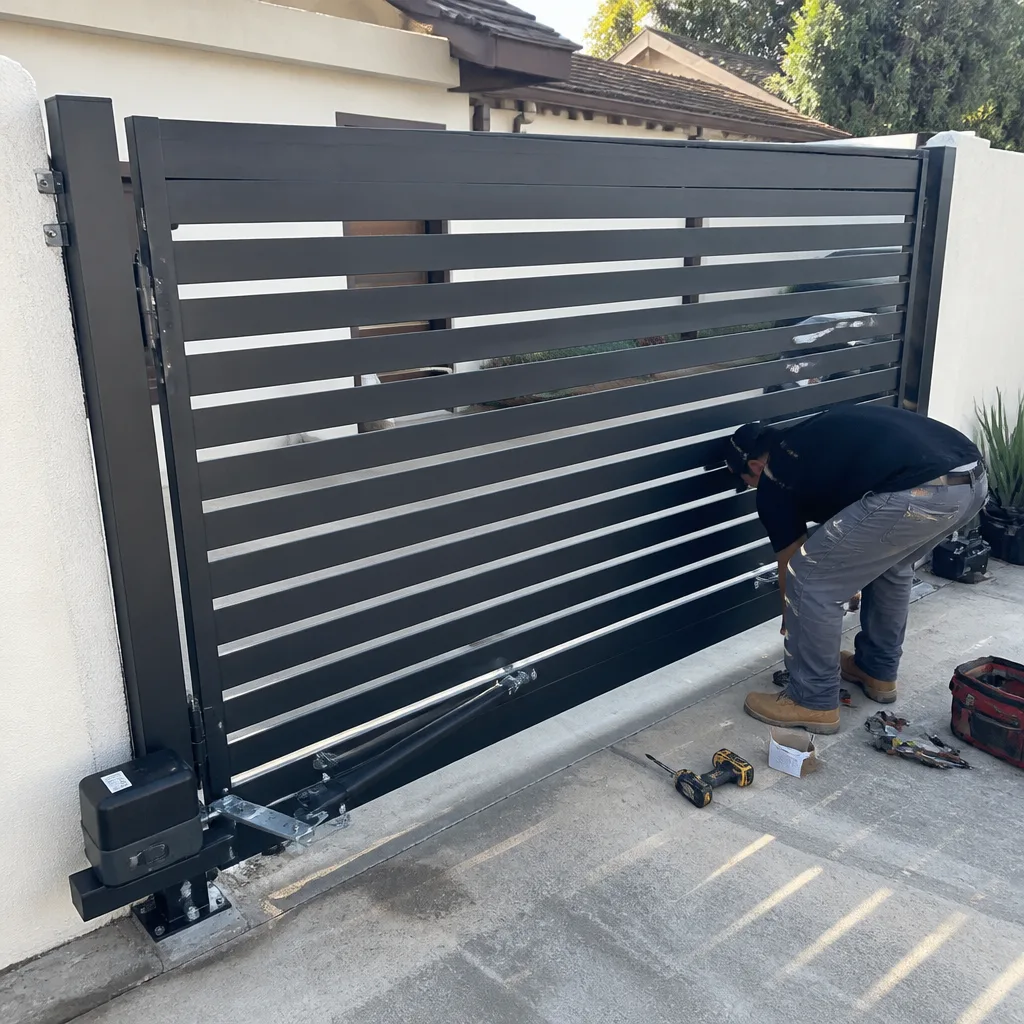 After
After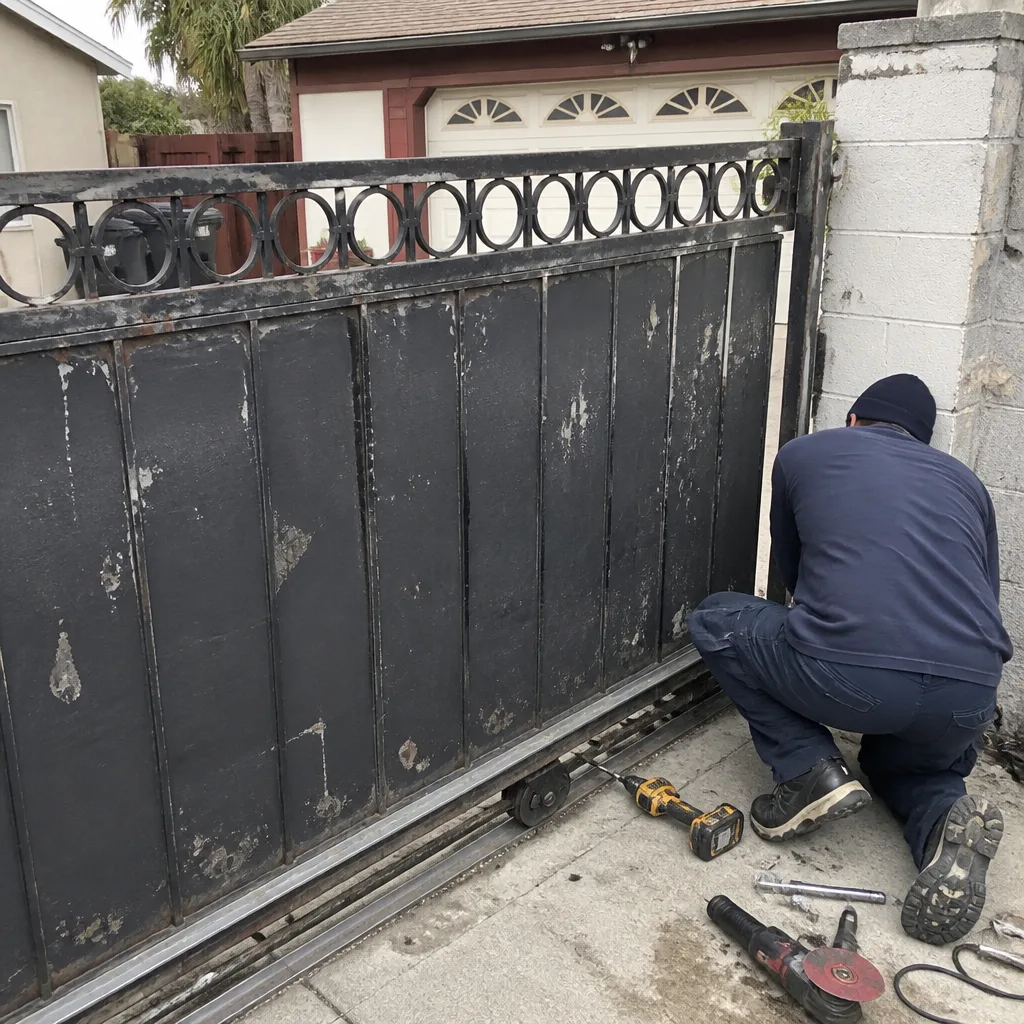 Before
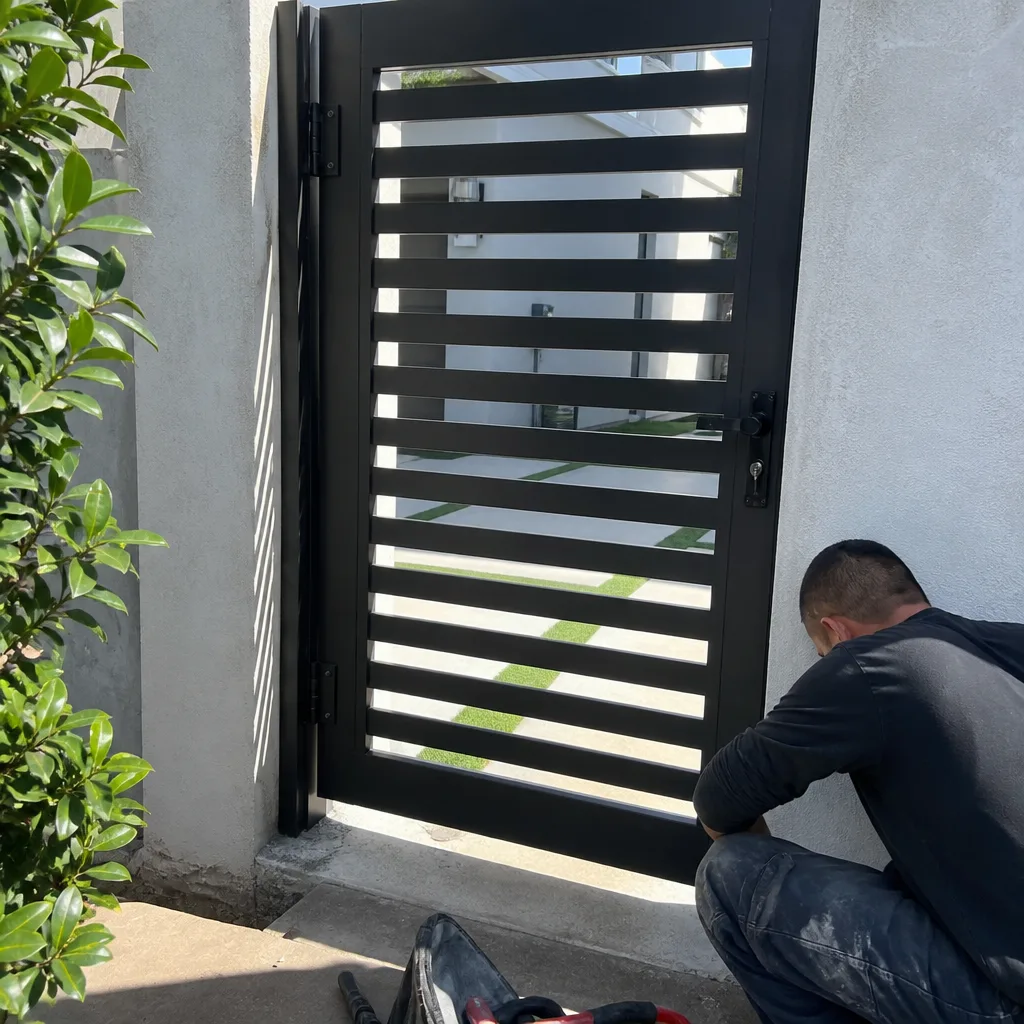 After
After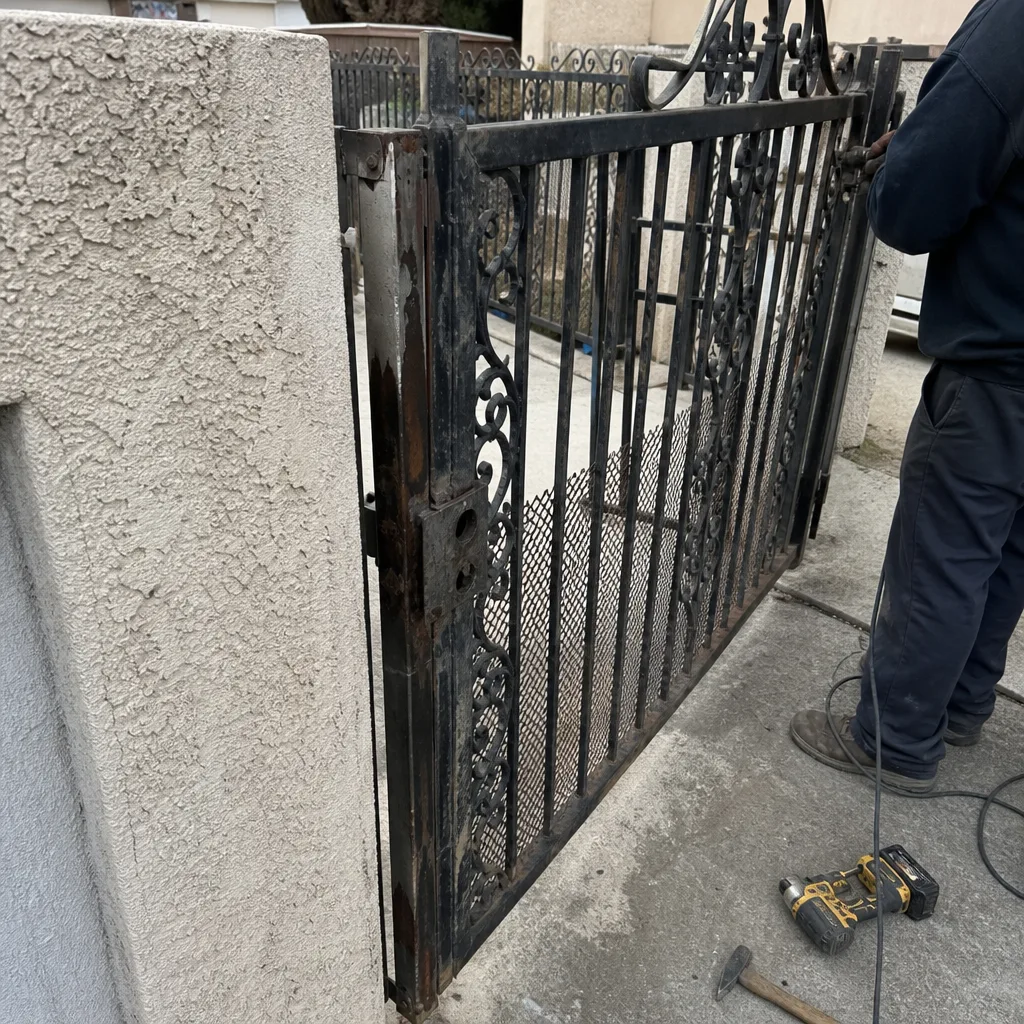 Before
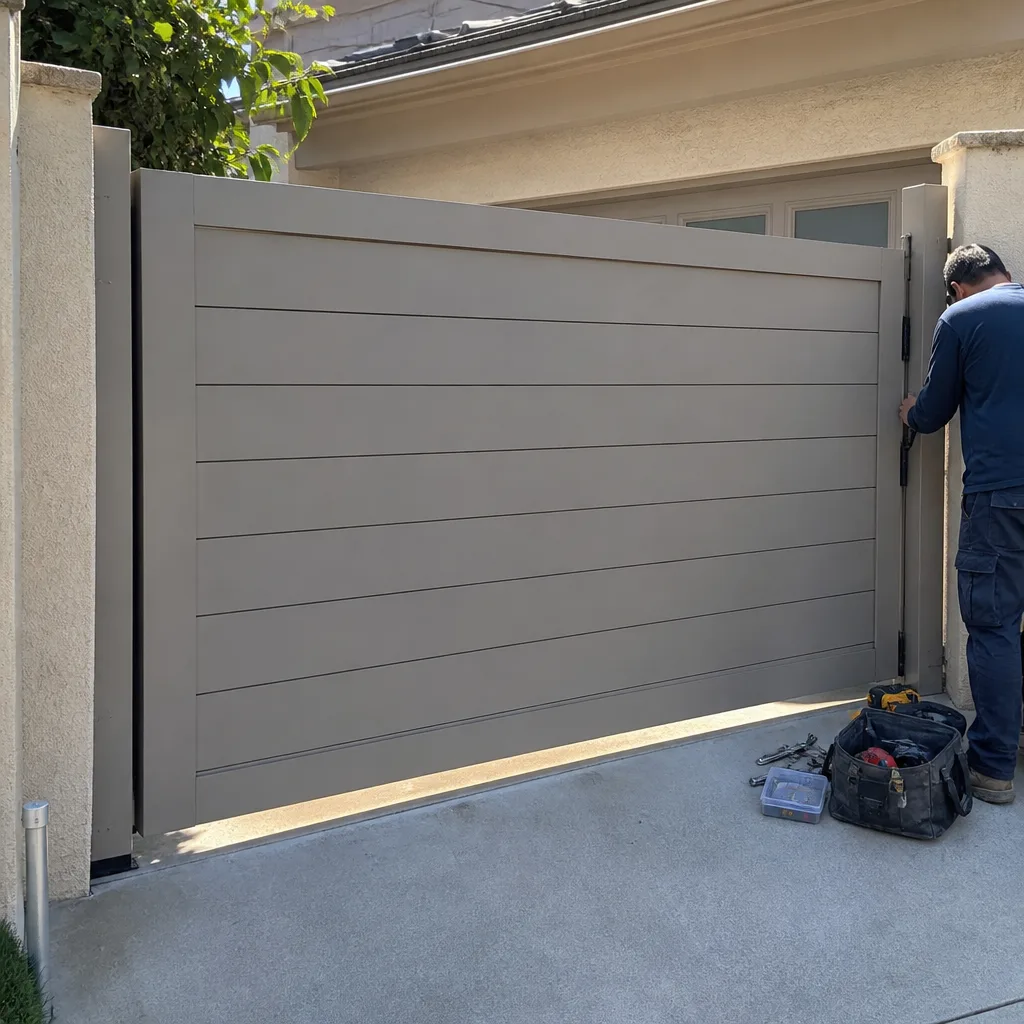 After
AfterGate Repair Maintenance Schedule: What to Do and When
A gate that gets 15 minutes of maintenance four times a year will statistically outlast a neglected gate by six to nine years. That is the difference between a roughly $200 annual habit and a $4,000 full replacement. Most Los Angeles homeowners do not skip gate maintenance out of laziness. They skip it because no one has ever handed them a plain-language calendar that says what to do, in what order, with what products. This guide is that calendar. We have provided Gate Repair services to thousands of gates across Los Angeles since 2008, and the patterns are consistent: the gates that fail are the ones nobody touched for three years. The gates that last are the ones whose owners followed a schedule almost identical to the one below.
Quick Answer
A residential gate needs four seasonal checkups per year, roughly 15 minutes each: lubricate the moving parts, tighten hardware, clean the track or hinge line, test the safety sensors, and inspect the posts and welds. In Los Angeles, the schedule runs on a calendar that follows our two real weather events: the winter rain season and the summer heat. Do the deeper tasks, like post footing inspection and motor diagnostic checks, once a year, and log everything in a simple notebook or phone note so a technician can diagnose problems faster when something does go wrong.
Table of Contents
- Why Gates Fail in Los Angeles: The Real Wear Patterns
- The Quarterly Maintenance Checklist: Exact Tasks, Exact Order
- What to Lubricate, With What, and When
- The Los Angeles Month-by-Month Schedule
- The One Annual Task Most Homeowners Skip: Post Footing Integrity
- Seasonal Adjustments: Rain Rust and Summer Heat Expansion
- How to Log Maintenance So It Actually Helps You Later
- Common Mistakes to Avoid
- When to Call a Professional
- Frequently Asked Questions
- The Bottom Line
Why Gates Fail in Los Angeles: The Real Wear Patterns
Los Angeles gates do not die from old age. They die from three specific conditions, and all three are preventable with the schedule in this guide.
First is rust. Salt air near the coast, morning marine layer moisture, and the winter rain season all combine to attack unprotected metal. A gate that looks fine from ten feet away can be quietly corroding at the hinge welds and the base of the posts. We see this constantly in Venice, Playa del Rey, and anywhere within two miles of the water.
Second is heat expansion. Vinyl gates and composite materials expand in Los Angeles summer temperatures. A gate that swings perfectly at 7 a.m. can bind against the latch post at 3 p.m. when the surface temperature hits 140 degrees. Homeowners call us convinced their gate frame is bent, when in fact the clearance was never set for thermal movement.
Third is deferred lubrication. A gate motor (the box that slides or swings your gate automatically) works harder when the gate hardware is dry. The motor draws more amperage, runs hotter, and burns out its control board or gearset years before it should. We have replaced DoorKing and Elite motors in Los Angeles that would have lasted another decade if the hinges and rollers had been lubricated twice a year. Dry hardware is the single most common cause of premature motor failure we see.
The Quarterly Maintenance Checklist: Exact Tasks, Exact Order
You do not need special training to do 80% of routine gate maintenance. You need a workable order of operations, so you do not waste an afternoon hunting for tools. Here is the exact checklist we recommend to Los Angeles homeowners, in the order you should perform it. Budget 15 minutes per quarter.
- Disconnect the automatic opener. Put the gate in manual mode so it cannot move while you work. Most operators, including Ghost Controls and Mighty Mule units, have a simple release handle. For sliding gates, make sure the gate cannot roll on its own if the driveway has any slope.
- Run the gate by hand. Open and close it slowly. Listen and feel. Does it grind, catch, wobble, or require real effort at any point? A smooth manual swing or slide is the baseline for a healthy gate.
- Tighten every visible fastener. Go after hinge bolts, bracket bolts, track clamps, and the operator mounting bolts. Use a socket set, not a crescent wrench. Metal gates in Los Angeles vibrate constantly from traffic, wind, and daily cycles, and loose hardware compounds fast.
- Clean the track or hinge line. For sliding gates, clear out leaves, dirt, gravel, and pet hair from the track and the V-groove. A dry shop vacuum or a stiff brush works. For swing gates, wipe the hinge pins and pivot points clean of grit and old grease residue.
- Lubricate the moving points. Apply lubricant to hinges, rollers, pivot points, and the chain or belt if equipped. Exact product guidance is in the next section.
- Test the safety sensors. With the gate in manual, roll or swing a trash bin, a board, or just put your hand in the gate path, then re-engage the opener and test. The gate should immediately stop and reverse when the photo eye beam or contact edge is interrupted. If it does not, that is a call to a professional, not a project.
- Check the warning signage and manual release. Every automatic gate in Los Angeles must have visible warning signs and an accessible manual release for emergencies. Confirm both are legible and reachable.
- Log it. Write down the date, what you did, and anything that seemed off. This habit pays off years later, and it is covered in the maintenance log section below.
What to Lubricate, With What, and When
Lubrication is the most misunderstood maintenance task in the gate industry. The wrong product does more damage than none at all. In our experience across Los Angeles, we see two extremes: gates that have been sprayed with WD-40 every few months, which strips away real lubricant, and gates that have been greased so heavily that dirt and grit have formed an abrasive paste in the hinges. Both cause premature failure.
Here is the correct product guidance, by material and application.
- Metal hinges and pivot points: Use a white lithium grease or a synthetic spray grease that dries to a non-tacky film. One short burst per hinge, twice a year, is enough. Wipe away any excess with a rag after the first swing.
- Sliding gate rollers and track: Use a dry silicone spray or a PTFE-based lubricant, not grease. Grease on a track collects Los Angeles dust and becomes sandpaper within weeks. Silicone goes on light and stays clean.
- Chains and drive belts on openers: Chains get one small dab of chain-specific lubricant per link, once a year at most. Belts get nothing. Belt-driven openers from Mighty Mule and Ghost Controls are designed to run dry, and adding oil degrades the rubber.
- Gate motor internals: Nothing. Do not open the motor housing. It is factory-sealed and lubricated for life, and spraying anything into a LiftMaster, DoorKing, or Elite motor voids the warranty and shortens the board’s life. If the motor is making noise, that is a diagnosis problem, not a lubrication problem.
- Vinyl and composite gates: Silicone spray only on the hinge hardware, applied lightly, and wipe down any overspray from the gate surface immediately. Petroleum-based products can stain and soften vinyl in Los Angeles sun.
If you remember one thing from this section, remember this: lubricate metal moving parts sparingly, never grease a track, and never open the motor.
The Los Angeles Month-by-Month Schedule
Los Angeles does not have four seasons in the traditional sense. It has two: a rain season from roughly November to March, and a heat season from May to October, with April and October serving as transition months. Your gate maintenance calendar should follow that rhythm, not a generic spring-summer-fall-winter pattern written for Michigan.
January – February: Post-Rain Inspection Window
Once the first real rain storms pass, inspect every metal surface for new rust. Look at the bottom six inches of the gate posts, the hinge welds, the bolts, and any exposed steel. Catch rust early and it is a ten-minute wire brush and touch-up paint job. Let it go until August and it is structural. Also check the drainage around the post footings. Los Angeles soil shifts when saturated, and a post base sitting in standing water is the beginning of a leaning gate. Clean out any debris piling against the base of the posts.
March – April: Post-Rain Deep Clean and Lubrication
After the last real rain, do the full quarterly checklist from above, including a thorough track cleaning and fresh lubrication. The rain season has driven grit into every moving part, and now is when you evict it. This is also the time to verify the gate still closes securely against the latch post. Wood gates in particular absorb winter moisture and swell, and you may need to adjust the latch plate by an eighth of an inch. Do not force it by trimming the gate; adjust the hardware instead.
May – June: Pre-Heat Clearance Check
Before the first real triple-digit Los Angeles heat wave, check the clearances on every side of a swing gate. In the San Fernando Valley and inland areas, vinyl gates expand noticeably in July and August. You want at least a half-inch gap between the gate edge and the latch post in cool morning temperatures. If it is already tight in May, it will bind in August. For sliding gates, confirm the gate runs fully open and fully closed without laboring, and that the end stops are cushioned. Heat softens some types of plastic and rubber, so worn end stops get chewed up quickly in summer.
July – August: Mid-Summer Motor Check
This is the season when gate motors work hardest in Los Angeles. The heat causes the motor to run hotter on every cycle, and if the hardware has any added resistance from dry hinges or a dirty track, the motor’s internal thermal protection may trip. You will notice it as a gate that stops mid-cycle and will not respond for 15 minutes. Do not keep resetting the breaker and forcing it. That is how control boards die. Instead, run the full quarterly checklist, paying special attention to lubrication and track cleanliness, and listen to the motor during a full cycle. A motor that sounds labored in August, but is still working, will often fail completely in November. The off-season repair is always cheaper.
September – October: Pre-Rain Prep
Before the first real storm of the new rain season, inspect all weather seals, touch up any paint chips on metal gates, verify the gate drains correctly at its base, and make sure the operator’s housing gaskets are seated. Water getting into the motor housing is a top-three cause of Los Angeles gate motor failure. Also test the manual release one more time, because if the power goes out during a storm, you need to know you can open your own gate by hand in the dark.
November – December: The Annual Deep Service
Once a year, in late fall or early winter, do a more thorough version of the quarterly checklist. Remove and inspect the gate leaf on its hinges if you can safely do so, check every weld and every joint for hairline cracks, test the battery backup on your opener (most Los Angeles gate openers have one), and consider a professional diagnostic on the motor, or consult our Gate Repair Troubleshooting: Common Problems and How to Fix Them for guidance. This is the service that catches what the quarterly checks miss. A trained eye finds a cracked weld or a failing capacitor in minutes. Call a pro for this one. Warden Gate Repair offers free estimates in Los Angeles, and we will give you a written price before any work starts.
The One Annual Task Most Homeowners Skip: Post Footing Integrity
The single most expensive gate repair in Los Angeles is a leaning or failed gate post. When the post leans, the gate sags. When the gate sags, it drags, scrapes, and eventually refuses to close. Fixing it means digging out the old footing, pouring new concrete, and remounting the gate, and that runs into the thousands. Most homeowners never see it coming because they never test the posts.
Here is the simple tug test that reveals early post failure before the gate moves visibly. Do this once a year, in November, when the soil has had time to settle after the summer heat.
- With the gate in the full open position, grip the top of the gate post with both hands.
- Pull it firmly toward you, then push it away. Fifteen to twenty pounds of force is all you need.
- Watch the base of the post where it meets the concrete or the ground.
- If you see any movement, any gap opening, or any powder from cracking concrete at the base, the footing is failing.
Post footings fail most often in Los Angeles for three reasons: poor original concrete depth, soil erosion from rain runoff, and rusting of the steel anchor bolts below grade. A post that passes the tug test every year will almost never surprise you with a sudden lean. A post that is starting to fail can sometimes be rescued with bracing and a poured collar if caught early, but only if the problem is caught early. Once the lean is visible, the repair is a full reset.
Seasonal Adjustments: Rain Rust and Summer Heat Expansion
The same quarterly checklist runs year-round, but Los Angeles rewards you for adjusting emphasis by season. Here is what that looks like in practice.
Post-rainy season, roughly February through April: Make rust your primary target. A quarter-inch scratch that went to bare metal in November will show rust by March in coastal Los Angeles. Treat it now. Wire brush to clean metal, dab on a rust-converter primer, topcoat with enamel in a close color match. That is a $30 fix that prevents a $900 steel gate replacement two years later. If the gate is aluminum, rust is not a concern on the leaf itself, but the hinge hardware is usually steel, and those hinges rust exactly the same as a full steel gate.
Summer heat months, June through September: Heat expansion is your primary target. Vinyl and composite gates move the most. Wood gates also move, but they shrink and swell with humidity, not temperature, and Los Angeles is not humid enough to make wood movement the main concern. Metal gates expand less than vinyl but still noticeably on a 16-foot steel slide. If your gate binds or drags only on hot afternoons but works fine in the morning, that is a clearance problem, not a broken gate. Adjust the latch post or the end stop before you start replacing hinges.
How to Log Maintenance So It Actually Helps You Later
A maintenance log serves two masters: your warranty and your technician. Both benefit from the same simple record-keeping habit.
For your warranty: Most gate and opener manufacturers require proof of regular maintenance if you ever file a claim. A Ghost Controls or Mighty Mule warranty claim on a burned-out control board is much stronger when you can show a written log of quarterly maintenance over the previous 24 months. The log does not need to be elaborate. A notebook in the garage or a note on your phone works. Record the date, the tasks you performed, the products you used, and any observations. If you have a technician out for a professional service, keep the invoice in the same place.
For your technician: When something does go wrong, a log transforms the diagnosis. Instead of guessing whether the gate has been lubricated recently, we can see that the hinges were lubed in March and the gate started grinding in May, which points to a failing roller rather than dry hardware. We know to check the post footing because your log shows a passing tug test in November, so this new lean probably happened during the February rains. A maintenance log is the difference between a technician replacing parts on a hunch and a technician replacing the right part the first time.
Keep it simple: date, task, product, observation. Four lines, four times a year. Done.
Common Mistakes to Avoid
- Greasing the track. We see this so often in Los Angeles it could be its own repair category. Heavy grease on a sliding gate track collects dust, car exhaust particulates, and pet hair until it becomes an abrasive slurry that grinds down the rollers and the track itself. Use dry silicone, and only silicone.
- Spraying the motor internals with WD-40. WD-40 is a solvent and water displacer that strips protective lubricants. Spraying it into a sealed motor or control board is a fast way to kill a $400 board. Nothing in the motor housing needs your lubricant.
- Ignoring a slow gate. A gate that moves slower than it did a year ago is telling you something. The motor is working harder, drawing more current, and running hotter. Every month you ignore it shortens the motor life. Slow is a symptom, not a setting.
- Testing safety sensors by blocking the beam with your hand only. Your hand is small and you can jerk it away quickly. Test with a large object, like a rolling trash bin, so you know the sensor actually sees obstacles at the full height and width of the gate path. A sensor that passes the hand test can still fail the trash bin test.
- Painting over rust without removing it first. Paint over active rust looks fine for about six months and then the rust blooms through as a bubble. Wire brush to clean metal, treat with a converter, then paint. Los Angeles coastal air eats shortcuts.
- Skipping the post tug test. Every expensive leaning-gate repair we have done in Los Angeles had a precursor: the post was loose for a year before the lean was visible. One tug test a year catches it at the repairable stage.
- Using pressure washers on gate operators. A pressure washer aimed at the motor housing or the control board will find its way past the gaskets and cause corrosion or short circuits. Hand wash the gate, avoid the operator box, and never pressure wash near the keypad.
When to Call a Professional
Some gate issues are not DIY projects, and knowing where that line is saves you money and risk. Call a professional when the motor is making a grinding, buzzing, or clicking sound; when the gate stops mid-cycle and resets itself; when the safety sensors fail to reverse the gate during a test; when a post is leaning more than a quarter inch; when there is visible cracking at any weld; or when a vinyl gate has a crack in the panel itself. High-tension springs on some cantilever and older swing gates can cause serious injury if released incorrectly, and we do not recommend attempting that work yourself. Warden Gate Repair offers free estimates in Los Angeles, and a trained technician can diagnose nearly any issue in under an hour. Call (828) 426-7081 and we will send a named, photo-badged technician with a written price before the first tool comes out.
Frequently Asked Questions
Perform a 15-minute quarterly checklist four times a year, plus a more thorough annual deep service once a year in late fall. Los Angeles homeowners should align the quarterly checks with the rain season and heat season rather than a generic calendar: post-rain in March or April, pre-heat in May or June, mid-summer in July or August, and pre-rain in September or October. Call (828) 426-7081 if your quarterly check turns up anything you are not sure about.
Use white lithium grease or a synthetic spray grease on metal hinges and pivot points, dry silicone spray or PTFE-based lubricant on sliding gate rollers and tracks, and a chain-specific lubricant on opener chains. Do not use grease on tracks, do not use WD-40 on hinges as a substitute for real lubricant, and never lubricate the inside of the motor housing. The motor is sealed and lubricated for life.
Vinyl gates need less rust prevention than metal gates, but they need more attention to heat clearance. Los Angeles summer heat expands vinyl noticeably, and a gate that clears its latch post in May can bind by August. Check the gap on hot afternoons and adjust the latch plate if needed. Vinyl also stains if petroleum-based lubricants touch the panel surface, so use silicone spray carefully and wipe off any overspray immediately.
A professional gate tune-up and diagnostics visit in Los Angeles typically runs between $90 and $180, depending on whether the gate is a swing or slide, and whether the motor needs a diagnostic readout. If the technician finds a part that needs replacing, that cost is quoted separately and in writing before any work is done. Warden Gate Repair provides a written price before any work starts, on every job, no exceptions.
Yes. The most common cause of premature gate motor failure we see in Los Angeles is a motor that has been running against dry hinges, a dirty track, or a dragging gate for years. The motor draws more current, runs hotter, and its control board or gearset fails years ahead of schedule. A homeowner who lubricates quarterly and cleans the track regularly can realistically extend motor life by 40 to 60 percent compared to a neglected gate.
Always. Put the gate in manual mode and confirm it cannot move under its own power before you touch any moving part. Gate openers can cycle unexpectedly if a remote gets bumped, a timer is set, or a vehicle loops over the driveway sensor. A moving gate has enough force to cause serious injury. If you are not confident you know how to safely disconnect your opener, call (828) 426-7081 and we will walk you through it or send a technician.
The Bottom Line
A Los Angeles gate that gets 15 minutes of maintenance on a consistent quarterly schedule will outlast a neglected one by years, not months. Lubricate the right parts with the right products, tighten the hardware, clean the track, test the sensors, and spend one afternoon a year on the post footing tug test. Write it all down. When something does finally break, and something always breaks eventually, your maintenance log makes the repair faster and the diagnosis accurate. Most of these tasks do not require a professional. But when a problem falls beyond the 15-minute checklist, or the motor is making a sound you have never heard before, call someone who works on gates every day. Warden Gate Repair has been serving Los Angeles since 2008, and we are one call away at (828) 426-7081. Need a hand with your quarterly check? We are happy to help. Explore our Warden Gate Repair home services, see our Gate Repair in Los Angeles, Electric Gate Repair in Los Angeles, or Gate Motor Repair in Los Angeles pages for more information.
Written by Cole Rafferty, Owner at Warden Gate Repair, serving Los Angeles since 2008. Explore more guides & resources on gate maintenance and repair.