
Last updated October 9, 2026
Free on-site gate assessment - hinges, posts, and your LiftMaster or Nice gate operator checked before anything is quoted
The assessment is free and the quote is the invoice.

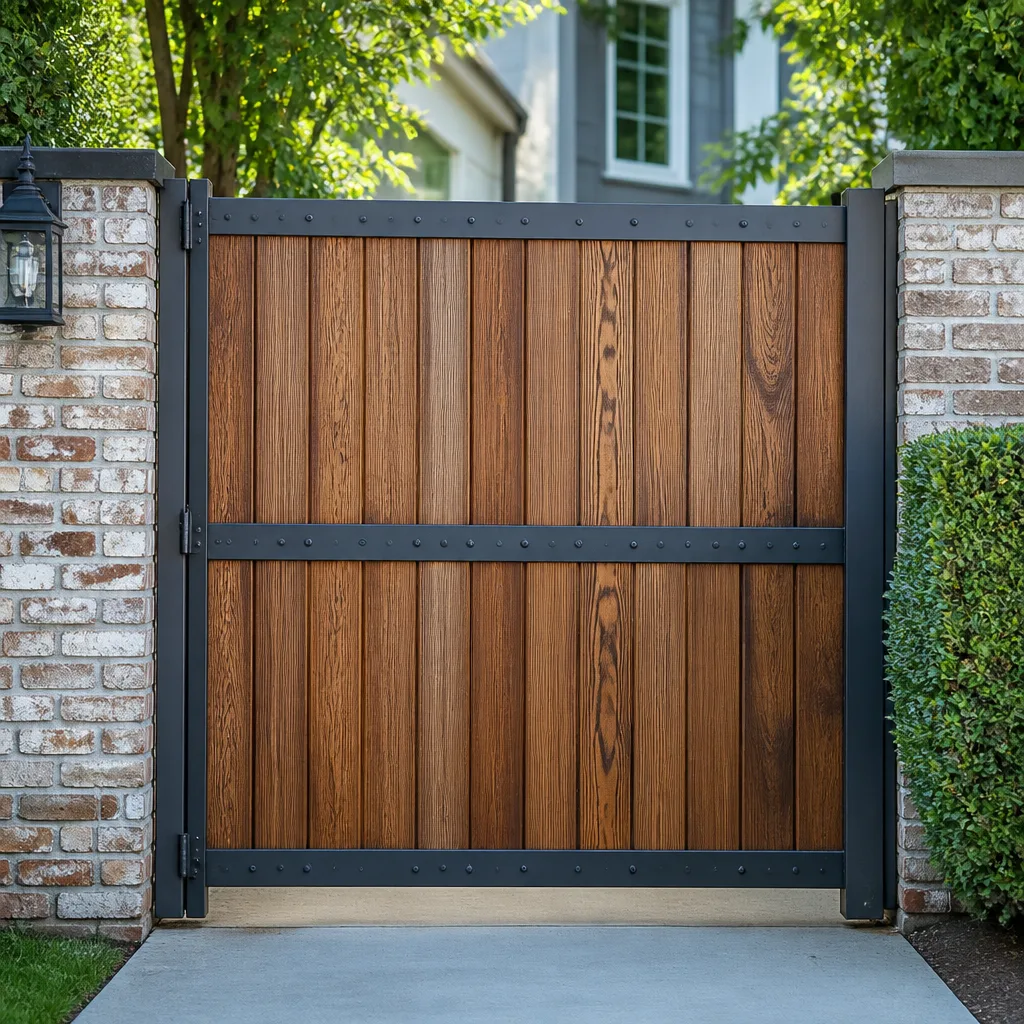
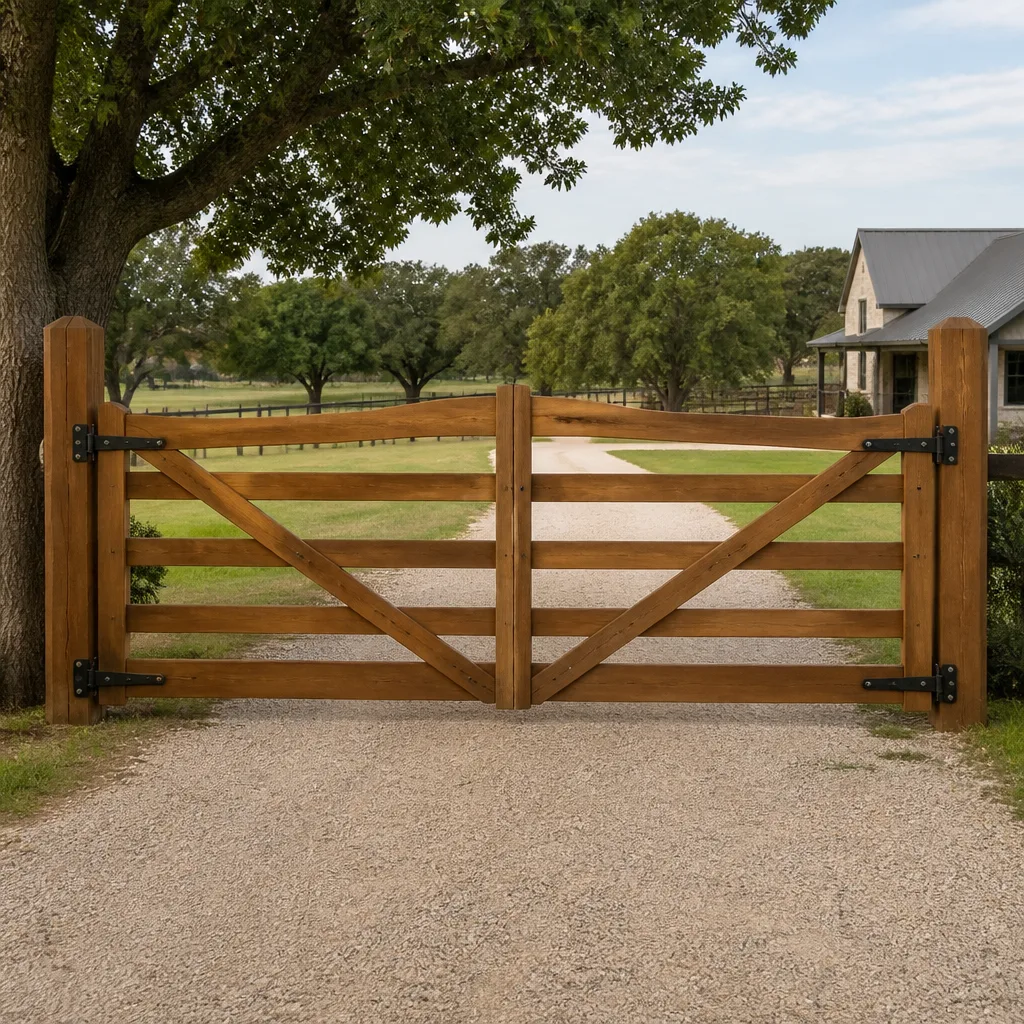
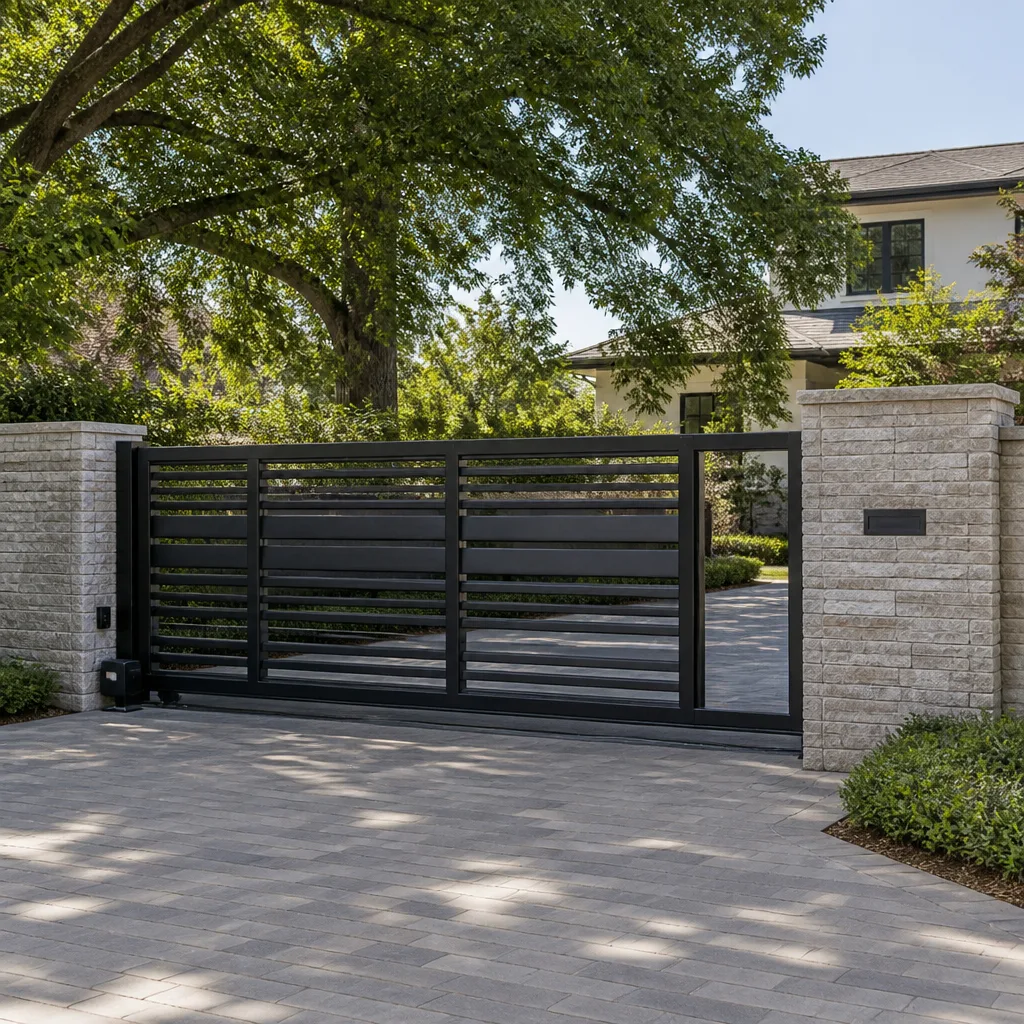
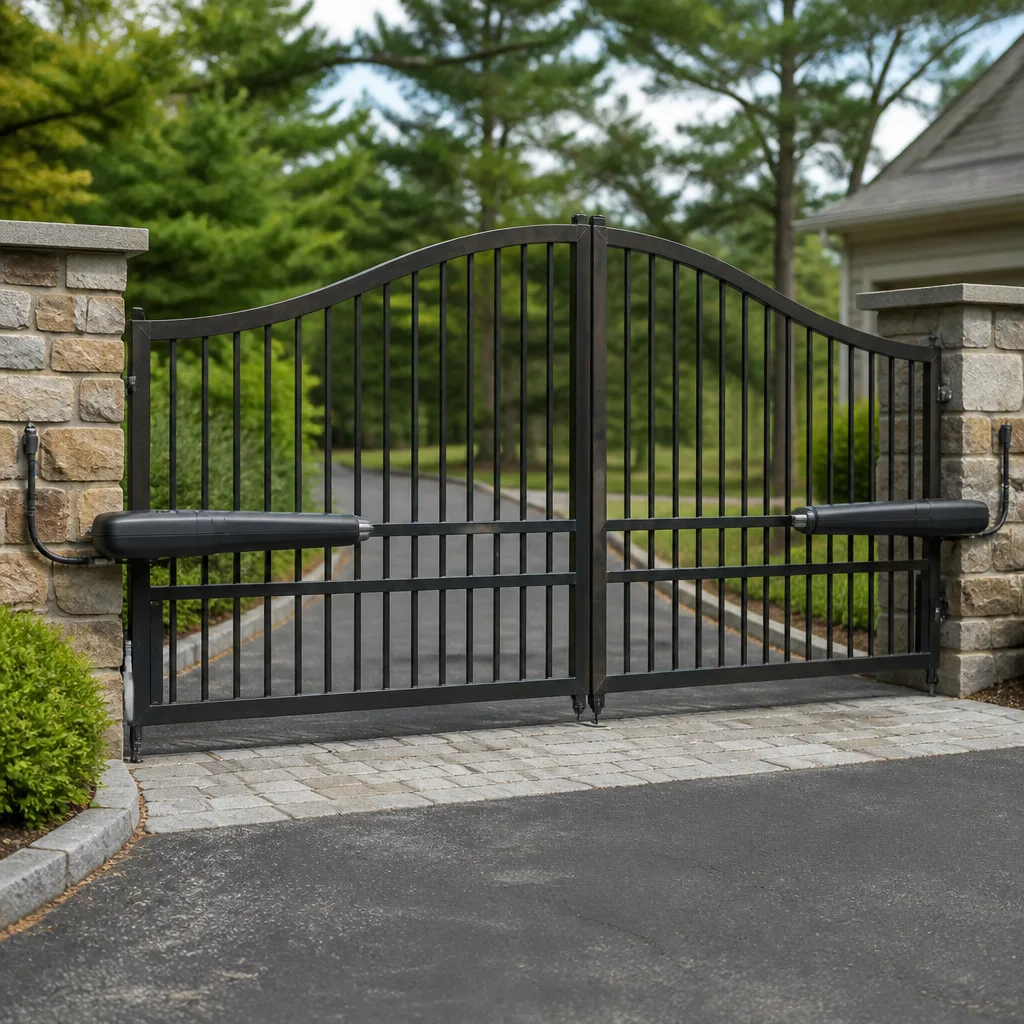
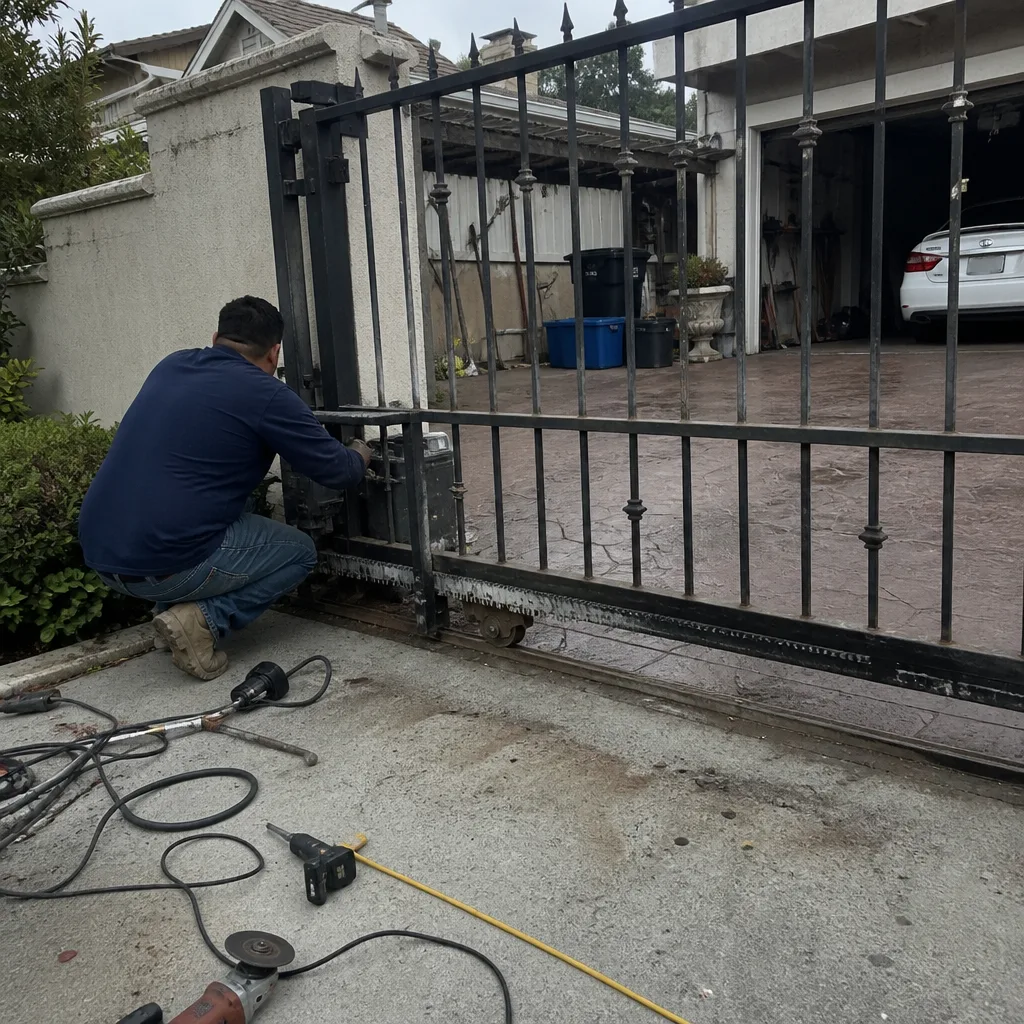 Before
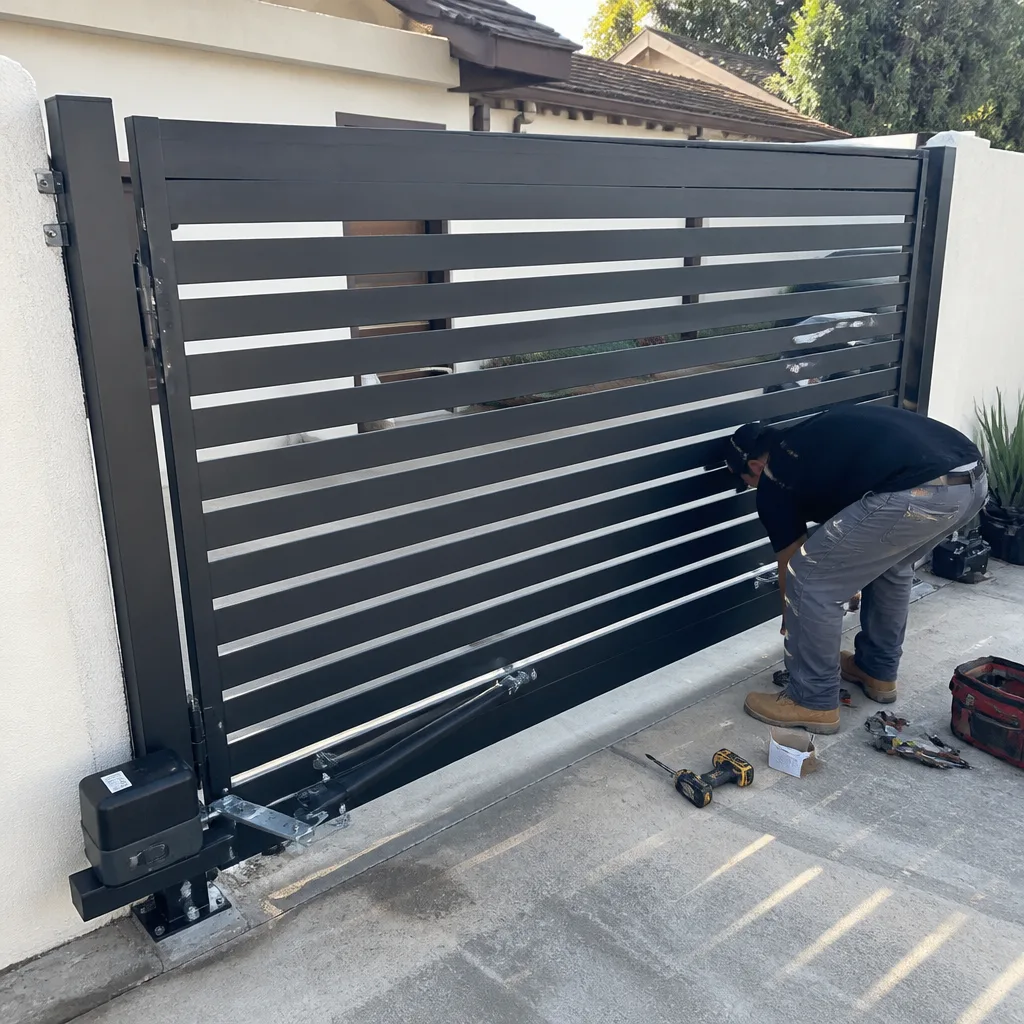 After
After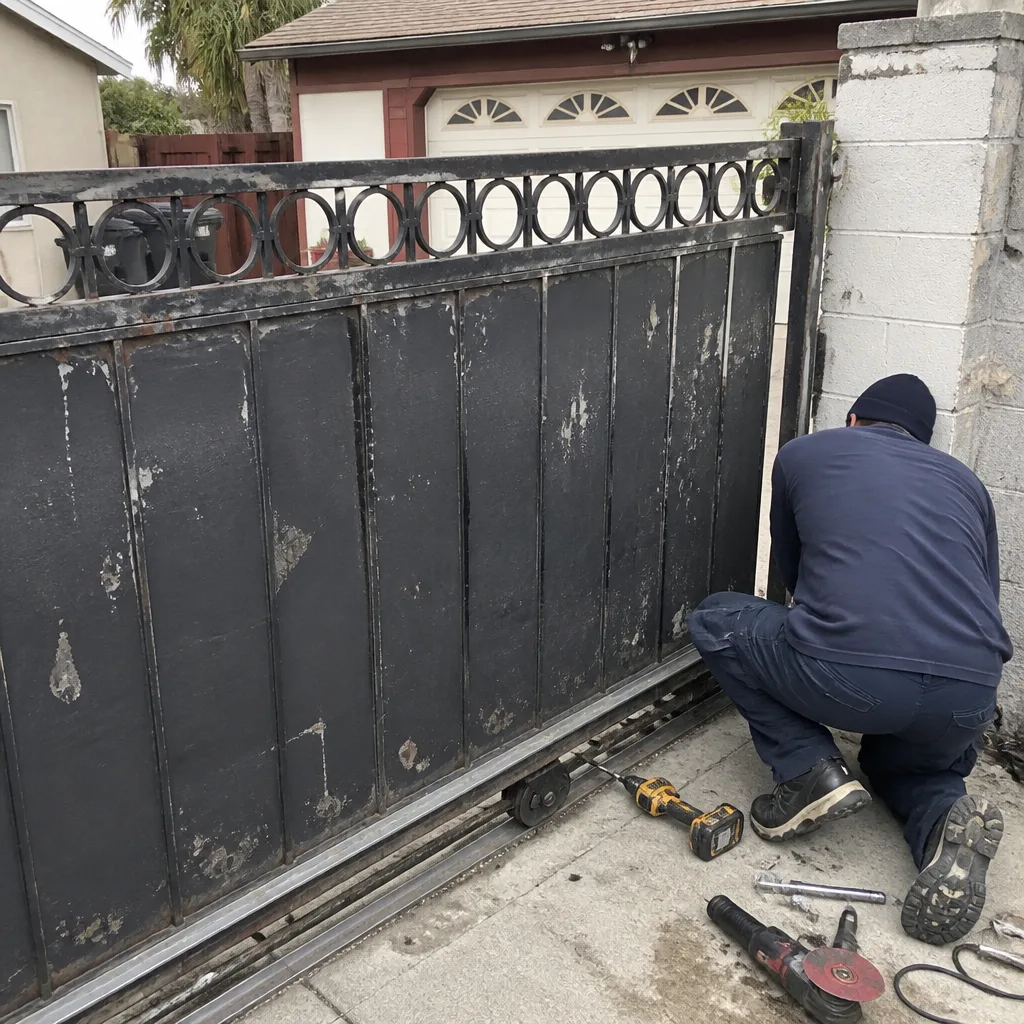 Before
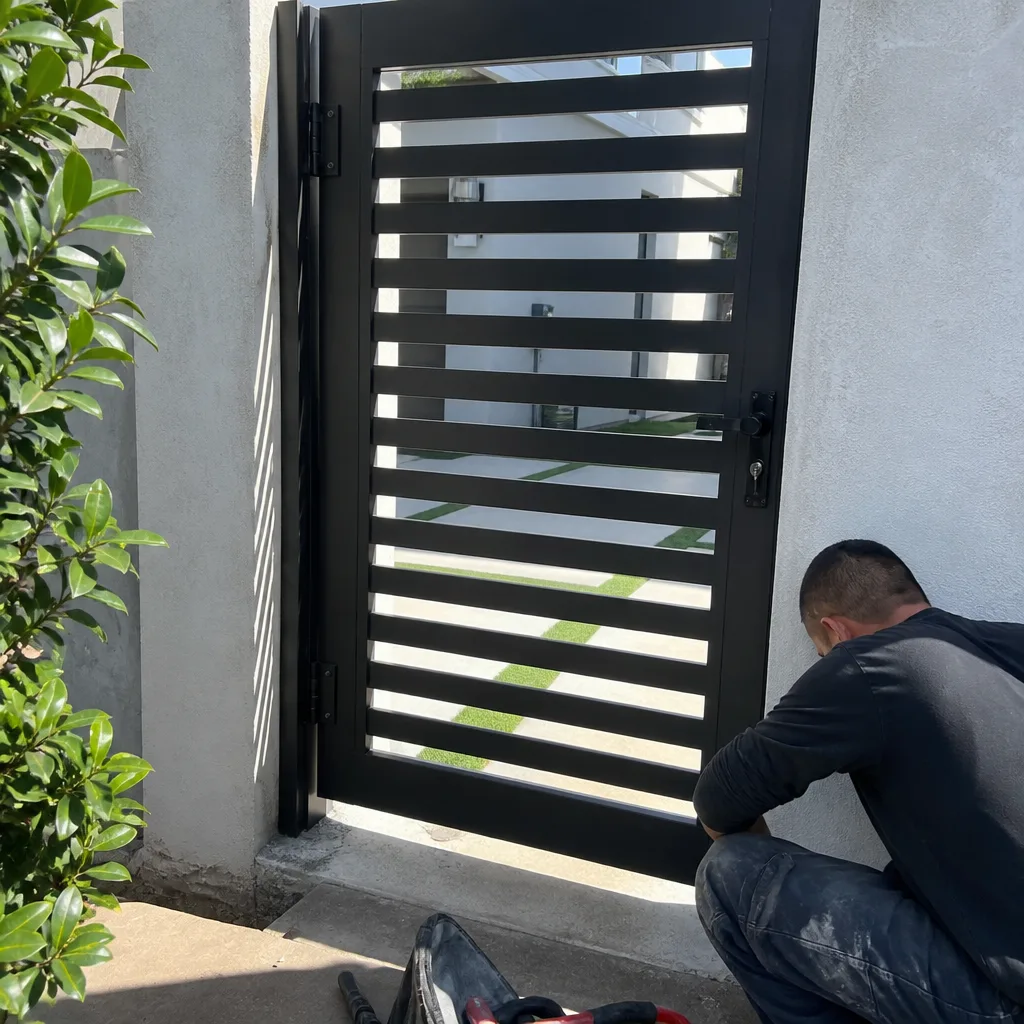 After
After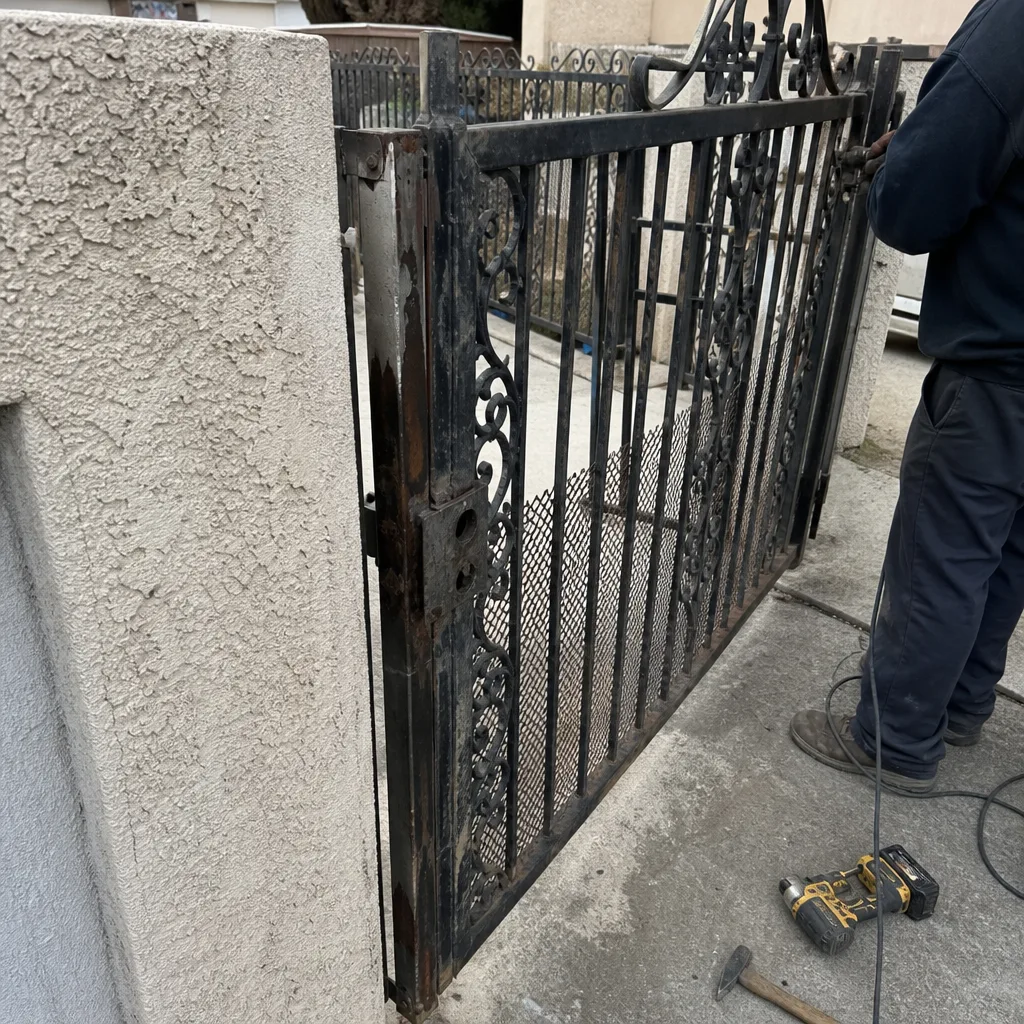 Before
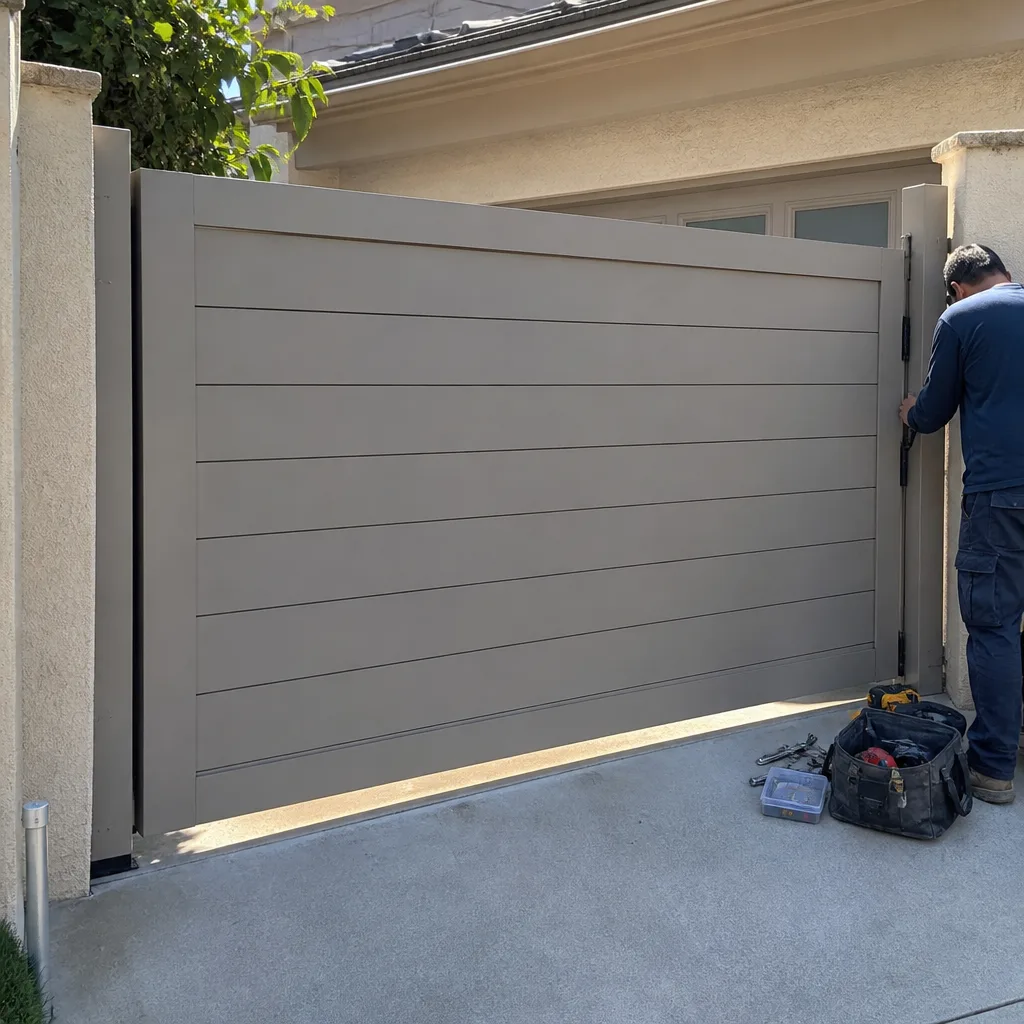 After
AfterGate Repair Maintenance Checklist for Los Angeles Homeowners
Lubricating your gate hinges every six months sounds responsible, until you learn that lithium grease on a coastal gate attracts the salt particulate that accelerates the rust you were trying to prevent. The product matters as much as the habit, and so does your neighborhood. A gate in Bel Air endures soil creep and 40-degree temperature swings between day and night. A gate in Torrance sits in salt fog every morning. A gate in Reseda bakes in 105-degree heat for three straight months. The same checklist won’t serve all three. This Los Angeles-specific guide gives you the exact inspection points, products, and intervals that match your microclimate, your gate type, and the way your household actually uses the gate. You’ll leave knowing what to check monthly, what to leave to a trained technician, and how to keep records that protect you later. For ongoing help, see our Gate Repair Maintenance Schedule: What to Do and When.
Quick Answer
A Los Angeles gate maintenance checklist should be built around your zone: coastal gates need monthly rust inspection and salt-resistant lubricant, hillside gates need quarterly hinge and post alignment checks due to soil movement, and valley gates need summer-specific lubrication and capacitor inspection. At minimum, every homeowner should test safety sensors monthly, lubricate moving parts with the correct product (never lithium grease near the coast), and keep a written log of every service visit with dates, part names, and technician details. Browse our more guides & resources for deeper dives on each topic.
Table of Contents
- LA Gate Zones: Why Your Neighborhood Changes Your Checklist
- The Monthly 10-Minute Gate Inspection
- Seasonal Maintenance: The 4 Times a Year Your Gate Needs Extra Attention
- Lubrication by Component: Exact Products, Exact Spots
- Safety Sensor Testing: The Paper Towel Roll Method
- The 12-Point Professional Inspection Sequence
- Your Maintenance Log: What to Record and Why It Matters
- Common Mistakes to Avoid
- When to Call a Professional
- Frequently Asked Questions
- The Bottom Line
LA Gate Zones: Why Your Neighborhood Changes Your Checklist
Los Angeles is not one climate. It’s at least four distinct environments, each of which punishes gate hardware differently. We’re going to walk through the three most common zones so you can calibrate your own maintenance schedule. This is the section most generic checklists skip entirely, and it’s the reason a gate that runs flawlessly in Studio City might fail within two years in Playa del Rey.
Coastal Zone: Santa Monica, Marina del Rey, Playa del Rey, Venice
Salt air is the dominant factor within two miles of the ocean. It corrodes exposed steel, degrades wiring insulation faster than heat does, and turns the wrong lubricant into a grinding paste. Coastal gates need monthly visual inspection of all exposed metal, especially hinge barrels, the gate motor (the box that slides or swings your gate automatically), and any exposed chain drive. Every three months, wipe down metal surfaces with a dry microfiber cloth before re-lubricating. Use a marine-grade or silicone-based lubricant, never a lithium grease. Lithium attracts salt particulate and holds it against the metal, which is the opposite of what you want. FAAC and BFT rams used on coastal condominium gates tend to show pitting on the piston shaft within 18 months if not wiped down regularly.
Hillside Zone: Silver Lake, Laurel Canyon, Echo Park, Mount Washington
Hillside gates sit on ground that moves. Southern California hillsides expand in winter rains and contract through the dry summer, and that means your gate posts shift fractionally year over year. A gate that scraped the ground in January may swing cleanly by August, or vice versa. Check the gap between the gate leaf and the ground once a month. If you see the gap changing by more than a half inch, the posts are shifting, not the gate. You’ll also want to check that the gate still meets the post squarely. A gate that hangs slightly out of square will eventually wear out its hinges on one side or stall the motor. In our experience, hillside gates need hinge bolt re-torquing about three times more often than flat-lot gates.
Valley Heat Zone: Reseda, Chatsworth, Northridge, Van Nuys
Summer heat above 100 degrees kills capacitors and dries out every lubricant faster than anything else. In the San Fernando Valley, we recommend lubricating monthly from June through September and checking the motor housing temperature on the hottest afternoons. If the housing is too hot to keep your hand on for five seconds, the motor is working harder than it should and the capacitor is likely next in line to fail. Linear and Viking slide gate operators are common in valley homes with long driveways, and both benefit from an annual capacitor check before the first heat wave, not after it.
No matter which zone you’re in, the core Warden Gate Repair home inspection philosophy applies: catch the small thing before it becomes the big invoice. The sections below give you the specific checks and the exact order to run them.
The Monthly 10-Minute Gate Inspection
This is the list to run every month, regardless of your zone. It takes about ten minutes once you know what to look for, and it will catch roughly 80 percent of developing problems before they turn into a service call. Run it with the gate in manual mode if you have a release handle, and with a second person if the gate is heavy.
- Listen first. Open and close the gate twice, standing next to the motor. A healthy gate makes a consistent hum. A grinding sound means a bearing or chain issue. A clicking sound at startup often means a capacitor or limit switch problem. Write down what you hear, even if it’s normal, so you have a baseline.
- Watch the gate travel. The gate should move at one steady speed from start to finish. If it speeds up, slows down, or stutters, the motor is fighting something. A jerky gate is a failing capacitor or worn drive gear, not a quirky personality.
- Check the ground track or rail. For slide gates, run your hand along the V-track (with the gate stopped). Remove pebbles, palm fronds, and any debris. In Los Angeles, jacaranda flowers and bougainvillea leaves collect in tracks and harden into a paste that binds the rollers.
- Look at the chain or belt tension. A drive chain should have about a quarter inch of deflection when you press down on the midpoint. If it’s sagging more than that, the chain is stretching and will eventually skip a tooth on the sprocket.
- Test the safety reverse. Place a paper towel roll upright in the gate’s path and close the gate on it. The gate should stop and reverse before crushing the roll. If it doesn’t, stop using the automatic function and call a professional. California law requires functioning entrapment protection on every automated gate, and your homeowner’s insurance policy assumes compliance.
- Eyeball the hinge bolts. Look for rust streaks running down from the hinge barrels, which signal water ingress and ongoing corrosion. If you see a streak, mark it in your log. Streaks that appear suddenly mean the hinge is failing from the inside.
- Check the keypad and intercom. Run a test open from every access point: the wireless keypad, the call box, any indoor remote, and the key switch. A keypad with one dead button is a security vulnerability, not just an inconvenience.
These seven checks cover the basics for any gate repair in Los Angeles scenario before it becomes an emergency call. Print this section and keep it near your gate remote.
Seasonal Maintenance: The 4 Times a Year Your Gate Needs Extra Attention
Monthly checks catch wear. Seasonal checks catch the environmental damage that rides in on Los Angeles’s specific weather patterns. Here’s what to add at each quarter.
Spring (March-April): Post-Rain Inspection
After the winter rains end, check for three things: rust bloom on any scratched or chipped paint, softened soil around gate posts, and sand or silt in the track. Heavy rain can wash soil out from under a post footing, and a gate that leaned all winter is a gate that needs post resetting before summer. Use a wire brush on any rust spots, then touch up with a zinc-rich primer and outdoor enamel. If the rust is on the motor housing itself, call a technician rather than painting over a seam, which can trap moisture inside.
Summer (June-August): Heat Load Management
In valley zones especially, summer is when capacitors fail and lubricants cook off. Apply lubricant every four to six weeks instead of quarterly. Check that the motor’s ventilation slots are clear of dirt and cobwebs. A motor covered in dust runs hotter than a clean one, and heat is the fastest path to a failed control board. If your gate faces west and gets full afternoon sun, consider a simple shade structure. Even a sheet of corrugated metal mounted six inches above the motor housing will drop the internal temperature meaningfully.
Fall (September-October): Santa Ana Wind Prep
Santa Ana winds push sideways on swing gates, which stresses hinges and can warp lightweight aluminum panels. Check all hinge bolts for tightness before the wind season peaks. For slide gates, clear all loose vegetation from the track and the along the fence line. A eucalyptus branch in the V-track during a wind event can jam the gate at full extension and burn out the motor in seconds.
Winter (December-February): Rain and Debris Management
Winter is the time to check drainage around the gate. Standing water at the base of a slide gate motor will get inside the housing and corrode the control board. Make sure water flows away from the motor, not toward it. For swing gates, check that the leaf drains at the bottom edge are clear. A gate that fills with water gets heavier, and a heavier gate shortens motor life.
Seasonal work pairs naturally with a professional electric gate repair in Los Angeles visit. If you’re already having a technician out for one thing, the seasonal check adds fifteen minutes and rarely adds much cost.
Lubrication by Component: Exact Products, Exact Spots
Here’s the part generic guides get wrong. Lubricating a gate is not one product and not one schedule. Each component has a specific lubricant and a specific failure mode when you use the wrong one. This is the exact breakdown we use in the field.
- Hinge barrels and pins. Use a silicone spray or white lithium grease on inland gates, and a pure silicone spray or marine-grade grease on coastal gates. Spray the top and bottom of each hinge barrel, then run the gate through three full cycles to work it in. Wipe away any excess. Excess lubricant collects dirt, which becomes grinding paste.
- V-track rollers and wheels. Use a dry PTFE spray, not a wet lubricant. Wet grease on a V-track attracts every grain of sand and every jacaranda petal in the neighborhood. Spray the roller bearings directly and spin the wheel by hand to distribute. Do this monthly in dusty zones like the east San Fernando Valley.
- Chain drives. Use a motorcycle chain wax or spray-on chain lube, applied lightly. A dry chain squeaks and wears the sprocket. A dripping-wet chain flings lubricant onto the track and creates a sticky mess. Apply once every two months in valley heat, quarterly everywhere else.
- Gate motor piston or threaded shaft (for FAAC, BFT, and similar rams). Wipe the shaft with a dry cloth, then apply a thin film of silicone grease. Never use heavy axle grease or lithium grease on a piston shaft. Any lubricant that attracts grit will score the shaft seal, and a scored seal leaks hydraulic fluid or allows water into the cylinder.
- Gate track itself. Do not lubricate the track surface. Clean it. A greased track accumulates debris and changes the rolling resistance the motor was calibrated for. Keep it clean, keep it dry, and let the rollers do their job.
- Lock cylinder and key mechanism. Use a graphite powder once a year. Liquid lubricants in a lock cylinder attract dust and eventually gum up the tumblers. A sticky lock is a security issue, not just a maintenance annoyance.
If you’re not certain which product you’re holding, read the label. If the label says “multi-purpose,” that’s a red flag. Gates want purpose-specific products. Using the wrong one in the wrong spot costs more in gate motor repair in Los Angeles than buying three right products would have cost from the start.
Safety Sensor Testing: The Paper Towel Roll Method
Every automated gate installed or retrofitted in California must include entrapment protection: the gate must stop and reverse when it encounters an obstruction. Your gate also has photo-eye sensors that detect objects in the path before the gate reaches them. Both systems fail over time, and both are testable in under five minutes.
The Paper Towel Roll Test
- Grab a full roll of paper towels. It’s roughly the diameter of a child’s leg, which is the right test object.
- Stand the roll upright in the middle of the gate’s travel path.
- Close the gate using the automatic control.
- Watch what happens. The gate should stop and reverse before crushing or pushing the roll.
- If the gate crushes the roll, pushes it along the ground, or does anything other than reverse, the safety system has failed.
Photo-Eye Sensor Check
Photo-eye sensors are the small boxes mounted on either side of the gate opening, usually a few inches off the ground. They project an invisible beam; when something breaks the beam, the gate should refuse to close or should stop mid-travel. To test, close the gate and, while it’s moving, pass your hand in front of one of the sensors. The gate should stop immediately. If it keeps closing, the sensor is misaligned, dirty, or dead.
Why a Failed Test Matters Legally
In California, you are legally liable for injuries caused by a gate you own and maintain. Your homeowner’s insurance policy has an implied warranty that you maintain entrapment protection devices in working order. If a visitor or delivery person is injured by a gate with a failed safety reverse, your insurer can deny the claim on the grounds of negligent maintenance. You can’t claim you didn’t know. Run the test, log the result, and if it fails, stop using the automatic function until a professional has replaced or recalibrated the system. For details on local requirements, read our guide to Gate Repair Permits, Codes & Inspections in CA: What You Need to Know. This is not a check to skip.
The 12-Point Professional Inspection Sequence
When a technician from a company like ours runs a full gate inspection, we follow a specific order. You can replicate most of these steps yourself between professional visits. The sequence matters because each check builds on the one before it: you confirm the gate is safe to move before you move it, and you confirm it’s stable before you test the motor.
- Visual walkaround. Look at the whole gate from both sides. Note rust, dents, loose bolts, sagging, or anything touching that shouldn’t touch.
- Manual operation check. Release the motor and swing or slide the gate by hand. It should move smoothly through its full range with no binding, scraping, or excessive effort.
- Hinge and roller inspection. Check each hinge barrel and each V-track roller for play, rust, and wear. A hinge with vertical play of more than an eighth inch needs replacement.
- Post and footing stability. Push on each post at the top. A post should not flex visibly. In hillside zones, check for soil erosion around the footing.
- Track alignment. For slide gates, verify the V-track is straight, level, and free of debris or pitting. A bent or pitted section wears rollers unevenly.
- Chain or belt tension check. Confirm proper deflection and check sprocket teeth for hooking or wear.
- Motor mount and housing check. Verify the motor is securely mounted, the housing is sealed, and the ventilation slots are clear.
- Electrical connection inspection. With power disconnected, check all wire nuts, terminals, and splices for corrosion or looseness. Coastal gates show green corrosion on connections within three years without dielectric grease.
- Control board diagnostic. The board’s LED indicators tell you about power, limit status, and fault codes. A flashing pattern often identifies the problem before it becomes a failure.
- Safety system test. Run the paper towel roll test and the photo-eye interruption test described above.
- Limit switch adjustment. Confirm the gate stops in the correct open and closed positions. A gate that overruns its limit switch every cycle is battering its own stop blocks.
- Lubrication and debris removal. Apply the correct lubricants to each component as described in the lubrication section, then clear any remaining debris.
A full professional inspection in Los Angeles typically runs 45 to 90 minutes depending on gate type and complexity. You don’t need this monthly. You need it once a year, plus whenever you notice a change in sound, speed, or behavior.
Your Maintenance Log: What to Record and Why It Matters
Most homeowners don’t keep a gate maintenance log, and most homeowners who sell their house lose money on the gate because of it. Here’s what to record, and here’s why it protects you.
What to Record
- Date of every maintenance action, including your own monthly checks.
- Part names and brands. Write “FAAC 415 actuator, replaced June 2023,” not “the motor thing.”
- Technician name and company for every professional service.
- What was done. Lubricated, adjusted, replaced, tested.
- What was observed. Rust starting on lower hinge, gate slightly out of square, sensor misaligned then corrected.
- What was purchased. Lubricant brand, replacement parts, rollers, bolts.
Why the Log Protects You
If you sell your home, the buyer may ask about the gate, and a log turns a vague “we maintained it” into a documented history. That supports your asking price and eliminates negotiation leverage. If you file an insurance claim for gate damage or a gate-related injury, the log demonstrates responsible maintenance, which is exactly what your insurer needs to pay out. And if a gate fails right after a repair, the log tells you exactly who did what and when, which is the first thing a second technician will ask about.
Keep it simple: a spiral notebook in the garage or a notes app on your phone. The format matters less than the consistency. Cole Rafferty, who has been running gate service in Los Angeles since 2008, says the homeowners who keep logs are the ones whose gates also last the longest, because the act of recording forces you to actually look.
Common Mistakes to Avoid
- Using WD-40 as a gate lubricant. WD-40 is a water displacer and light solvent, not a long-term lubricant. It cleans, it does not protect, and it evaporates within days. On a gate, it leaves metal dry and exposed.
- Greasing the track. A greased V-track attracts debris and changes the rolling resistance the motor was calibrated for. Clean tracks, lubricated rollers. Never lubricate the track surface itself.
- Ignoring a squeak because the gate still works. A squeak is metal-on-metal contact where there should be a lubricant film. By the time the squeak becomes a grind, you’re replacing parts instead of lubricating them.
- Testing the safety reverse only once a year. Entrapment protection fails silently. If the sensor dies in March and you test in December, you’ve had nine months of liability exposure. Test monthly.
- Tightening a sagging gate by adjusting only one hinge. A gate that sags is usually a post issue or a structural issue, not a hinge adjustment issue. Cranking one hinge transfers the stress to the remaining points and accelerates failure elsewhere.
- Painting over rust without treating it first. Rust continues to spread under paint. Remove it with a wire brush, treat with a rust converter, then prime and paint. Skipping the converter is a three-month cosmetic fix on a multi-year problem.
- Running the motor after the gate jams. A stalled motor draws maximum amperage and burns out its capacitor or control board quickly. If the gate jams, release the motor and move the gate manually. Then diagnose. Never hold the remote button down and hope.
When to Call a Professional
Some maintenance jobs are genuinely yours. Some are not. Call a professional if your gate fails the safety reverse or photo-eye test, if the motor hums but the gate doesn’t move, if you see exposed wiring or scorch marks on the control board, if the gate post visibly shifts, or if the gate has been hit by a vehicle. High-tension springs, chain drives under load, and gate motors with charged capacitors can cause serious injury if handled incorrectly. Do not attempt to remove a torsion spring or open a motor housing yourself. Warden Gate Repair offers free estimates in Los Angeles, call (828) 426-7081. Our technicians are background-checked, identity-verified, and sent to you by name and photo before arrival. The written price comes before any work starts, and every repair is covered by the 365-Day Done Right Promise.
Frequently Asked Questions
In most Los Angeles zones, lubricate hinges, rollers, and chains every three months. In valley heat zones (Reseda, Chatsworth, Northridge), lubricate monthly from June through September because heat cooks off lubricants faster. In coastal zones (Santa Monica, Marina del Rey), use a silicone-based or marine-grade product every two to three months, and never lithium grease, which attracts salt particulate. Call (828) 426-7081 if you’re not sure which product matches your gate and zone.
A basic professional gate inspection and lubrication in Los Angeles typically runs $95 to $175 depending on gate type and size. Full maintenance with part replacements ranges from $150 to $400. The written price is quoted and agreed before any work starts, so the number you approve is the number you pay. For an exact quote on your gate, call (828) 426-7081.
Yes, and you should, monthly. Stand a full paper towel roll upright in the gate’s path and close the gate. It should stop and reverse before crushing the roll. To test the photo-eyes, pass your hand in front of a sensor while the gate is closing; the gate should stop immediately. If either test fails, stop using the automatic function and call a professional.
Lithium grease is a heavier, longer-lasting lubricant that works well on inland metal-on-metal contact like hinge barrels. Silicone lubricant is lighter, water-resistant, and better for coastal gates where salt exposure is the main threat. Lithium grease attracts and holds salt particulate, which accelerates corrosion; silicone does not. In Los Angeles, the right choice depends on your distance from the ocean.
Most Los Angeles homeowner’s policies cover sudden gate damage from events like vehicle impact or storm damage, but not wear-and-tear from skipped maintenance. They also assume you’ve kept entrapment protection systems in working order. If a visitor is injured by a gate with a failed safety reverse, your insurer can deny the claim for negligent maintenance. Run your monthly safety test and keep a log.
Ask for the technician’s name before they arrive, request a photo, and confirm the price in writing before you approve any work. Warden Gate Repair sends every customer the technician’s name and photo ahead of time, and every tech arrives with a photo ID badge. Our written price comes before any work starts, every time, and our 365-Day Done Right Promise means if the repair fails, the return visit is free. Call (828) 426-7081 for a free estimate.
The Bottom Line
Your Los Angeles gate is not a generic appliance, and it shouldn’t get a generic maintenance schedule. Coastal gates need salt-aware lubrication and monthly rust checks. Hillside gates need post alignment and hinge bolt attention as the soil shifts. Valley gates need summer-specific care that respects the heat. Run the monthly ten-minute inspection, test your safety sensors with a paper towel roll, use the correct lubricant on each component, and keep a written log of everything. When something falls outside your comfort zone, call a professional for Gate Repair services who tells you the price before the work starts. A gate that’s maintained on the right schedule for its actual environment is a gate that works quietly for years, and a maintenance log that proves it protects your family, your insurance, and your resale value.
Written by Cole Rafferty, Owner at Warden Gate Repair, serving Los Angeles since 2008.