
Last updated October 9, 2026
Free on-site gate assessment - hinges, posts, and your LiftMaster or Nice gate operator checked before anything is quoted
The assessment is free and the quote is the invoice.
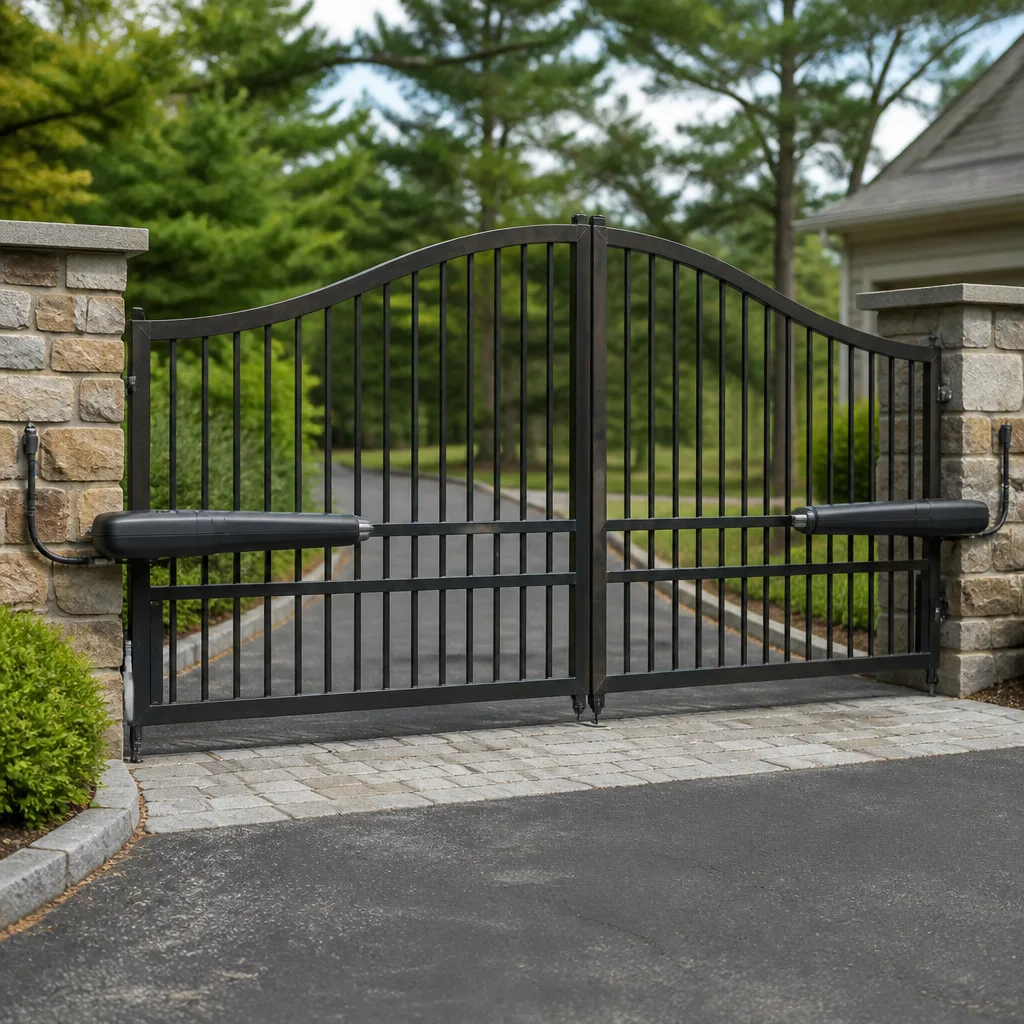
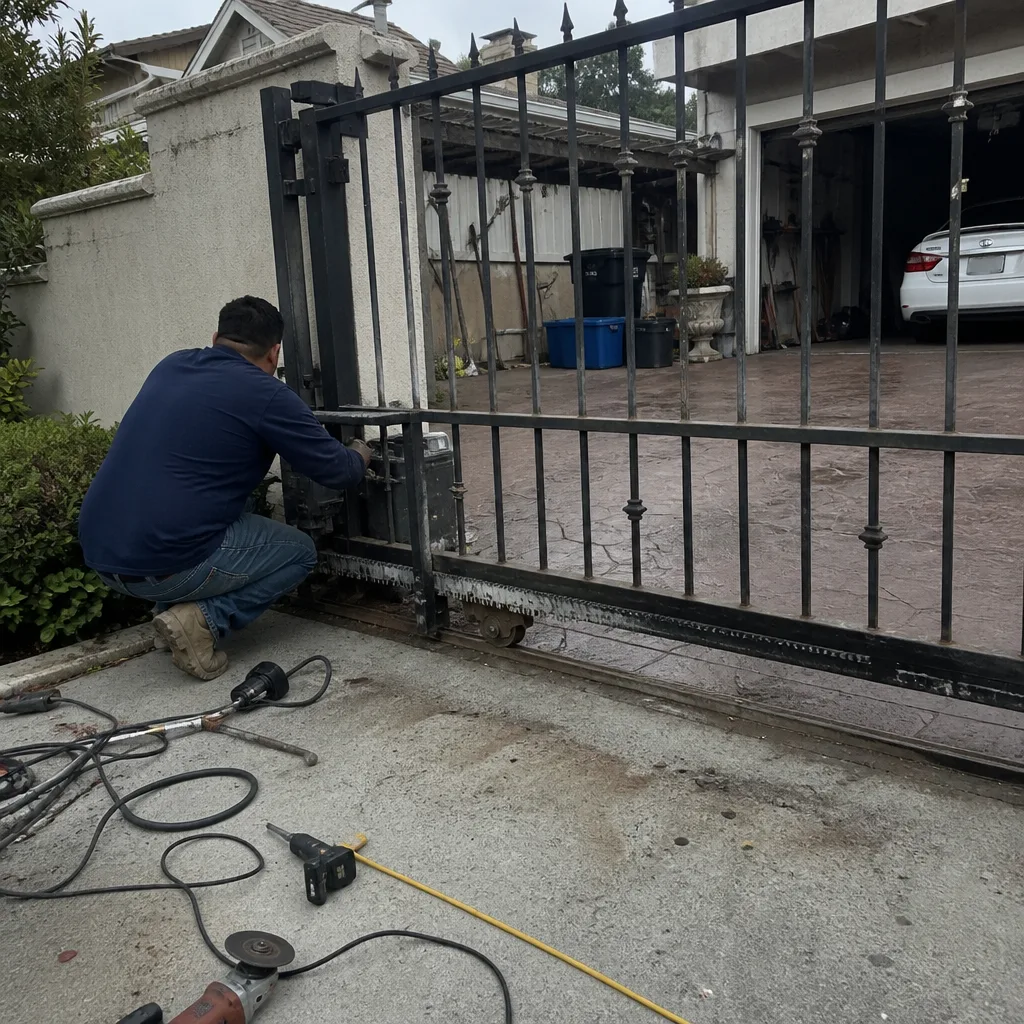 Before
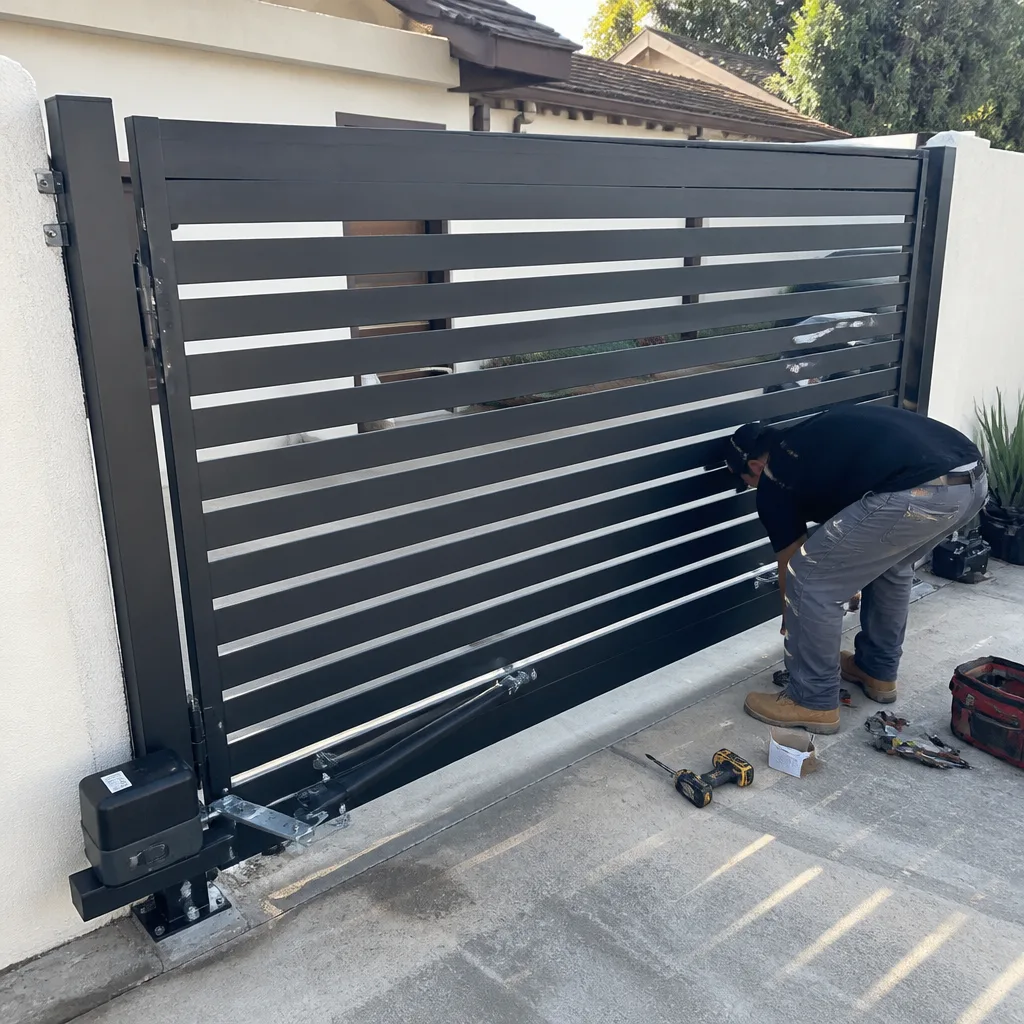 After
After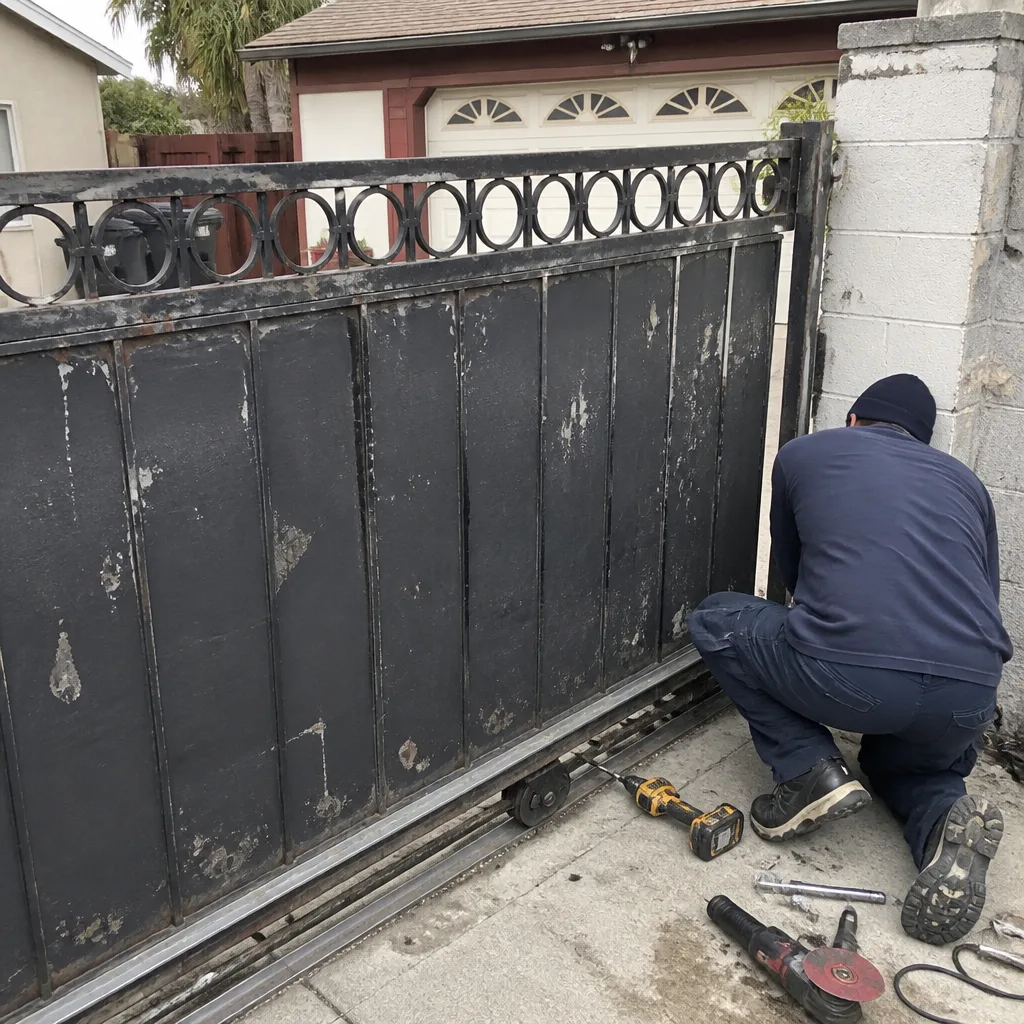 Before
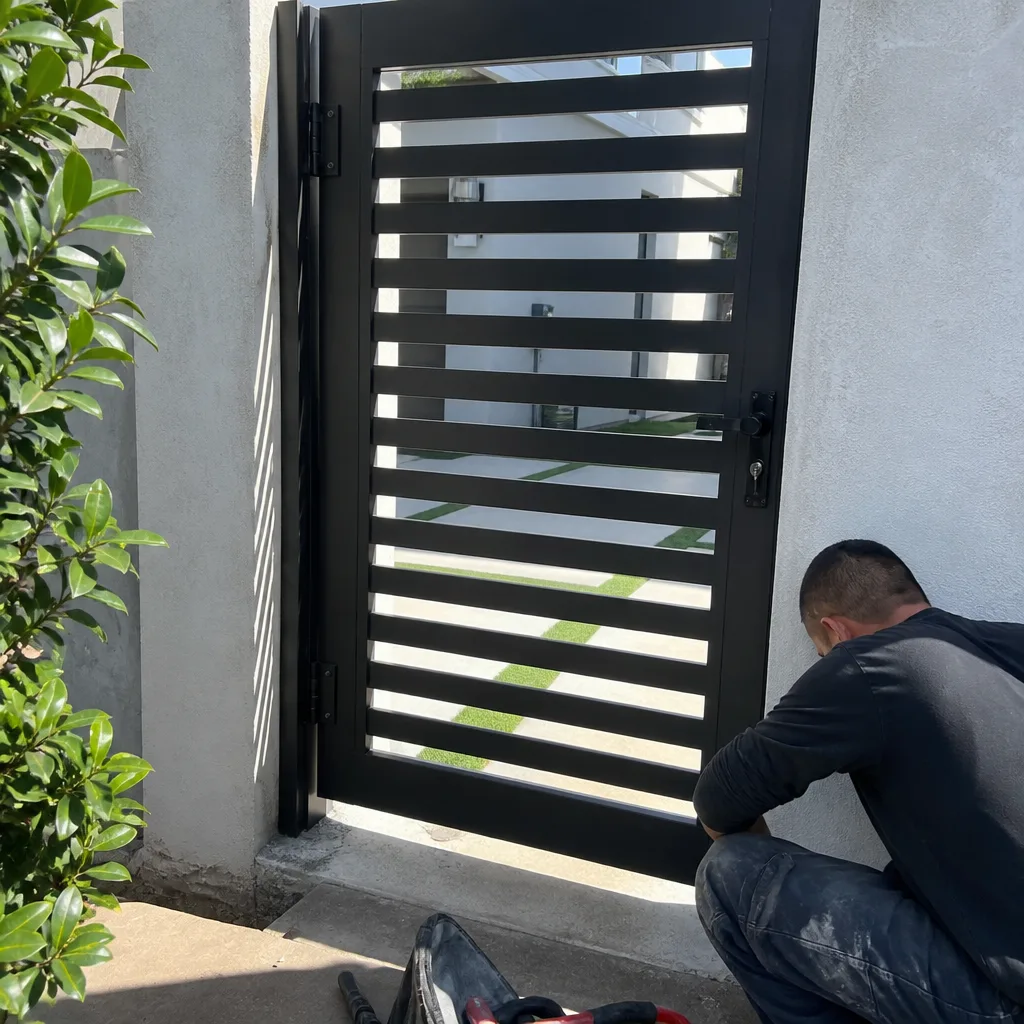 After
After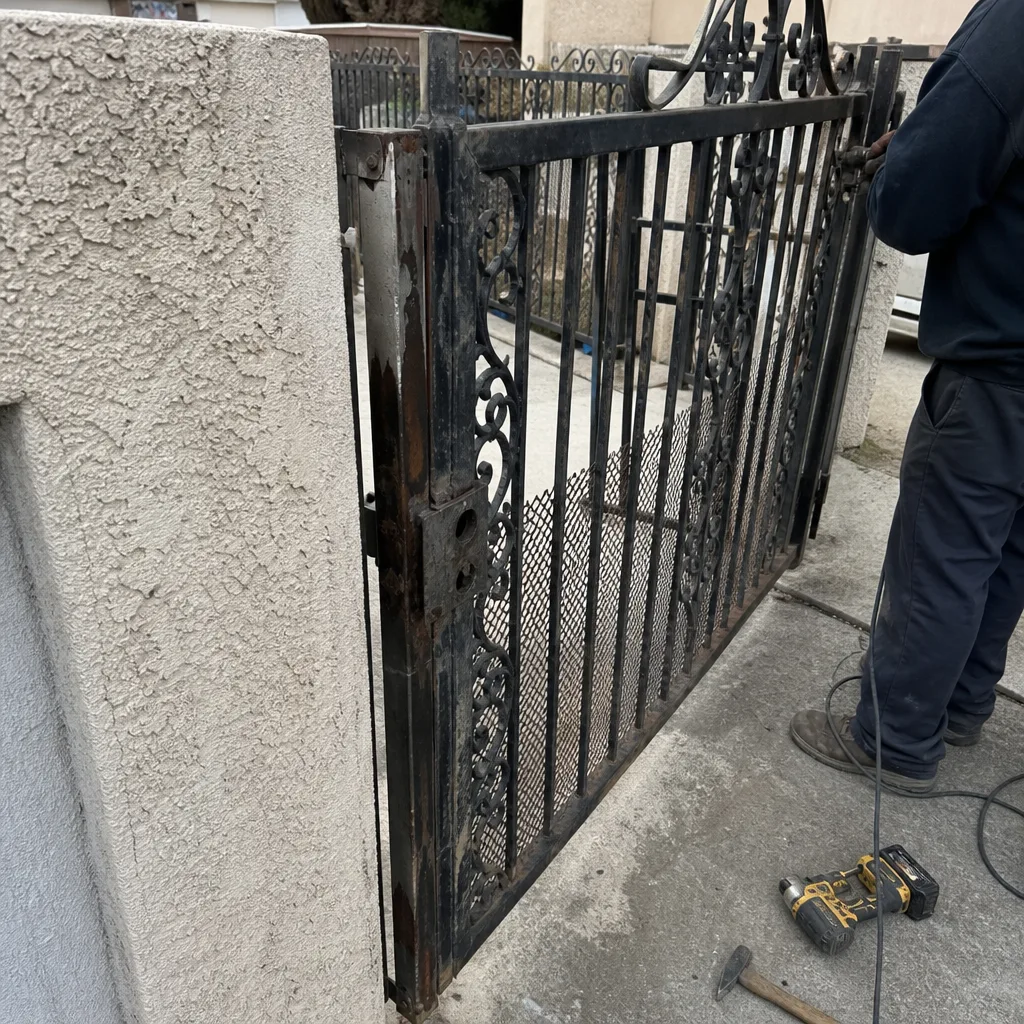 Before
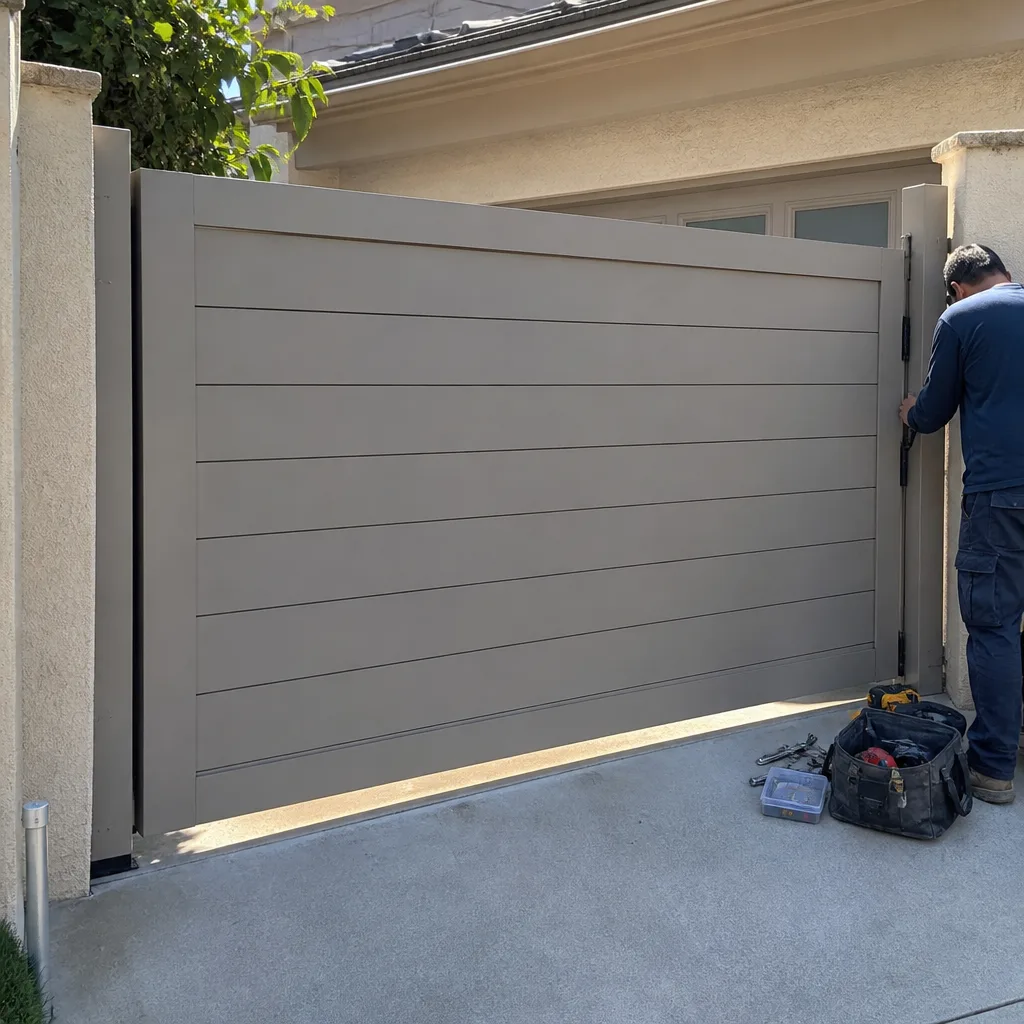 After
AfterThe Complete Guide to Gate Repair in Los Angeles
The average Los Angeles homeowner calls a gate repair company 2.3 times before the underlying problem is actually resolved. Not because gates are complicated, but because most repair calls treat the symptom that’s visible rather than the component that caused it. A gate is a system, not a single machine. When you understand how its five parts interact, you stop paying for repeat visits. This guide walks you through the whole system so you can fix your gate once, the right way, in Los Angeles.
Quick Answer
Gate repair in Los Angeles typically costs $145 to $385 for mechanical issues like hinges and track alignment, and $285 to $750 when the motor or control board needs attention. The best repair strategy treats the gate as a five-part system, because fixing only the visible symptom usually means another failure within six months. For exact pricing on your setup, call Warden Gate Repair at (828) 426-7081 for a free estimate.
Table of Contents
- The Five-Part Gate System Explained
- How Los Angeles Conditions Damage Gates Differently
- What You Can Fix Yourself vs. What Requires a Licensed Contractor
- Brand-Specific Repair Realities: LiftMaster, FAAC, and Elite
- How to Document Your Gate System Before It Breaks
- Common Mistakes to Avoid
- When to Call a Professional
- Frequently Asked Questions
The Five-Part Gate System Explained
Every automatic gate in Los Angeles, whether it swings across a driveway in Brentwood or slides beside a warehouse in Vernon, runs on the same five components. When a gate stops working, the problem is usually in one of these parts. But here’s what most people miss: a failing component rarely announces itself. It strains the components around it first. That’s why understanding all five matters before you call for repair.
- The operator (gate motor) is the box that physically moves the gate. In swing gates, it’s an arm attached to a hydraulic or electromechanical actuator. In slide gates, it’s a chain-driven motor mounted on a pad. This is what most people think of as “the gate opener,” and it’s the most expensive single component to replace.
- The controller (control board) is the circuit board that tells the motor when to start, stop, and reverse. It processes signals from remotes, keypads, and safety sensors. A blown capacitor or failed relay on this board can make a perfectly good motor look dead.
- The safety sensors include photo eyes mounted near the ground, edge sensors on the gate itself, and sometimes loops cut into the driveway. These prevent the gate from closing on a car, a person, or a pet. In Los Angeles, where gates cross busy sidewalks in older neighborhoods, these sensors are legally required and frequently the actual cause of a gate that won’t close.
- The mechanical hardware covers hinges, wheels, track, chain, and the gate’s own weight-bearing structure. A gate that sags by half an inch puts triple the load on the motor, which then burns out early. We see this pattern constantly in our work across Los Angeles.
- The power supply includes the transformer, battery backup, and any solar panel. In LA’s older hillside neighborhoods, the same circuit that powers a 1950s-era gate also feeds outdoor lighting and a pool pump. Voltage dips from that shared load cause intermittent motor failures that no new motor will fix.
Think of it this way: the motor is the heart, but the hinges are the joints, the controller is the brain, the sensors are the eyes, and the power supply is the bloodstream. You wouldn’t run a marathon on a broken ankle just because your heart is strong. You shouldn’t replace a motor when your gate’s hinges are the real problem.
How Los Angeles Conditions Damage Gates Differently
Los Angeles isn’t one climate. It’s three distinct micro-environments, and each one attacks your gate system differently. Knowing which environment you live in tells you which components will fail first, and that shapes what a smart repair actually costs.
- Coastal zones (Santa Monica, Playa del Rey, Long Beach, San Pedro): Marine layer moisture and salt air corrode connections on control boards and accelerate rust on exposed hinges and chains. We regularly see gates within three miles of the coast that need hinge replacement twice as often as inland gates. The control board often fails first, not the motor, because salt-laden air eats the solder joints.
- Valley and inland basin (Sherman Oaks, Van Nuys, Glendale, Pasadena): Extreme heat cycling, 50 degrees at 3 a.m. and 95 by 2 p.m., causes thermal expansion that loosens mounting bolts and cracks plastic gear housings. Gates here tend to fail mechanically first: stripped drive gears, broken hinge welds, warped track. The motor usually outlasts the hardware around it.
- Hillside and canyon zones (Bel Air, Studio City hills, Silver Lake, Echo Park): Santa Ana winds hit these gates with 40 to 60 mph gusts that slam swing gates against their stops. Seismic micro-shifts, the small tremors Angelenos don’t even notice, slowly knock concrete gate posts out of plumb. A gate that was perfectly aligned two years ago might be dragging on its track today because the ground itself moved a quarter inch.
This ZIP-code reality matters because the right repair in Venice is often the wrong repair in Van Nuys. A technician who doesn’t factor in marine corrosion will replace a control board and leave the corroded wiring that killed it, guaranteeing the same failure in eighteen months. A technician who doesn’t understand Santa Ana wind load will adjust a swing gate’s limits without checking the post anchors, and the customer watches the wind push the gate past its stops again within weeks.
Our team works across all three zones, which is one reason we keep detailed notes on every Los Angeles neighborhood we serve. The fix that holds in Playa del Rey won’t be the same fix that holds in Studio City, even when the gate model is identical.
What You Can Fix Yourself vs. What Requires a Licensed Contractor
California law is specific about gate work. Under the Contractors State License Board, gate installation and repair falls under the C-61/D28 classification, doors, gates, and activating devices. If a repair involves running new electrical wiring, modifying the gate’s structure, or working on the motor and controller, it legally requires a licensed contractor. Homeowners can do some things themselves, but the line is clearer than most people think.
Work a homeowner can legally do:
- Replacing remote batteries and reprogramming remotes using the manufacturer’s manual
- Cleaning and lubricating hinges, wheels, and track
- Tightening visible bolts and hardware
- Clearing debris from the gate’s path and cleaning photo eye lenses
- Replacing a light bulb in a keypad, if the keypad has a serviceable bulb
Work that requires a licensed C-61/D28 contractor:
- Any motor replacement or major motor repair
- Control board diagnosis and replacement
- Safety sensor installation or repair, including edge sensors and photo eyes
- Hinge replacement that requires lifting or realigning the gate leaf
- Track repair that involves cutting, welding, or reanchoring to concrete
- Any power supply work beyond plugging in a transformer
The reason the state draws the line here is simple: an improperly installed gate can crush a child, a pet, or an adult. The safety systems that prevent that have to be installed by someone who knows the UL 325 standard and the manufacturer’s exact specs. When we send a technician to a Los Angeles home, that tech arrives background-checked and photo-badged under the Threshold Standard, and every piece of work is done to code.
One more note on DIY: even legal homeowner repairs can void a manufacturer’s warranty. LiftMaster and FAAC both have warranty language requiring installation and major repair by a qualified technician. The money saved on a DIY motor install often turns into a denied warranty claim six months later.
Brand-Specific Repair Realities: LiftMaster, FAAC, and Elite
Not all gate brands age the same way in Los Angeles. We service nine major manufacturers, but three account for the majority of what we see across the city: Warden Gate Repair home technicians are factory-trained on all of them, and each brand has its own failure personality.
LiftMaster is the most common residential brand in Los Angeles, and its gates are the easiest to keep running long term because parts are widely stocked and the design is forgiving. The typical LiftMaster repair call is either a stripped drive gear, a dead capacitor on the control board, or a fault from a misaligned photo eye. We can usually complete a full LiftMaster motor swap in three to four hours, including reprogramming remotes and testing safety sensors. Parts are rarely more than a day out if we don’t already carry them on the truck.
FAAC is the workhorse of European hydraulics, found on many high-end swing gates in Bel Air and Brentwood. A FAAC system that’s maintained will run twenty years, but when it fails, the failure is usually hydraulic: a leaking ram, low fluid, or a pump that’s cavitating. The repair timeline runs longer because hydraulic work is slower and messier. A full FAAC ram replacement typically takes five to seven hours, and we recommend a full system flush while the ram is out, since that’s the one repair where doing the “quick fix” genuinely costs more later.
Elite gates show up most often on commercial properties and multi-family buildings in Los Angeles, though we see residential Elites too. Elite’s weak points are the control board relays and the chain tension adjustments on slide gates. An Elite repair often starts with a board-level diagnosis that takes an hour just to complete properly, because Elite boards fault in ways that mimic motor failures. Replacing a motor without checking the board on an Elite is the single most common unnecessary repair we undo. A full Elite motor replacement usually runs a full day, including safety loop testing.
The lesson: ask your repair company which brands they actually train on. A technician who’s seen your exact motor model fifty times will diagnose it in twenty minutes. A technician who’s never touched it will replace parts until something works, and you’ll pay for the education.
How to Document Your Gate System Before It Breaks
The fastest way to turn a future repair from a two-hour diagnostic slog into a forty-minute fix is to document your gate system today, while it’s still working. This takes fifteen minutes and costs nothing, and it means any competent technician in Los Angeles can serve you faster when something goes wrong. Here’s the exact documentation routine we recommend to every customer.
- Photograph the motor and control board. Open the operator cover and take clear photos of the motor’s data plate, which shows the model number, serial number, voltage, and date of manufacture. Then photograph the control board itself, especially any visible part numbers. These photos are gold for parts sourcing.
- Record your remotes and keypads. Photograph the outside and the battery compartment of each remote, and your keypad’s make and model. Count how many remotes you have. When you add or remove a remote later, write it down.
- Find your installer’s contact information. If the gate was installed by a company on a sticker or an invoice, photograph that sticker and save the invoice. Many Los Angeles homes have gates installed by companies that no longer exist, but the invoice still tells a technician which accessories were added after the fact.
- Note the gate’s age and history. Write down roughly when the gate was installed, and any repairs you’ve already had done, with dates. “Motor replaced 2021 by a guy in a van, board replaced 2023” tells a technician more in one sentence than an hour of testing.
- Store everything in one place. A dedicated folder in your phone’s photos app, or a shared note you keep with your house documents. When the gate fails at 6:30 a.m. and you’re trying to get to work, you won’t want to hunt for this stuff.
This documentation is also a safety matter. When a technician arrives with the model and serial number already in hand, they’ve got the right parts on the truck more often, which means the repair happens in one visit instead of two. And when you call Warden Gate Repair, we’ll ask you for exactly this information, because the less time we spend identifying the system, the less time you spend waiting for a fix.
Common Mistakes to Avoid
- Replacing the motor when the hinges are shot. We see this more than any other mistake. A sagging gate overworks the motor until it burns out, and then the homeowner replaces the motor without fixing the sag. The new motor dies within a year. Fix the alignments first.
- Ignoring a gate that’s getting slower. A gate that opens more sluggishly every week is telling you something is degrading. Waiting until it stops completely usually means a more expensive repair, because the strain has already damaged secondary components.
- Buying generic aftermarket parts for name-brand systems. A knockoff control board for a LiftMaster costs half as much and lasts a quarter as long. Worse, it can send wrong voltage to a perfectly good motor and destroy that too.
- Disabling safety sensors because they keep “false-triggering.” In Los Angeles, a gate that reverses on a shadow across the photo eye is annoying. But clipping the sensor wires to stop it is illegal and dangerous. The sensor is usually misaligned, not broken, and alignment is a cheap fix.
- Not checking the power source first. Before calling for repair, confirm the gate’s breaker hasn’t tripped and the outlet it plugs into is live. We’ve driven to Los Angeles homes where the gate was unplugged because a leaf blower finished the job.
- Scheduling repair during a Santa Ana wind event. If you can wait, don’t call a swing gate repair during a 50 mph wind day. Technicians can’t safely work on an extended swing gate in high winds, and you’ll pay for a rescheduled visit.
When to Call a Professional
Call a professional when the gate motor makes grinding noises, when the gate stops mid-travel or reverses unpredictably, when a safety sensor has physically broken loose from its mount, or when you’ve already replaced a remote and the motor still won’t respond. If you can see exposed wiring at the operator or any sparking when the gate runs, stop using the gate and call immediately. Same if the gate has contacted a person, a vehicle, or a pet. Those are not troubleshooting scenarios, they’re stop-and-call scenarios. Gate repair in Los Angeles is our specialty, and electric gate repair in Los Angeles is the majority of what our technicians handle every day. Warden Gate Repair offers free estimates across the city; call (828) 426-7081 and we’ll give you a written price before any work starts.
Frequently Asked Questions
Gate repair in Los Angeles typically runs $145 to $385 for mechanical work like hinge, wheel, or track repairs, and $285 to $750 when the motor, controller, or power supply needs attention. Full motor replacements on premium brands like FAAC can reach $1,200 to $2,400 with parts and labor. Call (828) 426-7081 for a written estimate on your specific system – estimates are always free.
In most cases, yes. When a repair is urgent and the parts are on our truck or available locally in Los Angeles, we can often complete the job the same day you call. Live phone coverage is available 24/7, so you’ll always reach a person, never a voicemail. Call (828) 426-7081 and we’ll tell you straight what’s possible today.
Most gate repairs in Los Angeles do not require a city permit because you’re repairing existing equipment, not building new structure. However, any gate that crosses a public sidewalk, any new underground electrical run, and any structural post replacement may trigger City of LA Department of Building and Safety rules. We can tell you during your free estimate whether your specific repair falls under permit requirements.
A gate that opens by itself usually has a receiver board receiving interference from a neighbor’s remote, a failing capacitor on the control board, or a photo eye that’s misaligned and sending false obstruction signals. In dense Los Angeles neighborhoods, shared frequencies between adjacent gates are common. A proper diagnostic can identify which of these is the culprit in under an hour.
With proper maintenance, a quality gate motor in Los Angeles should last 10 to 15 years. Coastal Los Angeles homes near the marine layer often see shorter motor life, around 8 to 12 years, due to corrosion. Valley and inland homes usually get the full 15 years if the gate is kept balanced and the hinges are maintained. Gate motor repair in Los Angeles is what we do most often when those years run out.
Yes, we service Mighty Mule openers along with LiftMaster, FAAC, BFT, Linear, Viking, Ghost Controls, DoorKing, and Elite. Mighty Mule systems are popular with Los Angeles homeowners who did an initial self-install, and we frequently step in when those systems outgrow their original setup or need board-level repair. Call (828) 426-7081 with your model number and we’ll let you know what’s involved before you book anything.
The Bottom Line
A gate in Los Angeles is a five-part system where every part depends on the others. When you treat a motor failure as an isolated event instead of looking at the hinges, sensors, power supply, and control board together, you’ll keep paying for repairs the same way the average homeowner does, 2.3 calls before the real problem gets solved. The smarter approach is to document your system now, understand what your specific Los Angeles climate does to your gate, and call a repair company that diagnoses the whole system rather than swapping the most visible part. That’s how you fix a gate once, instead of watching it fail twice a year. When you’re ready for a straight answer and a written price, call (828) 426-7081.
Written by Cole Rafferty, Owner at Warden Gate Repair, serving Los Angeles since 2008.